The Soul's Whisper: Seeking Connection Beyond the Postcard
I remember standing on a bustling street in a seemingly exotic destination, camera in hand, watching a "cultural show." The performers were vibrant, the music lively, but something felt… hollow. It was beautiful, yes, but it was for me, the tourist, a performance rather than a living, breathing tradition. I felt like an outsider looking in, longing for a deeper connection, a real understanding of the soul of the place. Have you ever felt that? That yearning to scratch beneath the surface of travel, to move beyond the Instagram-perfect shot and truly feel a destination in your bones?
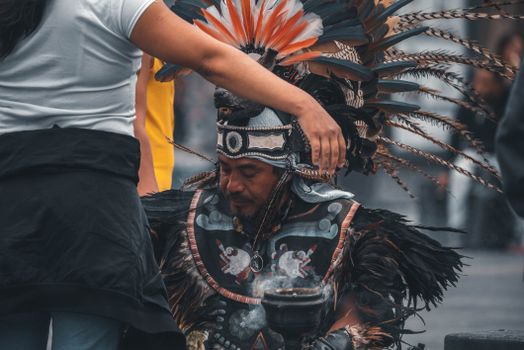
That was the moment Tripsora's mission crystallized for me: to seek out and share experiences that genuinely transform, that challenge your perspective, and that connect you to humanity in its most authentic forms. And nothing does that quite like participating in traditional ceremonies – not the ones packaged for mass tourism, but the sacred rituals still woven into the fabric of local life, waiting to be discovered by the respectful, curious traveler.
We're talking about experiences that are raw, ancient, and profoundly moving. These aren't just "things to do"; they are invitations to witness and, if welcomed, become part of a spiritual lineage that predates guidebooks and travel blogs. The best part? Many of these are still relatively unknown to the wider tourist world, offering you a rare window into cultures before they adapt (or are forced to adapt) to mainstream demand. So, pack your open mind and your respectful heart, because we're about to dive into some truly special journeys.
The Call to Connection: Why Seek Out These Experiences?
In an age of hyper-connectivity, many of us feel a profound disconnect from the natural world, from our own spiritual selves, and from the ancient wisdom that once guided human societies. Traditional ceremonies offer a powerful antidote. They are living archives of history, spirituality, and community resilience.
Participating isn't about ticking a box; it's about:
- Profound Cultural Immersion: Moving beyond observation to genuine interaction, understanding the why behind local customs.
- Personal Transformation: These rituals often invite introspection, gratitude, and a sense of belonging that can be deeply moving and perspective-altering.
- Responsible Tourism: By engaging respectfully with local practitioners and communities, you contribute to the preservation of these traditions and offer direct economic support.
- Unforgettable Memories: Forget the crowded landmarks; these are the stories you'll tell for years, the moments that redefine your understanding of the world.
The key, however, is respectful participation. We are guests in these sacred spaces. Our role is to learn, to listen, and to honor the traditions, not to appropriate or disrupt them. This guide isn't just about where to go, but how to go – with humility, an open heart, and a deep appreciation for the profound privilege of being welcomed.
Whispers from the Andes: Pachamama Despacho in Peru
My first encounter with an Andean Despacho ceremony was in the Sacred Valley of Peru, nestled among the towering peaks that cradle Machu Picchu. I'd been trekking, feeling overwhelmed by the sheer scale of the mountains, and a local guide suggested I participate in an offering to Pachamama, Mother Earth. It sounded intriguing, but I had no idea how deeply it would resonate.
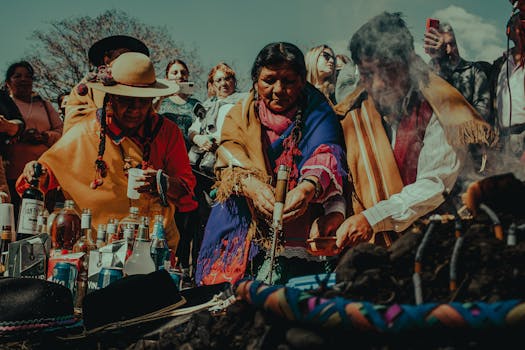
We met with a Q'ero Pakko, an Andean shaman, in a small, unassuming stone hut. The air was thick with the scent of coca leaves and palo santo. He meticulously laid out a vibrant tapestry, upon which he began to arrange an intricate offering: corn kernels representing abundance, coca leaves for connection, sweets for sweetening intentions, seeds for new beginnings, and even a tiny shell for the ocean. Each item was placed with intention, a quiet prayer whispered over it.
As the Pakko chanted in Quechua, his voice a low, rhythmic hum, I felt a deep sense of gratitude. Gratitude for the mountains, for the air I breathed, for the food that sustained me. It wasn't just a ritual; it was a profound act of reciprocity, acknowledging our dependence on the earth and offering thanks. We each added our own intentions, a silent moment of connection to something ancient and powerful. When the offering was finally wrapped and carried to a sacred spot to be burned, releasing our prayers to the cosmos, I felt a lightness, a sense of belonging I hadn't anticipated.
Practical Tips for Your Pachamama Despacho:
- Location: The Sacred Valley (Pisac, Urubamba, Ollantaytambo) or around Cusco are ideal. You can also find them in Bolivia.
- Finding a Genuine Pakko: This is crucial. Avoid large tour groups. Ask trusted local guides, your guesthouse host, or look for small, community-based spiritual centers. Reputable NGOs working with indigenous communities can often connect you. Be wary of overly commercialized offerings.
- What to Expect: Ceremonies can range from 1-3 hours. You'll sit in a circle, observe the Pakko prepare the offering, and be invited to add your own intentions. Dress respectfully (layers are good for the Andean climate).
- Cost: A private or small group Despacho with a genuine Pakko might cost anywhere from $50-$150 USD, depending on the duration and the Pakko's experience. This directly supports the spiritual leader and their community.
- Instagram-worthy (with respect): The intricate, colorful offerings laid out on the tapestry are visually stunning. Capture the details, but prioritize being present. Ask permission before photographing the Pakko directly and avoid flash. The mountain backdrop is always a bonus!
Silent Dawn, Sacred Offerings: Tak Bat in Laos
The first time I witnessed Tak Bat, the daily alms giving ceremony, it was in Luang Prabang, Laos. I'd heard about it, but nothing prepared me for the quiet majesty of it all. Waking before dawn, the streets still shrouded in mist, I found a spot away from the main tourist throng, near a smaller temple.
I had purchased a small basket of sticky rice from a local vendor, ensuring my offering supported the community directly. As the first saffron-robed monks emerged from the monastery, walking in a silent, single-file line, a profound hush fell over the street. Locals, kneeling on mats, reverently placed small handfuls of rice into the monks' alms bowls. There was no talking, no fanfare, just the soft padding of bare feet and the gentle clinking of bowls.
When it was my turn, I knelt, looked down, and carefully placed my offering. It was a fleeting moment, but filled with a deep sense of humility and connection. It wasn't about the monks needing the food (though it is their sustenance); it was about the act of giving, of community support, of spiritual devotion. Later, in a smaller village near Nong Khiaw, the experience was even more intimate, just a few villagers and myself, the silence broken only by the chirping of crickets and the distant crow of a rooster. This is the "before mainstream" experience – finding it where it's still a quiet, daily rhythm, not a spectacle.
Practical Tips for Tak Bat (Alms Giving):
- Location: While Luang Prabang is famous, seek out smaller towns like Nong Khiaw, Muang Ngoi Neua, or even rural areas of Cambodia for a more authentic, less crowded experience.
- Timing: It happens every morning, just before sunrise. Ask your guesthouse for the exact time.
- Dress Code: Crucial for respect. Shoulders and knees must be covered. For women, a scarf over the chest is also recommended.
- Offerings: Buy sticky rice or other small food items from local vendors away from the main procession areas. This supports local businesses and ensures fresh offerings. Do not buy pre-packaged tourist offerings from touts.
- Etiquette:
- Observe First: Watch locals to understand the rhythm.
- Keep Distance: Do not get too close to the monks, especially if you are female.
- No Flash Photography: Seriously, don't do it. It's disruptive and disrespectful. If you must take photos, do so from a distance with a zoom lens, without flash, and quietly.
- Silence: Maintain silence throughout the ceremony.
- Don't Interrupt: Never block the monks' path or interrupt the procession.
- Don't Touch: Never touch a monk.
- Cost: Only the cost of your sticky rice (a few dollars). Your respectful presence is your true offering.
- Instagram-worthy (with respect): The saffron robes against the misty dawn, the quiet reverence of the participants. Focus on capturing the atmosphere, not intrusive close-ups.
The Earth's Embrace: Kava Ceremony in Vanuatu's Nakamals
My journey to Vanuatu, a breathtaking archipelago in the South Pacific, was driven by a desire for raw, untouched culture. One of the most unique experiences was participating in a Kava ceremony in a local Nakamal. Kava, a traditional non-alcoholic drink made from the root of a pepper plant, is more than just a beverage; it's a social and cultural cornerstone.
I was in Port Vila, the capital, and asked my guesthouse owner where the locals went for kava. He pointed me to a dimly lit, unassuming shack just off a side street, marked only by a small, hand-painted sign and the soft glow of a single lantern. This was a true Nakamal. Inside, men sat on simple benches, speaking in hushed tones. The air hummed with a quiet camaraderie.
I ordered a "shell" (a coconut half-shell serving) of kava. The taste was… earthy. Like muddy water, but with a peppery, numbing effect that soon spread through my lips and tongue. The experience wasn't about getting "high" (though it is a mild sedative); it was about the ritual, the quiet conversation, the connection to the land and the community. We sat in silence for long stretches, gazing at the stars that pierced the inky sky, occasionally exchanging quiet words with the men around me. It was a profound lesson in slowing down, in simply being.
Practical Tips for Your Kava Ceremony:
- Location: Most easily found in Vanuatu, particularly Port Vila, Espiritu Santo, and the outer islands. Fiji also has Kava, but the Nakamal culture is distinct in Vanuatu.
- Finding an Authentic Nakamal: Ask locals! Your guesthouse, taxi driver, or market vendors are the best source. Look for places with minimal lighting, often just a single bulb or lantern, and basic wooden benches. Avoid places that advertise heavily to tourists or mix kava with alcohol.
- What to Expect: Nakamals are typically quiet, reflective spaces. In some traditional Nakamals, women are not permitted or sit separately. Kava is usually consumed in silence or hushed tones. Expect a numbing sensation in your mouth and a feeling of relaxation.
- Etiquette:
- Respect the Quiet: Keep your voice low.
- No Alcohol: Do not mix kava with alcohol, as it can be dangerous and is disrespectful.
- Drinking Order: Often, you drink your shell in one go or two big gulps.
- Dress: Casual and modest is fine.
- Be Patient: The effects are subtle.
- Cost: Kava is very affordable, usually a few dollars per shell.
- Instagram-worthy (with respect): The rustic charm of the Nakamal, the shared coconut shells, the starry night sky. Focus on the atmosphere rather than intrusive shots of people.
Fire, Smoke & Ancestors: Mayan Fire Ceremony in Guatemala's Highlands
The highlands of Guatemala, particularly around Lake Atitlán, are steeped in ancient Mayan culture. It was there, near the village of Santiago Atitlán, that I was invited to participate in a Mayan Fire Ceremony. This wasn't a performance; it was a deeply spiritual cleansing and offering, led by an Ajq'ij (a Mayan spiritual guide or day keeper).
We gathered at a secluded spot overlooking the lake, the air crisp with the scent of pine. The Ajq'ij, a wise woman with kind eyes and a powerful presence, began to arrange offerings on the ground: colorful candles, fragrant flowers, sugar, honey, and incense. Each item, she explained through our interpreter, represented different aspects of creation, different prayers.
As she lit the fire, the flames danced, transforming the offerings into smoke that carried our intentions to the ancestors and the cosmos. Her chants, rhythmic and ancient, filled the air, invoking blessings, asking for guidance, and releasing burdens. I closed my eyes, feeling the warmth of the fire, the energy of her words, and the profound connection to a lineage that stretched back thousands of years. It was a visceral, emotional experience, a deep cleansing of the spirit. I felt seen, heard, and connected to something much larger than myself.
Practical Tips for Your Mayan Fire Ceremony:
- Location: Lake Atitlán region (Santiago Atitlán, San Juan La Laguna, San Pedro La Laguna) and Chichicastenango are places where you can find genuine Ajq'ij.
- Finding a Genuine Ajq'ij: This is paramount. Avoid random tour guides offering "Mayan rituals." Seek recommendations from reputable cultural centers, indigenous community organizations, or trusted local guides who have deep connections with the communities. An interpreter is often necessary.
- What to Expect: Ceremonies can last from 1-3 hours. You'll sit around a fire, observe the Ajq'ij's preparations and prayers, and often be invited to add your own offerings or intentions. Dress respectfully and bring layers, as highland evenings can be cool.
- Cost: A private or small group ceremony with a genuine Ajq'ij can range from $30-$100+ USD, often including the cost of materials and an interpreter. This supports the Ajq'ij directly.
- Instagram-worthy (with respect): The vibrant colors of the offerings, the dancing flames, the smoke swirling against the backdrop of the lake or mountains. Focus on capturing the sacred atmosphere. Always ask permission before photographing the Ajq'ij or other participants directly.
The Art of Respectful Immersion: Your Guide to Ethical Participation
The beauty of these "before mainstream" experiences lies in their authenticity and the profound connection they offer. To ensure they remain so, and to truly honor the cultures that host us, responsible and ethical participation is non-negotiable.
- Do Your Research (Beyond This Blog Post!): Understand the meaning and significance of the ceremony. What are the local customs? Are there specific taboos or expectations? The more informed you are, the more respectfully you can engage.
- Seek Permission, Always: Before joining, taking photos, or even just observing, politely ask for permission. A simple "May I observe?" or "Is it okay to join?" can make all the difference. Respect a "no" without question.
- Dress Appropriately: Modesty is almost universally appreciated. Shoulders and knees covered are a good rule of thumb. Avoid overly revealing or flashy clothing.
- Be Present, Not Just an Observer: Engage with intention. Put your phone away (unless you've been given explicit permission for a quick, respectful photo). Listen, feel, and open yourself to the experience. Your presence, not your camera, is what truly matters.
- Support Local, Directly: When possible, pay your guide or the spiritual leader directly. If offerings are required, buy them from local vendors. This ensures your contribution benefits the community.
- Leave No Trace, Leave a Positive Impact: Physically, emotionally, and culturally. Don't leave trash. Don't disrupt the natural environment. And strive to leave a positive impression through your respectful demeanor.
- Embrace the "Before Mainstream" Mindset: This often means foregoing luxury, embracing inconvenience, and stepping outside your comfort zone. It means choosing local, less-trodden paths, and valuing authenticity over polished perfection.
Your Journey Beyond the Ordinary Awaits
Participating in these traditional ceremonies has been some of the most profound and transformative experiences of my life. They remind me that travel isn't just about seeing new places; it's about seeing the world, and yourself, with new eyes. It's about connecting with the deep, enduring spirit of humanity.
These rituals, often ancient and resilient, are still living, breathing parts of their communities. They offer a rare opportunity to step out of the tourist bubble and into a space of genuine cultural exchange and spiritual enrichment. But their "before mainstream" status is delicate. It relies on travelers like you approaching them with reverence, curiosity, and a deep commitment to respectful participation.
So, which ceremony calls to your soul? Will you offer gratitude to Pachamama in Peru, share a silent offering in Laos, find camaraderie over kava in Vanuatu, or seek ancient wisdom by a fire in Guatemala? The world is full of these hidden gems, waiting for the discerning traveler.
Which of these sacred journeys will you embark on first? Share your own authentic travel stories with us using #TripsoraRituals and inspire others to travel deeper!
---