Ditching the Runway: The High-Speed Train Routes That Left Short Flights in the Dust
I stepped off the Frecciarossa 1000 at Roma Termini, clutching a paper cup of 1-euro espresso that was still piping hot. Two hours and forty-five minutes earlier, I had been standing on the platform at Milano Centrale watching the rain smear across the station’s iron canopy. I didn't remove my shoes for security. I didn't yield my full-sized bottle of Tuscan olive oil to a plastic bin. I didn't spend ninety minutes crammed into a metal tube waiting on a tarmac taxiway while a crackling speaker updated me on ground delays.
Instead, I polished off a bowl of rigatoni arabiata while cruising through the Tuscan hills at 186 miles per hour, working seamlessly on free Wi-Fi.
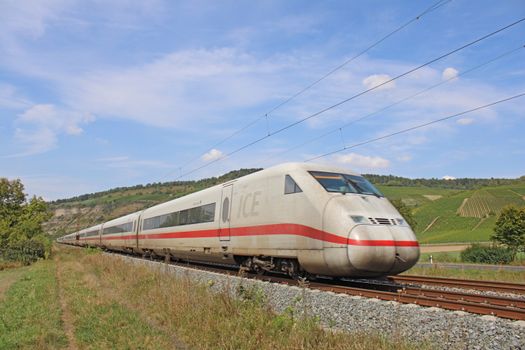
The short-haul flight is dying, and honestly? Good riddance. Across Europe and Asia, high-speed rail has crossed a critical threshold. When total downtown-to-downtown train travel time drops under three hours, air lines systematically fold. France has already legally banned domestic flights on routes reachable by train in under two and a half hours, and Spain is following suit.
If you are still booking short flights between major hub cities, you are losing money, burning time, and inflicting unnecessary torture on yourself. Here are the top train routes around the world that have replaced short flights right now—and how to ride them like a seasoned travel writer.
---
1. Paris to Bordeaux (France)
### The Route That Forced a National Law
- The Old Way: 1-hour flight from Orly (ORY) + 45-minute RER train from central Paris + 90-minute security queue + 40-minute bus from Bordeaux-Mérignac airport into town. Total time: 4 hours, 15 minutes.
- The High-Speed Rail Way: TGV InOui from Paris Montparnasse direct to Bordeaux St-Jean. Total time: 2 hours, 04 minutes.
```
[ Paris Montparnasse ] === 2h 04m (TGV InOui) ===> [ Bordeaux St-Jean ]
```
When France opened the LGV Sud Europe Atlantique line, air passenger traffic between Paris and Bordeaux plummeted by over 70% almost overnight. Today, air routes on this corridor are practically extinct. You board at Montparnasse in central Paris and disembark right at Bordeaux’s Saint-Jean station, a brief tram ride from the historic wine district.
Insider Pro-Tips
* The Seat Secret: Book an upper-deck seat (Haute) on the TGV Duplex. Choose seats in Carriage 1 or 11 for the smoothest ride over the bogies.
* The Food Hack: Skip the onboard cafe bar queue. Pick up a sourdough jambon-beurre sandwich from Maison Pradier inside Montparnasse station before boarding.
* Booking Window: Tickets open 4 months in advance on SNCF Connect. Set an alarm: early-bird Prem's tickets start as low as €19, while walk-up fares hit €120+.
---
2. Madrid to Barcelona (Spain)
### The Battle of the Bullet Trains
- The Old Way: Iberia "Puente Aéreo" flight + Madrid Barajas Metro transit + El Prat airport shuttle. Total time: 4 hours, 30 minutes.
- The High-Speed Rail Way: AVE, Iryo, or Ouigo from Madrid Atocha to Barcelona Sants. Total time: 2 hours, 30 minutes.
The Madrid–Barcelona route used to be one of the busiest air corridors in the world. Enter the AVE (Alta Velocidad Española) and recent market deregulation, which allowed low-cost private operators like Iryo and Ouigo onto the tracks. Competition has driven prices through the floor, offering luxury service for budget fares.
```
+-----------------------------------------------------------------+
| OPERATOR | SPEED | VIBE | INSIDER VALUE |
+-----------------------------------------------------------------+
| Iryo | 192 mph | Sleek Italian Tech | Best First Class/Food |
| AVE | 192 mph | Classic State Rail | Most Frequent Departures|
| Ouigo | 186 mph | Budget Double-Deck | Cheapest Cash Price |
+-----------------------------------------------------------------+
```
Insider Pro-Tips
* The Secret Entrance: Madrid Atocha has two security checkpoints. The main entrance downstairs gets backed up for 30 minutes. Use the upper-level entrance near the tropical garden atrium for a 2-minute breeze-through.
* The Operator Choice: Book Iryo over the national carrier AVE. Their Infinita class includes a hot meal curated by Spanish chefs, served at your leather seat with free-flowing Rioja, often for under €50 if booked 3 weeks out.
---
3. Milan to Rome (Italy)
### The Airline Killer
- The Old Way: Alitalia flight from Linate to Fiumicino + transit on both ends. Total time: 4 hours.
- The High-Speed Rail Way: Trenitalia Frecciarossa 1000 or Italo from Milano Centrale to Roma Termini. Total time: 2 hours, 59 minutes (non-stop direct).
Italy’s national airline, Alitalia, bankrupt and restructured into ITA Airways, owes much of its downfall to the Frecciarossa (Red Arrow). The non-stop executive trains zip between Italy’s financial engine (Milan) and its political capital (Rome) at speeds up to 190 mph. High-speed rail now claims over 80% of all passenger traffic on this route.
```
[ Milano Centrale ] ---> Non-Stop Frecciarossa (2h 59m) ---> [ Roma Termini ]
```
Insider Pro-Tips
* Silence is Golden: When booking Trenitalia, select "Business Area Silenzio." It costs the exact same as regular Business class, but mobile phone calls are strictly forbidden. You get free Illy espresso, a morning newspaper, and total quiet.
* Platform Hack: Milano Centrale’s tracks are long. If you're in Carriages 1–3, give yourself at least 10 minutes just to walk from the security barrier to your train car.
---
4. Tokyo to Osaka / Kyoto (Japan)
### The Gold Standard of Rail
- The Old Way: Flight from Haneda (HND) to Itami (ITM) + security lines + bus transfer. Total time: 3 hours, 45 minutes.
- The High-Speed Rail Way: Tokaido Shinkansen (Nozomi) from Tokyo Station to Shin-Osaka. Total time: 2 hours, 14 minutes.
While Japan’s domestic air travel remains efficient, the Tokaido Shinkansen is legendary for a reason. With departures every 3 to 5 minutes during peak hours and an average annual delay measured in seconds, the bullet train renders flying between Tokyo, Kyoto, and Osaka completely point-free.
```
[ Tokyo Station ] === Nozomi Super-Express (2h 14m) ===> [ Shin-Osaka ]
|
(Views of Mt. Fuji)
```
Insider Pro-Tips
* The Fuji View: Always request Seat E in Economy (or Seat D in Green Car) when booking westbound from Tokyo. This guarantees you a front-row view of Mount Fuji as you blast past Shizuoka roughly 45 minutes after departure.
* Luggage Rules: Oversized baggage (total dimensions over 160cm up to 250cm) requires a dedicated seat reservation with an oversized baggage area. Book this free of charge using the official SmartEX app before you board, or face a ¥1,000 fine at the gate.
* The Bento Protocol: Do not buy food on board; the cart services are being phased out. Grab an Ekimae Bento (station box meal) from the Ekiben Ya Matsuri shop on the main concourse at Tokyo Station.
---
5. London to Paris (UK / France)
### The Tunnel That Erased Heathrow-CDG
- The Old Way: Heathrow (LHR) to Charles de Gaulle (CDG) flight + Security + Border Control + Airport Express trains. Total time: 5 hours, 30 minutes.
- The High-Speed Rail Way: Eurostar from London St Pancras International to Paris Gare du Nord. Total time: 2 hours, 16 minutes.
```
[ London St Pancras ] === Eurostar via Channel Tunnel (2h 16m) ===> [ Paris Gare du Nord ]
```
Flying between London and Paris is widely regarded by frequent travelers as an amateur mistake. Eurostar places you in the heart of both capitals, allowing you to breeze through customs before you board, meaning you walk off the platform directly into Paris ready to explore.
Insider Pro-Tips
* The Check-in Buffer: Eurostar isn't like domestic rail—you must clear border control. Arrive 75 to 90 minutes before departure at St Pancras. The gates close strictly 30 minutes prior.
* Carriage Positioning: Book seats in Carriages 5–8 or 9–12 to sit right near the Cafe Metropole bar car and avoid long walks down the 400-meter-long train upon arrival at Gare du Nord.
* Ticket Hack: Eurostar tickets release up to 330 days in advance. Mid-week departures (Tuesdays and Wednesdays) are routinely 50% cheaper than Friday or Sunday evening services.
---
6. Vienna to Munich (Austria / Germany)
### The Central European Scenic Corridor
- The Old Way: Flight from Vienna (VIE) to Munich (MUC) + S-Bahn transit on both ends. Total time: 3 hours, 50 minutes.
- The High-Speed Rail Way: ÖBB Railjet Express from Wien Hauptbahnhof to München Hauptbahnhof. Total time: 4 hours, 00 minutes.
While the train travel time is slightly longer than three hours, the total door-to-door time beats flying once you factor in Munich Airport’s distance from the city center (a grueling 45-minute S-Bahn ride). Plus, the ÖBB Railjet provides one of the most serene workspace environments in modern transit.
```
[ Wien Hbf ] === ÖBB Railjet Express (4h 00m) ===> [ München Hbf ]
```
Insider Pro-Tips
* Upgrade Secret: Upgrade to ÖBB First Class or Business Class for a nominal fee (€15–€25 over standard fare). You get plush leather reclining seats, at-seat waiter service, and access to the excellent ÖBB Lounge at Wien Hauptbahnhof with complimentary drinks and snacks.
* Wi-Fi Trick: The train switches networks at the German border. If your connection drops, log into the onboard entertainment portal (`railjet.oebb.at`) which streams live onboard camera views of the tracks ahead.
---
Fast-Facts & Logistics Comparison
Here is how high-speed rail stacks up against air travel on these six key corridors:
| Route | Train Time | Air Door-to-Door Time | Avg Train Ticket | Carbon Saved vs Flying | Recommended Operator |
| :--- | :--- | :--- | :--- | :--- | :--- |
| Paris to Bordeaux | 2h 04m | 4h 15m | €19 – €85 | -93% CO₂ | TGV InOui |
| Madrid to Barcelona | 2h 30m | 4h 30m | €18 – €65 | -85% CO₂ | Iryo |
| Milan to Rome | 2h 59m | 4h 00m | €29 – €95 | -89% CO₂ | Trenitalia (Frecciarossa) |
| Tokyo to Osaka | 2h 14m | 3h 45m | ¥13,870 (~$90) | -82% CO₂ | JR Central (Nozomi) |
| London to Paris | 2h 16m | 5h 30m | £49 – £180 | -90% CO₂ | Eurostar |
| Vienna to Munich | 4h 00m | 3h 50m | €29 – €75 | -80% CO₂ | ÖBB Railjet |
---
The Ultimate Rail Hacking Playbook
To make your transition from air travel to high-speed rail completely frictionless, follow these ground rules:
1. The 90-Day Booking Rule
Unlike airlines, which often lower prices close to departure to fill seats, European rail operators use aggressive yield management that rewards early bookers. Tickets for SNCF (France), Trenitalia (Italy), and Renfe (Spain) typically open 60 to 120 days ahead. Booking on the release date gets you premier seats for rock-bottom rates.
2. Ditch Third-Party Aggregators
While apps like Trainline and Omio are good for routing research, always buy directly from the rail operator’s official app (e.g., SNCF Connect, Trenitalia, SmartEX, or ÖBB). If there is a track disruption, strike, or delay, direct bookers receive instant push notifications and automatic compensation processing that third-party platforms delay or obscure.
3. Pack Like a Smart Rail Traveler
Rail travel has no strict liquid limits, meaning you can pack full-sized toiletries, wine bottles, and pocketknives without issue. However, you must be able to lift your own bag overhead. Trains stop at stations for as little as 90 seconds. If you can’t carry your bag up a flight of narrow train carriage stairs in five seconds flat, downsize your luggage.
---
The Verdict: Flying Short-Haul Is No Longer Defensible
When you factor in downtown connectivity, luggage freedom, spacious seating, constant high-speed Wi-Fi, zero airport security circus, and an 80–90% reduction in your carbon footprint, the train isn't just an alternative to flying short-haul. It is superior in every measurable way.
Next time you plan your itinerary across Europe or Asia, bypass the flight aggregator. Book the track, grab your coffee on the platform, and watch the countryside zip past your window at 190 miles per hour.
---