The New Era of Impact Travel: Short-Term Conservation Realities
I stepped off the wooden transfer boat onto the calcified shore of Nusa Penida, my nostrils instantly filling with the sharp, ozone smell of wet brine mixed with low-tide seagrass. The morning air was already heavy at 85°F, humming with the sound of local motorized outriggers. But instead of slingshotting straight to the viral, photo-clogged overhang of Kelingking Beach, I walked three hundred yards down a gravel track to a low-slung, whitewashed cinderblock workshop.
Inside, a marine biologist handed me a pair of surgical callipers, a tub of non-toxic aquatic epoxy, and a two-centimeter fragment of Acropora coral.
"You're not here to paint a school wall or take selfies with tranquilized animals," she told me, pointing toward a submerged nursery grid offshore. "You're here because we have four hundred coral micro-fragments that need to be mounted onto concrete spiders before the noon tide drops. If they aren't secured, today's swell destroys six months of bio-growth."
This is the frontier of the modern eco-sabbatical. For years, short-term conservation travel was plagued by "voluntourism"—feel-good, high-cost trips that prioritized traveler ego over ecological efficacy. However, a quiet revolution has taken place across marine sanctuaries, highland rewilding zones, and cloud forest reserves. Conservation organizations have overhauled their operational frameworks to integrate day-visitors and weekend travelers into rigorous, peer-reviewed data gathering and habitat restoration pipelines.
If you have two days, four days, or a single week, here are seven cutting-edge, short-term conservation projects emerging this year where your presence actually moves the ecological needle.
---
1. The Marine Bio-Matrix Coral Reef Restoration (Nusa Penida, Indonesia)
```
[Coral Nursery Grid] ---> [Micro-fragmentation Station] ---> [Deep Reef Outplanting]
```
Traditional coral restoration relied on slow-growing fragments that took years to form colonies. Nusa Penida’s newly launched Ocean Matrix Initiative uses micro-fragmentation—a process where corals are cut into tiny pieces to stimulate accelerated tissue regeneration—and relies on short-term visitors to handle the delicate, labor-intensive mounting process.
What You Do in 48 Hours
After a 90-minute technical brief on coral taxonomy, visitors assist marine scientists in the land-based nursery. You carefully cut resilient micro-colonies, apply marine epoxy to bio-ceramic hex-plugs, and log tissue health metrics into the program’s database. Advanced divers can join afternoon drop-offs to affix these hex-plugs directly to degraded reef frameworks at depths of 8 to 12 meters.
- The Field Experience: The work is delicate and intensely focused. Sitting at an outdoor stainless-steel bench, ocean spray dampening your hair, you carefully handle living marine invertebrates while tropical damselfish dart through the holding tanks beside you.
- Pro-Tip: Book the early Tuesday slot. The morning swell in the Lombok Strait is calmest between 6:30 AM and 9:00 AM, providing the clearest water clarity for afternoon outplanting dives.
- Scientific Impact: Short-term visitors increase the program's weekly planting yield by 300%, directly accelerating the restoration of Penida’s marine protected area (MPA).
---
2. The Caledonian Forest Bio-Acoustic Rewilding (Glen Affric, Scotland)
Deep within the Scottish Highlands, the ancient Caledonian Pinewood ecosystem survives in fragmented pockets. The Affric Bio-Acoustic Project, launching its short-stay volunteer tracking track this spring, relies on high-density audio monitoring to track the re-emergence of pine martens, red squirrels, and capercaillie.
```
[AudioMoth Acoustic Sensor]
│
┌───────────────┴───────────────┐
▼ ▼
[Native Pine Canopy] [Deadwood Micro-Habitat]
│ │
└───────────────┬───────────────┘
▼
[Spectrogram Data Analysis]
```
What You Do in a 3-Day Shift
Equipped with handheld GPS units and low-frequency AudioMoth bio-acoustic recorders, visitors trek through peat bogs and Scots pine stands to swap SD cards, recalibrate sensor arrays, and run field audio sweeps. Evening sessions are spent in the timber field station using spectrogram software to identify species calls from the day’s recordings.
- The Field Experience: You spend your hours breathing pine-scented air and wading through knee-deep heather. The ground feels sponge-soft beneath your boots, and the sky shifts constantly from dark slate gray to sudden beams of golden amber light.
- Pro-Tip: Wear tall, waterproof gaiters over broken-in gore-tex boots. The secret path through the lower bog behind the old shepherd's hut avoids two miles of thigh-burning mud.
- Scientific Impact: Visitors maintain over 150 passive acoustic sensors across a 10,000-hectare corridor, compiling baseline data critical for future Eurasian lynx reintroduction studies.
---
3. Desert Elephant Hydration Corridor Tech (Damaraland, Namibia)
In the arid scrublands of Namibia’s Kunene region, free-roaming desert-adapted elephants frequently clash with local pastoral communities over water infrastructure. The Kunene Coexistence Project has opened 3-day access points for travelers to construct protective stone barriers around rural wells and install thermal smart-cameras at water points.
```
+-------------------------------------------------------------+
| COMMUNITY WATER INFRASTRUCTURE |
| |
| [Solar Pump] <---> [Dry-Stone Barrier] <---> [Elephant] |
| │ |
| [Thermal Camera] |
+-------------------------------------------------------------+
```
What You Do on a 3-Day Mission
Visitors work alongside local Damara field rangers. Tasks include hauling local basalt rocks to build heavy dry-stone walls around solar pump units, retrofitting water troughs with elephant-safe access pipes, and mounting solar thermal imaging cameras to track night-time herd movements.
- The Field Experience: The smell of hot, dry earth and crushed mopane leaves fills your lungs. As the sun drops behind red granite kopjes, you sit on the back of an open-topped Land Cruiser, watching a matriarch and her calf drink peacefully from a newly fortified trough.
- Pro-Tip: Bring heavy-duty goat-hide work gloves. Local basalt is sharp, and standard canvas work gloves shred within three hours of rock hauling.
- Scientific Impact: Physical infrastructure built by short-term teams reduces human-elephant conflict incidents by 85% in targeted communal conservancies.
---
4. Cloud Forest Epiphyte & Bio-Acoustic Mapping (Mashpi Reserve, Ecuador)
The Chocó rainforest is one of the most biodiverse places on Earth, yet its steep, cloud-shrouded terrain makes long-term monitoring logistically challenging. The Mashpi Cloud Forest Initiative now accepts short-term visitors for 1- to 3-day micro-expeditions focused on high-canopy epiphyte health and amphibian bio-acoustics.
```
[Canopy Sky-Bike / Rope Rig]
│
▼
[Micro-Climate Data Loggers]
│
▼
[Orchid/Moss Density Measurement]
│
▼
[Amphibian Population Index]
```
What You Do in 24 to 72 Hours
Accompanied by resident parabiologists, you traverse the canopy using ascending ropes and specialized sky-bikes. You assist in servicing micro-climate data loggers strapped to ancient trees, measuring humidity and temperature variations, and logging canopy orchid density—a key indicator of overall rainforest health.
- The Field Experience: It is an intense sensory environment: cool mist clinging to your skin, the smell of damp moss and wild ginger, and a constant background chorus of glass frogs, toucans, and cascading water.
- Pro-Tip: Pack three times as many silica gel packets as you think you need. Store all your camera gear and field notebooks in dry bags; the relative humidity here rarely drops below 92%.
- Scientific Impact: Short-term data collection helps track real-time micro-climate shifts, contributing directly to international tropical forest resilience modeling.
---
5. Coastal Mangrove Bio-Shield & Turtle Patrol (Osa Peninsula, Costa Rica)
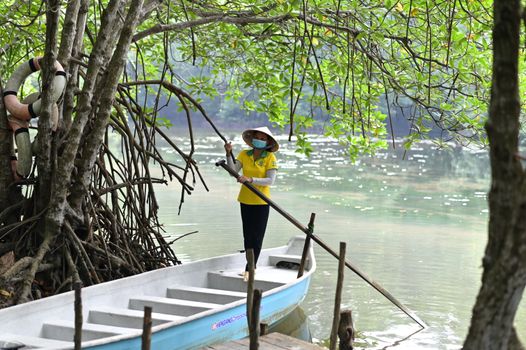
Costa Rica’s Osa Peninsula houses 2.5% of the world’s biodiversity. The newly expanded Osa Coastal Buffer Project offers weekend conservation tracks where travelers participate in mangrove hydro-restoration by day and sea turtle nesting patrols by night.
```
[Day Phase: Mangrove Channel Digging] ---> [Night Phase: Infrared Beach Patrol] ---> [Hatchery Relocation]
```
What You Do in a 48-Hour Loop
* Day Phase (07:00 - 11:00): Clear debris from obstructed tidal channels and plant red mangrove seedlings (Rhizophora mangle) along coastal estuaries to prevent shoreline erosion.
* Night Phase (21:00 - 01:00): Walk non-illuminated stretches of beach alongside marine biologists to locate nesting Olive Ridley and Pacific Green sea turtles, measure carapace dimensions, and relocate exposed egg clutches to safe hatcheries.
```
+-------------------------------------------------------------+
| OSA COASTAL RECOVERY TIMELINE |
| |
| Day 1: Tidal Channel Digging & Seedling Placement |
| Night 1: Beach Patrol & Nest Relocation |
| Day 2: Hatchery Thermal Index & Data Logging |
+-------------------------------------------------------------+
```
- The Field Experience: Walking a black sand beach under a cloudless tropical sky, guided only by the ambient moonlight and red headlamp beams, watching a 100-pound sea turtle deposit her eggs in the warm sand.
- Pro-Tip: Use a headlamp with a dedicated red LED mode (minimum 620nm wavelength). White light disorients female turtles and disrupts nesting behavior.
- Scientific Impact: Short-term patrol units protect over 90% of targeted nests from illegal poaching and natural tide inundation during peak nesting seasons.
---
6. Satoyama Micro-Forest & Native Seed Sanctuary (Kyoto Fringes, Japan)
In the rural hills surrounding Kyoto, the traditional Satoyama—a mosaic of mixed forests, rice paddies, and streams—is disappearing as rural populations decline. The Kameoka Satoyama Collective offers day-long and weekend micro-immersions focused on restoring native oak-pine forest balances and banking endangered regional flora seeds.
```
[Overgrown Bamboo Thicket] ---> [Selective Manual Thinning] ---> [Light Penetration Restored] ---> [Native Seedling Sprouting]
```
What You Do in a 1- to 2-Day Workshop
Working alongside local elders and forestry conservationists, you selectively clear fast-growing invasive moso bamboo that chokes native Japanese red pine (Pinus densiflora) and oak groves. You collect, clean, and catalog native wildflower and tree seeds for the regional community seed bank.
- The Field Experience: The dry sound of bamboo leaves rustling overhead, the smell of fresh wood shavings and woodsmoke, and the rhythmic sound of hand saws filling the quiet forest valley.
- Pro-Tip: Wear traditional split-toe jika-tabi boots or light trail runners with exceptional grip. The damp, mossy clay slopes of Kameoka require precise foot placement.
- Scientific Impact: Manual thinning by short-term participants increases forest floor light penetration by 40%, directly enabling dormant native seed banks to germinate naturally.
---
7. The Sub-Antarctic Marine Megafauna Census (Fjordland, New Zealand)
Doubtful Sound in Fiordland is a complex marine ecosystem home to one of the world's southernmost populations of bottlenose dolphins, alongside fur seals and rare Fiordland crested penguins. The Fiordland Marine Research Trust has introduced day-pass scientific berths aboard their survey vessels for travelers interested in marine mammal tracking.
```
[Survey Boat Track]
│
┌────────┴────────┐
▼ ▼
[Photo-ID] [Hydrophone Audio]
│ │
└────────┬────────┘
▼
[Spatial Distribution Map]
```
What You Do on a 1-Day Survey
Visitors spend 8 hours aboard an active research vessel taking photo-identification shots of dolphin dorsal fins, recording surface behaviors, and lowering hydrophones into deep fjord basins to record underwater vocalizations.
- The Field Experience: Deep, ink-black ocean waters framed by vertical granite cliffs draped in ancient rainforest. The silence of the fjord is broken only by the mist-burst blow of a surfacing dolphin alongside the vessel.
- Pro-Tip: Bring a DSLR or mirrorless camera with a minimum 200mm telephoto lens and high shutter speed capability (1/2000s). Fin identification requires razor-sharp focus on small, unique surface notches.
- Scientific Impact: Visitor photo uploads feed directly into an AI-assisted fin-matching database that tracks long-term population health, movement patterns, and birth rates without requiring invasive tagging.
---
Quick Logistics & Budget Master Guide
| Project & Location | Min. Duration | Est. Cost (USD) | Primary Focus | Best Time to Visit | Primary Logistics |
| :--- | :--- | :--- | :--- | :--- | :--- |
| Ocean Matrix<br>Nusa Penida, Indonesia | 1 Day | $65 - $110 | Coral Restoration & Micro-fragmentation | May – October | Fast-boat from Sanur, Bali (45 min) to Toyapakeh harbor. |
| Affric Rewilding<br>Glen Affric, Scotland | 3 Days | $280 - $450 | Bio-Acoustics & Mammal Tracking | April – September | Train from Inverness to Beauly; pre-arranged project 4x4 pickup. |
| Kunene Project<br>Damaraland, Namibia | 3 Days | $520 - $800 | Elephant Coexistence & Infrastructure | May – November | 4x4 rental from Windhoek (7 hr drive) or light aircraft to Doro Nawas. |
| Mashpi Reserve<br>Chocó Cloud Forest, Ecuador | 2 Days | $350 - $600 | Canopy Epiphytes & Bio-Acoustics | Year-round | 3.5-hour overland drive from Quito via private transfer or shuttle. |
| Osa Buffer<br>Osa Peninsula, Costa Rica | 2 Days | $180 - $320 | Mangrove Renewal & Sea Turtle Patrol | July – December | Domestic flight from San José to Puerto Jiménez; taxi to field station. |
| Kameoka Satoyama<br>Kyoto Fringes, Japan | 1 Day | $80 - $140 | Forest Thinning & Native Seed Banking | March – May / Oct – Nov | San-in Line train from Kyoto Station to Kameoka (20 min); local bus. |
| Fiordland Research<br>Doubtful Sound, New Zealand | 1 Day | $210 - $340 | Marine Mammal Photo-ID & Hydro-Acoustics | November – March | Bus from Te Anau to Manapouri; ferry across Lake Manapouri to Wilmot Pass. |
---
How to Audit a Short-Term Conservation Project
Before booking any short-term eco-trip, use this four-point framework to ensure the organization operates with scientific integrity:
```
[FINANCIAL TRANSPARENCY]
│
▼
[COMMUNITY DIRECTION] <---> [ETHICS AUDIT] <---> [DATA UTILITY]
▲
│
[NO ANIMAL TOUCHING]
```
- Data Utility: Does the project feed its findings into open-access databases, peer-reviewed journals, or governmental policy bodies? If data ends in an internal ledger, it's marketing—not science.
- Community Direction: Is the initiative led or co-managed by local stakeholders? Ethical projects compensate local guides, rangers, and field staff fairly.
- No Forced Interaction: Run from projects offering direct contact with wild animals (e.g., holding baby animals, lion walking, feeding wild mammals). Ethical wildlife conservation focuses on habitat maintenance and non-invasive observation.
- Financial Transparency: The project should clearly break down where your fee goes—equipment maintenance, scientist stipends, and local community infrastructure funding should take clear priority over administrative overhead.
---
Final Thoughts
Travel doesn't have to be a net-negative extraction of local resources. By shifting our mindset from consumption to participation, a short vacation can contribute directly to long-term biodiversity preservation. Whether you spend a single morning gluing coral fragments in the Lombok Strait or four days tracking acoustic signals through the Scottish rain, these emerging short-term projects prove that you don't need a degree in ecology—or months of spare time—to make a real contribution to our planet's future.
---