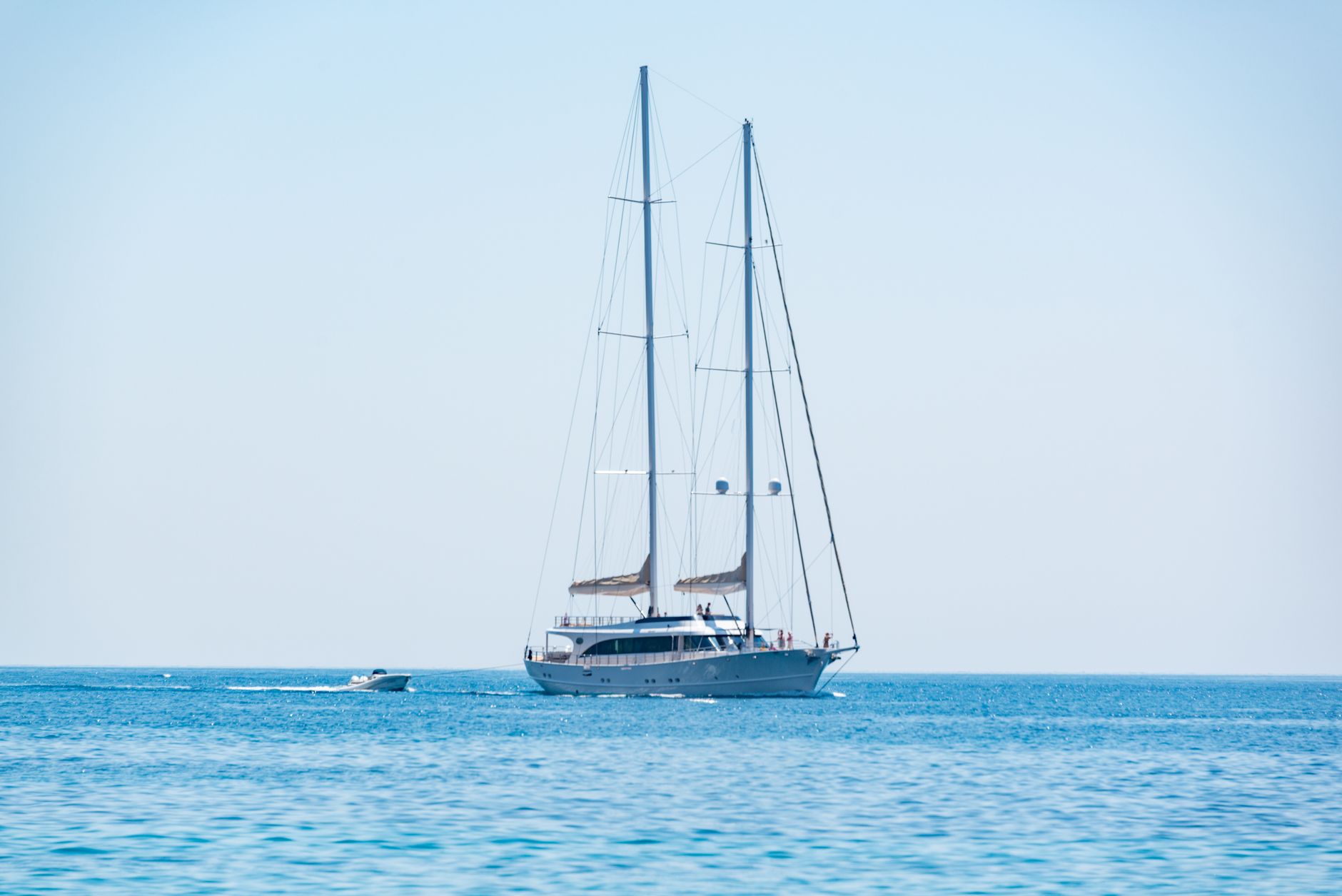
The Wind-Salty Shift: My Departure from the Mega-Ship Era
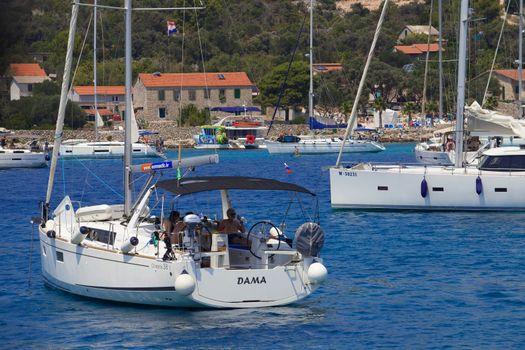
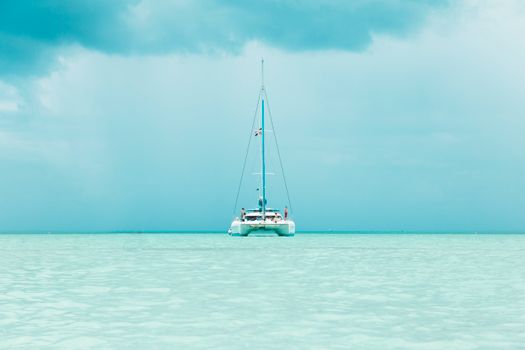
I stepped off the rickety wooden tender onto the oiled teak deck of a 46-foot Lagoon catamaran, anchored off the southern lip of Kastos—a Greek island so small it doesn't even have a gas station. The sun was dropping behind the limestone cliffs of Kalamos, turning the Ionian Sea into a sheet of liquid amber.
The air didn't smell like diesel exhaust or the reefer-deck ozone of a 15-story ocean liner. It smelled of crushed wild rosemary, sea salt, and the sweet garlic sizzling from a tiny shore-side tavern where our skipper, Nikos, had reserved our table by calling the owner on WhatsApp five minutes earlier.
```
[Mega-Cruise Ship Port Call] [Boutique Sailing Adventure]
5,000 Passengers 6–12 Crew & Guests
Concrete Cruise Terminal Secluded Anchorages
Regimented 4-Hour Shore Excursions Spontaneous Island Hopping
Engine Exhaust & Buffet Lines Wind Power & Local Taverns
```
Two years ago, I stood on the 12th deck of a major cruise ship outside Santorini, wedged shoulder-to-shoulder with 4,000 people fighting for a turn at the soft-serve machine while watching three other mega-ships dump an army of 12,000 tourists onto a tiny dock below. It felt less like travel and more like an industrial logistics experiment.
That evening in Kastos, standing on our catamaran deck with eight fellow travelers, I realized the tide had turned. Sailing adventures as an alternative to cruises are emerging rapidly this year, reshaping how conscious, adventure-hungry travelers experience the world's blue spaces.
---
The Great Maritime Pivot: Why Travelers Are Ditching Floating Cities
The cruise industry is facing a massive cultural and environmental reckoning. Major ports across Europe and the Americas are placing strict caps on large-scale vessels. Venice has banned big ships from its historic lagoon, Amsterdam is moving its cruise terminal out of the city center, and Dubrovnik limits port calls to protect its medieval walls.
```
+--------------------------------------------------------------------+
| THE OCEAN VOYAGE REVOLUTION |
+--------------------------------------------------------------------+
| TRADITIONAL MEGA-CRUISE BOUTIQUE SAILING ADVENTURE |
| - Fixed, rigid itineraries - Wind-dependent flexible routes |
| - Massive environmental footprint - Minimal carbon footprint |
| - Commercialized tourist hubs - Access to shallow, hidden bays |
| - Onboard casinos & buffets - Farm-to-table coastal dining |
+--------------------------------------------------------------------+
```
Concurrently, traveler priorities have fundamentally pivoted toward slow travel, low-impact footprint, and hyper-local immersion.
The Shallow-Draft Advantage
A 220,000-ton cruise ship requires deep-water harbors, concrete piers, and massive handling infrastructure. A 45-foot sailing yacht or catamaran draws between three and seven feet of water.
This mechanical reality unlocks a totally different map:
* You anchor in hidden azure lagoons inaccessible to anything larger than a sea turtle.
* You tie off stern-to-pier at family-run island harbors.
* You step directly off the swim platform into crystal-clear waters without waiting for an hour-long tender queue.
Environmental Stewardship
Modern sailing charters leverage wind power for up to 80% of their transit, supplemented by solar-array battery banks that power onboard refrigeration and lights. Instead of dumping heavy wastewater in open seas, modern expedition yachts utilize advanced filtration and zero-waste protocols, leaving fragile marine ecosystems undisturbed.
---
Decoding the Fleet: 4 Ways to Sail Without Buying a Yacht
You don't need to know how to tie a bowline, read a nautical chart, or spend a million dollars to join this maritime movement. The modern charter market has evolved into four accessible tiers tailored to every experience level and budget.
```
SAILING ADVENTURE MODELS
|
+-----------------+----------+----------+-----------------+
| | | |
By-the-Cabin Skippered Private Flotilla Hands-On
Charters Charters Sailing Expeditions
(Best for Solos) (Best for Groups) (Social Focus) (Skill Building)
```
1. By-the-Cabin Charters (The Solo & Couple Hack)
Ideal for individual travelers or duos who want the intimate sailboat experience without paying for an entire vessel. You reserve a private double cabin with an en-suite bathroom aboard a larger catamaran (45 to 58 feet).
A professional skipper handles navigation, while an onboard cook prepares breakfast, lunch, and fresh local snacks. You share the public deck space with four to six like-minded travelers.
2. Skippered Private Charters (The Friend & Family Play)
If you have a group of four to eight people, renting a whole yacht with a dedicated skipper is often cheaper per person than booking mid-tier balconies on a luxury cruise. You collaborate with your captain each morning to set a custom itinerary based on weather, wind, and personal preferences.
> Pro-Tip: Ask your charter company for a "Skipper/Cook Combo" to handle both sailing mechanics and meal preparation, leaving your group free to focus entirely on relaxation and coastal exploration.
```
+-------------------------------------------------------+
| SKIPPERED CHARTER COST BREAKDOWN (FAMILY OF 6) |
+-------------------------------------------------------+
| 45 ft Catamaran Rental (Peak Season): $4,800/wk |
| Professional Skipper Fee: $1,400/wk |
| Fuel, Water & Port Fees: $600/wk |
| Groceries & Provisions: $700/wk |
+-------------------------------------------------------+
| TOTAL: $7,500 ($1,250 per person / week) |
+-------------------------------------------------------+
```
3. Flotilla Sailing (Social Travel with a Safety Net)
For those who have basic bareboat sailing certifications (like RYA Day Skipper or ASA 104) but lack confidence in unfamiliar waters, flotillas offer the ultimate compromise. You skipper your own 35-to-45-foot yacht as part of a fleet of 5 to 10 boats guided by a lead support vessel carrying a master skipper and marine mechanic.
4. Hands-On Expedition Vessels (For Aspiring Mariners)
For travelers seeking true ocean adventure, traditional tall ships, converted research vessels, and blue-water expedition boats offer hands-on voyages. Passengers take shifts at the helm, haul halyards, stand night watches, and learn astronomical navigation under the guidance of a seasoned crew.
---
4 Breakout Sailing Routes Taking Over This Year
```
[Croatia: Dalmatian Outer Ring]
\
\ [Greece: Ionian Outer Arc]
\ /
\ /
[Grenadines Trail]------- + -------[Whitsunday Passage]
```
Forget standard cruise stops like St. Thomas or Cozumel. These four emerging sailing routes offer raw beauty, deep cultural connection, and pristine waters.
1. Greece’s Ionian Outer Arc: Lefkada to Kastos & Kalamos
While large cruise liners jam into Santorini and Mykonos, the southern Ionian islands remain a tranquil sanctuary of green pine forests meeting turquoise water.
```
IONIAN OUTER ARC ROUTE
[Lefkada Base] ---> [Meganisi Coves] ---> [Kalamos Village] ---> [Kastos Island]
```
- The Route: Start at Marina Lefkas, sail down through the sheltered Meganisi Channel, clear the dragon-backed ridgeline of Kalamos, and drop anchor off Kastos.
- The Highlight: Anchor off the deserted fishing village of Port Leone on Kalamos. Earthquake-abandoned in 1953, its stone cottages are overgrown with wild figs, while its 19th-century church is still lovingly tended by local fishermen.
- Insider Dining: Walk up the stone steps in Kastos to Windmill Bar, a converted 19th-century olive mill, for sharp local tsipouro and grilled octopus overlooking the archipelago.
```
+-------------------------------------------------------------------+
| LOCAL INSIGHT: IONIAN SEA |
| "The Maistros thermal wind blows reliably from the NW at 12 PM |
| like clockwork, dropping completely by 6 PM. It provides smooth, |
| flat-water sailing without heavy sea swells." |
+-------------------------------------------------------------------+
```
2. The Caribbean’s Grenadine Chain: Bequia to Carriacou
Skip the crowded mega-ports of St. Maarten and St. Thomas. The Grenadines offer authentic West Indian island vibes reachable almost exclusively by small sailcraft.
```
GRENADINE CHAIN ROUTE
[Bequia] ---> [Mustique] ---> [Tobago Cays] ---> [Mayreau] ---> [Carriacou]
```
- The Route: Embark from St. Vincent or Bequia, sweeping down south through Mustique, Mayreau, the uninhabited Tobago Cays Marine Park, and across the channel to Carriacou.
- The Highlight: Anchoring behind the horseshoe reef of the Tobago Cays. You're surrounded by four uninhabited islets where green sea turtles graze in knee-deep water right beneath your boat's swim ladder.
- Insider Secret: Skip the commercialized beach bars on Union Island. Head instead to Salt Whistle Bay on Mayreau and order fresh spiny lobster grilled directly over split coconut husks by local chef Righteous.
3. Croatia’s Outer Dalmatian Ring: Vis, Lastovo, and Biševo
Croatia’s mainland coast near Split and Dubrovnik can feel choked with tourists in summer. The outer islands of Vis and Lastovo—formerly restricted military zones—offer pristine, untouched Croatian culture.
```
DALMATIAN OUTER RING ROUTE
[Split] ---> [Vis Town / Komiža] ---> [Biševo Blue Cave] ---> [Lastovo Archipelago]
```
- The Route: Depart Trogir or Split, bypassing crowded Hvar Town to make a long starboard tack out to Vis, then push further offshore to the remote Lastovo Archipelago Nature Park.
- The Highlight: The hidden cold-war submarine tunnels near Parja Bay on Vis. You can nose a 40-foot sailboat inside these massive military bunkers cut directly into limestone cliffs.
- Pro-Tip: Visit the famous Blue Cave on Biševo at precisely 11:30 AM. When sunlight hits the underwater limestone opening, it floods the sea cave with an ethereal, glowing electric-blue light.
```
+-------------------------------------------------------------------+
| LOCAL INSIGHT: DALMATIAN COAST |
| "Order 'Peka' (lamb or octopus slow-cooked under a heavy iron bell |
| covered in embers) at least 4 hours in advance at Konoba Magazin |
| in Stončica Bay. They only cook what they catch that morning." |
+-------------------------------------------------------------------+
```
4. The Whitsundays Inner Track: Hook Island to Whitehaven Beach, Australia
The Great Barrier Reef's inner waters offer some of the most protected, high-definition tropical sailing on Earth.
```
WHITSUNDAY INNER TRACK
[Airlie Beach] ---> [Hook Island Reefs] ---> [Cid Harbour] ---> [Whitehaven Beach]
```
- The Route: Set sail from Coral Sea Marina at Airlie Beach, traversing Whitsunday Passage to navigate the sheltered bays of Hook Island, Whitsunday Island, and South Molle.
- The Highlight: Dropping anchor at Tongue Inlet and walking up through the rainforest to Hill Inlet lookout, watching the shifting swirling sands of Whitehaven Beach as the tide changes.
- Cultural Connection: Explore ancient marine rock art galleries created by the indigenous Ngaro people in the sea caves of Nara Inlet on Hook Island.
---
Essential Packing & Onboard Etiquette: The Sailor's Handbook
Sailing aboard an intimate 45-foot yacht requires a subtle shift in mindset compared to checking into a resort hotel or boarding a mega-cruise ship.
```
PACKING CHECKLIST: BOAT LIFE vs. CRUISE LIFE
[YES] Soft-Sided Duffels (Folds Flat) [NO] Hard-Shell Suitcases
[YES] Non-Marking Deck Shoes [NO] Dark-Sled Stiletto Heels
[YES] Reef-Safe Mineral Sunscreen [NO] Chemical Spray Sunscreens
[YES] Quick-Dry Marine Towels [NO] Bulky Terry-Cloth Towels
```
1. Ditch the Hard Luggage
Storage on a sailboat is cleverly engineered around curved hulls and under-berth lockers. Hard-shell suitcases are impossible to stow and will permanently block your cabin floor space. Bring a collapsible, soft-sided duffel bag that can be folded completely flat and tucked under your mattress.
2. Tread Lightly on Water & Power
While modern catamarans feature water-makers and solar panels, freshwater tanks are finite.
* Take quick "navy showers" (wet down, turn off tap, soap up, rinse off).
* Charge devices during daytime engine runs or high-sun hours when solar panels operate at peak output.
3. Master the Marine Head (Toilet)
Marine plumbing is delicate. The Golden Rule of sailing: Do not put anything into the marine toilet unless you have eaten it first. Paper products, hygiene items, and wipes go into designated sealed sanitary bins, never down the pump assembly.
---
Quick Facts & Planning Matrix
| Metric / Parameter | By-the-Cabin Charter | Private Skippered Yacht | Expedition Tall Ship | Traditional Mega-Cruise |
| :--- | :--- | :--- | :--- | :--- |
| Est. Cost (Per Person/Wk) | $1,500 – $2,800 | $1,200 – $2,200 (Group of 6) | $2,000 – $4,500 | $800 – $3,500 |
| Passenger Count | 6 – 12 guests | Your private group (4-8) | 15 – 40 guests | 3,000 – 6,500 guests |
| Port Accessibility | Shallow coves, hidden piers | Unrestricted shallow bays | Deep bays & historic quays | Commercial industrial ports |
| Sustainability Factor | Very High (Wind power) | Very High (Wind power) | Extreme (100% Sail driven) | Low (Heavy fuel oil consumption) |
| Flexibility Index | High (Weather dependent) | Extreme (Custom daily plan) | Moderate (Set ocean routes) | Zero (Rigid timetable) |
| Best Time to Visit | May–Oct (Med) / Nov–Apr (Carib) | May–Oct (Med) / Nov–Apr (Carib) | Year-round (Global routes) | Year-round |
---
Strategic Pro-Tips for First-Time Sailors
```
SMOOTH SAILING: 4 GOLDEN RULES
+------------------------------------------------------------------+
| 1. BOOK EARLY: Small-vessel fleets sell out 6-9 months out. |
| 2. PACK LIGHT: You only wear half of what you pack. |
| 3. TAME SEASICKNESS: Take Meclizine 2 hours BEFORE leaving dock. |
| 4. TRUST YOUR SKIPPER: Weather dictates the ultimate route. |
+------------------------------------------------------------------+
```
- Prevent Seasickness Early: Do not wait until you feel nauseous. If you are prone to motion sensitivity, take Meclizine (Dramamine Less-Drowsy) or apply a Transderm-Vscop patch two hours before setting sail. Catamarans offer dual-hull stability, drastically reducing rolling motions.
- Understand the Tip Culture: Marine skippers work long hours managing safety, navigation, and guest comfort. It is customary to tip your skipper and cook 10% to 15% of the total charter cost at the end of the week.
- The "Hidden Entrance" Rule for Anchorages: When entering a crowded island bay, never anchor directly in line with the harbour ferry track or right in front of the local boat ramp. Ask your skipper to anchor on the quiet outer edge—you’ll get cleaner water for swimming and zero morning wake disruption.
---
Final Verdict: Taking Back the Ocean
The golden age of mindless ocean travel is coming to a close. Sailing adventures as an alternative to cruises are emerging as the definitive choice for travelers who value authenticity over buffets, wind power over smoke stacks, and silent turquoise bays over crowded, tourist-clogged ports.
Whether booking a single berth on a Mediterranean catamaran or gathering close friends to charter a vessel through the Grenadines, stepping onto a sailboat restores what ocean travel was always meant to be: a thrilling, intimate, and deeply respectful dance with nature.
---