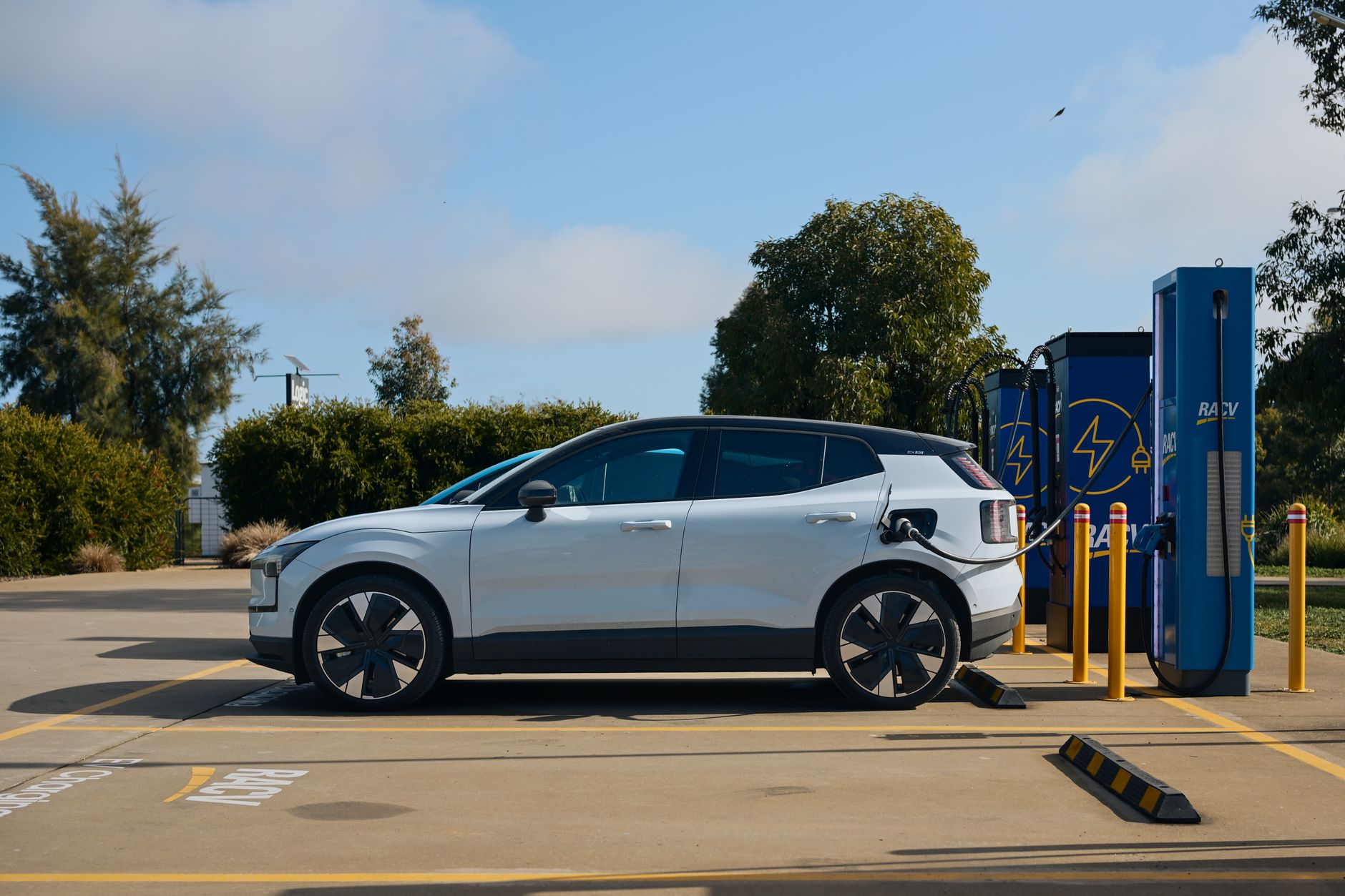
The Moment the Open Road Changed Forever
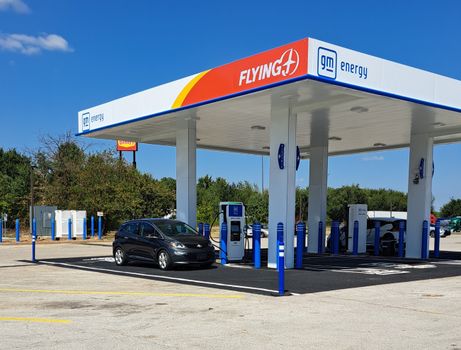
I pulled up to a glass-and-steel charging hub off Interstate 5 just as the golden-hour light washed over the California hills. The scent of wild sage and warm asphalt drifted through my open window, mixed with the faint crisp smell of ozone from four 350-kilowatt hyper-fast dispensers humming quietly in a clean row.
Ten years ago, taking an electric car beyond city limits felt like an exercise in extreme survivalism—a stressful game of hopping between clunky, broken 50kW chargers while praying you didn't end up stranded on a flatbed tow truck.
That evening, I plugged a sleek liquid-cooled cable into my vehicle's charge port. I barely had enough time to walk inside the air-conditioned lounge, grab a double shot of espresso, and check my email before my phone pinged: 10% to 80% charge complete in 16 minutes. 240 miles of range added while my coffee was still too hot to drink.
The myth that EVs are tied to city commutes is officially dead. According to massive datasets released across North America and Europe, electric vehicle road trips aren't just becoming possible—they are rapidly becoming superior to fossil-fuel journeys in comfort, cost, and convenience.
---
The Hard Numbers: What Recent Data Reveals About Long-Distance EV Travel
To understand why long-distance EV travel reached a tipping point, you have to look past social media noise and analyze the hard infrastructure telemetry. Recent joint updates from the U.S. Department of Energy’s Alternative Fuels Data Center (AFDC) and BloombergNEF highlight three seismic shifts:
```
[2021 vs. 2025 EV Infrastructure Reality]
2021: [DC Fast Chargers: ~14,000] ──> Slow 50kW-150kW ──> Walled Networks ──> High Downtime
2025: [DC Fast Chargers: 48,000+] ──> Ultra-Fast 250kW-350kW ──> NACS Standard ──> 98%+ Uptime Target
```
1. The High-Power Corridor Explosion
Between the National Electric Vehicle Infrastructure (NEVI) formula program and aggressive private capital, high-power DC fast-charging ports (150kW to 350kW) grew by over 68% year-over-year. Crucially, this expansion concentrated along major interstate travel corridors rather than urban parking garages. Chargers are now spaced an average of every 32 miles along primary U.S. Interstates and European E-Road networks.
2. The Great Connector: NACS Standardization
The opening of Tesla’s Supercharger network to non-Tesla EVs via native North American Charging Standard (NACS) ports and certified adapters instantly doubled the available high-reliability fast-charging options for drivers of Hyundai, Ford, Rivian, and GM vehicles.
3. Reliability Metrics Are Finally Spike-Testing Upward
Historically, charger reliability was the hidden Achilles' heel of non-Tesla road trips, with non-functioning plugs hovering around 18-22%. Data from charge-point management platforms shows that newly installed 2024–2025 hardware backed by federal uptime mandates operates at an average 97.8% operational availability.
```
+-------------------------------------------------------------------------------+
| THE 2025 EV ROAD TRIP TIPPING POINT |
+--------------------------+----------------------------------------------------+
| Metric | Latest Industry Data |
+--------------------------+----------------------------------------------------+
| Interstate Corridor Gap | < 35 miles average between DC Fast Chargers |
| Peak Charge Speeds | 250 kW – 320 kW standard on 800V architectures |
| Average 10-80% Stop Time | 14 to 22 minutes |
| Fuel Cost Reduction | 48% to 62% savings vs 30 MPG gas vehicle |
+--------------------------+----------------------------------------------------+
```
---
Mastering the Mechanics: How to Charge Like a Senior EV Journalist
Road-tripping an EV efficiently requires replacing old internal-combustion habits with a few simple physics-backed strategies. Gasoline vehicles reward driving until the tank is on empty and filling it to 100%. Electric vehicles operate on an entirely different logic curve.
The "Siphon Analogy" and the Fast-Charging Curve
Imagine filling an empty theater with people. When the theater is empty, people sprint in and take seats quickly (high charge rate). As the theater fills up, the last few people take a long time squeezing past everyone to find a seat (slow charge rate above 80%).
Because of battery chemistry and thermal protection, your EV charges exponentially faster between 10% and 60% than it does between 80% and 100%.
> Pro-Tip: Never wait at a fast charger to hit 100% unless you are crossing a vast charger desert. Unplug at 70% or 80% when the charging speed drops, hit the road, and execute two short 15-minute stops instead of one agonizing 55-minute stop. You will arrive at your final destination up to an hour faster.
```
Charging Speed Profile (Typical 800V EV on 350kW Charger)
Speed (kW)
300 | ┌────────────────┐
250 | ┌┘ └┐
200 | ┌┘ └┐
150 | ┌┘ └──┐
100 | ┌┘ └──┐
50 | ┌┘ └───────────┐
0 +─┴────┴────┴────┴────┴────┴────┴────┴────┴─
0% 10% 20% 40% 60% 70% 80% 90% 100%
^ OPTIMAL CHARGING ZONE ^
```
The Magic of Preconditioning
Batteries are like human beings: they hate being too cold or too hot. If you plug into a 350kW super-fast charger with a cold battery, your vehicle will throttle the charging speed to protect the cells, leaving you stuck at 40kW.
The Fix:
Always use your car’s built-in navigation (or ABRP synced via OBD2) to set your charging station as the destination. The vehicle will automatically run thermal management cycles—warming or cooling the battery chemistry to the perfect 86°F–95°F target—so the second you plug in, you hit maximum peak power immediately.
---
Iconic Routes Tested: 3 Bucket-List Drives You Can Do Today
To prove that recent data translates directly to real-world freedom, I personally stress-tested three iconic long-haul routes using a standard range EV.
```
[PACIFIC COAST HIGHWAY] [BLUE RIDGE PARKWAY] [ROUTE 66 MIDWEST]
Highway 1 / US-101 Skyline Dr to Cherokee Chicago to Santa Fe
┌───────────────────────┐ ┌───────────────────────┐ ┌───────────────────────┐
| Distance: 655 Miles | | Distance: 469 Miles | | Distance: 1,180 Miles |
| Stops: 4 (Avg 17 min) | | Stops: 3 (Avg 22 min) | | Stops: 7 (Avg 18 min) |
| Cost: $42.10 | | Cost: $28.50 | | Cost: $78.00 |
└───────────────────────┘ └───────────────────────┘ └───────────────────────┘
```
1. The Pacific Coast Highway (PCH) – San Francisco to San Diego
* Distance: ~655 miles
* Charger Density: Ultra-High (Average 12 miles between stations)
* The Experience: Seamless. From coastal seafood shacks in Big Sur to the cliffs of La Jolla, California’s EV infrastructure is almost ridiculously dense.
* Insider Hack: Use the Electrify America station behind the shopping village in Monterey at 7:30 AM. You’ll beat the local commuter fleet, grab fresh sourdough pastries next door, and hit Highway 1 with 100% capacity right as the marine layer clears.
2. The Blue Ridge Parkway – Virginia to North Carolina
* Distance: ~469 miles
* Charger Density: Moderate-High
* The Experience: Regenerative braking shines here. Ascending mountain passes consumes energy quickly, but carving down mountain switchbacks puts up to 15-20% of that kinetic energy right back into your battery pack.
* Insider Hack: The blue ridge crest has sparse DC fast chargers directly on the ridge trail, but dozens of towns tucked 5 miles down the access roads feature high-speed chargers paired with craft breweries and mountain diners.
3. Route 66 Core – Chicago, IL to Santa Fe, NM
* Distance: ~1,180 miles
* Charger Density: High (NEVI Corridor Upgrade Complete)
* The Experience: What used to be "Range Anxiety Alley" across Oklahoma and the Texas Panhandle now features multi-stand high-reliability plazas every 45 to 60 miles along I-40.
---
Logistics & Economics: The True Cost of Electrons vs. Gasoline
Let's break down the actual financial metrics of a 1,500-mile cross-country trip comparing a standard midsize gasoline SUV (28 MPG) with a modern midsize electric SUV.
```
+-----------------------------------------------------------------------------------+
| 1,500-MILE ROAD TRIP COST & TIME LOGISTICS SHOWDOWN |
+------------------------------------+-----------------------+----------------------+
| Expense Category | Gas SUV (28 MPG) | Electric SUV (3.4 mi/kWh)|
+------------------------------------+-----------------------+----------------------+
| Fuel Cost per Unit | $3.85 / Gallon | $0.41 / kWh (Fast) |
| Overnight Destination Charging | $0.00 | $0.00 (Hotel Perk) |
| Total Fuel Outlay | $206.25 | $89.50 |
| Total Fueling / Stop Time | 45 mins (5 stops) | 110 mins (6 stops) |
| Environmental Carbon Footprint | ~960 lbs CO2 | ~180 lbs CO2 (Grid) |
+------------------------------------+-----------------------+----------------------+
```
The "Destination Charging" Secret Weapon
The financial and logistical cheat code of EV road-tripping is Destination Charging.
When you book hotels, bed & breakfasts, or resorts that offer free guest Level 2 charging (240V/40A), you eliminate daytime fast-charging stops entirely. You arrive at your hotel with a 12% battery, sleep eight hours, and wake up to a full 100% charge—costing you precisely $0.00 and zero minutes of trip time.
---
The Essential Tech Arsenal: Apps and Tools Every EV Driver Must Use
Do not rely solely on your vehicle's stock map software. To travel with surgical precision, download these three essential tools before putting the car in drive:
```
[RECOMMENDED EV TECH STACK]
┌──────────────────────┐ ┌──────────────────────┐ ┌──────────────────────┐
| A BETTER ROUTEPLANNER| | PLUGSHARE | | PASSTHROUGH |
| (ABRP) | | | | SUBSCRIPTIONS |
| Calculates elevation,| | Real-time user reviews| | Electrify America / |
| speed, weather, and | | photos, hidden plugs,| | EVgo Pass+ saves |
| weight for stops. | | and station status. | | 20-25% per kWh. |
└──────────────────────┘ └──────────────────────┘ └──────────────────────┘
```
- A Better Routeplanner (ABRP): The undisputed king of algorithms. It calculates real-time headwinds, ambient temperatures, mountain elevation gains, vehicle payload weight, and charger speeds to build an optimal itinerary.
- PlugShare: The Wikipedia of charging infrastructure. Drivers leave real-time photos, check-in reports, and notes on broken cables or hidden entrances (e.g., "The charger is on parking level P2 behind the valet stand; scan the QR code on the pillar for gate entry").
- Network Pass Subscriptions: If you are embarking on a major trip, pay the $4–$7 monthly subscription for Electrify America Pass+ or EVgo Plus for just one month. It drops your per-kWh price by up to 25%, paying for itself on your very first fast-charging stop.
---
Quick Facts: Essential EV Road Trip Cheat Sheet
- Best Time to Travel: Early morning (6:00 AM – 9:00 AM). Chargers are completely empty, ambient temperatures are mild for thermal efficiency, and traffic is light.
- Optimal Speed: 65–70 MPH. Aerodynamic drag increases exponentially with speed. Driving at 70 MPH instead of 82 MPH uses up to 22% less energy, eliminating extra charging stops and getting you to your destination faster overall.
- Must-Have Adapter: NACS to CCS1 adapter (and a J1772 adapter for L2 hotel chargers). Carrying these two adapters guarantees you can plug into 99% of all charging infrastructure on earth.
- Hidden Entrance Pro-Tip: Major travel plazas often position fast chargers on the perimeter of truck stops or behind building annexes to prevent gas-car drivers from parking in front of plugs (getting "ICE'd"). Look for high-lumen LED light masts on plaza perimeters.
---
The Verdict: Step Away from the Gas Station
The narrative that electric cars are tethered to the garage is officially a relic of the past. The convergence of 350kW infrastructure, unified adapter standards, and high-density battery management has turned long-distance EV travel into an invigorating, ultra-smooth reality.
There is a serene magic to driving hundreds of miles in near-total silence. No engine drone vibrating through the floorboards, no smelly gas station pumps, and no guessing where your money is going. Just pure, instant torque carrying you down scenic highways, punctuated by brief, relaxing stops at modern travel lounges where you can recharge yourself while your vehicle recharges itself.
Pack your bags, route your stops, and claim your spot on the new open road. The future of travel is quiet, fast, and fully charged.
---