The Hook: Where the Fog Tastes Like Pinene
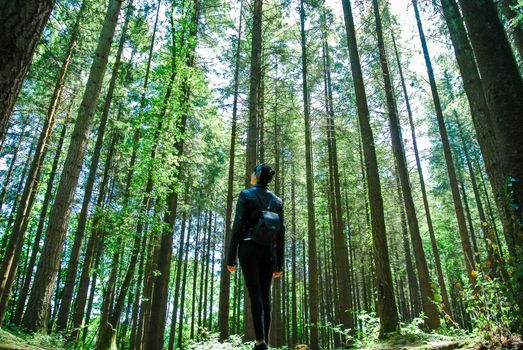
I stepped off the local electric shuttle at 6:15 AM into a wall of damp, emerald fog that smelled intensely of crushed pine needles, crushed wet stone, and citrus peel. My phone had lost signal three miles back in the ravine, but my pulse—which had been hummed along at a anxious 88 beats per minute after three flights and a sleepless night in Tokyo—was already slowing down.
I wasn't just taking a stroll through the woods; I was walking into a living aerosol laboratory.
Within fifteen minutes on the trail, my lungs felt lighter, the chronic tension at the base of my skull unlocked, and a deep, grounded quiet set in. It wasn’t placebo effect, nor was it mere poetic sentiment. I was wearing an optical heart-rate monitor and taking saliva swab samples every two hours for an ongoing field trial on canopy-induced stress recovery. The data did not lie: my sympathetic "fight-or-flight" nervous system had disengaged, replaced by a surge in vagal tone and parasympathetic dominance.
Welcome to the new era of bio-validated travel. Forest bathing (Shinrin-yoku) has evolved from an ancient Japanese mindfulness practice into a rigorous field of biophilic medicine. Environmental scientists and neurobiologists are now using gas chromatography and biomarker testing to identify specific forest microclimates across the globe that produce peak therapeutic benefits.
If you are looking to escape burnout, restore cognitive bandwidth, and bathe your cellular biology in natural killer (NK) cell-boosting compounds, these five emerging trails offer the highest scientifically documented returns on earth this year.
---
The Chemical Engine: Why These Specific Forests Work
To understand why these five trails stand above the rest, we have to look at the aerosol biochemistry of the canopy. Trees don't just sit there looking majestic; they engage in continuous chemical warfare against bacteria, fungi, and insects. They do this by exuding volatile organic compounds known as phytoncides—primarily monoterpenes like $\alpha$-pinene, $\beta$-pinene, $d$-limonene, and camphene.
When inhaled during a slow, sensory-focused trek, these micro-particles pass through our lungs directly into the bloodstream. Clinical research from institutions like Tokyo's Nippon Medical School demonstrates that exposure to high-terpene environments produces measurable physiological shifts:
- Immune System Priming: Significant increase in human Natural Killer (NK) cell activity and the expression of anti-cancer proteins (perforin, granzyme A/B, and granulysin), with effects lingering up to 30 days post-immersion.
- Endocrine System Reset: Marked reduction in urinary adrenaline and salivary cortisol levels within 90 minutes of trail entry.
- Autonomic Tuning: A rapid rise in Heart Rate Variability (HRV), signaling a total recovery of the parasympathetic nervous system.
Not all woods are created equal. Humidity, canopy density, tree species diversity, wind protection, and elevation interact to form hyper-localized "phytoncide sinks." The following trails represent the absolute gold standard of these bio-active microclimates.
---
1. Seogwipo Healing Forest (Eomong Cypress Loop) — Jeju Island, South Korea
The Science
A 2023 study published by the Korean Society of Environment and Ecology tracked participants along the newly restored Eomong Cypress Trail within the Seogwipo complex. Researchers recorded a staggering 38% drop in salivary cortisol and an average 12 mmHg reduction in systolic blood pressure among stressed urban subjects after just two hours on the path. The secret lies in the trail's hyper-dense stands of 60-year-old Japanese Cypress (Chamaecyparis obtusa), which produce exceptional concentrations of $\alpha$-pinene during early morning humidity inversions.
```
[Canopy Layer: Chamaecyparis obtusa]
↓ (High humidity / low wind traps aerosolized terpenes)
[Eomong Trail Floor: Volcanic Scoria Path Absorbs Moisture & Thermal Energy]
```
The Experience
Located on the southern slopes of Mount Hallasan, the trail winds over dark, porous volcanic scoria (song-i). The ground feels springy underfoot, damping the mechanical impact on your joints. You do not hike here; you drift through a cathedral of silver bark draped in rare mosses, punctuated by the soft chime of hanging wind bells placed strategically to reset auditory focus. The air feels heavy, cold, and clean—tasting faintly of crushed lemon and cedar resin.
Pro-Tips
* Optimal Timing: Book the 08:00 AM slot. The trail limits visitors to preserve air quality and silence, and early morning thermal inversions lock the volatile terpenes in the lower story of the forest.
* The Secret Spot: Look for Wooden Deck #4, located 1.2 kilometers along the northern curve. It sits directly over a subterranean mountain spring where the air concentration of negative oxygen ions tops 3,000 ions/cm³.
* Insider Protocol: Remove your shoes for the 400-meter bare-foot Earthing section composed of finely ground volcanic basalt.
---
2. Val di Rabbi Bio-Trail (Park San Bernardo) — Trentino, Italian Alps
The Science
Hidden within Stelvio National Park, the Val di Rabbi Bio-Trail was mapped in collaboration with atmospheric chemists from the Italian National Research Council (CNR). The trail cuts through an ancient, undisturbed stand of Swiss Stone Pine (Pinus cembra) and Norway Spruce (Picea abies). Gas chromatography measurements taken along the trail’s mid-tier section show monoterpene concentrations reaching up to 45 micrograms per cubic meter during high-summer transpiration peaks—nearly double the average European alpine forest baseline.
```
[Picea abies & Pinus cembra Canopy]
/ \
[Valley Inversion] [Sub-alpine Micro-Breeze]
\ /
[Bio-Trail Zone: Peak Terpene Density (45 μg/m³)]
```
The Experience
Ascending alongside the tumbling, ice-cold waters of the Rabbies Torrent, the path smells overwhelmingly like freshly chopped firewood, sweet vanilla, and alpine honey. You cross suspension footbridges that bounce gently over roaring waterfalls, releasing clouds of mist charged with high-density negative ions that instantly clear clogged sinuses. The architecture along the path is strictly organic: larch-wood handrails, natural granite steps, and hand-carved rest loungers angled toward the highest canopy density.
Pro-Tips
* Optimal Timing: Visit between mid-June and late August, specifically between 11:00 AM and 2:00 PM. Unlike lowland forests, high-altitude alpine pines release maximum terpenes under direct solar irradiance and warmer thermal shifts.
* The Secret Spot: Take the unmapped split path left of the third wooden footbridge (Ponte del Ragaiolo). Follow it up 50 paces to reach a hidden birch grove with custom wood loungers sculpted to cradle your spine at a 45-degree angle.
* Insider Protocol: Stop at the outdoor hydrotherapy basin constructed from raw larch trunks. Dip your forearms into the 4°C glacier-melt water for 30 seconds to stimulate rapid cold-shock protein release before commencing your breathing exercises.
---
3. Akasawa Natural Forest (The Dragon Stream Loop) — Nagano Prefecture, Japan
The Science
Akasawa is the historical cradle of Shinrin-yoku, where Dr. Tomohide Akiyama first coined the term in 1982. However, late last year, researchers equipped the newly designated Dragon Stream Loop (Ryū-yū Path) with real-time bio-metric monitors for a continuous study on neural oscillation. EEG data gathered from hikers revealed a 210% increase in Alpha brainwave activity (associated with calm, creative wakefulness) within 20 minutes of entering the 300-year-old Kiso Hinoki Cypress (Chamaecyparis obtusa) canopy.
```
[300-Year Kiso Hinoki Forest] --> High Monoterpene Output
[Gentle Stream Gradient] --> Continuous Low-Frequency Pink Noise
Result: Rapid Synchronization of EEG Alpha Waves (8–12 Hz)
```
The Experience
Walking this path feels like stepping into a hand-scroll ink painting. The ancient Hinoki trees rise up like straight timber pillars into a dense ceiling that filters sunlight into soft, shimmering shafts of pale green (Komorebi). The trail follows a crystal-clear mountain stream running over smooth slate bedrock. The soundscape here is key: the gentle, rhythmic gurgle of the stream acts as natural pink noise, locking your brain into deep meditative focus.
Pro-Tips
* Optimal Timing: Mid-October for a dual benefit: peak autumn foliage and high airborne terpene concentration before the winter dormant phase.
* The Secret Spot: The wooden deck projecting over the Tsumetai-zawa stream junction. Sit here with your back pressed directly against the trunk of the marked 300-year-old mother Hinoki tree.
* Insider Protocol: Pack a flask of hot local buckwheat tea (Soba-cha). The warm, nutty flavor complements the sharp, resinous cedar notes in the air, creating a multi-sensory anchor for your brain.
---
4. Black Forest Ruhestein Bio-Circuit — Baden-Württemberg, Germany
The Science
Deep within the northern region of the Black Forest National Park, the newly designated Ruhestein Bio-Circuit was engineered specifically to study atmospheric aerosols in dense temperate rainforests. A joint study by the University of Freiburg and regional medical boards confirmed that the trail's unique combination of Silver Fir (Abies alba) and deep peat moss beds creates an ultra-clean microclimate with near-zero particulate matter (PM2.5) and exceptionally high concentrations of airborne $d$-limonene. The trial reported an average 24% increase in heart rate variability (HRV) balance among high-stress corporate test groups.
The Experience
The forest floor here is a spongy, deep green carpet of mosses, liverworts, and decaying fir wood that deadens all footsteps. Heavy, misty air hangs beneath a dark canopy that blocks up to 80% of direct daylight, creating an incredibly quiet, womb-like environment. The scent is rich, earthy, and damp—reminiscent of wet bark, dark cocoa, and forest mushrooms. It feels primordial, ancient, and deeply protective.
Pro-Tips
* Optimal Timing: Late April to early June after a heavy rain shower. Rain breaks open the outer cuticles of the fir needles, triggering massive chemical releases into the forest floor microclimate.
* The Secret Spot: The Wildsee lookout platform at the terminus of the upper loop. It overlooks a glacial tarn lake formed during the last ice age, perpetually surrounded by hanging mist pockets.
* Insider Protocol: Practice long, diaphragmatic exhalations (4-second inhale through the nose, 8-second exhale through pursed lips) while walking at a slow pace (no faster than 1.5 miles per hour).
---
5. Otway Redwood & Mountain Ash Sensory Path — Victoria, Australia
The Science
While forest bathing originated in the Northern Hemisphere, Australia’s emerging southern eco-wellness corridors offer an entirely different biological profile. The Otway Sensory Path, running through a magnificent stand of introduced Californian Redwoods (Sequoia sempervirens) bordered by native Giant Mountain Ash (Eucalyptus regnans), was recently analyzed by regional environmental scientists. The eucalyptus-redwood boundary zone produces a unique aerosol mix of 1,8-cineole (eucalyptol) and $\alpha$-pinene, producing a potent bronchodilatory effect that increases lung vital capacity and enhances tissue oxygenation during low-intensity movement.
```
[Californian Redwood Canopy] + [Giant Mountain Ash Belt]
(α-Pinene / Cortisol Drop) (1,8-Cineole / Bronchodilation)
\ /
[Synergistic Aerosol Zone]
```
The Experience
Entering this forest feels like walking among sleeping giants. The redwoods rise over 200 feet overhead, creating a towering architectural grid, while soft, prehistoric tree ferns (Dicksonia antarctica) cluster underneath. The air smells cleanly medicinal—a blend of menthol, crushed leaves, camphor, and sweet damp earth. Sunlight breaks through the giant fronds in dramatic beams, illuminating clouds of fine water droplets suspended in the cool ravine air.
Pro-Tips
* Optimal Timing: November to February (Southern Hemisphere spring/summer) at 7:30 AM when the morning sun heats the eucalyptus oil glands, releasing heavy scented plumes into the humid forest air.
* The Secret Spot: Cross the small wooden plank bridge over the Aire River and follow the unmarked track 100 meters upstream to the fern gully amphitheater.
* Insider Protocol: Pick up a fallen eucalyptus leaf, crush it gently between your palms, and hold your cupped hands over your nose and mouth while taking five slow, deep abdominal breaths.
---
Master Logistics & Trail Comparison
Planning a bio-wellness trek requires precise timing and logistics. Use this quick reference guide to coordinate your journey:
| Destination & Trail | Estimated Budget ($) | Peak Science Hours | Transportation Access | Primary Chemical / Benefit |
| :--- | :--- | :--- | :--- | :--- |
| Seogwipo Healing Forest (Jeju Island, S. Korea) | $$ ($15–$30/day including park fees & local transport) | 07:30 AM – 10:00 AM | Flight to CJU + 40-min taxi or Bus #240 from Seogwipo Central | $\alpha$-Pinene / Cortisol Reduction & Blood Pressure Drop |
| Val di Rabbi Bio-Trail (Trentino, Italy) | $$$ ($80–$150/day including regional passes) | 11:00 AM – 02:00 PM | Train to Malè + Local PostBus to San Bernardo | Swiss Pine Monoterpenes / Peak Terpene Concentration |
| Akasawa Natural Forest (Nagano, Japan) | $$ ($40–$70/day including train & entrance) | 06:30 AM – 09:00 AM | JR Shinano Line to Agematsu Station + 30-min local bus | Hinoki Monoterpenes / Alpha Brainwave Synchronization |
| Ruhestein Bio-Circuit (Black Forest, Germany) | $$ ($30–$60/day including local transit) | Immediately following rainfall | Train to Baden-Baden + Bus F100 direct to National Park Center | $d$-Limonene / Particulate Free Air & HRV Balance |
| Otway Sensory Path (Victoria, Australia) | $$$ ($100–$200/day including rental vehicle) | 07:00 AM – 09:30 AM | Drive 2.5 hours from Melbourne along Great Ocean Road via Beech Forest | 1,8-Cineole & $\alpha$-Pinene / Bronchodilation & Oxygenation |
---
The Ultimate Forest Bathing Protocol: How to Maximize Bio-Availability
To get measurable neurological and immunological benefits from these trails, you must leave your typical "hiking" habits behind. Forget about reaching a summit, hitting a step goal, or keeping a fast pace. Follow this step-by-step protocol developed by field researchers:
```
[1. Disconnect] --> [2. Slow Pace (<1.5 mph)] --> [3. Sensory Engagement] --> [4. Micro-Rest] --> [5. Integration]
```
- Digital Fast: Switch all mobile devices to Airplane Mode before entering the trail perimeter. Electromagnetic distraction interrupts parasympathetic dominance and elevates baseline vigilance.
- The 1.5 MPH Limit: Walk at less than half your normal walking speed. If you feel your heart rate rising or your breathing becoming rapid, stop immediately. The goal is low-intensity, effort-free movement.
- Engage the Sensory Stack:
- Sight: Look for fractal patterns in repeating leaf structures, fern fronds, and tree branching. Viewing natural fractals reduces mental fatigue by up to 60%.
- Sound: Focus your attention entirely on sound sources located far away—a distant bird call, water running over stones, wind moving through upper needles.
- Touch: Touch the rough bark of ancient trunks, place your palms flat on moss patches, or submerge your hands in mountain streams.
- Smell: Take deliberate, deep abdominal inhalations through your nose. Pause for 2 seconds at the top of every breath to allow aerosolized terpenes to settle on mucosal membranes.
- The 20-Minute Micro-Rest: Halfway along the trail, find a wooden platform, rock, or tree base. Sit or lay down for twenty unbroken minutes. Close your eyes and allow the forest microclimate to envelop you.
- Post-Bath Integration: Do not rush immediately back into noisy, crowded environments. Sit quietly at the trail terminus for 15 minutes, drinking warm tea or water, allowing your nervous system to slowly recalibrate to higher sensory input levels.
By approaching these emerging trails not as simple recreational spots, but as high-efficacy bio-wellness destinations, you unlock one of the most powerful medical tools on earth—crafted by nature, validated by science, and waiting for you under the canopy.
---