Beyond the Savannah: Epic Safaris You Need Before They Explode
My first safari was everything I’d dreamed of. The golden light of the Maasai Mara, the rumble of wildebeest, the silhouette of a giraffe against a fiery sunset – it was magical. For years, I, like so many others, believed that "safari" was synonymous with "Africa." It was the ultimate wildlife pilgrimage, the apex of adventure travel. But then, a chance conversation with a seasoned explorer sparked a thought: what if the world held other, equally breathtaking, yet vastly different, safari experiences? What if there were hidden gems, untamed wildernesses, and unique creatures waiting to be discovered, long before they grace every travel magazine cover?
That question set me on a quest, a journey to uncover the world's best non-African safaris. And what I found blew my mind. From tracking elusive big cats in the dense jungles of Asia to cruising through icy fjords in search of polar bears, these aren't just alternatives; they are distinct, profound, and utterly unforgettable adventures that deserve a spot on every discerning traveler's bucket list. And the best part? Many of them are still flying under the radar, offering an intimacy with nature that's becoming increasingly rare.
If you're ready to redefine your understanding of a "safari" and embark on an adventure that will make your Instagram feed legendary, then buckle up. Tripsora is about to take you on a wild ride to the world's best safaris beyond Africa, before they become mainstream.
---
Asia's Untamed Heart: Tigers, Rhinos, and Red Pandas
When you think "safari," Asia might not be the first continent that springs to mind, but it absolutely should be. This vast continent is a mosaic of incredible biodiversity, home to some of the planet's most iconic and endangered species. Forget the open plains; here, the thrill comes from navigating dense jungles, spotting creatures camouflaged in lush foliage, and experiencing a different kind of wild.
India: The Land of the Royal Bengal Tiger
My first non-African safari took me deep into the heart of India, a country pulsating with life and ancient mysteries. The sheer anticipation of seeing a Bengal tiger in its natural habitat is an experience unto itself. Unlike the vast open spaces of Africa, tiger safaris in India are a game of patience, stealth, and incredible luck.
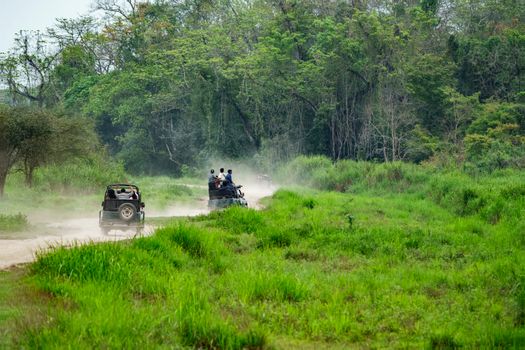
- Ranthambore National Park, Rajasthan: This is perhaps India's most famous tiger reserve, set amidst ancient ruins and rugged terrain. My first morning game drive here was a masterclass in suspense. The jeep rumbled over dusty tracks, the air thick with the scent of dry earth and the distant calls of langur monkeys. Our guide, a man whose eyes seemed to miss nothing, suddenly stopped. Silence. Then, a rustle in the tall grass. A flash of orange and black. For a breathtaking minute, a magnificent tigress, 'Machli's Daughter' as our guide whispered, sauntered across our path, her gaze piercing, her power undeniable. It was an electrifying moment, a visceral connection to the wild that sent shivers down my spine.
- Best Time to Visit: October to June (March to May for best tiger sightings due to heat).
- Cost Estimate: Park entry and jeep safaris can range from $100-$200 per person per safari. A 5-7 day all-inclusive safari package (including accommodation, meals, transfers, and multiple game drives) can cost anywhere from $2,000-$5,000+, depending on luxury level.
- Tripsora Tip: Book your safaris well in advance, especially for Ranthambore, as permits are limited. Opt for a smaller group jeep (Gypsy) for a more intimate experience.
- Bandhavgarh National Park, Madhya Pradesh: Known for its high tiger density, Bandhavgarh offers excellent chances for sightings. The park is also famous for its ancient fort and diverse birdlife.
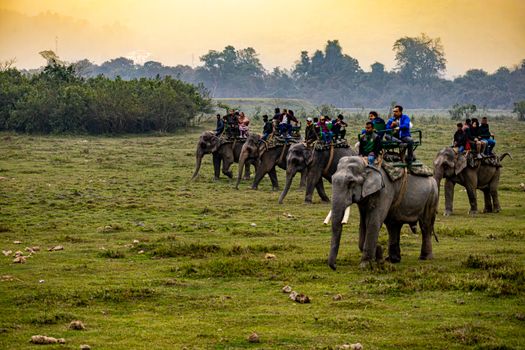
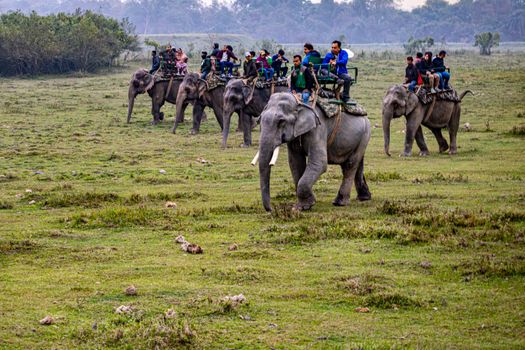
- Kaziranga National Park, Assam: While tigers are present, Kaziranga is primarily famous for its one-horned rhinoceroses, boasting two-thirds of the world's population. Elephant safaris here offer a unique perspective, allowing you to get incredibly close to these prehistoric-looking giants.
Nepal: Rhinos, Elephants, and the Spirit of the Terai
Nestled at the foot of the Himalayas, Nepal’s Terai lowlands offer a completely different safari experience. Chitwan National Park, a UNESCO World Heritage site, is a haven for wildlife.
- Chitwan National Park: Here, I swapped the jeep for a dugout canoe, silently paddling down the Rapti River as gharials (fish-eating crocodiles) sunned themselves on the banks and kingfishers darted overhead. Later, a jungle walk with an experienced local guide offered a humbling perspective, teaching us to read tracks and listen to the forest's whispers. We saw a sloth bear foraging and, from a safe distance, observed several one-horned rhinos grazing peacefully.
- Best Time to Visit: October to March.
- Cost Estimate: A 2-3 day package including accommodation, food, and activities (jeep safari, canoe ride, jungle walk) can range from $300-$800.
- Tripsora Tip: Combine your Chitwan safari with a trek in the Himalayas for an unforgettable Nepal adventure.
China: The Gentle Giants of Sichuan
While not a "safari" in the traditional sense, a visit to China's Giant Panda Sanctuaries offers one of the most heartwarming and crucial wildlife encounters on the planet.
- Chengdu Research Base of Giant Panda Breeding / Wolong National Nature Reserve: My visit to Chengdu was less about adrenaline and more about awe. Watching these magnificent, gentle creatures munching on bamboo, tumbling playfully, or simply lounging in serene contentment, is a profound experience. It's a powerful reminder of conservation efforts and the delicate balance of nature.
- Best Time to Visit: Year-round, but spring (March-May) and autumn (Sept-Nov) offer pleasant weather.
- Cost Estimate: Entry fees are minimal ($10-$20). Most costs come from travel and accommodation. Ethical tours focusing on conservation can be higher.
- Tripsora Tip: Choose a reputable conservation-focused tour operator if you want to get closer or participate in volunteer programs. Always prioritize the pandas' welfare.
---
South America's Wild Rhythms: Jaguars, Anacondas, and Marine Giants
South America, a continent of vibrant cultures and unparalleled natural beauty, is a treasure trove for wildlife enthusiasts. From the world's largest wetlands to its most biodiverse rainforests and unique island ecosystems, it offers a safari experience unlike any other.
Brazil: Tracking the Elusive Jaguar in the Pantanal
If you're looking for a big cat encounter that rivals Africa's lions and leopards, look no further than Brazil's Pantanal. This sprawling wetland, larger than many European countries, is a wildlife paradise, and it's the best place on Earth to spot the magnificent jaguar.
- The Pantanal: My journey to the Pantanal was a revelation. It's wild, rugged, and teeming with life. We spent days on small boats, navigating narrow waterways, our eyes scanning the dense riverbanks. The air was alive with the calls of exotic birds, the snorts of capybaras, and the occasional splash of a caiman. Then, it happened. Our guide, with an eagle eye, pointed to a thicket. A shadow moved. And there it was – a powerful, muscular jaguar, emerging silently from the foliage, its rosetted coat shimmering in the dappled sunlight. It was a heart-stopping moment, far more intimate and thrilling than I could have imagined. We watched it for what felt like an eternity, as it casually surveyed its domain before melting back into the green. Beyond jaguars, the Pantanal is home to giant anteaters, tapirs, anacondas, and an incredible array of birdlife.
- Best Time to Visit: Dry season (May to October) for easier wildlife spotting, especially jaguars near water sources.
- Cost Estimate: Multi-day tours (3-7 days) with lodges, guides, and activities typically range from $1,500-$4,000+. Daily rates for excursions can be $150-$300.
- Tripsora Tip: Focus on the northern Pantanal (Porto Jofre) for the highest jaguar sighting chances. Horseback riding safaris offer a unique way to explore the wetlands.
Ecuador/Peru: The Mystical Amazon Rainforest
The Amazon is not a place for traditional game drives, but for immersive, sensory safaris. Here, the "hunt" is for discovery – of vibrant macaws, playful monkeys, elusive sloths, and the incredible diversity of flora and fauna.
- Amazon River Cruises & Jungle Lodges: My Amazon adventure involved a river cruise into the Ecuadorian Amazon. Each day brought new wonders: spotting pink river dolphins, navigating flooded forests by canoe, and guided night walks where the forest came alive with the sounds of unseen creatures. The sheer scale and biodiversity of the Amazon are overwhelming in the best possible way.
- Best Time to Visit: Year-round, but the dry season (June-October) can make forest walks easier, while the wet season (Nov-May) allows for deeper canoe exploration.
- Cost Estimate: 3-7 day lodge stays or river cruises can range from $1,500-$5,000+, depending on luxury and remoteness.
- Tripsora Tip: Choose an eco-lodge that actively supports local communities and conservation efforts. Hire a local guide; their knowledge of the forest is invaluable.
Ecuador: The Evolutionary Wonders of the Galapagos Islands
While not a "safari" in the terrestrial sense, a cruise through the Galapagos Islands is arguably the world's most unique wildlife encounter. Here, animals have no fear of humans, offering an unparalleled opportunity for close-up observation.
- Galapagos Islands: My expedition cruise through the Galapagos was a constant stream of "pinch me" moments. Snorkeling with playful sea lions, watching blue-footed boobies perform their comical mating dance, observing giant tortoises slowly making their way across volcanic landscapes, and seeing marine iguanas bask in the sun – every island offered a new, incredible interaction. It's a living laboratory of evolution.
- Best Time to Visit: Year-round. The "warm" season (Dec-May) is greener with calmer seas, while the "dry" season (June-Nov) is cooler, with more active marine life.
- Cost Estimate: Expedition cruises (4-15 days) are typically $3,000-$10,000+, not including international flights.
- Tripsora Tip: Book with an accredited tour operator that adheres to strict conservation guidelines. Small ship cruises offer a more intimate experience.
---
The Frozen Frontiers: Polar Bears, Whales, and Penguins
For those seeking an adventure at the very ends of the Earth, the polar regions offer a "safari" experience that is truly in a league of its own. These harsh, beautiful landscapes are home to some of the planet's most resilient and majestic creatures.
The Arctic: Realm of the Polar Bear
Venturing into the Arctic is an expedition, not just a trip. It's about facing raw nature, dramatic landscapes, and the incredible survival stories of its inhabitants.
- Svalbard, Norway: My Arctic journey took me to Svalbard, a Norwegian archipelago high above the Arctic Circle. This is prime polar bear territory. Our expedition ship navigated through icy fjords, past towering glaciers, and along barren coastlines. One day, a collective gasp went through the ship as a magnificent polar bear was spotted, slowly traversing the ice, a stark white against the blue-grey landscape. It was a humbling sight, a powerful reminder of the delicate balance of this fragile ecosystem. We also saw walruses lounging on ice floes, seals diving into frigid waters, and an abundance of Arctic birds.
- Best Time to Visit: Summer (June-August) when the ice breaks up, allowing ship navigation and longer daylight hours.
- Cost Estimate: Expedition cruises (7-14 days) are a significant investment, ranging from $5,000-$15,000+, often excluding flights.
- Tripsora Tip: Choose an expedition cruise that emphasizes responsible tourism and employs experienced naturalists. Pack layers – lots of them!
- Churchill, Manitoba, Canada: Known as the "Polar Bear Capital of the World," Churchill offers unique tundra buggy tours in autumn (October-November) to witness polar bears gathering on the shores of Hudson Bay, waiting for the ice to form.
Antarctica: The White Continent of Penguins and Whales
Antarctica is the ultimate adventure, a destination that truly feels like another planet. While technically not a "safari," it's the world's greatest wildlife spectacle, offering unparalleled encounters with vast colonies of penguins, seals, and whales.
- Antarctic Peninsula: My expedition to Antarctica was life-changing. Landing on shores teeming with hundreds of thousands of penguins (Adélie, Gentoo, Chinstrap) was an assault on the senses – the cacophony of their calls, the distinctive smell, and the sheer joy of watching them waddle and dive. Zodiac cruises brought us face-to-face with leopard seals lounging on icebergs and pods of humpback whales breaching in the frigid waters. It's a place of immense beauty and profound silence, punctuated by the sounds of wildlife and calving glaciers.
- Best Time to Visit: Austral summer (November to March).
- Cost Estimate: Expedition cruises (10-20 days) typically range from $8,000-$20,000+, excluding flights.
- Tripsora Tip: Go with an IAATO-certified operator to ensure ethical and sustainable practices. Book early, as spots fill up quickly.
---
Practical Prowess: Planning Your Non-African Safari
Embarking on a safari beyond Africa requires a bit more specialized planning, but the rewards are immeasurable. Here's your actionable guide to making it happen:
1. When to Go: Timing is Everything
- Asia (Tigers, Rhinos): Dry season (roughly October to June) for best visibility. Peak heat (March-May) can be excellent for tiger sightings near water.
- South America (Jaguars): Dry season (May to October) in the Pantanal for jaguar spotting. Amazon is year-round, but consider wet vs. dry season activities. Galapagos is great year-round, with subtle seasonal differences.
- Polar Regions (Polar Bears, Penguins): Summer months (June-August for Arctic, November-March for Antarctica) when ice conditions allow for navigation.
2. Budgeting for Adventure: Expect an Investment
These aren't budget trips, but they offer incredible value for unique experiences.
* Mid-Range (Local Operators, Shared Tours): India/Nepal ($2,000-$5,000 for 1 week), Pantanal ($1,500-$4,000 for 3-7 days), Amazon ($1,500-$5,000 for 3-7 days).
* High-End (Luxury Lodges, Private Guides, Expedition Cruises): Galapagos ($3,000-$10,000+), Arctic/Antarctica ($5,000-$20,000+).
* Remember: These estimates generally exclude international flights. Factor in visas, vaccinations, travel insurance, and gear.
3. Ethical Considerations: Be a Responsible Traveler
- Choose Reputable Operators: Look for companies with strong conservation policies, local employment practices, and certifications (e.g., IAATO for polar regions, eco-tourism certifications elsewhere).
- Respect Wildlife: Maintain distance, never feed animals, and follow your guide's instructions implicitly. Your presence should not impact their natural behavior.
- Support Local Communities: Opt for lodges and tours that directly benefit local economies.
- Minimize Your Footprint: Reduce waste, conserve water, and avoid single-use plastics.
4. Packing Essentials: Gear Up for the Wild
- Camera Gear: A good DSLR or mirrorless camera with a telephoto lens (200-400mm) is a must. Binoculars are essential.
- Clothing: Layers are key in all environments. Quick-drying, breathable fabrics for warm climates; waterproof and insulated for polar regions. Earthy tones are best for wildlife viewing.
- Footwear: Comfortable, sturdy walking shoes or hiking boots. Waterproof boots for wet environments.
- Essentials: Sunscreen, insect repellent (especially for tropics), wide-brimmed hat, sunglasses, personal first-aid kit, reusable water bottle.
- For Polar Regions: High-quality waterproof and windproof outer layers, thermal base layers, warm hat, gloves, and thick socks. Most expedition cruises provide rubber boots.
5. Booking Tips: Plan Ahead
- Small Groups: Opt for smaller group tours for a more intimate experience and less impact.
- Local Guides: Their expertise is invaluable for spotting wildlife and understanding the ecosystem.
- Flexibility: Wildlife viewing is unpredictable. Be patient and enjoy the journey, even if you don't see every animal on your list.
- Health & Safety: Consult your doctor about necessary vaccinations and medications for your chosen destination. Research visa requirements well in advance.
---
The Tripsora Takeaway: Why Now is the Time
The world is changing rapidly. Pristine wildernesses are under threat, and popular destinations can quickly become crowded. The beauty of these non-African safaris lies not just in their incredible wildlife, but in their relative obscurity. They offer a chance to connect with nature on a deeper, more personal level, before the rest of the world catches on.
Imagine the stories you'll tell: tracking a jaguar through the Pantanal, standing eye-to-eye with a rhino in Nepal, witnessing a polar bear's majestic stride across Arctic ice, or being surrounded by thousands of penguins in Antarctica. These aren't just trips; they're transformative experiences that will ignite your passion for conservation and leave you with memories to last a lifetime.
So, what are you waiting for? The wild beyond Africa is calling. It's time to answer.
---