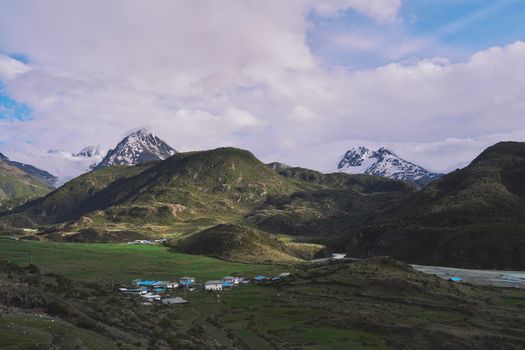
Hike to Hidden Villages: My Life-Changing Journeys Beyond the Map
There’s a moment on every journey when the map folds away, the phone loses signal, and the path ahead becomes a story waiting to be written by your own two feet. For me, these are the moments I live for – the ones where the trail narrows, the air thins, and the promise of something truly hidden beckons. I’m talking about those incredible hikes that don't just lead to a breathtaking view, but to a village – a living, breathing community nestled away from the modern world, where time seems to slow, and every interaction feels like a precious gift.
I used to chase big cities and famous landmarks, ticking off bucket list items like a dutiful tourist. But a few years ago, after a particularly grueling period of burnout, I felt an undeniable pull towards something more profound. I craved authenticity, a connection to something ancient and real. That’s when I started seeking out the hidden villages, reachable only by foot, communities that have preserved their traditions, their smiles, and their way of life against the relentless march of globalization.
These weren't just hikes; they were pilgrimages. Each step was an unlearning, a shedding of the superficial. And when I finally emerged from the wilderness into these secluded havens, I wasn't just observing; I was living. The people I met, the stories they shared, the sheer resilience of their existence – it changed me. Forever.
Are you ready to discover the trails that lead not just to incredible landscapes, but to a profound transformation of self? Let me share five of my most cherished experiences, along with practical tips to help you embark on your own life-altering adventure.
The Call of the Unseen Path: Why Seek the Hidden?
In an age where every corner of the globe seems mapped, reviewed, and Instagrammed, the idea of a "hidden village" might sound like a romantic fantasy. But trust me, they exist. These are the places where the air smells different, the silence is profound, and the rhythm of life is dictated by the sun, the seasons, and ancient traditions, not Wi-Fi signals.
What draws me to them? It’s the raw, unfiltered experience. It’s the chance to witness resilience, hospitality, and a way of life that reminds you of what truly matters. It’s an escape from the curated, commercialized version of travel and an immersion into something authentic. These journeys challenge your physical limits, stretch your comfort zone, and open your heart in ways you never thought possible. They teach you gratitude for simple things, patience with the unknown, and a deep respect for cultures vastly different from your own.
1. Nepal's Annapurna Sanctuary – Ghandruk & Chhomrong: Where Mountains Whisper Ancient Tales
My first true hidden village experience was in Nepal, trekking the Annapurna Sanctuary. While the main Annapurna Base Camp (ABC) trail is popular, the Gurung villages nestled along the lower sections felt like stepping into a living museum. After days of lung-busting ascents and descents, the sight of Ghandruk’s slate-roofed houses clinging to the hillside, framed by the majestic Annapurna South, was nothing short of magical.
I remember arriving in Ghandruk just as the late afternoon sun cast long shadows over the terraced fields. The air was crisp, carrying the scent of woodsmoke and blooming rhododendrons. I found a small tea house run by a grandmotherly woman whose smile instantly warmed my weary bones. She served me dal bhat – a hearty lentil soup, rice, and vegetable curry – that tasted like pure comfort. That evening, sitting by the fire, listening to the murmurs of the village and the distant jingling of yak bells, I felt a peace I hadn't known in years.
Further along, Chhomrong offered a similar enchantment, strategically perched with panoramic views of Machapuchare (Fishtail Mountain). Here, I spent an entire afternoon simply watching children play, their laughter echoing through the valley. A local artist invited me into his small home to show me his intricate Thangka paintings, patiently explaining the symbolism of each deity. There was no pressure to buy, just a genuine desire to share his craft and culture.
Practical Details:
* Location: Annapurna Conservation Area, Nepal.
* Best Time to Visit: Spring (March-May) for rhododendrons and clear skies, or Autumn (Sept-Nov) for stable weather and stunning mountain views.
* Permits: ACAP permit (approx. NPR 3,000 / ~$25 USD) and TIMS card (approx. NPR 2,000 / ~$17 USD). Obtainable in Kathmandu or Pokhara.
* Cost: Tea house meals typically cost NPR 500-1000 (~$4-8 USD). Accommodation is usually NPR 300-600 (~$2.50-5 USD) per night, often cheaper if you eat all your meals there.
* Tip: Carry enough Nepali Rupees in smaller denominations. There are very few ATMs once you start the trek. Support local businesses by purchasing handmade crafts directly from the artisans.
2. Peru's Sacred Valley – Lares Trek & Patacancha: A Tapestry of Andean Life
While Machu Picchu draws millions, the true heart of the Andes beats strongly in the remote villages accessible only by treks like the Lares Trail. This was my second encounter with profound cultural immersion, and it was utterly transformative. Instead of the crowded Inca Trail, the Lares Trek winds through high mountain passes and descends into traditional Quechua-speaking communities, offering a glimpse into a way of life that has remained largely unchanged for centuries.
My most vivid memory is of reaching Patacancha, a village renowned for its exquisite hand-woven textiles. After a challenging day of hiking over a 4,400-meter pass, the sight of the stone houses with thatched roofs, nestled against a backdrop of towering peaks, felt like a reward from the gods. As I walked through the village, women in vibrant traditional dress sat spinning alpaca wool, their nimble fingers working with an ancient grace.
I was welcomed into a communal area where a group of women demonstrated their weaving techniques. They explained the natural dyes derived from plants and insects, the intricate patterns that tell stories, and the generations of knowledge passed down. There was no Wi-Fi, no television – just the rhythmic thud of the loom and the soft murmur of Quechua. I bought a beautifully intricate scarf directly from the weaver, feeling the weight of her heritage in its threads. It wasn't just a souvenir; it was a piece of her life, her art, her culture.
Practical Details:
* Location: Cusco Region, Peruvian Andes.
* Best Time to Visit: Dry season (May-October) for clear skies and less rain, though nights are colder.
* Altitude Sickness: Acclimatize in Cusco for 2-3 days before starting. Drink coca tea, stay hydrated, and consider medication like Diamox.
* Cost: Guided Lares treks typically range from $500-800 USD for 3-4 days, including guides, porters, food, and camping gear. You can also hire local guides and go independently, which is cheaper but requires more planning.
* Tip: Learn a few basic Quechua phrases (e.g., "Rimaykullayki" - Hello, "Sulpayki" - Thank you). Always ask permission before taking photos, and be prepared to offer a small gift or purchase if you do.
3. Japan's Iya Valley – Ochiai Village: Stepping Back in Time
Japan, often associated with bustling metropolises and bullet trains, holds a secret deep within its Shikoku island: the Iya Valley. This remote, mountainous region is a world apart, characterized by dramatic gorges, ancient vine bridges, and incredibly steep, terraced villages that seem to defy gravity.
My journey to Ochiai Village felt like entering a Miyazaki film. Designated an Important Preservation District of Historic Buildings, Ochiai is a collection of traditional thatched-roof farmhouses clinging precariously to a 390-meter-high slope. The hike down into the valley, past bamboo groves and through mist-shrouded forests, was ethereal. When I finally emerged, the village appeared like a forgotten dream, nestled amongst meticulously maintained rice paddies.
I stayed in a renovated kominka (traditional Japanese farmhouse) that had been lovingly restored. It had tatami mats, paper screens, and a deep, cedarwood bath overlooking the valley. The experience was one of profound tranquility. I spent my days walking the narrow paths between houses, marveling at the ingenuity of the architecture and the peaceful rhythm of life. One evening, the elderly owner of my guesthouse prepared a feast of local river fish, wild mountain vegetables, and homemade soba noodles. Her quiet hospitality, her gentle smile, and the shared meal in the silent, ancient house were moments of pure grace.
Practical Details:
* Location: Tokushima Prefecture, Shikoku Island, Japan.
* Best Time to Visit: Spring for fresh greenery, Autumn for stunning fall foliage. Summers are hot and humid, winters can be cold with snow.
* Transportation: Getting there requires a combination of train and local bus/rental car. It's challenging but part of the adventure. A rental car offers the most flexibility.
* Accommodation: Traditional kominka stays can range from ¥10,000-25,000 (~$70-170 USD) per night, often including dinner and breakfast. Book well in advance.
* Tip: Be prepared for limited English. Learn a few basic Japanese phrases. Respect the quiet nature of the villages. The local onsen (hot springs) are a must after a day of hiking.
4. Italy's Dolomites – Seceda & the Puez-Odle Alpe di Funes Villages: Alpine Fairytale
When you think of Italy, you might picture Rome or Venice. But high in the north, the Dolomites offer a different kind of magic – towering, jagged peaks, emerald green meadows, and charming Alpine villages that feel straight out of a storybook. While popular, many of the smaller hamlets in areas like Alpe di Funes remain relatively untouched by mass tourism, especially if you venture beyond the main cable car routes.
My journey here wasn't about an arduous multi-day trek, but rather a series of exhilarating day hikes leading to breathtaking views and then descending into serene valleys. The iconic ridge of Seceda is accessible by cable car, but the real magic begins when you choose to hike away from the crowds, descending into the Val di Funes.
I found myself in a tiny village – I won't name it specifically, as part of its charm was its anonymity – nestled beneath the dramatic Puez-Odle peaks. It was late afternoon, and the air was filled with the scent of pine and freshly cut hay. The village consisted of a handful of wooden chalets, a small church with a slender spire, and cows grazing in flower-strewn meadows, their bells gently chiming. I stumbled upon a small rifugio (mountain hut) where a family was preparing dinner. They offered me a glass of local wine and a slice of speck (smoked ham) and cheese. We communicated mostly through gestures and smiles, but the warmth of their hospitality was undeniable.
This experience taught me that "hidden" isn't always about extreme remoteness; sometimes, it's about choosing the less obvious path, even in well-known regions, and allowing serendipity to guide you to unexpected connections.
Practical Details:
* Location: South Tyrol, Italian Dolomites.
* Best Time to Visit: June-September for hiking. Early October for fall colors before many huts close.
* Transportation: A rental car is ideal for exploring the various valleys and trailheads. Public buses are available but less flexible.
* Cost: Accommodation in a traditional guesthouse can range from €60-120 (~$65-130 USD) per night. Meals at rifugi or local restaurants are typically €15-30 (~$16-32 USD).
* Tip: Invest in a good hiking map (Tabacco maps are excellent). Learn a few German or Italian phrases, as both are widely spoken here. Don't be afraid to veer off the main trails onto smaller paths.
5. Northern Thailand – Mae Kampong: The Coffee Village That Embraced Simplicity
My final revelation came in the lush, green mountains of Northern Thailand, specifically a village called Mae Kampong. While it has gained some popularity, it still feels wonderfully secluded, especially if you arrive by foot after a morning hike through the surrounding jungle and waterfalls. This village is famous for its coffee plantations and homestays, offering a unique blend of sustainable tourism and authentic local life.
What struck me about Mae Kampong was its harmonious existence with nature. The houses are built from wood, blending seamlessly into the forest. Life revolves around coffee harvesting, traditional massage, and community-based tourism. I stayed in a homestay with a family who had lived there for generations. My "room" was a simple, elevated wooden structure with a mosquito net and a balcony overlooking the stream.
The days were spent helping the family pick coffee beans (or at least trying to!), exploring the waterfalls, and learning to cook traditional Northern Thai dishes like Khao Soi and Sai Oua. In the evenings, we'd gather on the porch, sipping freshly brewed coffee, sharing stories, and listening to the sounds of the jungle. It was a powerful reminder that true wealth isn't measured in possessions, but in community, connection, and a deep respect for the land. The genuine warmth and generosity of my host family taught me more about happiness than any self-help book ever could.
Practical Details:
* Location: Mae On District, Chiang Mai Province, Northern Thailand.
* Best Time to Visit: November-February for cooler, dry weather. March-May is hot.
* Transportation: Most easily reached by scooter from Chiang Mai (approx. 1.5 hours) or via a local songthaew (red truck taxi). Many tour operators also offer day trips or overnight stays.
* Cost: Homestays are incredibly affordable, often around 500-800 THB (~$14-22 USD) per person per night, including meals.
* Tip: Embrace the slow pace. Participate in the local activities offered by your homestay (coffee harvesting, cooking classes, traditional massage). Buy local coffee directly from the farmers – it’s delicious and supports the community.
The Transformative Power: More Than Just a View
These aren't just pretty pictures for Instagram. These journeys change you at a fundamental level. They force you to simplify, to adapt, to communicate beyond language, and to appreciate the sheer resilience of the human spirit.
- You learn resilience: When your legs ache, your backpack feels heavy, and the path seems endless, you discover an inner strength you didn't know you had.
- You learn gratitude: A hot meal, a dry bed, a kind smile – these simple things become profound luxuries.
- You gain perspective: Witnessing lives lived with so much less, yet often with more joy and community, makes you re-evaluate your own priorities.
- You connect authentically: Stripped of modern distractions, interactions become deeper, more meaningful. You truly see and hear people.
- You find inner peace: The silence of the mountains, the rhythm of nature, the absence of constant digital noise allows your mind to quiet, to reflect, and to heal.
I returned from each of these trips a slightly different person. More patient, more grateful, more open-hearted. My perspective on travel, and on life itself, had irrevocably shifted.
Your Own Journey to Discovery: Practical Tips for the Trail
Inspired to find your own hidden village? Here’s how to prepare for a truly transformative adventure:
- Do Your Research (But Leave Room for Spontaneity): Look for regions known for trekking and cultural preservation. Read blogs, check local tourism boards. But once you're there, be open to suggestions from locals and trust your intuition.
- Pack Smart & Light: Layers are key. Good hiking boots are non-negotiable. A basic first-aid kit, water filter/purifier, headlamp, and power bank are essential. Don't overpack – you'll carry every ounce.
- Prioritize Safety & Local Guides: For remote areas, especially in places like Nepal or Peru, consider hiring a local guide. They know the terrain, the culture, and can be invaluable in emergencies. Always inform someone of your itinerary.
- Respect Local Culture & Environment: This is paramount. Dress modestly, especially in religious sites. Ask permission before taking photos. Learn a few phrases in the local language. Pack out everything you pack in. Support local economies directly.
- Embrace the Uncomfortable: Things will go wrong. You might get lost, the food might be unfamiliar, the bed might be hard. These challenges are part of the adventure and often lead to the most memorable experiences.
- Go with an Open Mind and Heart: Shed your expectations. Be curious, be patient, and be willing to connect. The most profound moments often come from unexpected conversations and shared smiles.
- Cash is King: In remote villages, ATMs are non-existent. Carry enough local currency in small denominations.
- Digital Detox: Try to disconnect. Leave your phone in your bag, or only use it for photos. Immerse yourself fully in the present moment.
Ready to Find Your Own Hidden Haven?
The world is still full of wonders waiting to be discovered, not just by sight, but by spirit. These aren't just destinations; they are experiences that will strip away the superficial and reveal the core of what it means to be alive. They are challenges that lead to profound self-discovery.
So, lace up your boots. Pack your sense of adventure. And dare to wander off the map. There’s a hidden village out there, waiting to change your life forever.
What's the most remote or authentic place you've ever discovered on your travels? Share your stories in the comments below – let's inspire each other to seek the unseen!
---