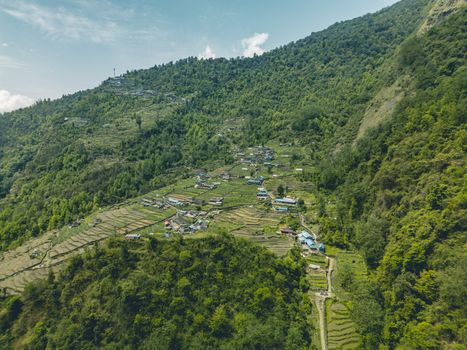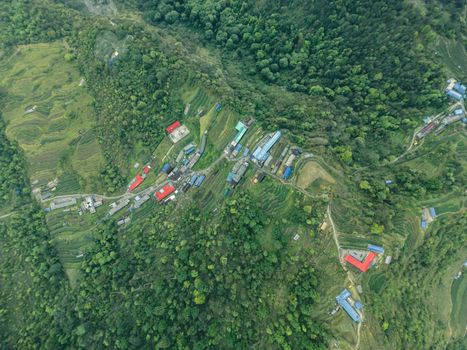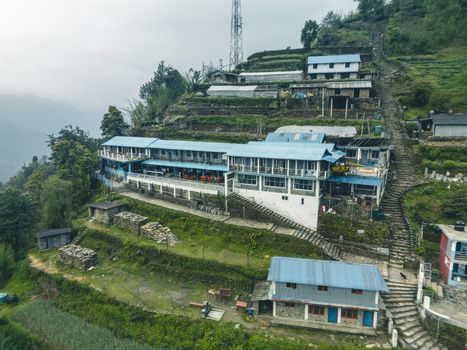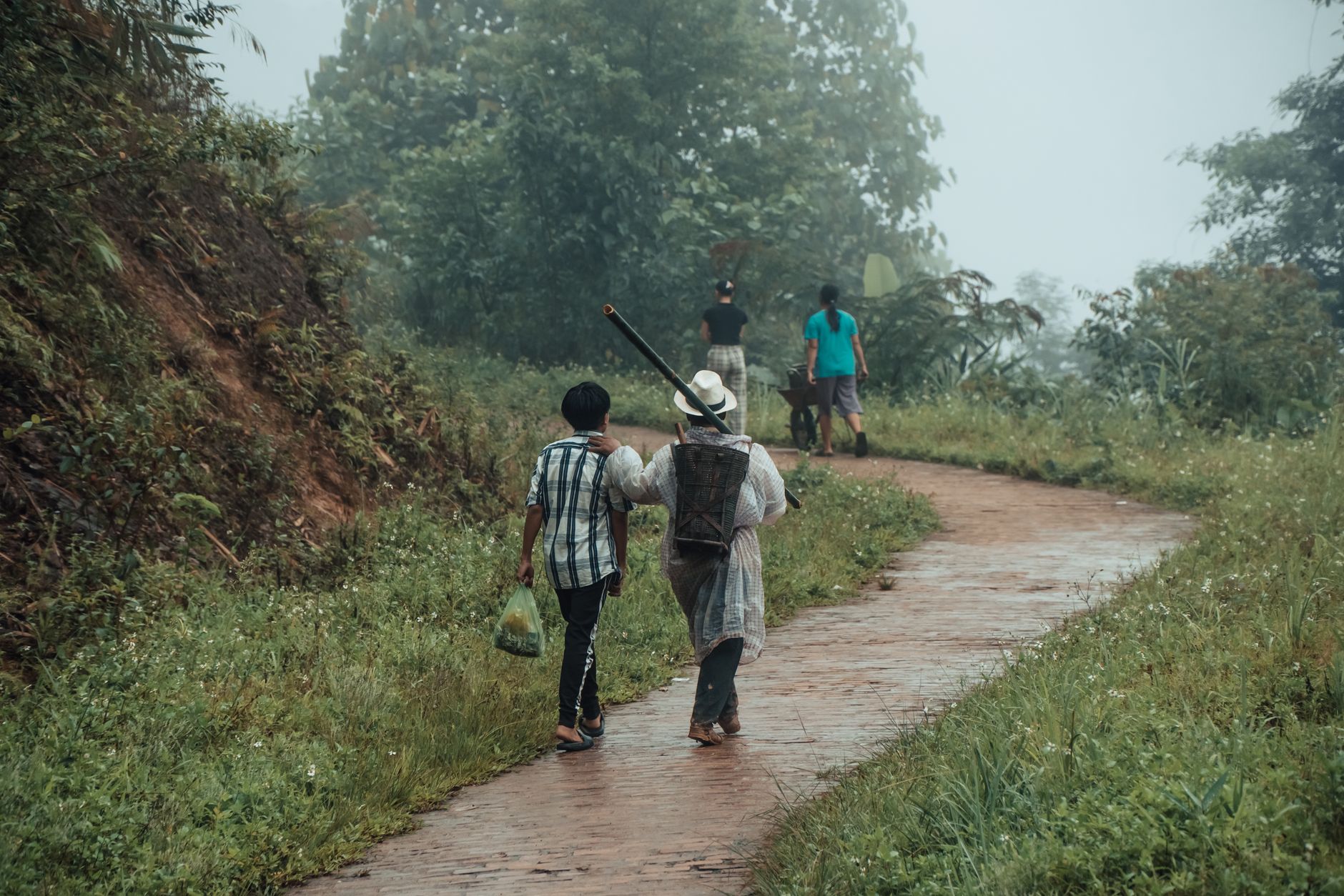
The crisp mountain air filled my lungs, carrying with it the scent of pine and distant woodsmoke. Below, the valley unfolded like a crumpled green carpet, dotted with tiny stone houses that seemed to have sprouted from the earth itself. As I descended the winding path, the faint sound of laughter and the clanging of a cowbell reached me, a symphony of simple life. That moment, arriving in a tucked-away village after days of strenuous but spectacular hiking, wasn't just a destination – it was an epiphany. It was the realization that the most profound travel experiences aren't found on a map but earned with every step, every sweat bead, every breathtaking vista.
We live in a world obsessed with connectivity, yet our souls often yearn for disconnection. For places where time slows down, where traditions are living breaths, and where the landscape itself tells stories millennia old. These aren't just villages; they're living museums, communities resiliently preserving their heritage in the face of modernity. And the best part? They’re often only accessible to those willing to put in the effort, to embrace the journey as much as the destination.
If your heart beats for adventure, if your soul craves authenticity, and if your bucket list demands experiences that truly transform, then lace up your boots. I'm taking you on a virtual journey to five hidden villages, each a testament to human resilience and natural beauty, waiting to be discovered at the end of an unforgettable hike. These aren't just trips; they’re pilgrimages you absolutely need to experience before you die.
---
1. Langtang Valley, Nepal: The Tamang Heart of the Himalayas
My first encounter with the Langtang Valley was years ago, after the devastating earthquake of 2015. The resilience of the Tamang people, rebuilding their lives amidst the towering Himalayas, left an indelible mark on my heart. This isn't just a trek; it's a journey into a vibrant culture, framed by some of the most dramatic mountain scenery on Earth.
The Journey:
The Langtang Valley trek begins a few hours' drive from Kathmandu, typically in Syabrubesi. From there, the trail gradually ascends through rhododendron forests, past roaring rivers, and across suspension bridges. You’ll pass through charming Tamang villages like Lama Hotel, Langtang Village (rebuilt with incredible spirit), and eventually reach Kyanjin Gompa, a spiritual hub nestled at 3,870 meters (12,700 ft). The beauty of this trek is its relatively moderate difficulty compared to some of Nepal's more famous routes, yet it delivers equally stunning vistas of peaks like Langtang Lirung (7,227m).
The Village Experience:
Kyanjin Gompa isn't a single "village" in the traditional sense, but rather a cluster of guesthouses, a cheese factory, and a historic monastery that serves as the heart of the upper valley. Staying here, you’ll witness the daily rhythm of high-altitude life. I remember waking up to the sound of yak bells, the morning mist clinging to the prayer flags, and the smell of yak cheese wafting from the local factory. The people are incredibly welcoming, their faces etched with stories of the mountains. Spend a day exploring the monastery, hiking up Kyanjin Ri or Tserko Ri for panoramic views, or simply sipping yak butter tea while watching the clouds dance around the peaks.
Practical Tips & Details:
* Best Time to Go: Spring (March-May) for rhododendrons and clear skies, or Autumn (September-November) for crisp air and stunning visibility.
* Duration: 7-10 days for the full trek to Kyanjin Gompa and back.
* Difficulty: Moderate. Some steep ascents, but well-defined trails.
* Accommodation: Basic teahouses with shared rooms and simple meals. Expect to pay around $5-10 USD per night for accommodation and $15-25 USD per day for food.
* Permits: You'll need a Langtang National Park Permit (approx. $30 USD) and a TIMS card (approx. $20 USD).
* Instagram Moment: The view from Kyanjin Ri at sunrise, with prayer flags fluttering against a backdrop of snow-capped giants. Pure magic!
---
2. Aït Bouguemez Valley, Morocco: The Happy Valley of the High Atlas
Deep within Morocco's High Atlas Mountains lies the Aït Bouguemez Valley, affectionately known as "The Happy Valley." It's a place where time seems to stand still, where Berber traditions flourish, and where the vibrant red earth contrasts dramatically with emerald green fields and snow-capped peaks. My hike through this valley felt like stepping into an ancient storybook.
The Journey:
Accessing Aït Bouguemez typically involves a long, scenic drive from Marrakech to Azilal, then a rugged journey into the heart of the mountains. The real magic begins when you start hiking from one village to the next. The trails are ancient mule tracks, weaving through terraced fields, past walnut groves, and alongside crystal-clear rivers. You’ll pass through numerous small villages, each with its distinctive mud-brick houses (known as pisé architecture) and friendly inhabitants. The air is clean, the silence profound, broken only by the bleating of goats or the distant call to prayer.
The Village Experience:
Unlike a single destination, the Aït Bouguemez Valley is a tapestry of interconnected Berber villages. My favorite memory is arriving in Aït Imi, a cluster of houses clinging to a hillside, where children would run out to greet us with shouts of "Bonjour!" and "Salam!" We stayed in a local guesthouse (gîte d'étape), sharing tagine and mint tea with our Berber hosts. Learning about their agricultural cycles, their traditional music, and their deep connection to the land was incredibly humbling. The highlight is often the weekly souk (market) in Tabant, where villagers gather to trade goods, socialize, and share news – a truly authentic cultural immersion.
Practical Tips & Details:
* Best Time to Go: Spring (April-May) for wildflowers and pleasant temperatures, or Autumn (September-October) for harvest season and cooler weather. Avoid summer due to intense heat.
* Duration: 3-7 days of hiking, depending on how many villages you want to explore and side treks you undertake.
* Difficulty: Easy to Moderate. Trails are generally well-defined, with gradual ascents and descents.
* Accommodation: Gîtes d'étape (simple guesthouses) or homestays. Expect to pay around $20-40 USD per person per night for half-board (dinner and breakfast).
* Guide: Hiring a local Berber guide is highly recommended for navigation, cultural insight, and supporting the local economy. Costs vary but expect $40-70 USD per day for a guide.
* Instagram Moment: The vibrant red architecture of the villages set against the lush green fields and the dramatic backdrop of Jbel M'Goun, often with a local donkey meandering by.
---
3. The Dolomites, Italy: Alpine Hamlets & Ladin Lore
When I first saw the Dolomites, I felt like I'd stepped into a painting. Jagged, pale grey peaks erupting from emerald meadows, dotted with quaint wooden chalets. While many visitors flock to the main towns, the real magic, for me, lies in discovering the smaller, more isolated alpine hamlets (or malghe) that are only truly accessible by foot. This is where the ancient Ladin culture thrives, a unique blend of Italian and Austrian influences.
The Journey:
My favorite approach to this experience starts near Val Gardena or Val di Funes. From these valleys, numerous well-marked trails lead into the heart of the Puez-Odle Nature Park. The hikes here offer incredible variety, from gentle strolls through flower-strewn pastures to challenging ascents up rocky passes. You'll traverse UNESCO World Heritage landscapes, with views of iconic peaks like the Seceda ridgeline and the Geisler Group. The destination isn't always a "village" in the conventional sense, but rather a small cluster of farmhouses or a rifugio (mountain hut) that functions as a vibrant community during the summer months.
The Village Experience:
Imagine hiking for hours, the only sounds being your footsteps and the distant jingle of cowbells, only to round a bend and discover a handful of wooden huts, smoke curling from their chimneys, and the aroma of freshly baked apple strudel filling the air. Staying overnight in a rifugio like Rifugio Puez or Malga Geisler is an experience in itself. These aren't just shelters; they're hubs of mountain life, often run by local families for generations. I recall sharing a hearty meal of polenta and goulash with fellow hikers, swapping stories in a mix of Italian, German, and English, all while the last rays of sun painted the peaks in fiery hues. The next morning, waking up to absolute silence and stepping out to witness a breathtaking sunrise over the mountains felt like a secret gift.
Practical Tips & Details:
* Best Time to Go: Mid-June to mid-September, when the trails are clear of snow and the rifugi are open.
* Duration: Can range from a challenging day hike to a multi-day trek (e.g., portions of the Alta Via routes). Allow 2-4 days for a deep immersion.
* Difficulty: Moderate to Challenging. Trails are well-maintained but can involve significant elevation gain.
* Accommodation: Rifugi offer dormitory-style beds or private rooms. Expect to pay around $30-60 USD per person for half-board. Booking well in advance is essential during peak season.
* Gear: Sturdy hiking boots, layers of clothing, rain gear, and a good map are crucial.
* Instagram Moment: The dramatic jagged peaks of Seceda or the Geisler Group at sunrise or sunset, with a tiny, rustic malga nestled in the foreground.
---
4. Colca Canyon, Peru: Deep Canyons & Living Inca Legacy
While Machu Picchu draws the crowds, Peru offers countless other treasures. The Colca Canyon, one of the world's deepest, is a prime example. It's not just about the awe-inspiring views and the majestic condors; it's about the small, indigenous villages nestled at the bottom and along its slopes, where life continues much as it has for centuries, a living testament to Inca and pre-Inca traditions.
The Journey:
Most treks into Colca Canyon start from Cabanaconde. From there, the descent into the canyon is immediate and dramatic. The trails are steep and dusty, switchbacking down thousands of feet to the Colca River. You'll pass through tiny hamlets like San Juan de Chuccho, Cosñirhua, and Malata, each a haven of tranquility. The return ascent is equally challenging, testing your endurance. My personal experience climbing out of the canyon was grueling but incredibly rewarding, knowing I had earned every single step.
The Village Experience:
The real gems are the villages at the bottom of the canyon. I vividly remember arriving in Sangalle, an oasis of palm trees and turquoise swimming pools (fed by natural springs!) after a long, hot descent. It felt surreal, like finding a tropical paradise in the middle of a desert canyon. But beyond Sangalle's tourist appeal, the more authentic experience lies in staying in a basic homestay in San Juan de Chuccho. Here, you can interact with local families, try traditional Andean dishes cooked over an open fire, and witness their farming practices on ancient terraces. The villagers, descendants of the Collagua and Cabana cultures, are incredibly resilient and proud of their heritage, often dressed in colorful traditional attire.
Practical Tips & Details:
* Best Time to Go: May to November (dry season) for clear skies and optimal hiking conditions.
* Duration: 2-3 days for a standard trek into and out of the canyon.
* Difficulty: Challenging. The descents are very steep, and the ascents are long and strenuous, especially at altitude (starting point is around 3,300m/10,800ft).
* Accommodation: Basic guesthouses and homestays at the bottom of the canyon. Expect to pay around $10-20 USD per night for accommodation, and $15-25 USD per day for food.
* Colca Canyon Tourist Ticket (Boleto Turístico): Around $20 USD, mandatory for all visitors.
* Elevation: Be aware of altitude sickness; acclimatize in Arequipa (2,335m/7,660ft) for a day or two before starting the trek.
* Instagram Moment: The sight of majestic Andean condors soaring overhead at Cruz del Condor, or the vibrant green terraces of the canyon floor contrasting with the arid slopes.
---
5. Iya Valley, Japan: The Hidden Heart of Shikoku
Japan is often associated with bustling cities and bullet trains, but venture to the island of Shikoku, and you'll discover a world of ancient forests, deep gorges, and incredibly remote villages – none more captivating than those in the Iya Valley. This region, often called "Japan's Last Frontier," feels like stepping back in time, a place where legends whisper through the cedar trees.
The Journey:
Reaching the Iya Valley is an adventure in itself, often involving a combination of trains, local buses, and then, inevitably, your own two feet. The hiking trails here are less about conquering peaks and more about immersing yourself in the dense, primeval forests and traversing dramatic gorges. The most iconic "hike" involves crossing the vine bridges (kazurabashi), ancient structures woven from mountain vines that sway precariously over the river below. But beyond these, countless smaller trails lead to isolated hamlets clinging to impossibly steep hillsides. I remember one particular trail, barely more than a deer path, leading to a tiny cluster of thatched-roof houses where an elderly woman was tending her garden, seemingly unfazed by the modern world.
The Village Experience:
The "hidden villages" of Iya are truly that – small, scattered communities where traditional farming methods persist and the pace of life is dictated by the seasons. Many of these villages are famous for their unique architecture, particularly the thatched-roof houses (kayabuki-yane) and the local soba noodles made from buckwheat grown on the steep slopes. Staying in a traditional ryokan or a restored farmhouse offers a deep dive into Japanese rural life. One evening, after a long day of exploring, I found myself soaking in an outdoor onsen (hot spring) overlooking the misty valley, listening to the cicadas, and feeling a profound sense of peace. It's a place to slow down, to appreciate the quiet beauty, and to connect with a Japan rarely seen.
Practical Tips & Details:
* Best Time to Go: Spring (April-May) for cherry blossoms and fresh greenery, or Autumn (October-November) for stunning fall foliage. Summer is lush but can be hot and humid.
* Duration: 2-4 days to explore the main attractions and undertake several hikes.
* Difficulty: Easy to Moderate. Trails can be steep and narrow in places, but generally accessible. The vine bridges require a head for heights!
* Accommodation: Traditional ryokan, guesthouses, or restored farmhouses. Expect to pay $80-150 USD per night, often including dinner and breakfast.
* Transportation: A rental car offers the most flexibility, but local buses connect main points, albeit infrequently.
* Instagram Moment: Crossing the wobbly vine bridges with the emerald river rushing below, or a misty morning view of a thatched-roof village nestled amongst the cedar forests.
---
Before You Go: Essential Tips for Your Hidden Village Adventure
Embarking on these journeys requires more than just a sense of adventure; it demands preparation, respect, and an open heart.
- Do Your Research (Thoroughly!): While I've given you a starting point, conditions change. Check recent trail reports, weather forecasts, and local regulations.
- Pack Smart & Light: Every ounce counts when you're carrying it on your back. Invest in quality hiking boots, layered clothing (wicking fabrics are your friend!), rain gear, and a first-aid kit. Don't forget a portable charger for your phone/camera.
- Acclimatize to Altitude: For high-altitude treks (Nepal, Peru), spend a few days at a moderate elevation before starting. Hydrate, go slow, and listen to your body.
- Embrace Local Guides: For many of these remote regions, hiring a local guide is not just about safety and navigation; it's about cultural exchange and directly supporting the local economy. They are a wealth of knowledge and often open doors to experiences you wouldn't find otherwise.
- Respect Local Culture & Environment: These are living communities, not just tourist attractions. Dress modestly where appropriate, ask permission before taking photos, learn a few basic phrases in the local language, and always practice Leave No Trace principles. Pack out everything you pack in.
- Be Flexible: Remote travel rarely goes exactly to plan. Roads might be closed, weather can change rapidly, or a local festival might unexpectedly alter your itinerary. Embrace the unexpected!
- Cash is King: Many of these remote villages won't have ATMs or accept credit cards. Carry enough local currency for your entire trip, including emergencies.
- Travel Insurance: Non-negotiable. Ensure it covers high-altitude trekking and emergency evacuation.
---
The Call of the Untamed Path
The world is vast, and its most profound secrets aren't found on polished tourist brochures but along dusty trails and forgotten paths. These hidden villages, patiently waiting at the end of challenging but immensely rewarding hikes, offer more than just stunning scenery. They offer a glimpse into lives lived differently, a connection to ancient wisdom, and a profound sense of accomplishment that stays with you long after the blisters heal.
These are the experiences that reshape your perspective, challenge your limits, and fill your soul with stories worth telling for a lifetime. So, stop dreaming and start planning. Which hidden village will you discover first? Share your thoughts in the comments below, and let's inspire each other to seek out the extraordinary. Your next unforgettable adventure is just a hike away.