The Elite Guide to Food Markets Better Than Bangkok Without Crowds Travel Advisors Suggest
I stepped off the local train in Tainan, Taiwan, and was immediately wrapped in air that smelled of sweet, slow-simmered soy sauce, star anise, and the oceanic brine of fresh oysters. There were no flashing neon signs, no megaphones blaring pop music, and certainly no tour buses blocking the narrow asphalt lanes. Instead, I heard the rhythmic thud-clack of a heavy cleaver slicing through braised pork belly and the low, comforting hiss of steam escaping from fifty-year-old bamboo baskets.
For years, Bangkok has worn the crown of street food royalty. But let’s be honest: the magic of eating on the street dies when you are crammed shoulder-to-shoulder with hundreds of tourists, breathing in exhaust fumes, and paying inflated prices for sanitised versions of local classics.
To help you reclaim the romance of culinary discovery, I sat down with top-tier travel advisors who specialise in bespoke Asian itineraries. They shared their secret black books of food markets better than Bangkok without crowds travel advisors suggest to discerning clients who crave authentic flavours, historic architecture, and space to breathe.
---
1. Guohua Street: The Ancient Food Vein of Tainan, Taiwan
While tourists flock to Taipei’s Shilin Night Market, culinary purists in Taiwan take the high-speed rail south to Tainan, the island’s oldest city and undisputed food capital. Guohua Street is not a single night market but a historic, open-air culinary corridor that has been operating since the Japanese colonial era.
```
[Guohua Street Layout]
======================
Minquan Road (Start here for Wa Gui)
|
| <-- Shaded arcade stalls
|
Guohua Section 3 (The sweet spot for Milkfish)
|
| <-- Iron-roofed historic market hall
|
Guohua Section 2 (End here for hand-cranked teas)
```
The architecture here is a beautiful, chaotic mix of low-slung wooden Japanese-style storefronts and mid-century concrete walk-ups. The air smells of sweet dashi broth and caramelized brown sugar.
What to Eat
* Wa Gui (Savory Rice Cake): A dense, steamed rice cake packed with salted egg yolk, shiitake mushrooms, and tender pork, drowned in a thick, savory-sweet soy glaze.
* Milkfish Belly Soup: Tainan’s signature dish. The broth is crystal clear, flavored with shredded ginger and fresh green onions, showcasing the incredibly fatty, melt-in-your-mouth belly of the locally farmed milkfish.
Pro-Tip
Head to the corner of Guohua Section 3 and Minquan Road at precisely 8:30 AM. This is when the older locals sit on low plastic stools for breakfast before the midday heat hits. Look for the stall with the faded blue sign that has no English translation—their Wa Gui is served in traditional ceramic bowls and routinely sells out by 10:30 AM.
---
2. Cecil Street Market: The Charcoal-Fired Soul of George Town, Penang
Penang’s Gurney Drive is famous, but it is also a tourist-trap. For a truly authentic experience, travel advisors direct their clients to Cecil Street Market (known locally as Chit Tiau Lor). Half wet market, half hawker center, this cavernous, metal-roofed pavilion is where Penang’s multi-ethnic working class comes to eat.
The floor is damp concrete, the tables are Formica, and the heat is cut by giant industrial ceiling fans spinning lazily overhead. The dominant scent is a heady mix of pungent belacan (shrimp paste) sizzling in hot lard and the sweet, herbal aroma of duck broth.
```
[Cecil Street Market Entry Route]
=================================
Lebuh Cecil (Main Road)
--> Avoid main food court entrance (High queues)
--> Enter through the Wet Market Side (Fishmongers)
--> Walk past the vegetable stalls
--> Arrive directly at the Charcoal Char Kway Teow stall
```
What to Eat
* Charcoal-Fired Char Kway Teow: Flat rice noodles stir-fried over screaming-hot charcoal embers with plump cockles, Chinese sausage, crunchy bean sprouts, and rich duck egg. The charcoal imparts a smoky wok hei (breath of the wok) that gas stoves simply cannot replicate.
* Duck Kuay Chap: Flat, rolled rice noodle sheets served in a dark, heavily spiced herbal broth loaded with tender braised duck meat, hard-boiled eggs, and offal.
Pro-Tip
Enter through the wet-market side on Lebuh Cecil rather than the main hawker entrance. You will walk past the fishmongers and vegetable stalls, bypassing the queues, and arrive directly at the rear of the food stalls. This is where you will find the uncle who has been frying noodles over charcoal since 1978. Grab a plastic stool next to his cart; he prioritises diners sitting within arm's reach.
---
3. Pasar Ngasem: The Royal Heritage Market of Yogyakarta, Indonesia
Tucked away in the shadow of the historic Taman Sari (Water Castle) in Yogyakarta, Pasar Ngasem is a sensory journey back in time. Once famous as a chaotic bird market, it was renovated into a clean, spacious, and incredibly atmospheric food and produce market.
The market features clean stone pathways and open-air pavilions built in traditional Javanese Joglo style. The air is sweet and earthy, dominated by the smell of burning teak wood, grated coconut, and fresh turmeric.
What to Eat
* Gudeg Yu Djum: A legendary Javanese dish made from young unripe jackfruit, slow-simmered for 24 hours in coconut milk and palm sugar inside clay pots over teak-wood fires. It is served with rich chicken, hard-boiled egg, and crispy, spicy beef skin cracker (krecek).
* Kipo: A tiny, ancient royal snack made from glutinous rice flour dough colored green with pandan juice, stuffed with grated coconut and liquid palm sugar, then grilled on clay plates over charcoal.
```
[Pasar Ngasem Layout]
=====================
[Main Entrance]
|
[Fresh Produce & Spices]
|
[Ancient Banyan Tree] -- (Find Jamu Vendor here!)
|
[Joglo Food Pavilion]
(Gudeg & Kipo stalls)
```
Pro-Tip
Walk past the main food pavilion toward the ancient banyan tree near the ruins of the old bird market. Under its shade, you will find an elderly woman sitting on a woven mat with a basket of recycled glass bottles. She sells home-brewed Jamu (traditional herbal medicine). Ask for Beras Kencur (a sweet, spicy blend of rice flour and galangal) for a refreshing drink that prepares your stomach for a day of eating.
---
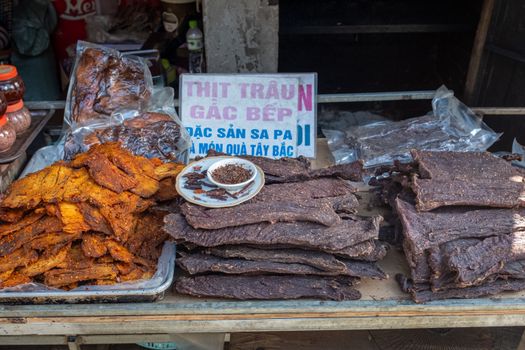
4. Thanh Ha Market: The Hidden Riverside Alley of Hanoi, Vietnam
While tourists pack the chaotic lanes of Dong Xuan Market or the weekend night market in Hanoi’s Old Quarter, elite travel advisors send their food-loving clients to Thanh Ha Market. This narrow, open-air alleyway runs near the Red River dyke, offering a raw, unvarnished look at Hanoian food culture.
The market is narrow, wet, and intensely lively. Motorbikes squeeze past baskets of fresh herbs, and the air is filled with the clean, citrusy scent of lemongrass, purple perilla leaves, and the smoky aroma of pork grilling over open braziers.
What to Eat
* Bun Cha: Pork patties and pork belly grilled over charcoal, served in a warm, sweet-and-sour dipping sauce with green papaya slices, rice vermicelli, and a mountain of fresh herbs.
* Banh Gio: Pyramid-shaped dumplings made from rice starch, filled with minced pork and wood-ear mushrooms, wrapped in banana leaves and steamed until silky smooth.
Pro-Tip
Thanh Ha is primarily a morning wet market that transitions into street food stalls around 11:00 AM. Skip the tourist-heavy spots and head to the narrow alleyway off Nguyen Thien Thuat street. Look for a stall operating out of a residential doorway with no sign—just a low-slung charcoal grill on the pavement and a few tiny blue stools. If you see the owner fan-grilling pork skewers wrapped in wild betel leaves (la lot), you have found the spot.
---
5. Luang Prabang Morning Market: The Foraged Wonders of Laos
While the Luang Prabang Night Market is famous for its tourist-friendly buffet alleys, the Morning Market (located in a dirt alleyway behind the old French-colonial villas of Sisavangvong Road) is where the real culinary magic happens. There are no souvenirs here—just local ingredients sourced from the surrounding jungles and the Mekong River.
The market is quiet and peaceful, with vendors whispering rather than shouting. The air smells of damp earth, wild lemongrass, and the sweet smoke of roasting sticky rice.
```
[Luang Prabang Morning Market]
==============================
Sisavangvong Road
|
[French-Colonial Villa]
\ (Narrow Dirt Alley)
\
* [Blue Tarp: Jeow Bong Vendor]
\
* [Khao Piak Sen Stalls]
\
Mekong Riverbank
```
What to Eat
* Khao Piak Sen: A comforting, thick noodle soup made from fresh tapioca and rice flour noodles, served in a rich chicken broth topped with crispy shallots, lemongrass, and fresh herbs.
* Sai Oua (Lao Pork Sausage): A coarse pork sausage packed with lemongrass, galangal, kaffir lime leaves, and bird's eye chilies, grilled over hot coals until the skin is blistered and crispy.
Pro-Tip
Arrive at 6:30 AM, right after the daily alms-giving ceremony. The light filtering through the French-colonial shuttered windows is spectacular. Look for a low-slung blue tarp where an elderly woman sits cross-legged selling hand-pounded Lao chili paste (jeow bong). Buy a small jar to take home; it is packed with caramelized shallots, garlic, and dried buffalo skin.
---
6. Pasar Gede Hardjonagoro: The Colonial Culinary Temple of Solo, Indonesia
Solo (Surakarta) is Yogyakarta’s quieter, more aristocratic sister city. At its heart lies Pasar Gede, a stunning indoor market designed by renowned Dutch architect Thomas Karsten in 1930. The building blends traditional Javanese design elements with grand Dutch colonial brickwork.
Inside, the market is incredibly clean, cool, and spacious, with high ceilings that let in soft, natural light. The air is sweet, dominated by the scent of boiling palm sugar, pandan leaves, and roasted peanuts.
What to Eat
* Nasi Liwet: Rich rice cooked in coconut milk, chicken broth, and lemongrass, served on a folded banana leaf with shredded chicken, a savory coconut milk custard (areh), and spicy tofu stew.
* Es Dawet Selasih: A chilled dessert of coconut milk, palm sugar syrup, basil seeds (selasih), and soft, green rice-flour jelly noodles, served in a small clay bowl.
Pro-Tip
Head straight to the second floor of the west building, tucked away behind the traditional textile vendors. Here, you will find a tiny, three-bench stall run by Ibu Lim. Her Cabuk Rambak—sliced rice cakes drizzled with a pale, savory sauce made from sesame seeds and grated coconut, served on a pincuk (folded banana leaf pinned with a toothpick)—costs less than 50 cents and is a rare royal delicacy you won't find anywhere else.
---
Quick Facts & Logistics
| Market Name | Location | Est. Cost per Meal (USD) | Best Time to Visit | How to Get There (Insider Route) |
| :--- | :--- | :--- | :--- | :--- |
| Guohua Street | Tainan, Taiwan | $4.00 - $8.00 | 8:30 AM - 11:30 AM | Take the HSR to Tainan Station, then transfer to the local train to Tainan Main Station. Walk 15 minutes west down Minquan Road. |
| Cecil Street Market | George Town, Penang | $2.00 - $4.00 | 11:00 AM - 2:00 PM | Take a local Grab ride to Lebuh Cecil. Tell the driver to drop you off at the wet market entrance, not the main food court side. |
| Pasar Ngasem | Yogyakarta, Indonesia | $1.50 - $3.00 | 7:00 AM - 10:00 AM | Walk south from the Sultan’s Palace (Kraton) through the residential lanes of the Water Castle (Taman Sari). |
| Thanh Ha Market | Hanoi, Vietnam | $2.00 - $5.00 | 11:00 AM - 1:00 PM | Walk north from the Old Quarter towards the Red River dyke. Enter the alleyway directly opposite the historic Ô Quan Chưởng gate. |
| Morning Market | Luang Prabang, Laos | $1.50 - $3.00 | 6:30 AM - 8:30 AM | Walk down the narrow dirt alleyway located between the Tourism Office and the old French school on Sisavangvong Road. |
| Pasar Gede | Solo, Indonesia | $1.00 - $2.50 | 8:00 AM - 11:00 AM | Take a short becak (cycle rickshaw) ride from Solo Balapan train station directly to the grand colonial entrance on Jalan Urip Sumoharjo. |
---
Why Travel Advisors Prefer These Markets
According to elite travel advisors, the shift away from massive, overcrowded street food hubs like Bangkok is driven by a desire for culinary preservation.
In places like Guohua Street or Pasar Gede, the vendors are not cooking for tourists looking for Instagram photos; they are cooking for their neighbors, business owners, and local families who have eaten at their stalls for generations. The recipes have not been toned down for western palates, the ingredients are sourced locally each morning, and the prices remain fair.
When you sit down at these markets, you are not just a customer in a fast-food line—you are an invited guest in a living, breathing culinary community. Skip the long lines of Bangkok and head to these crowd-free havens to experience the true soul of Asian street food.
---