From Paralyzed to Puzzled: My First Steps Up
Let me paint you a picture. It’s a beautiful spring day, and I’m standing at the base of the Eiffel Tower. My friends are excitedly pointing skyward, talking about the panoramic views from the top. Me? My stomach is doing a rather impressive imitation of a washing machine on spin cycle. My palms are sweaty, my knees feel like jelly, and my mind is screaming, “GET ME OUT OF HERE!”
That, dear reader, was my life with acrophobia. A crippling, irrational fear of heights that had followed me for as long as I could remember. It wasn’t just tall buildings; it was roller coasters, glass-bottomed floors, even certain bridges. It meant missing out on incredible travel experiences, like hiking that breathtaking cliffside trail in Cinque Terre, or paragliding over the Swiss Alps. My fear cast a long, dark shadow over my desire for adventure.
I tried everything: breathing exercises, exposure therapy (which usually ended in a panic attack), even hypnotism. Nothing worked. The thought of being more than a few feet off the ground was enough to send me spiraling. So, when my friend, Alex, a seasoned climber, suggested I try an indoor climbing wall, I laughed. Hard.
“Are you serious, Alex? I can barely stand on a step stool without feeling faint, and you want me to climb a wall?”
But Alex, bless her persistent soul, wasn’t easily deterred. She explained that indoor climbing wasn't just about scaling Everest; it was about problem-solving, building strength, and, crucially, being in a controlled environment. She promised me it would be different. She promised me it might just change my life. With a healthy dose of skepticism and a desperate yearning for change, I finally agreed.
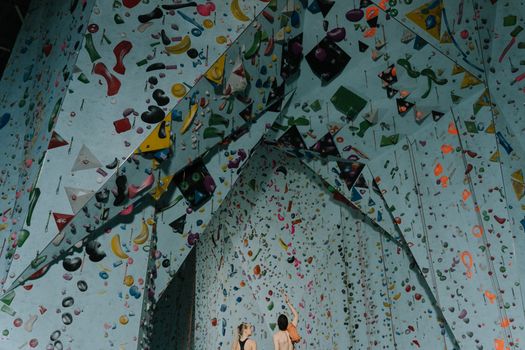
My first visit to "The Ascent Zone" in downtown Denver felt like stepping into another world. The air hummed with energy, a mix of upbeat music, the clatter of carabiners, and the earthy smell of chalk. Walls of vibrant, oddly shaped plastic holds reached towards a ceiling that seemed impossibly high. People of all ages and body types moved with grace, strength, and a surprising amount of focus. I felt utterly out of place, a fish out of water, or rather, a ground-dweller in a vertical universe.
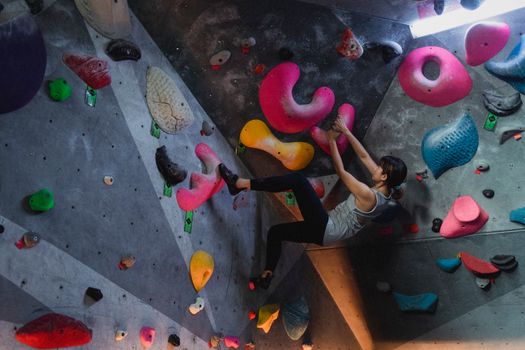
Alex led me to the bouldering area – shorter walls, no ropes, just thick crash pads below. My heart hammered against my ribs. Even a few feet up, my body screamed at me to get down. But then, something shifted. Alex pointed out the "problems" – sequences of holds marked by colored tape, each a puzzle to solve. She showed me how to use my feet, how to shift my weight, how to "read" the wall. It wasn't about brute strength, she emphasized, but about technique and balance.
Slowly, tentatively, I started. My first "climb" was barely four feet off the ground. My muscles trembled, my mind raced, but I focused on Alex’s calm instructions. "Trust your feet. Look for the next hold. Breathe." And then, I reached the top of that tiny problem. A wave of something unfamiliar washed over me: not relief, but a flicker of accomplishment. It was terrifying, yes, but also… exhilarating. That day, I didn't conquer my fear, but I certainly puzzled it into submission for a few precious minutes. And that, for an acrophobe like me, was nothing short of a miracle.
Bouldering: The Acrophobe's Secret Weapon
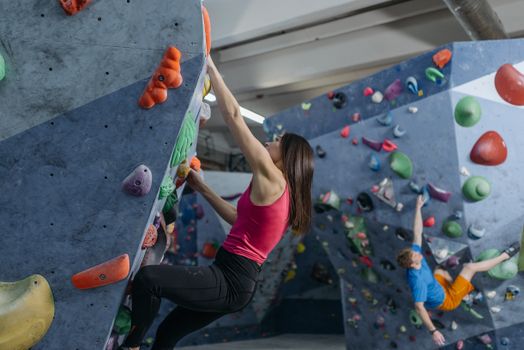
If the idea of being high up a wall, dangling from a rope, sends shivers down your spine, then bouldering is your secret weapon, just as it was mine. Bouldering involves climbing shorter walls (typically no more than 15-20 feet high) without ropes or harnesses, relying instead on thick padded mats for safety.
Why is this perfect for someone with a fear of heights?
1. Lower stakes: The heights are manageable. If you fall, you land on a soft mat. This significantly reduces the psychological barrier.
2. Focus on movement: Bouldering is all about solving intricate "problems" – sequences of holds that require strategic thinking, body positioning, and balance. Your mind is so engrossed in the puzzle that the height becomes a secondary concern.
3. Independence: You don't need a belayer (the person who manages the rope for you). You can go at your own pace, try a move, fall, rest, and try again without feeling like you're holding anyone up.
4. Quick progression: Because the problems are shorter, you get more attempts and faster feedback, leading to quicker learning and a greater sense of achievement.
My early bouldering sessions at The Ascent Zone became a ritual. I’d rent my ridiculously tight climbing shoes (a necessary evil, I learned) and spend hours navigating the colorful plastic landscape. My fear didn't vanish overnight. Every time I reached for a hold above my head, my stomach would lurch. But with each successful "send" of a problem, each time I pushed past that initial panic, a tiny crack appeared in the wall of my acrophobia.
I started noticing the subtle shifts. Instead of looking down and freezing, I'd focus on the texture of the hold, the angle of my foot, the next move. My brain was too busy calculating to spiral into panic. The feeling of my muscles working, the satisfaction of figuring out a tricky sequence – these sensations began to outweigh the fear. I wasn't just climbing a wall; I was climbing out of a mental cage.
Leaning Back and Letting Go: Trusting the Rope and Myself
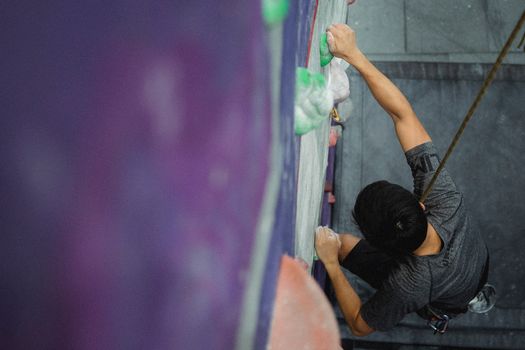
After a few months of bouldering, Alex gently nudged me towards top-roping. This meant much taller walls, a harness, a rope, and a belayer. My initial reaction was, predictably, pure terror. But the confidence I'd gained from bouldering had given me a new kind of courage.
The first time I strapped into a harness, the weight of the gear felt foreign and heavy. I watched as Alex, my belayer, meticulously checked our knots, the carabiners, and the belay device. This meticulousness, I discovered, was incredibly reassuring. Climbers are obsessive about safety, and that attention to detail helped quiet the frantic voice in my head.
The true test came when I had to lean back on the rope and let Alex lower me down. Every instinct screamed, "Don't let go! Hold on tight!" But Alex calmly coached me, "Trust the rope. Trust me. Lean back like you're sitting in a chair." With a shaky breath, I leaned. My world tilted. For a terrifying second, I felt utterly suspended, my feet dangling in the air, a good 30 feet off the ground. And then, slowly, steadily, Alex lowered me.
That descent was a revelation. It wasn't a fall; it was a controlled, graceful glide. The sensation of being suspended, once my greatest fear, became… almost peaceful. I learned to trust not just Alex, but the equipment, and most importantly, myself. I realized that falling wasn't failure; it was part of the process, a safe return to the ground to try again.
My climbing journey took me to different gyms across the country as I traveled for work. I loved the variety of routes at "Planet Granite" in San Francisco, the sheer scale of "Movement Climbing, Yoga & Fitness" in Denver, and the vibrant community vibe at "Brooklyn Boulders" in New York. Each gym offered new challenges, new heights, and new opportunities to incrementally push my boundaries. A day pass usually costs between $18-$30, with shoe and harness rentals adding another $5-$10. It’s an incredibly accessible sport to try out!
With each climb, I wasn't just strengthening my body; I was strengthening my mind. I was rewriting years of ingrained fear responses. The physical exertion, the mental focus, the triumphant feeling of reaching the top (or even just figuring out a particularly tricky move) became my new addiction.
The Ripple Effect: How Climbing Transformed My Entire World
The most profound change wasn't just that I could now stand on a balcony without hyperventilating (though that was a huge win!). It was how climbing completely rewired my brain and rippled into every other aspect of my life.
Increased Confidence:
There's something incredibly empowering about facing a challenge that once paralyzed you and conquering it, even in small increments. This newfound self-belief translated into my professional life. I started speaking up more in meetings, tackling daunting projects, and approaching new opportunities with a "why not me?" attitude.
Problem-Solving Skills:
Every climb is a puzzle. You have to analyze the route, plan your moves, adapt when things don't go as expected, and find creative solutions. This kind of strategic thinking became invaluable in my travels and daily life. Navigating a complex public transport system in a foreign city or dealing with an unexpected itinerary change no longer felt overwhelming; it felt like another climbing problem to solve.
Resilience & Patience:
You don't always "send" a route on the first try. Sometimes you fall, sometimes you get stuck, sometimes you have to rest and come back another day. Climbing taught me the importance of perseverance and the value of incremental progress. It taught me that failure is just feedback, and that patience, not just brute force, is key.
Mindfulness & Presence:
When you're 40 feet up a wall, your mind can't wander to your to-do list or past regrets. You are entirely in the present moment, focused on your breath, your balance, and the next hold. This intense focus became a form of moving meditation, a powerful antidote to anxiety and overthinking.
I remember a trip to Zion National Park a year after I started climbing. We were hiking Angel's Landing, a trail notorious for its steep drop-offs and chain-assisted sections. Old me would have turned back at the first sign of exposure. But new me, the climber me, felt a surge of adrenaline, not panic. I focused on my foot placement, on the sturdy chains, on the incredible views unfolding around me. I still felt a healthy respect for the height, but the crippling fear was gone. I reached the summit, tears streaming down my face, not from terror, but from overwhelming joy and gratitude. It was then I knew, definitively, that climbing had truly changed my life forever.
Ready to Climb? Your Actionable Guide to Starting Strong
Inspired to face your own fears or just try a fun new activity? Here’s your practical guide to getting started with indoor climbing:
- Find a Local Gym: A quick Google search for "climbing gym near me" will do the trick. Look for gyms that offer beginner classes or a dedicated bouldering area. Many gyms, like those in the "Movement" or "Earth Treks" chains, are fantastic for beginners.
- Try an Introductory Class: This is highly recommended! Most gyms offer a "Belay Lesson" or "Intro to Climbing" package. For around $30-$60, you'll learn basic safety, knot tying, belaying techniques, and proper climbing movement. It's the safest and most effective way to start.
- Go Bouldering First: If you’re truly nervous about heights, start with bouldering. It allows you to build foundational strength and technique without the added complexity of ropes and harnesses.
- Gear Up (Affordably!): You don't need to buy expensive gear right away. Most gyms offer rental packages for shoes and harnesses (typically $5-$10 each). Wear comfortable, athletic clothing you can move freely in.
- Focus on Technique, Not Strength: This is crucial. Climbing is more about balance, body positioning, and using your legs than it is about brute upper body strength. Listen to your instructors and watch experienced climbers.
- Bring a Friend: Climbing is incredibly social. Having a friend (especially one who knows the ropes, literally!) makes the experience more fun and less intimidating. They can encourage you, belay for you, and share in your triumphs.
- Don't Compare Yourself: Everyone starts somewhere. There will be seasoned climbers effortlessly floating up walls. Focus on your own progress, celebrate your small victories, and enjoy the journey.
- Hydrate and Snack: Climbing is a full-body workout. Bring a water bottle and a small snack to keep your energy up.
- Embrace the Fall: It sounds counterintuitive, but learning to fall safely (on the mats in bouldering, or being lowered gently in roped climbing) is a key part of the process. It builds confidence and reduces anxiety.
More Than a Workout: Community, Confidence, and Epic Views (Eventually!)
Indoor climbing is more than just a physical activity; it's a vibrant community. The camaraderie you'll find in a climbing gym is unlike almost any other sport. People cheer each other on, offer advice, and celebrate successes. It’s a fantastic way to meet new people, especially when you're traveling solo. I’ve made friends in climbing gyms from Seattle to Sydney, sharing beta (climbing lingo for advice on a route) and stories.
And let's not forget the Instagram-worthy moments! While you might not be taking selfies 50 feet up on your first day, the vibrant colors of the holds, the dynamic movements, and the sheer joy of overcoming a challenge make for incredible photo and video opportunities. Imagine capturing the moment you finally conquer that tricky route, chalk dust subtly clinging to your hands, a look of pure exhilaration on your face. That’s content gold, and a testament to your newfound bravery.
While this article focuses on indoor climbing, the ultimate reward for many (myself included!) is the gateway it provides to outdoor adventures. Having built my confidence and skills in a controlled environment, I've since tackled outdoor bouldering in Fontainebleau, France, and even multi-pitch climbs in the Red Rock Canyon, Nevada. The views from these natural rock faces are beyond anything I could have imagined when I was too scared to look down from a second-story balcony.
Your Vertical Journey Awaits!
If you're reading this and nodding along, secretly wishing you could conquer your own fear of heights, or simply looking for an exciting new challenge, I urge you: give indoor climbing a try. It’s accessible, incredibly rewarding, and genuinely transformative.
My journey from a terrified acrophobe to someone who actively seeks out vertical adventures is proof that the most profound changes often begin with a single, shaky step. Or in my case, a single, shaky handhold.
Don't let fear limit your adventures. Step into a climbing gym, embrace the challenge, and prepare to discover a strength and confidence you never knew you possessed. Who knows? It might just change your life forever, too.
Have you tried climbing? Or are you an acrophobe looking for a push? Share your stories and questions in the comments below! Let's inspire each other to reach new heights.
---