The hum of my phone vibrated against the wooden table, pulling me back from the rhythmic clanging of a blacksmith’s hammer. I was sitting in a tiny, sun-drenched courtyard in a village nestled deep within the Atlas Mountains, sipping mint tea so sweet it made my teeth ache. Outside, donkeys ambled past, laden with firewood, and the scent of baking bread drifted from a nearby home. My phone, a portal to a world of emails, notifications, and endless scrolling, felt utterly alien here. In that moment, I realized something profound: I wasn't just on vacation; I was time traveling.
We live in a world that accelerates daily, where new technologies become obsolete before we've even mastered them, and constant connectivity is the norm. But what if I told you there are still places on Earth where the internet is a distant rumor, cars are a novelty, and the rhythm of life is set by the sun, seasons, and ancient traditions? Villages where time truly seems to have stopped, not for a day or a week, but for a century or more. These aren't theme parks or curated experiences; they are living, breathing communities that have fiercely guarded their heritage against the relentless march of modernity.
I’ve been fortunate enough to wander through some of these incredible time capsules, and each journey has been a profound reminder of what we’ve gained – and perhaps lost – in our pursuit of progress. These aren't just destinations; they are invitations to slow down, connect, and witness a way of life that feels both ancient and deeply authentic. And trust me, you need to experience them before they inevitably change forever.
Ready to step back in time? Let’s go.
1. Where Monks Whisper & Mountains Watch: The Serenity of Hikkim, India
Imagine a place where the air is thin, the silence is profound, and the only sounds are the flapping of prayer flags and the occasional bray of a yak. Welcome to Hikkim, a tiny hamlet tucked away in the Spiti Valley of the Indian Himalayas. At an astounding altitude of over 14,400 feet, Hikkim proudly hosts the world's highest post office, a testament to its remote yet resilient spirit.
My journey to Hikkim was an adventure in itself, involving a bone-rattling jeep ride over treacherous mountain passes, each turn revealing vistas more breathtaking than the last. When I finally arrived, the sheer simplicity of life here was striking. Mud-brick homes clung to the mountainside, their flat roofs piled high with winter fodder. Locals, their faces weathered by the harsh sun and wind, greeted me with warm smiles and "Juley!" (hello in Spitian).
I spent an afternoon writing postcards at the famous post office, sending messages to friends and family that felt like dispatches from another era. But the real magic happened when I visited the ancient Hikkim Monastery. Inside, the scent of incense mingled with the faint musk of centuries-old scriptures. A young monk, no older than 12, offered me butter tea, his eyes sparkling with a wisdom beyond his years. We sat in companionable silence, watching the sunlight filter through a grimy window, illuminating dust motes dancing in the air. It was a moment of pure, unadulterated peace.
Practical Tips for Hikkim:
* Getting There: Hikkim is best accessed via Kaza, the administrative center of Spiti Valley. You can hire a shared taxi or a private jeep from Manali or Shimla. The roads are challenging and often closed in winter.
* Best Time to Visit: June to October, when the passes are open and the weather is relatively mild.
* Accommodation: Limited guesthouses and homestays are available in Kaza, with very basic options in Hikkim itself. Expect to pay around $15-25 USD per night for a homestay including meals.
* Must-Do: Send a postcard from the world's highest post office, visit the monastery, and simply soak in the incredible mountain scenery.
2. Italy's Dying City (That Refuses to Die): A Walk Through Civita di Bagnoregio
Perched precariously atop a volcanic plug, accessible only by a long, narrow pedestrian bridge, Civita di Bagnoregio is a ghost of its former self, yet utterly vibrant in its defiant beauty. Known as "the dying city" due to the constant erosion of its tufa rock foundations, Civita is a testament to human resilience and the enduring allure of ancient places.
I first saw Civita from a distance, a mirage shimmering in the Italian sun, a cluster of medieval buildings suspended in the sky. The walk across the bridge felt like a pilgrimage, each step taking me further from the present and deeper into history. Once inside its ancient gates, the silence was profound, broken only by the chirping of birds and the gentle rustle of leaves. No cars, no scooters, just cobblestone paths winding between honey-colored stone houses adorned with vibrant flowers.
I remember stumbling upon a tiny trattoria, its elderly owner, Nonna Maria, humming an old tune as she kneaded pasta. She served me the most exquisite cacio e pepe I’ve ever tasted, sharing stories of her childhood in Civita, a time when the village thrived with families and laughter. She spoke of the challenges, the dwindling population, but also of the fierce love that keeps Civita alive. Her passion was infectious. Exploring the narrow alleys, discovering hidden archways, and gazing out at the dramatic valley below, I felt a deep connection to the generations who had called this extraordinary place home.
Practical Tips for Civita di Bagnoregio:
* Getting There: Civita is a popular day trip from Rome (approx. 1.5-2 hours drive) or the nearby town of Orvieto. Parking is available at the base of the pedestrian bridge (ticket required for bridge access, approx. €5).
* Best Time to Visit: Spring and Fall offer pleasant weather and fewer crowds. Summer can be hot and busy.
* Accommodation: Very limited options within Civita itself (a few B&Bs), but plenty in nearby Bagnoregio or Orvieto.
* Must-Do: Walk across the bridge, explore every winding alley, enjoy a meal at a local trattoria, and capture the breathtaking views, especially at sunset.
3. Rice Terraces & Ancient Rhythms: The Hues of Mai Chau, Vietnam
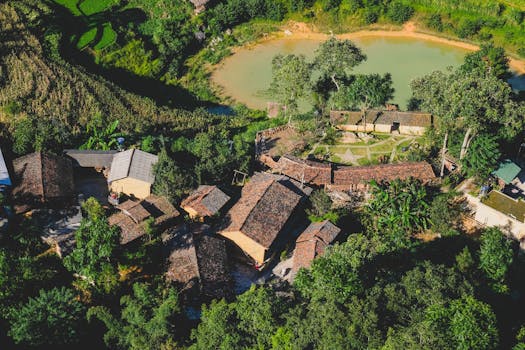
Leaving the bustling chaos of Hanoi behind, I journeyed west into the verdant valleys of Mai Chau, a region renowned for its stunning rice paddies and the traditional stilt houses of the White Thai ethnic minority. Here, life unfolds at a pace dictated by the seasons and the ancient rhythms of agricultural work.
My first morning in Mai Chau was a revelation. I woke up in a traditional homestay, the cool mountain air carrying the scent of damp earth and woodsmoke. Peeking out from my window, I saw the mist lifting to reveal a patchwork quilt of emerald rice fields stretching to the horizon, dotted with water buffalo grazing peacefully. It was a scene straight out of a painting.
I borrowed a rusty bicycle from my host family and spent hours cycling along narrow paths, past farmers tending their fields, children playing in the dirt, and women weaving intricate textiles on looms beneath their homes. One afternoon, I stopped at a local market, a riot of colors and sounds, where fresh produce, handmade crafts, and lively bartering filled the air. A friendly vendor offered me a small, sweet lychee, and despite the language barrier, her warm smile conveyed a welcome that transcended words. In Mai Chau, the simplicity of life is its greatest luxury, and genuine human connection is found around every corner.
Practical Tips for Mai Chau:
* Getting There: Regular tourist buses and minivans depart from Hanoi (approx. 3-4 hours).
* Best Time to Visit: October to May for pleasant weather. Avoid the peak rainy season (June-September). The "green season" (after planting) and "golden season" (before harvest) offer spectacular views of the rice paddies.
* Accommodation: Abundant homestays in traditional stilt houses, often including delicious home-cooked meals. Prices range from $10-30 USD per night.
* Must-Do: Cycle through the rice paddies, visit local villages (like Lac village or Poom Coong village), try a traditional cooking class, and enjoy a cultural performance.
4. Weavers of Time: The Living Traditions of Taquile Island, Peru
Floating on the impossibly blue waters of Lake Titicaca, the highest navigable lake in the world, Taquile Island is a place where ancient Andean traditions not only survive but thrive. The Quechua-speaking community here lives a communal life, largely devoid of modern amenities, and is renowned for its exquisite hand-woven textiles.
My arrival on Taquile after a serene boat journey from Puno felt like stepping onto another planet. There are no roads, no cars, just stone paths winding up the terraced hillsides. The islanders, dressed in their vibrant traditional clothing, greeted us with quiet dignity. What struck me most was their unique social code, where men are the primary knitters, always carrying their wool and needles, while women are the weavers. The designs and colors of their hats and belts even convey marital status and social standing!
I stayed with a local family in a simple, solar-powered home, sharing meals of fresh trout from the lake, potatoes, and quinoa soup. One evening, the patriarch of the family, a wise-looking man with calloused hands, showed me how he knitted intricate patterns, explaining the symbolism behind each stitch. The next morning, as the sun rose over the vast expanse of Lake Titicaca, painting the sky in fiery hues, I watched the women spinning wool, their movements as ancient and graceful as the mountains surrounding us. It was a powerful reminder of how deeply culture can be woven into the fabric of daily life.
Practical Tips for Taquile Island:
* Getting There: Take a tour boat or a public ferry from Puno (approx. 2.5-3 hours). Many tours combine Taquile with Uros floating islands.
* Best Time to Visit: May to October for dry, sunny weather. Be prepared for cold nights due to the high altitude.
* Accommodation: Homestays with local families are the most authentic option, often including meals. Prices around $20-40 USD per night.
* Must-Do: Learn about their weaving traditions, buy authentic textiles directly from the artisans, hike to the island's highest point for panoramic views, and experience a homestay. Be mindful of the altitude (over 13,000 feet).
5. Atlas Mountain Keepsakes: The Berber Heart of Aït Benhaddou, Morocco
Emerging from the vast, golden expanse of the Moroccan desert, the ancient fortified village (ksar) of Aït Benhaddou rises like a magnificent sandcastle. A UNESCO World Heritage site, this mud-brick marvel has stood for centuries, a silent sentinel on the former caravan route between the Sahara and Marrakech.
Driving towards Aït Benhaddou, I felt a familiar thrill – the feeling of approaching a place steeped in history, a place where time has slowed to a crawl. Crossing the seasonal river (or a small bridge during drier months), I entered the ksar, and it was like stepping onto a movie set – which, coincidentally, it often is! (Think Gladiator, Game of Thrones, Lawrence of Arabia). But beyond the cinematic allure, Aït Benhaddou is a living, breathing community, albeit a small one.
I spent hours getting wonderfully lost in its labyrinthine alleys, climbing crumbling staircases, and exploring the ancient granaries and homes. The intricate geometric patterns carved into the mud walls spoke of generations of artistry. I found myself in a small shop where a cheerful Berber man offered me sweet mint tea and explained the art of making traditional rugs, his hands moving with practiced ease. He shared stories of his ancestors who lived here, trading salt and spices, and how his family still strives to preserve their heritage. Watching the sunset paint the ksar in fiery oranges and deep reds, I understood why this place has captivated so many – it’s a living monument to a timeless past.
Practical Tips for Aït Benhaddou:
* Getting There: Aït Benhaddou is a popular day trip from Marrakech (approx. 3-4 hours drive) or Ouarzazate (approx. 30 minutes). Shared taxis (grand taxis) are available, or you can join a tour.
* Best Time to Visit: Spring and Fall offer pleasant temperatures. Summer can be extremely hot.
* Accommodation: Several charming guesthouses and riads are available in the modern village across the river, or a few very basic options within the ksar itself. Prices around $30-60 USD per night.
* Must-Do: Explore the ksar's alleys and climb to the granary for panoramic views, learn about Berber culture, enjoy mint tea with a local, and witness a spectacular sunset over the mud-brick village.
6. Gassho-zukuri Dreams: The Winter Wonderland of Shirakawa-go, Japan
Nestled deep in the snowy mountains of Gifu Prefecture, Shirakawa-go is a fairytale village straight out of a storybook. Famous for its unique gassho-zukuri farmhouses – traditional steeply pitched thatched roofs designed to withstand heavy snowfall – this UNESCO World Heritage site offers a glimpse into a bygone era of Japanese rural life.
My visit to Shirakawa-go was in winter, and the village was draped in a thick blanket of pristine white snow. It was utterly magical. The gassho-zukuri houses, with their distinctive A-frame roofs resembling hands clasped in prayer, looked like gingerbread houses dusted with icing sugar. The silence was profound, broken only by the crunch of my boots on the snow and the distant murmur of the Shogawa River.
I visited one of the preserved farmhouses, now a museum, and learned about the ingenious architecture and the communal effort required to maintain these massive roofs. Later, I checked into a traditional minshuku (family-run guesthouse), where I slept on a futon on tatami mats and feasted on a delicious, multi-course meal of local mountain delicacies. The warmth of the irori (traditional sunken hearth) was a welcome comfort after a day in the snow. As I walked through the village at night, illuminated by soft lights, with snowflakes gently falling, I felt a deep sense of peace and gratitude for experiencing such a perfectly preserved piece of history.
Practical Tips for Shirakawa-go:
* Getting There: Accessible by bus from Takayama (approx. 50 minutes) or Kanazawa (approx. 1.5 hours).
* Best Time to Visit: Winter (December-February) for the iconic snowy scenery, or Spring/Autumn for pleasant weather and vibrant colors.
* Accommodation: Staying in a traditional minshuku is highly recommended, but book well in advance, especially for winter. Expect prices from $100-200 USD per night, often including dinner and breakfast.
* Must-Do: Explore the Gassho-zukuri Minkaen Outdoor Museum, visit the observation deck for panoramic views, experience a traditional minshuku stay, and wander through the village at night.
7. The Sky's Embrace: Gásadalur, Faroe Islands
Imagine a place so remote, so untouched, that until 2004, its only connection to the outside world was a helicopter or a grueling hike over a mountain pass. Gásadalur, perched dramatically on the edge of a cliff on the island of Vágar in the Faroe Islands, is that place. With a population of barely 18 people, it’s a tiny slice of heaven where time truly feels irrelevant.
My journey to Gásadalur was part of a larger exploration of the Faroe Islands, an archipelago of rugged beauty and breathtaking landscapes. As I drove through the newly opened tunnel, the anticipation was palpable. Emerging on the other side, I was met with a sight that stole my breath: the iconic Múlafossur waterfall plunging directly into the Atlantic Ocean, framed by the tiny, turf-roofed houses of Gásadalur village.
The air was crisp and clean, carrying the scent of salt and damp earth. I walked through the village, past sheep grazing on impossibly green grass, their bells jingling softly. There’s no shop, no bustling street, just a handful of homes, a small church, and an overwhelming sense of tranquility. I sat on a bench overlooking the dramatic cliffs, watching seabirds soar and the powerful waves crash below. It wasn't about doing anything specific; it was about simply being. Being present, being silent, and soaking in the raw, untamed beauty of a place that exists entirely on its own terms, far removed from the clamor of modern life.
Practical Tips for Gásadalur:
* Getting There: Gásadalur is on Vágar island, accessible by car through a tunnel. Vágar also hosts the only airport in the Faroe Islands (FAE).
* Best Time to Visit: Summer (June-August) for milder weather and longer daylight hours, though the Faroe Islands are beautiful year-round. Be prepared for unpredictable weather.
* Accommodation: Very limited options in Gásadalur itself (a couple of guesthouses), but more choices in nearby villages like Bøur or Sørvágur. Prices can be higher than other destinations.
* Must-Do: Marvel at the Múlafossur waterfall, walk through the village, hike some of the surrounding trails, and simply immerse yourself in the incredible, wild landscape.
Your Journey Back in Time: Practical Tips for a Timeless Adventure
Visiting these villages isn't just about ticking off a bucket list; it's about embracing a different way of life, even if just for a few days. Here’s how to make the most of your journey:
- Embrace the Slow Pace: Forget your city schedule. Life moves slowly here. Be patient, observe, and let the rhythm of the village guide you.
- Digital Detox is Key: Cell service and Wi-Fi might be non-existent or unreliable. See this as an opportunity to truly unplug and connect with your surroundings and the people you meet.
- Respect Local Customs: These communities cherish their traditions. Dress modestly, ask permission before taking photos of people, and be mindful of local etiquette. A little research goes a long way.
- Learn Basic Phrases: Even a few words in the local language (hello, thank you, please) can open doors and show respect.
- Pack Light & Smart: You might be walking a lot, and amenities will be basic. Bring layers, comfortable shoes, a reusable water bottle, and a small first-aid kit.
- Carry Cash: Many of these remote villages operate on a cash-only basis. ATMs are rare.
- Support Local Economies: Stay in local guesthouses, eat at small eateries, and buy handicrafts directly from artisans. Your money directly benefits the community.
- Be Prepared for Basic Amenities: Don't expect five-star luxury. Hot water might be scarce, and electricity intermittent. This is part of the authentic experience.
- Leave No Trace: Practice responsible tourism. Pack out everything you pack in, minimize waste, and respect the natural environment.
Don't Wait: Experience History Before It Fades
These villages are more than just pretty places; they are living museums, repositories of human history, culture, and resilience. They remind us of a time when communities were tightly knit, work was done by hand, and life was lived in harmony with nature.
But the world is changing rapidly, and even these remote havens are not immune. Roads are built, internet cables are laid, and the allure of modern conveniences slowly but surely encroaches. The chance to experience these places in their untouched, authentic glory is a finite one.
So, I urge you, don't just dream about stepping back in time. Make it happen. Choose one of these incredible destinations, pack your bags, and prepare for an adventure that will not only transport you to another century but also deeply enrich your soul.
Which timeless village will you visit first? Share your thoughts and start planning your journey back in time today!
---