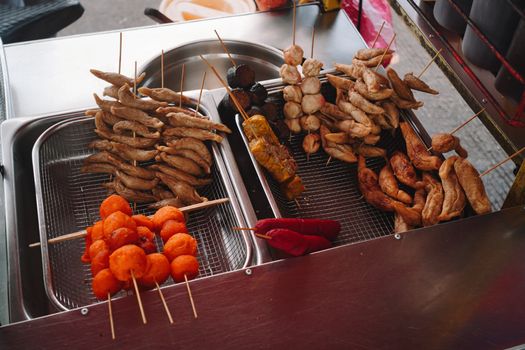
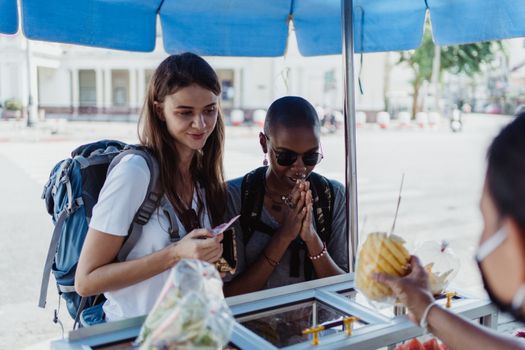
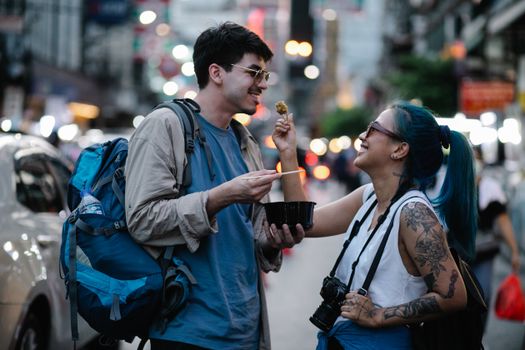
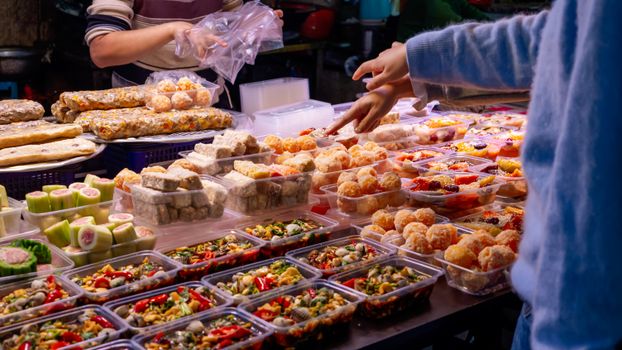
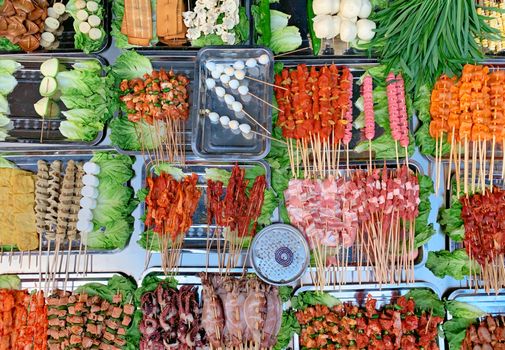
The aroma hit me first – a pungent, almost acrid smell that clung to the humid air of the Siem Reap night market. Then I saw them: glistening, dark, and undeniably insect-shaped, piled high on a vendor’s cart. Crickets, grasshoppers, silk worms, and… scorpions. My stomach did a nervous flip. My travel buddy, ever the instigator, nudged me. "Come on, you're a travel blogger! You have to try it."
My heart pounded a rhythm against my ribs. Every instinct screamed "NO!" But a deeper, more adventurous part of me, the part that craved authentic experiences and stories worth telling, whispered, "Why not?" That night, with a hesitant hand and a gulp of courage, I bit into a crispy fried cricket. And my world, or at least my culinary world, expanded forever. It was… surprisingly good. Salty, crunchy, a bit like a savory chip.
This, my fellow food explorers, is the essence of true culinary adventure. It’s about stepping outside your comfort zone, silencing the voice that says "that looks weird," and embracing the incredible flavors that often hide behind an intimidating appearance. Before they become the next big thing on a trendy fusion menu back home, these "scary" street foods are waiting to blow your mind, one surprising bite at a time.
Join me as we dive headfirst into the delicious unknown, uncovering dishes that might make your eyebrows raise but will undoubtedly make your taste buds sing.
The Art of the Unconventional Bite: Why 'Scary' is Often 'Amazing'
Let's be honest, our perceptions of food are heavily influenced by culture. What's a delicacy in one country might be considered off-limits in another. The vibrant, chaotic world of street food is where these cultural nuances truly shine. It's where innovation meets tradition, and where resourcefulness often leads to incredible flavors.
The "scary" factor often comes from unfamiliar textures, unusual ingredients, or preparation methods we're not accustomed to. But here's the secret: these are often the very foods that offer the most profound and memorable gastronomic experiences. They challenge your palate, teach you about local customs, and connect you to a destination in a way a fancy restaurant never could.
Tips for Approaching the Unknown:
- Embrace the Local Way: Watch how locals eat it, ask questions (even with gestures!), and don't be afraid to mimic.
- Start Small: You don't have to devour an entire plate. Ask for a small portion or just one piece to try.
- Look for Crowds: A busy stall usually means fresh ingredients and delicious food. Locals know best!
- Observe Hygiene: While street food isn't always pristine, look for vendors who seem to be taking care: fresh oil, clean surfaces, food being cooked to order.
- Be Open-Minded: Leave your preconceived notions at the hotel. This is about discovery!
From Silk Worms to Scorpion Skewers: Asia's Crunchy & Creamy Delights
Asia is a treasure trove for adventurous eaters. The sheer diversity and willingness to experiment with textures and ingredients mean you're always in for a surprise.
1. Fried Insects (Thailand & Cambodia): The Ultimate Crunchy Snack
My initial cricket experience in Siem Reap was just the beginning. In Thailand, particularly around Bangkok's Khao San Road or the bustling night markets of Chiang Mai, fried insects are a common sight. You'll find everything from grasshoppers and bamboo worms to silk worms and even scorpions.
- What looks scary: The fact that they are, well, insects. A whole, intact scorpion on a stick is definitely an eye-opener.
- What tastes amazing: The crunch! Most fried insects are seasoned with salt, pepper, and sometimes a hint of chili, making them incredibly savory and addictive. Silk worms have a creamier, almost buttery interior, while grasshoppers are delightfully crisp and nutty. Scorpions are mostly shell, offering a satisfying crunch with a subtle, earthy flavor.
- My Anecdote: After my first cricket, I graduated to a scorpion. Holding it up for a photo, I felt like a culinary warrior. The first bite was mostly air and crispiness, but the novelty and the flavor – surprisingly mild and nutty – made it an instant win. It’s less about the meat and more about the experience and the satisfying crunch.
- Where to find it: Night markets across Thailand (Bangkok, Chiang Mai), Siem Reap (Pub Street, Night Market).
- Price: Typically 20-50 THB/KHR per small bag or skewer.
- Instagram-worthy moment: Holding a scorpion skewer with a daring grin!
2. Balut (Vietnam & Philippines): The Brothy, Savory Surprise
This one is often cited as the ultimate food challenge, and for good reason. Balut is a fertilized duck embryo that is incubated for a specific period (usually 14-21 days) before being boiled and eaten from the shell.
- What looks scary: The idea of a partially developed duck embryo. You might see a feather, a beak, or even bones. It’s not for the faint of heart.
- What tastes amazing: It's incredibly rich and complex. You crack the top of the egg, sip the savory, concentrated broth inside, then peel away the shell to eat the rest. The yolk is creamy, the white is firm, and the embryo itself has a unique, slightly gamey flavor and a soft, almost liver-like texture. It's often served with salt, pepper, and Vietnamese coriander (rau răm) for an aromatic kick.
- My Anecdote: My first balut experience in Hanoi was a mix of trepidation and curiosity. The vendor smiled encouragingly as I tapped the shell. The broth was surprisingly delicious – a burst of umami. Eating the rest was a mental hurdle, but the flavors were so intense and satisfying that I quickly forgot my initial squeamishness. It's a truly nourishing and flavorful snack.
- Where to find it: Street vendors in Hanoi (especially Old Quarter), Ho Chi Minh City, and throughout the Philippines. Look for vendors with steaming pots of eggs.
- Price: Around 10,000-20,000 VND (less than $1 USD).
- Tips: Eat it warm. Add a pinch of salt and pepper, and a sprig of rau răm if available. Don't think, just taste!
Beyond the Usual Tacos: Latin America's Bold Flavors
Latin America offers a vibrant tapestry of flavors, and some of its most intriguing dishes push the boundaries of conventional ingredients, often rooted in ancient culinary traditions.
1. Escamoles & Huitlacoche (Mexico): The Pre-Hispanic Delicacies
Mexico’s culinary heritage is vast, and beyond the tacos and tamales, lie some truly ancient and unique ingredients.
- Escamoles (Ant Larvae): Often called "Mexican caviar," these translucent, pearl-like ant larvae are harvested from agave plants.
- What looks scary: They’re ant larvae. Tiny, squishy, and... ant larvae.
- What tastes amazing: They are incredibly delicate, with a buttery, nutty flavor and a texture that pops in your mouth, similar to caviar but softer. Often sautéed with butter, garlic, and epazote, then served in tacos or quesadillas.
- My Anecdote: In Oaxaca, I stumbled upon a market stall selling escamoles. The vendor, an elderly woman with a warm smile, offered me a small taste. The surprising richness and subtle sweetness, wrapped in a fresh tortilla, instantly won me over. It felt like tasting history.
- Where to find it: Seasonal (spring), often in markets in central Mexico (Oaxaca, Mexico City), and sometimes in high-end restaurants.
- Price: Can be expensive due to the difficulty of harvesting, but street versions are more affordable (50-150 MXN for a small portion).
- Huitlacoche (Corn Smut): A fungus that grows on corn kernels, turning them into puffy, greyish-black, spore-filled galls.
- What looks scary: It looks like diseased corn. Not exactly appetizing to the uninitiated.
- What tastes amazing: It has an intensely earthy, mushroom-like flavor, often described as smoky and savory. It's a gourmet ingredient, used in quesadillas, soups, and stews.
- My Anecdote: I first encountered huitlacoche in a quesadilla from a street vendor in Mexico City. The deep, umami flavor was unlike any mushroom I’d ever tasted, adding incredible depth to the simple tortilla and cheese. It’s a testament to Mexican ingenuity to turn a plant disease into a delicacy.
- Where to find it: Markets and street food stalls throughout Mexico, especially during the rainy season.
- Price: Affordable, similar to other quesadilla fillings (20-40 MXN).
2. Cuy (Guinea Pig) (Peru): The Andean Delicacy
In the Andean regions of Peru, cuy (guinea pig) is a traditional and revered dish, often reserved for special occasions.
- What looks scary: For many Westerners, the sight of a whole roasted guinea pig, often served with its head intact, can be confronting due to its association with pets.
- What tastes amazing: Cuy has dark, rich meat that's often compared to duck or rabbit, with a gamey flavor. When roasted, the skin becomes incredibly crispy and flavorful, much like crispy pork crackling. It's usually served with potatoes and a spicy sauce.
- My Anecdote: In Cusco, after hiking Machu Picchu, I decided it was time to try cuy. The restaurant was filled with locals, a good sign. When the whole roasted cuy arrived, it was definitely a moment of "Oh, wow." But the crispy skin and the tender, flavorful meat were a revelation. It felt like a truly authentic and ancient dining experience.
- Where to find it: Restaurants and some specialized street stalls in Cusco, Arequipa, and other Andean cities.
- Price: Can range from 30-70 PEN depending on the size and preparation.
- Tips: Don't be shy about eating with your hands to get all the delicious crispy bits!
Europe & Africa's Lesser-Known Gems: Challenging Palates
While Europe and Africa might be known for more conventional street foods, there are still plenty of adventurous bites to be found if you know where to look.
1. Hákarl (Fermented Shark) (Iceland): The Ultimate Acquired Taste
Iceland's culinary landscape is shaped by its harsh environment and Viking heritage, leading to some truly unique preservation methods. Hákarl is perhaps the most infamous.
- What looks scary: It's not so much how it looks (small, white cubes) but how it smells. The pungent, ammonia-rich aroma is intense and unforgettable.
- What tastes amazing: Okay, "amazing" is a strong word here, as it's definitely an acquired taste. But for those who embrace it, hákarl offers a deeply savory, umami flavor with a chewy texture. The initial ammonia burn gives way to a complex, fishy taste. It’s less about deliciousness and more about cultural immersion and bragging rights.
- My Anecdote: In Reykjavik, after much mental preparation, I found a vendor offering hákarl samples. The smell alone was enough to make my eyes water. I took a small cube, held my breath, and chewed quickly. The initial assault of ammonia was intense, but as I swallowed, a strange, almost sweet fishiness lingered. It’s not something I'd crave, but it was an unforgettable experience and a true taste of Icelandic tradition. A shot of Brennivín (Icelandic schnapps) immediately afterward is highly recommended!
- Where to find it: Food markets in Reykjavik (e.g., Kolaportið flea market), some restaurants, and at food festivals.
- Price: Often served in small, complimentary samples or as part of a tasting plate (500-1000 ISK).
- Tips: Take a very small piece. Hold your breath if the smell is too much. Have a strong drink ready to cleanse your palate.
2. Babbouche (Snail Soup) (Morocco): The Aromatic Elixir
In the bustling Djemaa el-Fna square of Marrakech, amidst snake charmers and storytellers, you'll find vendors ladling out steaming bowls of babbouche.
- What looks scary: A bowl full of snails in their shells, bobbing in a dark, aromatic broth. For those unaccustomed to eating snails, it can be a visual challenge.
- What tastes amazing: This isn't your French escargot swimming in butter. Babbouche is a fragrant, herbaceous broth infused with dozens of spices – mint, anise, thyme, licorice root, and more. The snails themselves are earthy and chewy, absorbing the flavors of the broth. It's considered medicinal and incredibly comforting.
- My Anecdote: The cool desert night in Marrakech made a bowl of babbouche incredibly appealing. The vendor handed me a small skewer to extract the snails. Each sip of the broth was a warm, spicy hug, and the chewy snails were a delightful texture contrast. It felt like a secret local ritual, a perfect way to end a day exploring the souks.
- Where to find it: Primarily in Djemaa el-Fna square in Marrakech, and other Moroccan markets.
- Price: Very affordable, 5-10 MAD per bowl.
- Tips: Use the provided toothpick-like skewer to pull the snails from their shells. Don't forget to slurp the delicious broth!
The Thrill of the Hunt: How to Find Your Next Adventurous Bite
So, you're ready to embark on your own "scary but amazing" street food quest? Here’s your battle plan:
- Hit the Markets & Night Bazaars: These are your prime hunting grounds. The sheer variety and concentration of food stalls make them ideal for discovery.
- Follow the Locals: If a stall has a long line of locals, it's a good bet for freshness, authenticity, and flavor. They know where the good stuff is!
- Ask for Recommendations: Don't be shy! Ask your hotel staff, local guides, or even friendly fellow travelers for their favorite unusual street foods. They might point you to a hidden gem.
- Learn Key Phrases: "Delicious," "how much," "thank you" in the local language can go a long way in building rapport with vendors.
- Observe & Assess: Before committing, take a quick look. Does the food look fresh? Is the cooking area reasonably clean? Are ingredients stored properly? Trust your gut, but also remember that street food culture is different from restaurant dining.
- Don't Be Afraid to Point: If language is a barrier, pointing and smiling works wonders.
- Be Patient & Persistent: Some of these foods are seasonal or found only in specific areas. The hunt is part of the adventure!
- Carry Cash: Many street food vendors only accept local currency.
- Stay Hydrated & Carry Hand Sanitizer: Basic travel precautions are always a good idea.
Conclusion: Embrace the Fear, Savor the Flavor
My journey from a hesitant cricket-eater to an enthusiastic balut-sipper has taught me one profound lesson: the most incredible travel memories often come from stepping just a little bit outside your comfort zone. These "scary" street foods aren't just meals; they're cultural gateways, a testament to human ingenuity, and an invitation to see the world through a different, more adventurous lens.
So, on your next adventure, dare to be brave. Dare to look beyond the familiar. Dare to try that dish that makes your eyebrows raise. You might just discover your new favorite flavor, a fantastic story to tell, and a deeper connection to the incredible culinary tapestry of our world.
What's the "scariest" food you've ever tried that turned out to be amazing? Or what's on your adventurous food bucket list? Share your stories and inspire fellow travelers in the comments below! Let’s keep the spirit of culinary exploration alive!
---