Beyond Old Faithful: 6 National Parks More Stunning Than Yellowstone Worth Considering
I was sitting in a two-hour exhaust-choked gridlock in Hayden Valley, staring at the rear bumper of a diesel motorhome while a lone bison grazed 200 yards away, when I realized something had gone deeply wrong with the American road trip. Yellowstone is iconic—nobody disputes that. But when you are elbowing three hundred tour bus passengers just to catch a glimpse of the Grand Prismatic Spring through a thick film of selfie sticks, the magic dissolves fast.
Three months after that frustrating summer in Wyoming, I stepped off a gravel airstrip onto a patch of glacial silt deep in Alaska’s backcountry. The air tasted clean, cold, and electric with ozone and spruce resin. There were no tour buses. No boardwalk ropes. Just five million acres of jagged peaks, blue ice, and vast silence.
If you crave jaw-dropping geology, rich wildlife, and landscapes that make your heart stutter—minus the theme-park congestion—it is time to look beyond the obvious. Here are six national parks more stunning than Yellowstone worth considering for your next epic getaway.
---
1. North Cascades National Park, Washington: The "American Alps"
If Yellowstone is a grand theatrical performance, North Cascades is a wild, untamed opera. Located barely three hours northeast of Seattle, this park receives fewer visitors in an entire year than Yellowstone gets on a single warm July weekend.
```
+-------------------------------------------------------------------+
| "North Cascades receives fewer visitors in a year than |
| Yellowstone sees on a single July weekend." |
+-------------------------------------------------------------------+
```
Why It Outshines Yellowstone
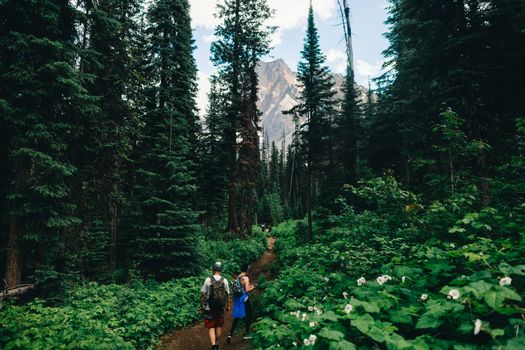
Yellowstone’s rolling plateau offers wide horizons, but North Cascades gives you vertical drama. Over 300 active glaciers crown razor-sharp granite jagged peaks, spilling down into glacial lakes of a neon, glowing turquoise color so intense it looks retouched. Because the rock ground down by glaciers (glacial flour) remains suspended in the water, sunlight reflects off it to produce an unreal electric-teal shade.
What to Do
* Hike the Cascade Pass to Sahale Arm: This 12-mile round-trip trail ascends through old-growth hemlock before popping out into subalpine meadows choked with heather, paintbrush, and black bears gorging on huckleberries.
* Drive State Route 20: Stop at the Diablo Lake Overlook during midday when the sun hits the water at the exact angle to ignite its supernatural turquoise hue.
> Pro-Tip: Skip the crowded trailhead at Heather Pass. Instead, park at the lesser-known Easy Pass trailhead at 6:00 AM. You will climb through a larch forest that turns molten gold by late September, with total solitude guaranteed for the first four miles.
---
2. Wrangell-St. Elias National Park, Alaska: Scale Beyond Imagination
To truly grasp raw scale, you must abandon the lower 48 states. At 13.2 million acres, Wrangell-St. Elias is large enough to fit six Yellowstones inside its boundaries. It houses nine of the sixteen highest peaks in the United States, yet it sees only a fraction of Yellowstone's annual visitation.
Why It Outshines Yellowstone
Yellowstone’s wildlife watching often feels like a safari drive inside a sanctuary. Wrangell-St. Elias is untamed, pure wilderness. Here, mountain goats balance on shear rock precipices above massive rivers of ice, and brown bears roam valleys that have never felt a boot print. The park fuses volcanic history with active glaciation—you can literally strap on crampons and crunch across the blue ice of the Root Glacier while staring up at active, snow-capped volcanoes.
What to Do
* Explore the Ghost Town of Kennicott: Base yourself in the historic copper mining camp nestled deep inside the park. The 14-story red wooden mill building leaning against the mountainside looks like a set from a gothic Western film.
* Ice Trek the Root Glacier: Grab a local guide in McCarthy and spend five hours trekking past sapphire-blue meltwater pools, dramatic ice caves, and deep moulins.
> Pro-Tip: Do not attempt to drive the rough 60-mile McCarthy Road in a standard rental car without two full-sized spare tires. Instead, fly in via bush plane from Chitina with Wrangell Mountain Air. The low-altitude flight over braided glacial rivers is worth every penny.
---
3. Jiuzhaigou Valley National Park, China: Nature’s Technicolor Masterpiece
Yellowstone’s geothermal basins are famous for their spectral rings of thermophilic bacteria. But if hyper-vibrant water features are what you seek, Jiuzhaigou Valley in Sichuan province, China, operates on an entirely different artistic plane.
Why It Outshines Yellowstone
Jiuzhaigou translates to "Nine Village Valley." It is a network of multi-tiered travertine waterfalls cascades emptying into dozens of crystal-clear lakes that range in color from icy mint to deep peacock teal. Unlike Yellowstone’s delicate boardwalk paths, Jiuzhaigou’s elevated wooden walkways wind seamlessly through untouched primeval forests, where fallen ancient trees lie perfectly preserved at the bottom of calcium-carbonate-rich lakes.
What to Do
* Five Flower Lake (Wuhua Hai): The crown jewel of the valley. The mineral-rich water is so transparent that you can count the rings on submerged ancient logs 30 feet below the surface.
* Nourilang Waterfall: A massive travertine curtain waterfall stretching nearly 1,000 feet wide, framing dramatically against fiery autumn foliage in October.
> Pro-Tip: Take the park’s eco-shuttle straight to the highest point—Primeval Forest—at 7:30 AM opening time. Hike downhill against the flow of the tour groups, who almost all start at the lower lakes and work their way up.
---
4. Torres del Paine National Park, Chile: The Patagonian Crown
If Yellowstone’s Lamar Valley represents the ultimate high-plains landscape, Torres del Paine represents the pinnacle of dramatic mountain topography.
Why It Outshines Yellowstone
Yellowstone is vast and sprawling, but much of its terrain is topographically gentle. Torres del Paine, by contrast, is aggressively dramatic. Golden pampas grass plains stretch toward vertical horn-like granite peaks (Los Cuernos) that slice directly into the Patagonian sky. Herds of wild guanacos graze peacefully alongside turquoise lagoons filled with floating, wind-sculpted icebergs from the Southern Patagonian Ice Field.
What to Do
* Trek the "W" or "O" Circuit: Experience multi-day wilderness backpacking at its world-class best. You will cross suspension bridges suspended over roaring glacial rivers and sleep beneath towering ice sheets.
* Mirador Base de las Torres: The iconic sunrise hike. A steep scramble up a boulder field rewards you with a amphitheater view of three vertical granite spires bathed in brilliant orange light.
> Pro-Tip: Patagonia is infamous for horizontal winds exceeding 60 mph. Skip lightweight pop-up tents; if you are camping, rent four-season mountaineering tents in Puerto Natales or book your bed space at the refugios (mountain lodges) exactly six months in advance.
---
5. Banff & Jasper National Parks, Canada: The Icefields Parkway Corridor
While technically two contiguous national parks, the combined stretch of Banff and Jasper connected by the Icefields Parkway represents the most breathtaking road trip in North America.
```
+-----------------------------------+
| BANFF & JASPER: AT A GLANCE |
+-----------------------------------+
| - 144 miles of continuous views |
| - 100+ visible glaciers |
| - Grizzly & Elk density matches |
| Yellowstone's ecosystem |
+-----------------------------------+
```
Why It Outshines Yellowstone
Yellowstone’s Grand Loop Road offers geothermal spots separated by long stretches of dense pine lodgepole forests. The 144-mile Icefields Parkway connecting Banff and Jasper, however, offers non-stop alpine scenery from start to finish. You drive parallel to wall-to-wall 11,000-foot peaks, hanging glaciers, and neon-blue lakes like Peyto and Moraine without losing sight of the high peaks.
What to Do
* Peyto Lake: View this fox-shaped glacial lake from the summit of Bow Summit. The color is so vibrant that visitors regularly ask if dyes are added to the basin.
* Maligne Lake & Spirit Island: Take an early morning boat cruise down a narrow glacial fjord in Jasper to one of the most photographed, isolated pine islands on Earth.
> Pro-Tip: To skip the soul-crushing parking chaos at Lake Louise and Moraine Lake, avoid standard private vehicles entirely. Book the official Parks Canada shuttle, or hire an e-bike from Lake Louise Village to ride the quiet, closed-to-traffic Moraine Lake Road at dawn.
---
6. Fiordland National Park, New Zealand: Prehistoric Wilderness
Occupying the southwestern corner of New Zealand’s South Island, Fiordland is a dramatic landscape carved by ancient glaciers, where dark mountain walls rise vertically out of ink-black sea waters.
Why It Outshines Yellowstone
Yellowstone’s arid climate can feel dusty during peak summer months. Fiordland is lush, moody, and rain-drenched in the best possible way. When it rains in Fiordland—which it does up to 200 days a year—thousands of temporary waterfalls cascade down vertical granite cliffs, dropping hundreds of meters into Milford and Doubtful Sounds. It feels prehistoric, primordial, and utterly untouched by modern man.
What to Do
* Overnight Cruise on Doubtful Sound: Ten times larger and vastly quieter than crowded Milford Sound, an overnight boat trip here lets you kayak past fur seal colonies and sleep in dead silence surrounded by towering fjords.
* Hike the Milford Track: Known as "the finest walk in the world," this 33-mile trail takes four days to cross pristine rivers, alpine passes, and temperate rain forests carpeted in thick green moss.
> Pro-Tip: Do not be deterred by a rainy forecast. Fiordland is actually more stunning during a downpour. Pack high-end Gore-Tex rain gear, leave the camera in a dry bag, and enjoy the visual spectacle of thousands of instant waterfalls coming alive along the highway.
---
Trip Planning Matrix: Logistics & Budget
Planning an alternative national park expedition requires balancing budget, travel style, and seasonal timing. Here is how these top options stack up side-by-side:
| National Park | Best Time to Visit | Est. Daily Cost ($ USD) | Primary Access Hub | Standout Feature |
| :--- | :--- | :--- | :--- | :--- |
| North Cascades (USA) | July – September | $120 - $220 | Seattle (SEA) | Alpine lakes & zero crowds |
| Wrangell-St. Elias (USA) | June – August | $300 - $550 | Anchorage (ANC) | Vast glaciers & ghost towns |
| Jiuzhaigou Valley (China) | September – October | $150 - $280 | Chengdu (TFU) | Multicolored travertine lakes |
| Torres del Paine (Chile) | November – March | $200 - $400 | Punta Arenas (PUQ) | Vertical granite horns & pampas |
| Banff & Jasper (Canada) | June – September | $180 - $350 | Calgary (YYC) | Glacial parkways & sheer scale |
| Fiordland (New Zealand) | December – March | $220 - $420 | Queenstown (ZQN) | Dramatic coastal fjords & mist |
---
The Final Verdict: Which Park Should You Choose?
Yellowstone will always hold a cherished spot in travel history, but it no longer holds a monopoly on breathtaking natural wonder.
- If you want high mountain peaks without the crowds, head to North Cascades.
- If you dream of unbridled scale and ice-age landscapes, lock in Wrangell-St. Elias.
- If dramatic water features and wild colors drive your itinerary, book a flight toward Jiuzhaigou Valley.
Pack your boots, leave the traffic jams behind, and reclaim the quiet magic of the great outdoors.
---