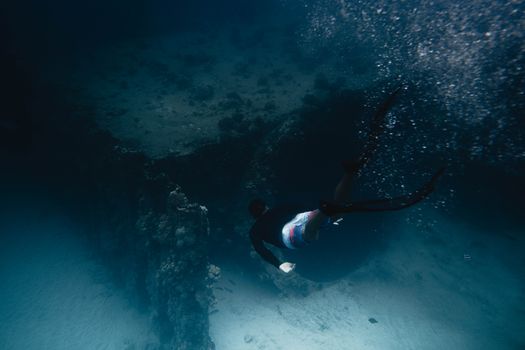
Oh, the ocean! Its vastness, its mystery, its vibrant ecosystems teeming with life – it’s a world that has always captivated me. But here’s a confession: I’m not a strong swimmer. In fact, for years, the very idea of venturing into deep water sent a shiver down my spine. I’d gaze longingly at photos of colorful coral reefs and playful dolphins, convinced that this magnificent realm was forever out of my reach. I'd stand on the shore, watching others snorkel and dive, a knot of longing and frustration in my stomach. "If only," I'd sigh, "I could see that without having to swim."
Then, a few years ago, on a trip to Mauritius, a local tour operator casually mentioned "sea walking." My ears perked up. "Sea walking?" I asked, skepticism lacing my voice. "But... I can't swim." He simply smiled, "Doesn't matter. You walk on the bottom, with a helmet. You breathe normally." My mind was blown. That day, I walked on the ocean floor, surrounded by iridescent fish, feeling the gentle sway of the current, and a whole new world opened up to me. It wasn't just an adventure; it was a revelation. It shattered my preconceived notions and ignited a passion to discover every possible way a non-swimmer like me could experience the magic beneath the waves.
So, if you, like the old me, have always dreamed of exploring the ocean but thought your lack of swimming prowess held you back, prepare to have your mind blown. I've scoured the globe, tried some myself, and researched countless options to bring you the ultimate list of underwater adventures that absolutely everybody – yes, even you, my fellow non-swimmers – needs to experience before they die. These aren't just activities; they're doorways to another dimension, offering unparalleled encounters with marine life and the sheer wonder of our blue planet. Let's dive in!
1. The Dry & Dazzling: Underwater Observatories & Tunnels
Imagine walking through a bustling city street, but instead of skyscrapers, you’re surrounded by schools of fish, majestic sharks, and graceful sea turtles. That’s the magic of an underwater observatory or tunnel. These incredible feats of engineering allow you to descend into the ocean (or a massive aquarium) and view marine life from a completely dry, climate-controlled environment. No getting wet, no special gear, just pure, unadulterated awe.
My first experience with this was at the Eilat Underwater Observatory Marine Park in Israel. You walk along a pier, then descend a spiral staircase into a large, submerged chamber with massive windows. It felt like I was inside a giant fishbowl, but I was the one being watched by the curious creatures outside! The Red Sea's vibrant corals and diverse fish species were right there, inches away. It was an incredibly peaceful and mesmerizing experience, perfect for families, couples, or anyone seeking a tranquil encounter with the deep.
Beyond observatories, many world-class aquariums feature spectacular walk-through tunnels that simulate an underwater journey. The Dubai Aquarium & Underwater Zoo at the Dubai Mall boasts one of the largest suspended aquariums in the world, with a 48-meter walk-through tunnel. Seeing enormous sharks and stingrays glide silently overhead is genuinely breathtaking and makes for some seriously Instagram-worthy moments. Similarly, the Okinawa Churaumi Aquarium in Japan has an incredible "Kuroshio Sea" tank with a huge acrylic panel where you can watch whale sharks and manta rays.
For the ultimate luxury, consider dining or even staying in an underwater restaurant or hotel. The Ithaa Undersea Restaurant at Conrad Maldives Rangali Island, or Subsix at Niyama Private Islands Maldives, offer gourmet meals surrounded by the ocean's beauty. Imagine sipping champagne as a reef shark glides past your window – talk about a dinner story! These experiences are often on the pricier side (expect hundreds for a meal, thousands for a stay), but they are truly once-in-a-lifetime.
Practical Tips:
* Best Locations: Eilat (Israel), Dubai (UAE), Okinawa (Japan), Maldives, Sentosa (Singapore), Monterey Bay Aquarium (USA).
* Cost: Observatories/aquarium tunnels typically range from $30-$80 USD. Underwater restaurants are significantly more, from $150-$500+ per person.
* Accessibility: Most are wheelchair and stroller friendly, making them great for all ages and mobility levels.
* Photography: Bring a good camera! The lighting can be tricky, but the views are incredible.
2. Submarine Safaris: Deep Dives Without Getting Wet
Want to go really deep, explore shipwrecks, and see marine life in their natural, untouched habitat, all from the comfort of a dry, air-conditioned cabin? Then a tourist submarine safari is your ticket to an unparalleled underwater adventure. These aren’t your typical glass-bottom boats; these are legitimate submarines that descend hundreds of feet below the surface.
My first submarine experience was with Atlantis Submarines in Grand Cayman. As we slowly submerged, watching the surface disappear above us, a quiet excitement rippled through the cabin. The pilot narrated our journey, pointing out vibrant coral formations, schools of tropical fish, and even a sunken ship. Seeing the vibrant colors of the reef illuminated by the submarine’s lights, and watching a barracuda eye us curiously through the porthole, was a truly surreal experience. You feel like a deep-sea explorer, without any of the risks or training.
Atlantis Submarines operates in several stunning locations, including Hawaii (Maui, Oahu, Kona), Aruba, Grand Cayman, and Guam. Each location offers a unique underwater landscape, from volcanic reefs to historic shipwrecks. In Sharm El Sheikh, Egypt, the Yellow Submarine offers similar tours into the Red Sea's famous reefs.
These tours typically last about 1.5 to 2 hours, with approximately 45 minutes to an hour spent underwater. The submersibles are designed with large viewports, ensuring everyone gets a fantastic view. It's a fantastic way to see larger marine life and deeper ecosystems that aren't accessible from the surface.
Practical Tips:
* Best Locations: Hawaii (USA), Grand Cayman, Aruba, Guam, Sharm El Sheikh (Egypt), Barbados, St. Martin.
* Cost: Expect to pay around $100-$200 USD per person, depending on the location and duration.
* Motion Sickness: While generally smooth, if you're prone to motion sickness, consider medication beforehand, though the views usually distract from any discomfort.
* Booking: Book in advance, especially during peak season, as spots are limited.
3. Sea Walking & Helmet Diving: Walking on the Ocean Floor
This is the adventure that changed my perspective, and it's perhaps the most hands-on (or feet-on!) underwater experience for non-swimmers. Sea walking, also known as helmet diving, allows you to literally walk on the seabed, breathing normally through a specially designed helmet that is supplied with air from the surface. You don’t need to swim, you don’t need to hold your breath, and you don’t even need to take off your glasses!
My sea walk in Mauritius was unforgettable. After a brief safety lesson, I donned the heavy, clear helmet. The weight felt strange at first, but once I descended the ladder into the water, it became surprisingly light. The water level came up to my shoulders inside the helmet, and I could breathe as easily as on land. As my feet touched the sandy bottom, surrounded by curious fish, I felt a rush of pure wonder. The guides are always nearby, leading you along, offering bread to attract fish, and ensuring your safety. It’s an incredible feeling of weightlessness and immersion.
Popular destinations for sea walking include:
* Mauritius: Many operators offer tours, often combined with island hopping.
* Andaman & Nicobar Islands (India): Havelock Island is famous for its clear waters and vibrant reefs.
* Bali (Indonesia): Tanjung Benoa and Sanur offer fantastic sea walking experiences.
* Boracay (Philippines): Known for its stunning white beaches and clear waters, perfect for this activity.
* Great Barrier Reef (Australia): Some pontoon operators offer helmet diving as an add-on.
This experience is incredibly interactive. You're not just observing; you're part of the underwater world, surrounded by schools of fish that swim right up to you. It's an absolute must-do for anyone wanting a truly immersive, yet non-swimming, underwater adventure.
Practical Tips:
* Best Locations: Mauritius, Andaman & Nicobar, Bali, Boracay, some Great Barrier Reef operators.
* Cost: Typically ranges from $50-$100 USD for a 20-30 minute walk, often including boat transfers.
* Safety: Always choose reputable operators who prioritize safety briefings and have experienced guides.
* Ear Pressure: Like flying, you might need to equalize pressure in your ears by pinching your nose and blowing gently. Guides will explain this.
* What to Wear: Swimwear is fine, and many operators provide wetsuits if the water is cool.
4. Semi-Submersibles & Glass-Bottom Boats: Surface-Level Wonders
For those who prefer to stay closer to the surface or have a lower tolerance for being completely submerged, semi-submersibles and glass-bottom boats offer fantastic alternatives. These options provide excellent views of coral reefs and marine life without requiring you to get wet or venture too far from the boat.
Glass-bottom boats
are exactly what they sound like: boats with transparent panels on the bottom, allowing you to look directly down into the water. They are perfect for all ages, great for families with young children, and ideal for those who might be a bit nervous about more intense underwater experiences. I’ve taken several glass-bottom boat tours, particularly in the Caribbean and around the Great Barrier Reef, and they offer a relaxed way to spot turtles, colorful fish, and intricate coral gardens. You get a fantastic overview of the shallow reef ecosystems.
Semi-submersibles
take it a step further. These vessels have an observation deck below the waterline, accessed by a ladder or stairs from the main boat deck. You sit in a comfortable, air-conditioned cabin with large windows, looking out into the reef. The top deck remains above water, so you can enjoy the sun and sea breeze, then descend for your underwater viewing. It’s the best of both worlds! I remember a semi-submersible tour in Key West where we saw a stunning array of fish and even a small nurse shark resting on the seabed. It felt like a mini-submarine ride, but with the reassurance of being connected to the surface.
These options are wonderful for experiencing the beauty of the ocean without any physical exertion or overcoming any fear of water. They're also often included as part of larger island tours or reef excursions.
Practical Tips:
* Best Locations: Great Barrier Reef (Australia), Caribbean Islands (e.g., Key West, Cancun, Bahamas), Red Sea (Egypt), Hawaii, Fiji, Maldives.
* Cost: Glass-bottom boat tours can be as low as $20-$50 USD. Semi-submersibles are usually $50-$100 USD, often part of a larger tour package.
* Photography: Reflections can be an issue with glass, but you can still get decent photos.
* Motion Sickness: If you're prone to seasickness, sitting in the middle of the boat or taking medication beforehand can help.
5. Discover Scuba Diving (DSD) & SNUBA: Beginner-Friendly Breathing
Okay, so these options do involve getting wet, but here’s the crucial part: they are specifically designed for non-swimmers or beginners and do NOT require certification! They are incredible stepping stones to experiencing the freedom of breathing underwater.
Discover Scuba Diving (DSD):
This is not a certification course, but an introductory experience under the direct supervision of a certified instructor. You'll typically start with a brief theory session, learn some basic skills in very shallow water (or a pool), and then go for an actual dive in shallow ocean waters (usually no deeper than 12 meters/40 feet). The beauty of DSD is that your instructor is right there with you, holding your hand, literally, if you need it. They handle all the equipment and navigation, allowing you to focus purely on breathing and enjoying the marine life.
My DSD experience in Thailand was transformative. I was nervous, but the instructor's calm demeanor and clear instructions put me at ease. We practiced breathing from the regulator in waist-deep water, then slowly descended. The feeling of weightlessness and the silence of the underwater world, broken only by the sound of my own breathing, was profound. I saw clownfish darting in anemones, vibrant corals, and felt like I had finally unlocked a secret world. It’s an incredible way to test the waters (pun intended!) and see if scuba diving is for you. Many non-swimmers successfully complete DSDs globally.
SNUBA:
This is a hybrid between snorkeling and scuba diving. With SNUBA, you breathe through a regulator that is connected by a long hose to an air tank floating on a raft at the surface. This means you don't wear a heavy tank on your back! You can descend to about 6 meters (20 feet) and explore the reef, but you are always tethered to the surface. It’s perfect for those who want to experience breathing underwater and get a closer look at marine life without the full commitment or equipment of scuba. It requires minimal instruction and no heavy gear.
Practical Tips:
* Best Locations: Any major dive destination in the world – Caribbean, Southeast Asia (Thailand, Philippines, Indonesia), Australia, Red Sea.
* Cost: DSD usually ranges from $80-$150 USD, including equipment rental and instructor. SNUBA is often $60-$100 USD.
* Health: You'll need to fill out a medical questionnaire. Certain conditions (e.g., asthma, heart conditions, recent surgery) might prevent you from participating.
* Reputation: Always choose PADI or SSI certified dive centers with excellent safety records and experienced instructors.
* Comfort: If you’re truly a non-swimmer, make sure your instructor knows this. They will provide extra support and reassurance.
6. Unique Underwater Stays & Dining Experiences
For the ultimate bucket-list indulgence, why not live underwater, even if just for a night or a meal? Beyond the restaurants mentioned earlier, a select few hotels offer fully submerged rooms or lodges, providing an unparalleled, intimate connection with the ocean.
Imagine waking up to the sight of fish swimming past your bedroom window, or having breakfast as a reef shark glides by. This isn't science fiction; it's a reality at places like The Muraka at Conrad Maldives Rangali Island. This multi-level residence features a stunning master bedroom suite submerged five meters (16 feet) below the surface of the Indian Ocean, offering 180-degree panoramic views of the coral reef. It’s an architectural marvel and an experience that redefines luxury.
Another iconic option is Jules’ Undersea Lodge in Key Largo, Florida. This isn't a luxury resort; it's a unique, accessible habitat for certified divers (or those willing to do a DSD to get there) who want to spend the night 21 feet underwater. While it requires a bit more effort to reach, the experience of living in a completely submerged habitat, with pizzas delivered in waterproof cases, is incredibly unique and adventurous.
Even if a full overnight stay is out of budget, the aforementioned Ithaa Undersea Restaurant and Subsix in the Maldives offer extraordinary dining experiences. These aren't just meals; they're theatrical performances where the ocean is your stage. The vibrant marine life provides constant entertainment, making every bite an unforgettable moment.
Practical Tips:
* Best Locations: Maldives (Conrad Maldives, Niyama Private Islands), Key Largo (Florida, USA).
* Cost: Prepare for significant expenses. Underwater rooms can be thousands of dollars per night. Dining experiences are typically hundreds per person.
* Booking: These are exclusive experiences, so book far in advance.
* Experience: These are not just places to stay or eat; they are destinations in themselves, offering unparalleled immersion.
7. Snorkeling with Life Vests & Guided Tours: Gentle Introductions
While snorkeling technically involves swimming, I've included it because with the right approach and equipment, it becomes incredibly accessible for non-swimmers. The key is a well-fitting life vest or buoyancy aid. This allows you to float effortlessly on the surface without expending any energy, freeing you to focus entirely on the underwater world below.
Many tour operators in popular snorkeling destinations (like the Caribbean, Thailand, or the Great Barrier Reef) provide life vests as standard. They also often offer guided snorkeling tours where an instructor can stay close to you, offering support and pointing out marine life. My first "snorkeling" experience post-sea-walking epiphany involved a life vest in a shallow, calm bay in Bali. I simply floated, face down, breathing through the snorkel, and was absolutely mesmerized by the colorful fish and corals just beneath me. It was a gentle, non-intimidating way to get a taste of the reef.
Another great option is a snuba-doo or similar surface-viewing device. These are small, motorized boats with an open viewing panel on the bottom. You sit on top, and as the boat glides along, you look down through the window, getting a panoramic view of the reef below, all while staying completely dry and above water.
Practical Tips:
* Best Locations: Anywhere with clear, calm waters and vibrant reefs.
* Cost: Often included in boat tours, or gear rental can be $10-$20 USD.
* Equipment: Ensure your mask fits snugly and your snorkel is comfortable. Practice breathing through it in shallow water.
* Safety: Always go with a buddy or on a guided tour, especially if you're not confident in the water. Choose calm, shallow areas.
Don't Let Fear Hold You Back!
My journey from a hesitant land-lover to an enthusiastic underwater explorer has been nothing short of magical. The ocean's depths hold wonders that truly must be seen to be believed, and I'm living proof that you don't need to be an Olympic swimmer to experience them. These adventures offer a glimpse into a world so beautiful, so serene, and so utterly different from our own, that they are guaranteed to leave an indelible mark on your soul.
Whether you choose the dry comfort of an observatory, the thrill of a submarine, the immersive fun of sea walking, or even take a cautious dip with a DSD, each experience promises a unique connection to our planet's most magnificent ecosystem. Don't let your perceived limitations stop you from ticking these incredible underwater adventures off your bucket list.
Which of these breathtaking underwater experiences will you conquer first? Share your dreams and plans in the comments below! And don't forget to tag #TripsoraUnderwater on your social media posts – we can't wait to see your adventures!