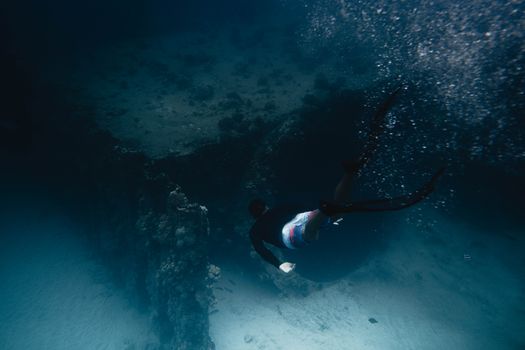
"I can't swim." For years, those three words felt like a barrier, a declaration that the vast, mysterious, and utterly captivating underwater world was simply not for me. I’d stand on pristine beaches, watching snorkelers glide effortlessly over coral gardens and divers descend into the azure depths, a pang of envy mixed with resignation in my chest. The ocean, with all its vibrant secrets, seemed eternally out of reach.
But then, something shifted. A few years ago, on a trip to Mauritius, a friend challenged my self-imposed limitation. "You don't need to swim to walk on the seabed," she declared, pointing to a brochure for "Sea Walking." Skeptical but intrigued, I decided to take the plunge – metaphorically, of course. And just like that, with a heavy, oxygen-filled helmet on my head and a reassuring guide by my side, I descended a ladder, step by hesitant step, until my feet touched the sandy bottom. The moment I looked up, surrounded by schools of iridescent fish darting through coral, a giant parrotfish nibbling nearby, my world changed forever. It was magical, breathtaking, and utterly transformative. And I hadn't swum a single stroke.
That experience opened my eyes to a whole new world of possibilities for us non-swimmers (and even those who can swim but prefer not to!). The travel industry has finally caught on, realizing that the desire to explore the ocean isn't limited by swimming ability. Today, trending underwater adventures for non-swimmers are booming, offering incredible access to marine life without ever needing to kick a fin. From walking among fish to cruising in personal submarines, the ocean is officially open for everyone. So, if you've ever dreamed of meeting Nemo face-to-face, or simply want to witness the vibrant ballet of a coral reef, get ready. Your deep-sea dreams are about to become a reality!
1. Walk on Water (or Rather, Under It!): The Marvel of Sea Walking & Helmet Diving
My personal epiphany, sea walking (often called helmet diving), is hands down one of the most incredible and accessible underwater adventures for non-swimmers. Imagine literally walking on the ocean floor, breathing normally through a specially designed helmet that gets a continuous supply of fresh air from the surface. Your hair stays dry, your makeup stays put (if you’re into that!), and you’re completely surrounded by marine life. It’s like being an astronaut on an alien planet, but instead of stars, you're enveloped by schools of dazzling fish.
How it Works:
You wear a weighted belt (don't worry, it's comfortable!) and a large, clear helmet placed over your head. You descend a ladder, and the air pressure in the helmet keeps the water out. Guides are always with you, often holding your hand and pointing out marine wonders. The experience is typically in shallow, calm waters (around 10-20 feet deep) where coral reefs thrive.
My Anecdote:
That first step onto the seabed in Mauritius was surreal. I remember gasping – a silent gasp within my helmet – as a vibrant blue tang swam inches from my face. Our guide even handed us bread, and within seconds, we were engulfed in a shimmering cloud of fish, gently bumping against our helmets. It felt like a scene from a documentary, except I was in it. The feeling of weightlessness combined with the grounded sensation of walking was truly unique. I even managed to pose for a few "look, no hands!" underwater photos, my biggest smile hidden behind the helmet glass.
Where to Try It & What to Expect:
* Mauritius: Grand Baie, Belle Mare. Often combined with other water sports. Expect to pay around $50-$100 USD for a 20-30 minute session.
* Phuket, Thailand: Many operators in Patong and surrounding areas. Similar pricing.
* Boracay, Philippines: A popular spot for helmet diving, offering clear waters and abundant fish.
* Bali, Indonesia: Tanjung Benoa, Nusa Dua.
* Safety First: Always choose reputable operators with clear safety briefings and experienced guides. They'll explain ear equalization techniques (like pinching your nose and blowing gently) to manage pressure changes.
Tripsora Tip:
Wear comfortable swimwear. Don't worry about prescription glasses – you can wear them inside the helmet! Bring an underwater camera or waterproof phone case to capture the magic.
2. The Submerged Safaris: Exploring in Semi-Submersibles & Passenger Submarines
If the idea of getting wet still gives you pause, or you simply want to go deeper and stay completely dry, then semi-submersibles and full-fledged passenger submarines are your ticket to ride. These aren't just for scientists anymore; they're tourist attractions offering unparalleled views of the underwater world.
Semi-Submersibles:
These vessels typically have an above-water deck for surface views and an air-conditioned, submerged viewing cabin with large windows below the waterline. You can walk around, sit comfortably, and watch the marine drama unfold outside. They usually stay in shallower, reef-rich areas.
Passenger Submarines:
For a truly immersive (and deep!) experience, full submarines take you hundreds of feet below the surface. These are purpose-built for tourism, offering panoramic views through large portholes. You’ll descend into the twilight zone, witnessing shipwrecks, deep-sea corals, and marine life rarely seen by human eyes.
My Anecdote:
In Waikiki, Hawaii, I took an Atlantis Submarine tour. Descending slowly, the sunlight began to fade, replaced by the eerie glow of the submarine's lights. We saw a sunken airplane wreck (deliberately placed as an artificial reef!) teeming with fish, and even a couple of reef sharks cruising by. The sheer scale of the ocean and its inhabitants became so much more apparent from within that pressurized cabin. It felt like being in a giant, slow-motion aquarium, but with real, wild creatures just inches away.
Where to Try It & What to Expect:
* Atlantis Submarines: Operates in Hawaii (Maui, Oahu, Big Island), Guam, Barbados, and Grand Cayman. Prices range from $100-$250 USD per person for a 1-2 hour tour. They often offer day and night dives.
* Maui, Hawaii: Known for its vibrant reefs and whale watching (in season), offering great submarine views.
* Grand Cayman: Famous for its wall dives and clear waters, excellent for submarine exploration.
* Red Sea, Egypt: Sharm El Sheikh offers several submarine tours exploring its famous coral reefs.
* Tripsora Tip: Book window seats if possible for the best views. If you're prone to motion sickness, take medication beforehand, although the ride is generally very smooth.
3. The Hybrid Approach: Snuba & Scuba Doo (Personal Underwater Scooters)
These options bridge the gap between snorkeling and diving, offering more freedom than sea walking but without the full commitment of scuba certification. They're fantastic for non-swimmers who are comfortable in water and want a bit more autonomy.
Snuba:
This is a fantastic middle ground. You wear a mask and fins like snorkeling, but breathe through a regulator connected by a long hose to an air tank floating on a raft on the surface. This allows you to explore deeper (up to 20 feet) without carrying a tank on your back or needing certification. You can swim around freely, guided by an instructor, experiencing the weightlessness of diving. While you can swim with Snuba, many non-swimmers find the buoyancy control and constant air supply incredibly reassuring, allowing them to focus on the underwater sights.
Scuba Doo (Personal Underwater Scooters):
Imagine riding a scooter underwater! Scuba Doo is a motorized, personal submersible with a large dome helmet that provides a continuous supply of air. You sit on a seat, steer with handlebars, and glide effortlessly through the water at a shallow depth (around 10-20 feet). Your head stays dry in the dome, and you can enjoy panoramic views of the reef. It’s like a combination of helmet diving and a mini-sub.
My Anecdote (from a friend):
My friend, Sarah, who is a complete non-swimmer but loves adventure, tried Scuba Doo in Aruba. She described it as "pure joy." "I was so nervous at first," she told me, "but once I was down there, gliding past schools of fish and vibrant coral, it felt so natural. My head was completely dry, and I could just focus on steering and looking around. It was like being in a video game, but real!"
Where to Try It & What to Expect:
* Snuba: Widely available in the Caribbean (Aruba, Grand Cayman, St. Maarten), Mexico (Cancun, Cozumel), and parts of Australia (Great Barrier Reef). Prices typically range from $70-$120 USD for a 1-2 hour experience.
* Scuba Doo: Predominantly found in the Caribbean (Aruba, Barbados, Grand Cayman) and some parts of Mexico. Expect to pay around $90-$150 USD.
* Tripsora Tip: For Snuba, wear a wetsuit or rash guard for sun protection and buoyancy. For both, listen carefully to your instructor and practice basic hand signals.
4. Underwater Observatories & Aquariums: Dry Dives into Marine Majesty
Sometimes, the simplest solutions are the most profound. For those who prefer to stay entirely dry but still crave the magic of the ocean, world-class underwater observatories and aquariums offer incredible, immersive experiences without ever touching the water. These aren't just fish tanks; they're meticulously designed ecosystems that bring the ocean to you.
Underwater Observatories:
These unique structures are built directly into the ocean, allowing you to descend into a dry, glass-walled viewing chamber that's literally surrounded by the natural marine environment. It's like being in a giant, stationary submarine, but with the comfort of a visitor center.
World-Class Aquariums:
Modern aquariums are engineering marvels, featuring massive walk-through tunnels, multi-story tanks, and interactive exhibits that transport you to various marine habitats. They offer a controlled environment where you can learn about and appreciate countless species, from tiny seahorses to majestic whale sharks.
My Anecdote:
The Underwater Observatory Park in Eilat, Israel, was a revelation. Descending into the glass tower, I felt like I was sinking into the Red Sea itself. Outside, vibrant corals stretched as far as the eye could see, and schools of fish swam past the windows, completely oblivious to our presence. It offered a quiet, contemplative way to appreciate the reef's beauty, especially for someone who, at the time, was still hesitant about getting wet. Later, walking through the gigantic tunnel at the Dubai Aquarium, with sharks and rays gliding overhead, felt like an out-of-body experience.
Where to Try It & What to Expect:
* Underwater Observatory Park, Eilat, Israel: A pioneer in its field, offering stunning views of the Red Sea's coral reefs. Entrance fees are around $25-$35 USD.
* Dubai Aquarium & Underwater Zoo, UAE: Located in the Dubai Mall, it boasts one of the world's largest suspended aquariums and a walk-through tunnel. Tickets around $40-$60 USD.
* Okinawa Churaumi Aquarium, Japan: Home to whale sharks and manta rays in its massive Kuroshio Sea tank. Entrance around $18-$25 USD.
* Monterey Bay Aquarium, California, USA: Renowned for its focus on local marine life and innovative exhibits, including a three-story kelp forest. Tickets around $50-$60 USD.
* Tripsora Tip: Visit during feeding times at aquariums for extra excitement. Check for behind-the-scenes tours for an even deeper dive into marine conservation.
5. Luxury Underwater Living: Sleep, Dine & Immerse
For the ultimate, no-effort-required underwater immersion, why not live underwater? The world of luxury travel now offers incredible opportunities to sleep, dine, or even get married beneath the waves. These experiences are certainly a splurge, but they promise an unforgettable, Instagram-worthy encounter with the ocean's tranquility.
Underwater Hotel Suites:
Imagine waking up to the gentle sway of fish outside your bedroom window, or having dinner as a reef shark glides past. Several exclusive resorts now offer underwater suites, providing 24/7 panoramic views of the marine world in unparalleled comfort.
Underwater Restaurants:
Dine on gourmet cuisine while surrounded by the vibrant ecosystem of a coral reef. These unique restaurants offer a multi-sensory experience where the food is as exquisite as the view.
My Anecdote:
While I haven't personally stayed in an underwater suite (yet!), I've seen countless incredible photos and videos. A friend who honeymooned at The Muraka in the Maldives described it as "living in a dream." She recounted watching a turtle graze on the coral outside their bedroom at dawn, and the serene feeling of being completely enveloped by the blue. It’s an aspirational experience, a true bucket-list item that redefines luxury travel.
Where to Try It & What to Expect:
* The Muraka, Conrad Maldives Rangali Island: The world's first underwater hotel residence. Expect prices to be in the tens of thousands per night.
* Atlantis The Palm, Dubai: Offers stunning underwater suites with views into the Ambassador Lagoon. Prices typically start from $1,000-$2,000+ per night.
* Ithaa Undersea Restaurant, Conrad Maldives Rangali Island: The world's first all-glass undersea restaurant. A multi-course meal can range from $200-$400+ per person.
* Subsix, Niyama Private Islands Maldives: An underwater nightclub and restaurant.
* Tripsora Tip: These experiences book up far in advance and are designed for special occasions. Start planning early and save up! They are truly once-in-a-lifetime experiences.
6. Shallow Water Marine Encounters: Get Up Close and Personal
You don't always need to go deep to experience incredible marine life. Many destinations offer unique shallow-water encounters where non-swimmers can safely interact with fascinating creatures, often while standing or wading in calm, clear waters.
Stingray City, Grand Cayman:
This is perhaps the most famous example. In the shallow sandbars of the North Sound, you can stand in waist-deep water and interact with dozens of friendly southern stingrays. Guides will help you hold and even kiss a stingray (for 7 years good luck, they say!). It’s an incredible, tactile experience.
Dolphin Encounters:
Many marine parks and resorts offer programs where you can stand on a shallow platform or in a pool and interact with dolphins, watching them perform tricks, and even getting a kiss or a fin shake. While controversial for some, these controlled environments offer a unique way to connect with these intelligent creatures.
Shark & Ray Feeding (from a platform):
Some eco-parks or marine centers have designated areas where you can safely observe or participate in feeding rays or even small, docile sharks from a raised platform, providing an eye-level view without entering the water.
My Anecdote:
My trip to Stingray City was an absolute highlight. I was initially hesitant – I mean, stingrays! But the guides were fantastic, showing us how to gently interact with them. Feeling their velvety skin as they glided past my legs, and holding one for a photo, was an exhilarating rush. It was wild, yet completely safe, and I felt a profound connection to these creatures.
Where to Try It & What to Expect:
* Stingray City, Grand Cayman: Numerous tour operators offer trips. Expect to pay around $40-$80 USD for a half-day tour, often combined with snorkeling stops.
* Dolphin Encounters: Available in various locations including Mexico (Cancun, Riviera Maya), Florida (Key Largo), and the Caribbean. Prices vary widely based on the interaction level, from $80-$300+.
* Tripsora Tip: Always choose ethical operators for animal encounters. Do your research to ensure the animals are well-cared for and the interactions are respectful and not exploitative.
Don't Just Dream It, Dive In (Without Swimming!)
The ocean is no longer an exclusive club for strong swimmers. Thanks to innovation and a growing demand for accessible adventures, the incredible beauty and mystery of the underwater world are now within reach for everyone. From the exhilarating feeling of walking among fish to the serene luxury of sleeping beneath the waves, these trending experiences prove that your non-swimming status is no longer a barrier to epic marine exploration.
So, what are you waiting for? Pick your adventure, pack your bags (and maybe some motion sickness pills, just in case!), and get ready to create memories that will last a lifetime. The vibrant, awe-inspiring world beneath the surface is calling, and it's ready to welcome you with open arms – no swim strokes required!
Your Turn!
Have you tried any of these incredible non-swimmer underwater adventures? Or perhaps you've discovered another hidden gem? Share your stories and tips in the comments below! Let's inspire more travelers to take the plunge and explore the ocean's magic.
---