The Hook: The Death of the Terminal Scramble
I stepped off the train at Paris Gare de Lyon, and for a moment, I forgot I had just crossed half of France. There was no ringing in my ears from a pressurized cabin, no frantic elbowing at a luggage carousel, and—best of all—no $60 Uber ride from a windswept airport in the middle of nowhere. Instead, I was greeted by the scent of buttery croissants from a nearby boulangerie and the soft chime of the SNCF arrival bell. I checked my watch: 1:55 PM. If I had flown from Lyon, I’d likely still be stuck in a security line at Saint-Exupéry or waiting for a gate to open at CDG.
According to recent data from the European Union and various transport NGOs, the "modal shift" from air to rail is no longer a hippy-dippy dream—it’s a data-backed reality. When a train journey takes under four hours, rail typically captures over 60% of the market share. When it drops under 2.5 hours? The airlines simply pack up and go home.
1. The Policy Pioneer: Paris to Lyon (The 2.5-Hour Rule)
France didn’t just suggest people take the train; they made it the law. Recent legislation banned domestic flights on routes that can be covered by train in under two and a half hours. The crown jewel of this policy is the Paris-Lyon corridor.
The TGV (Train à Grande Vitesse) turns a grueling drive or a logistical nightmare of a flight into a breezy 2-hour zip. You’re traveling at 300 km/h (186 mph), watching the rolling vineyards of Burgundy blur into a green smear.
- The Data: Since the implementation of the flight ban, rail passenger numbers on this route have surged, while carbon emissions for the journey have plummeted by over 90% per passenger.
- Pro-Tip: Don’t just book any seat. Aim for the TGV Duplex (double-decker) and snag a seat on the upper deck ("Salle Haute"). The views of the French countryside are vastly superior from six feet higher up.
- The Hidden Entrance: At Paris Gare de Lyon, most people crowd Hall 1. If you’re early, head to Hall 2; it’s generally quieter, has better coffee, and a "secret" side exit that leads directly to the Rue de Charenton for a quick escape into the city.
2. The Iberian Bullet: Madrid to Barcelona
In the mid-2000s, the Madrid-Barcelona air corridor was the busiest in the world. Then came the AVE (Alta Velocidad Española). Today, the train owns nearly 80% of the market share.
This isn't just a commute; it’s a lesson in Spanish efficiency. The journey takes roughly 2.5 hours, depositing you in the heart of Barcelona at Sants station, rather than the distant El Prat airport.
- The Data: Competition has entered the tracks. With the arrival of low-cost operators like Ouigo and Iryo, prices have dropped by 40% in the last 24 months, making the train significantly cheaper than a budget flight once you factor in baggage fees.
- Authenticity: The architecture of Madrid’s Atocha station is a destination in itself. It houses a massive tropical botanical garden inside the terminal. Arrive 30 minutes early just to breathe in the humid, oxygen-rich air before boarding.
- Pro-Tip: If you book with Iryo, their "Infinita" class offers seats designed by Poltrona Frau—the same leather used in Ferraris.
3. The Italian Masterpiece: Milan to Rome
Italy’s Frecciarossa (Red Arrow) has effectively killed the domestic airline Alitalia (now ITA Airways) on the Milan-Rome route. Why would you spend four hours navigating Malpensa and Fiumicino when you can go city-center to city-center in 2 hours and 59 minutes?
- The Data: High-speed rail has reduced the number of flights between Italy’s two main hubs by nearly 70% over the last decade. It is the gold standard of how infrastructure can change a nation's travel habits.
- Pro-Tip: Visit the Bistrò carriage. Unlike the soggy sandwiches found on planes, the Frecciarossa often serves authentic espresso and regional Italian snacks.
- Insider Language: Don’t call it a "train ride." It’s "l'Alta Velocità." To sound like a local, complain about the train being three minutes late—it’s the national pastime of the sophisticated Milanese commuter.
4. The Cross-Channel Legend: London to Paris
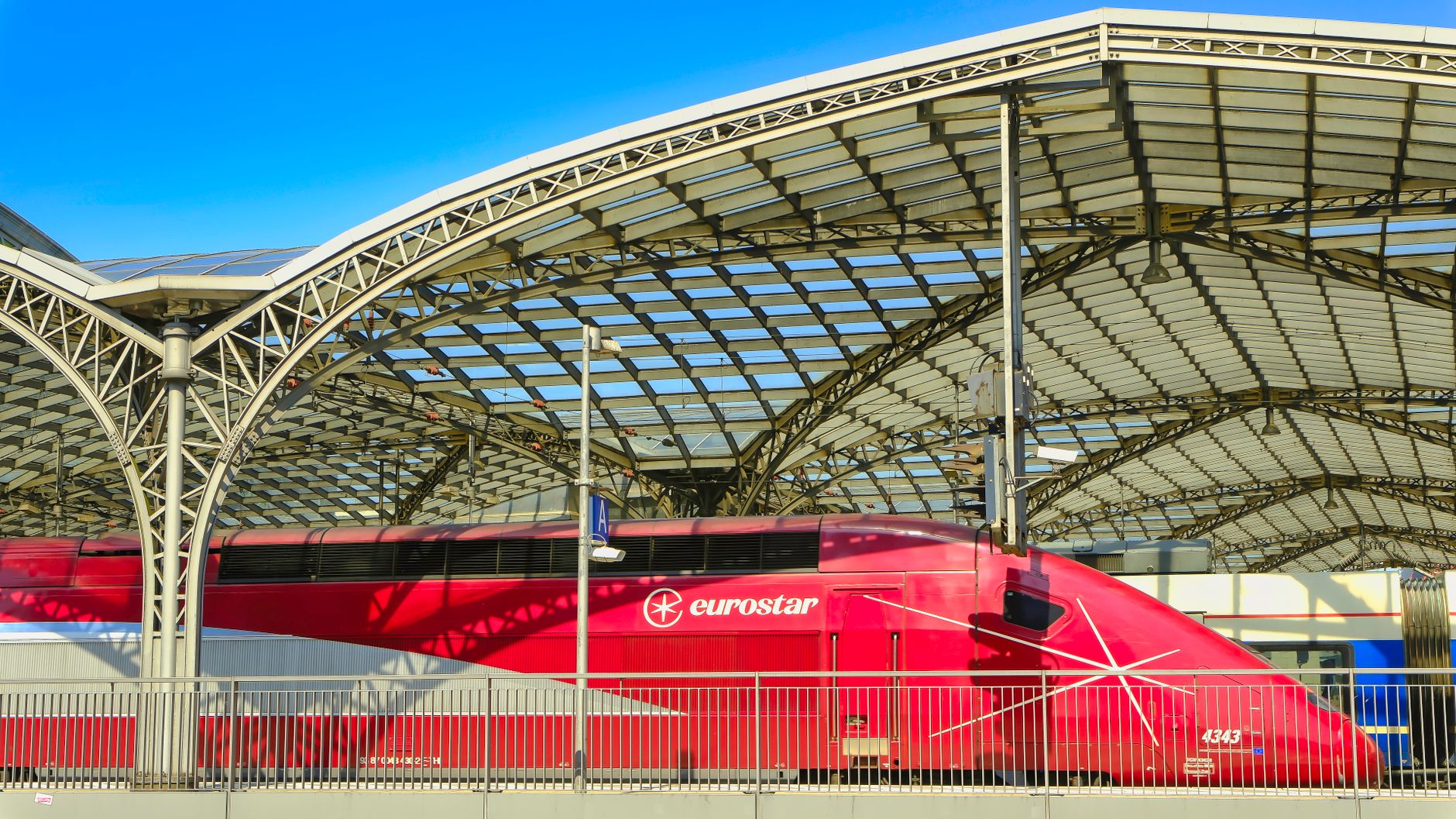
The Eurostar is the OG flight-killer. Recent data shows that the Eurostar accounts for over 70% of the travel market between London and Paris. While the "flight" is only 45 minutes, the "travel time" is closer to five hours when you include the trek to Heathrow or Charles de Gaulle.
- The Logistics: The train takes 2 hours and 16 minutes. You arrive at St. Pancras International, which is arguably the most beautiful station in the world.
- The Budget Reality: Eurostar can be pricey if booked late. However, if you book 120 days out, you can snag tickets for $55 (£44)—cheaper than a taxi to Heathrow.
- Pro-Tip: Post-Brexit, border control can be a bottleneck. If you have an EU or UK biometric passport, use the e-gates on the far right at St. Pancras; they move twice as fast as the manual lines.
5. The Shinkansen Standard: Tokyo to Osaka
While Europe gets the headlines, Japan’s Tokaido Shinkansen is the most reliable high-speed line on the planet. The "Nozomi" trains run every few minutes and take about 2.5 hours to cover the 500km distance.
- The Data: The Shinkansen is so efficient that airlines only survive on this route by catering to international transfers. For locals, the plane is an afterthought.
- Authenticity: This isn't just transport; it’s a ritual. You must buy an Ekiben (station bento box) at Tokyo Station. Look for the "Shinkansen-shaped" boxes for a kitschy souvenir, or the seasonal seafood boxes for a gourmet experience.
- Pro-Tip: When booking your seat from Tokyo to Osaka, request "Seat E" on the right side (or Seat D in Green Car). On a clear day, you’ll get a front-row view of Mount Fuji as you fly past at 285 km/h.
6. The Emerging Giant: Berlin to Paris
For years, this was a "flight-only" route. But as of late 2023 and into 2024, new direct high-speed links and the return of the Nightjet (Sleeper Train) have changed the game.
- The Data: The new direct TGV/ICE service takes about 8 hours, which sounds long, but the Nightjet allows you to "teleport." You board in Berlin at 8 PM, have a glass of wine, sleep in a bed, and wake up in Paris at 10 AM. It replaces both a flight and a hotel night.
- Quick Facts: A "Couchette" (shared bunk) starts at around $50, while a private "Sleeper" can go for $160.
- Pro-Tip: The Nightjet sells out months in advance. Use the ÖBB (Austrian Railways) app to book, as it’s more user-friendly than the French or German sites for this specific route.
---
Quick Facts: Train vs. Plane Comparison
| Route | Train Time | Flight Time (Total*) | Est. Cost (Train) | Best Time to Travel |
| :--- | :--- | :--- | :--- | :--- |
| Paris - Lyon | 1h 57m | 4h 15m | $30 - $90 | Mid-week mornings |
| Madrid - Barcelona | 2h 30m | 4h 30m | $20 - $110 | Spring/Autumn |
| Milan - Rome | 2h 59m | 4h 45m | $45 - $130 | Tuesday/Wednesday |
| London - Paris | 2h 16m | 5h 00m | $55 - $220 | Early morning (6 AM) |
| Tokyo - Osaka | 2h 30m | 4h 30m | $100 (Fixed) | Avoid Golden Week |
\*Total flight time includes 2 hours for check-in/security and 1.5 hours for airport transfers.
---
The Verdict: Why Rail Wins
The data is clear: the "golden era" of short-haul flying is ending. It’s not just about the carbon footprint—though saving 90% of your emissions is a nice ego boost. It’s about the quality of life.
On a train, you have Wi-Fi that actually works. You have legroom that doesn't require a chiropractor's visit afterward. You have the ability to walk to a bar carriage and strike up a conversation with a stranger while watching the Alps or the Pyrenees roll by.
Next time you’re looking at a map of Europe or East Asia, stop looking for the nearest airport. Look for the nearest station. The future of travel isn't in the clouds; it's on the tracks.
---