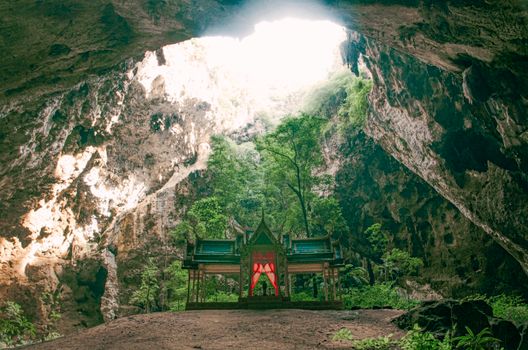
Forget Filters: These Places Are Real (And Will Break Your Instagram)
I remember the first time I saw a photo of Caño Cristales, Colombia. My initial reaction? "No way. That's Photoshop. Absolutely, unequivocally fake." The river glowed with such vibrant reds, yellows, greens, and blues, it looked like a rainbow spilled across the earth. But then, a friend who’d actually been there showed me their unedited snaps, and my jaw dropped. It was real. And it was even more breathtaking than the doctored images.
That moment ignited a new quest for me: to find those "looks fake but is real" places before they explode onto the mainstream travel scene. You know, before the tour buses roll in, the selfie sticks proliferate, and the magic gets diluted. We're talking about destinations so visually mind-bending, they challenge your perception of reality. They’re the kind of places that make your social media followers pause, zoom in, and ask, "Where is that?!"
If you’re a traveler who craves the truly unique, the genuinely unspoiled, and the utterly unforgettable, then buckle up. I’ve scoured the globe, braved challenging journeys, and captured countless pixels to bring you this curated list of five extraordinary photo spots that still feel like secrets. Get ready to update your bucket list and prepare for some serious wanderlust—these are the places you need to see (and shoot) now.
---
1. Socotra Island, Yemen: The Alien Arboretum
My Experience:
Stepping onto Socotra feels like landing on another planet. I'd seen photos of the Dragon's Blood Trees, those inverted, umbrella-shaped wonders, but nothing prepared me for their ancient, almost sentient presence. My first morning there, watching the sunrise paint the sky in hues of orange and purple over a grove of these bizarre trees, I felt a profound sense of awe mixed with a touch of surrealism. It was like a scene from a sci-fi movie, only the air was real, the sand was real, and the gentle bleating of goats was real. We spent days exploring, sleeping under a blanket of stars so bright it felt like you could reach out and touch them, and discovering hidden beaches where the sand was impossibly white and the water impossibly clear. Every corner turned was another "no way, this is real" moment.
Why it Looks Fake:
Socotra is home to an astonishing array of endemic flora and fauna, meaning they're found nowhere else on Earth. The most iconic are the Dragon's Blood Trees (Dracaena cinnabari), which look like giant, ancient mushrooms or something out of a Dr. Seuss book. Their dense, umbrella-like canopy and gnarled branches give the landscape an otherworldly, prehistoric vibe. Add to that the bottle trees and desert roses, and you've got an ecosystem that genuinely feels like it was designed by an extraterrestrial architect.
Getting There & Practicalities:
* Location: An island in the Arabian Sea, part of Yemen.
* Access: This is the most challenging part. Due to the political situation in mainland Yemen, direct flights are limited. Typically, you'll fly via Abu Dhabi (UAE) or Cairo (Egypt) with a local carrier like Yemenia. Flights are often once a week, so plan for at least a week-long trip.
* Permits & Tours: Independent travel is highly discouraged and often impossible. You must arrange your trip through a reputable tour operator who can handle visas, permits, and guides. This isn't a place for spontaneous backpacking.
* Best Time to Visit: October to May, avoiding the monsoon season (June-September).
* Cost: Expect it to be on the higher side due to the logistics and specialized tours (e.g., $2000-$4000+ for a week, excluding international flights).
* Photography Tips: Bring wide-angle lenses to capture the scale of the trees and landscapes. A drone (check regulations with your tour operator!) can offer incredible perspectives. Golden hour is magical for tree silhouettes.
---
2. Caño Cristales, Colombia: The Liquid Rainbow
My Experience:
The journey to Caño Cristales is an adventure in itself. After a small plane ride from Villavicencio, we landed on a dusty airstrip in La Macarena. From there, it was a bumpy jeep ride, then a small boat across the Guayabero River, and finally a hike through lush jungle. All that effort, and then you see it: a river glowing with an impossible spectrum of colors. I remember wading into the designated swimming areas, feeling the cool, clear water, and marveling at the vibrant Macarenia clavigera algae beneath my feet. It wasn't just red; it was crimson, vermilion, scarlet, interspersed with electric greens, deep blues, and sunny yellows. It felt like I was swimming in a living painting. The sheer vibrancy made every photo look like it had been heavily edited, even though it was completely natural.
Why it Looks Fake:
During a specific window each year, the Macarenia clavigera plant, which grows on the riverbed, blooms in an explosion of color. Depending on the light, water levels, and temperature, these plants turn brilliant shades of red, pink, orange, yellow, and green, creating a "liquid rainbow." It's an ephemeral spectacle that defies belief, making the river look like a natural art installation.
Getting There & Practicalities:
* Location: Serranía de la Macarena National Natural Park, Meta Department, Colombia.
* Access: Fly from Bogotá or Medellín to Villavicencio, then take a small charter flight to La Macarena. From La Macarena, local guides arrange jeep, boat, and hiking tours.
* Permits & Tours: You must visit with a registered local guide. The number of daily visitors is regulated to protect the ecosystem.
* Best Time to Visit: Mid-June to November, when the algae are in full bloom. Outside of this, the river looks like any other.
* Cost: Expect around $500-$1000 for a 3-4 day package from Bogotá/Medellín, including flights, accommodation, food, and tours.
* Photography Tips: A polarizing filter is essential to cut glare and enhance colors. Bring a waterproof camera or phone case for in-water shots. Early morning or late afternoon light often brings out the best hues. No sunscreen or insect repellent is allowed in the water to protect the ecosystem.
---
3. The Wave, Arizona, USA: Nature's Psychedelic Sculpture
My Experience:
Winning the lottery for The Wave permit felt like hitting the jackpot. The anticipation for the hike was immense. The trail itself is unmarked, a true wilderness trek through Coyote Buttes North. But when you finally round that last bend and see it, the exhaustion vanishes. The Wave is an impossibly fluid, swirling sandstone masterpiece. I spent hours just walking its curves, running my hand over the smooth, striated rock, marveling at how wind and water could carve such intricate, almost hypnotic patterns. The colors shift with the sun – from deep reds and oranges to delicate pinks and whites. Every angle offered a new, mind-bending perspective, making it incredibly difficult to capture the full 3D effect in a single photograph. It felt like walking through a giant, petrified brain or a surreal painting.
Why it Looks Fake:
This sandstone formation, part of the Paria Canyon-Vermilion Cliffs Wilderness, is renowned for its undulating, swirling patterns and vibrant, stratified colors. Millions of years of wind and rain have sculpted Navajo Sandstone into a mesmerizing, ribbon-like landscape that looks more like a digital rendering or an alien planet than something found on Earth. The smooth, flowing lines and sudden drops create an optical illusion of constant motion.
Getting There & Practicalities:
* Location: Coyote Buttes North, on the border of Arizona and Utah, USA.
* Access: This is the trickiest part. Only 64 permits are issued per day (48 online lottery, 16 walk-in lottery in Kanab, Utah). Demand is incredibly high. You must have a permit to enter. The trailhead is a 4x4-recommended dirt road.
* Permits: Apply months in advance for the online lottery via Recreation.gov. For the walk-in lottery, you need to be physically present in Kanab.
* Best Time to Visit: Spring and Fall offer the best hiking weather. Summer can be dangerously hot, and winter can bring snow.
* Cost: Permit fee is $9 per person. Other costs include travel to Kanab/Page and potentially a 4x4 rental or guide.
* Photography Tips: Bring a wide-angle lens to capture the vastness and curves. A tripod is essential for low-light shots and to capture the subtle textures. Play with different angles and perspectives; every twist reveals a new composition. Be prepared for a strenuous, unmarked 6.4-mile roundtrip hike. Bring plenty of water and sun protection.
---
4. Darvaza Gas Crater (Door to Hell), Turkmenistan: The Fiery Abyss
My Experience:
The journey to the Door to Hell was a classic off-road adventure through the Karakum Desert. As night fell, we approached the crater, and the glow in the distance grew steadily brighter. Standing on the edge, looking into that fiery abyss, was an experience that felt utterly apocalyptic. The sheer scale of the crater, combined with the continuous roar of the burning natural gas, created an atmosphere that was both terrifying and mesmerizing. The heat was intense, the air thick with the smell of sulfur, and the dancing flames cast eerie shadows across the crater walls. It truly looked like a portal to another dimension, a place where the earth itself had cracked open to reveal its infernal heart. Camping nearby, with the orange glow illuminating our tents, was something I'll never forget.
Why it Looks Fake:
This massive natural gas crater, accidentally ignited by Soviet geologists in 1971, has been burning continuously ever since. The fiery chasm, roughly 70 meters (230 feet) wide, glows orange and red against the desolate desert landscape, especially at night. It looks like a giant, eternal campfire or, as its nickname suggests, a literal "door to hell" straight out of a fantasy novel or a dystopian film set. The constant flames and the sheer unlikeliness of its existence make it appear completely unreal.
Getting There & Practicalities:
* Location: Karakum Desert, Turkmenistan.
* Access: Turkmenistan is a challenging country to visit, requiring a visa and often a letter of invitation (LOI) or a guided tour. Most visitors arrive via Ashgabat, then take a 4x4 vehicle with a driver/guide for the 4-5 hour drive into the desert.
* Permits & Tours: Independent travel is difficult. It’s best to arrange a tour through a local agency.
* Best Time to Visit: Spring (April-May) and Autumn (September-October) for more moderate desert temperatures. Visiting at night is essential to appreciate the full fiery spectacle.
* Cost: Tours can range from $500-$1500+ for a few days, including transport, guide, and possibly accommodation/camping.
* Photography Tips: A wide-angle lens is great for capturing the scale. A sturdy tripod is crucial for long-exposure shots at night, which will bring out the vibrant reds and oranges. Be prepared for dust and heat. Protect your gear.
---
5. Zhangye Danxia Landform, China: The Rainbow Mountains
My Experience:
I'd seen the photos, of course, the vibrant stripes of red, orange, yellow, and green, but I braced myself for the reality to be a little less impressive. I was wrong. The moment I stepped onto the first viewing platform in the Zhangye Danxia National Geological Park, I was speechless. The mountains truly are striped with such intense, almost painted colors that it’s hard to believe nature created them. It felt like walking through a giant, geological watercolor. The scale is immense, and as the sun shifted, new layers of color would seem to ignite, changing the entire panorama. My favorite was the "Seven-Color Fan" viewpoint, where the formations seemed to ripple like fabric. It was a dizzying, beautiful experience, and despite the crowds, the sheer grandeur of it made you feel small and insignificant in the best way.
Why it Looks Fake:
The Zhangye Danxia Landform Geological Park is famous for its "Rainbow Mountains," a unique type of petrified, layered sandstone and mineral deposits that have been compressed and then eroded over millions of years into towering, multi-colored peaks. The vibrant stripes of red, orange, yellow, green, and blue appear so vivid and distinct that they often look like an artist's brushstrokes or a fantastical landscape from a children's storybook.
Getting There & Practicalities:
* Location: Gansu Province, China, near the city of Zhangye.
* Access: Fly or take a high-speed train to Zhangye. From Zhangye, you can hire a taxi or take a local bus to the park entrance (about 40-60 minutes).
* Permits & Tours: The park is well-organized with an entrance fee and shuttle buses that take you between four main viewing platforms.
* Best Time to Visit: June to September for the best colors, especially after rain, which can enhance the vibrancy. Late afternoon (golden hour) is ideal for photography as the low sun brings out the textures and colors.
* Cost: Entrance fee is around 75-100 RMB (approx. $10-15 USD), plus shuttle bus fee. Taxis from Zhangye can be around 100-150 RMB one way.
* Photography Tips: Bring a wide-angle lens to capture the vastness. A telephoto lens can also be useful for isolating interesting patterns and close-up details. Patience is key, as the light changes constantly, revealing new perspectives. Consider drone photography if allowed and you have the necessary permits, but check local regulations carefully.
---
Your Guide to Unearthing the Unreal: Practical Tips for Chasing the "Fake But Real"
Embarking on a quest for these mind-bending destinations requires a bit more planning and an adventurous spirit than your typical resort vacation. Here are my top tips for making the most of your journey:
- Do Your Research (Thoroughly!): These aren't always easy-to-reach places. Check visa requirements, political stability, local customs, and health precautions well in advance. Some places, like Socotra and Darvaza, require specialized tours and permits that you can't just wing.
- Go with Local Experts: For many of these locations, a local guide isn't just recommended, it's mandatory. They know the terrain, the culture, the best times to visit, and how to navigate any logistical hurdles. Their insights often enhance the experience significantly.
- Pack Smart (and Light): You'll likely be doing some hiking, jeep rides, or boat trips. Comfortable walking shoes, layers of clothing, sun protection, and a good daypack are essential. Don't forget a first-aid kit.
- Photography Gear is Key:
- Wide-angle lens: Crucial for capturing vast landscapes and the full scale of these incredible formations.
- Polarizing filter: Essential for cutting glare on water (Caño Cristales) and enhancing colors in landscapes.
- Tripod: A must for low-light shots (Darvaza at night) and capturing intricate details.
- Drone: (Check regulations first!) Can provide unparalleled aerial perspectives that truly showcase the "fake but real" nature of these places.
- Protection: Dust, water, and extreme temperatures can be common. Protect your camera gear with waterproof bags, lens cloths, and dust covers.
- Embrace the Journey: Getting to these places is often part of the adventure. Expect long travel days, bumpy roads, and sometimes basic accommodation. These challenges often make the eventual reward even sweeter.
- Be Respectful and Sustainable: These are often fragile ecosystems or remote communities. Follow local guidelines, don't litter, respect wildlife, and minimize your impact. Support local economies where possible.
- Manage Expectations: While photos are amazing, nothing beats experiencing these places in person. The sounds, smells, and atmosphere add layers that no camera can fully capture. Be prepared for crowds at some popular spots (even if not "mainstream" globally, they can be popular locally).
- Power Up: Remote locations mean limited access to electricity. Bring portable power banks for your phone and extra batteries for your camera.
- Offline Maps & Translation Apps: Download maps and translation apps (if needed) before you lose signal.
---
Don't Just Dream It, Live It!
The world is full of wonders that defy explanation, places that make you question your senses and marvel at the sheer artistry of nature. These five spots are just the tip of the iceberg, but they represent some of the most visually astounding and, for now, relatively undiscovered gems on our planet. They offer not just incredible photo opportunities, but profound travel experiences that will stay with you long after you've returned home.
So, what are you waiting for? Stop scrolling through the same old travel feeds and start planning your adventure to these "fake but real" paradises. Be one of the first to witness their magic before they inevitably become the next big thing. Trust me, the stories (and the photos!) you'll bring back will be legendary.
Which of these mind-bending destinations is calling your name? Have you discovered a "fake but real" spot we missed? Share your thoughts and dream trips in the comments below! And don't forget to share this post with your fellow adventurers!
---