The Night the Arctic Sky Exploded in Silence
I stepped off the gravel track into the knee-deep crowberry scrub of Grøtfjord, Norway, at 11:45 PM. The air smelled sharp and clean—a salty mix of wet kelp, crushed pine needles, and cold granite. There was no hum of idling diesel engines. No white tour vans backing up with beeping reverse lights. No tour guides waving neon flags.
Just the low rhythm of the Arctic Ocean splashing against pitch-black coastal rocks, and a temperature sitting at a surprisingly comfortable 11°C (52°F).
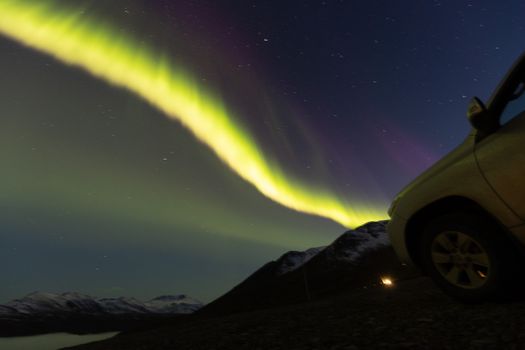
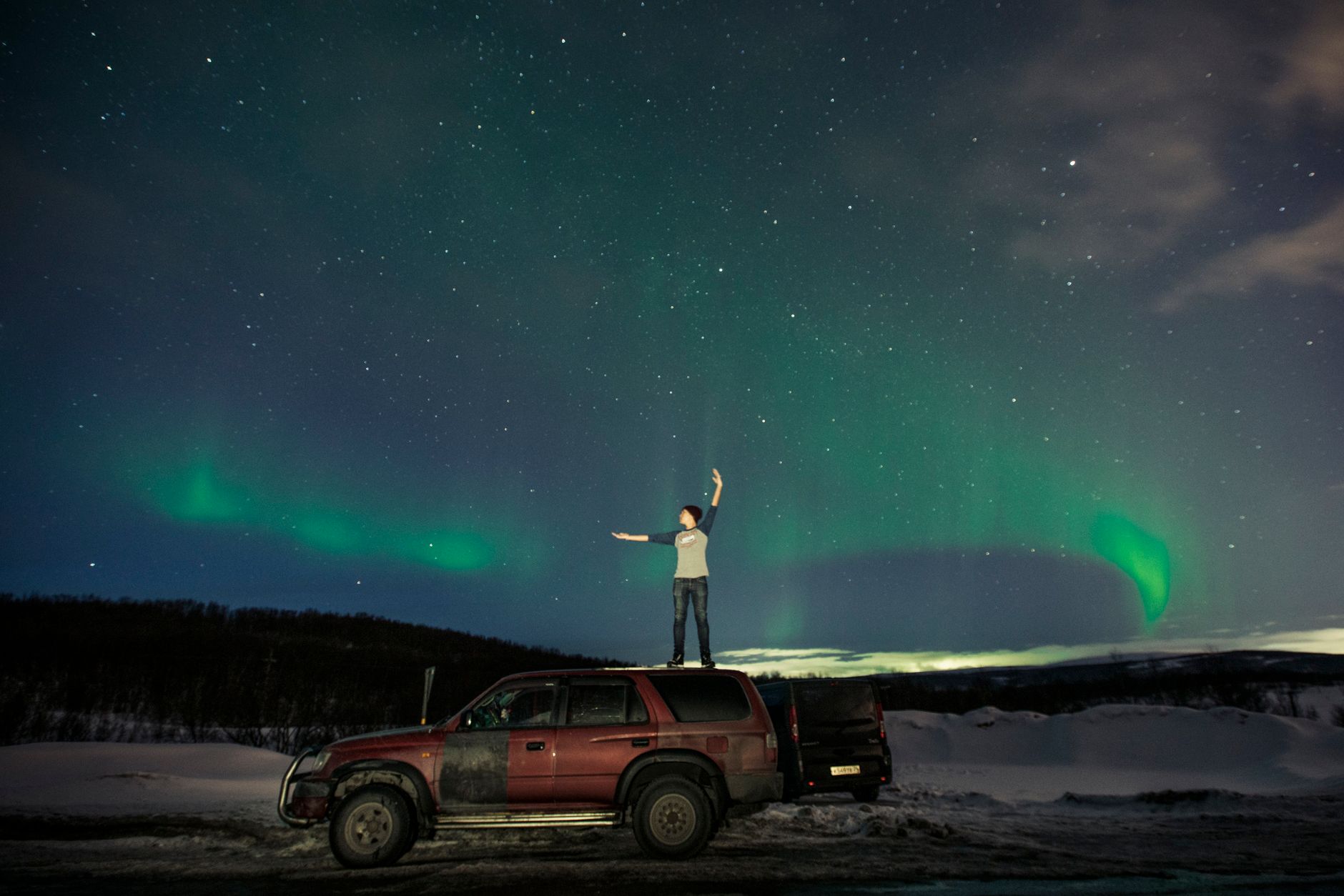
I pulled a flask of steaming local cloudberry tea from my pack, leaned back against a smooth fjord boulder, and looked up. Within three minutes, a faint ribbon of pale emerald rippled across the horizon. Ten minutes later, the entire sky shattered into violet, crimson, and neon green light, reflecting across the calm, unfrozen waters of the fjord like spilled ink.
This is the magic of chasing the summer Northern Lights.
Most travelers mistakenly assume you need sub-zero winter blizzards to view the Aurora Borealis. In reality, northern lights activity happens year-round. As soon as the midnight sun fades in mid-to-late August, night skies return to high latitudes. Hunting auroras in late summer means no icy roads, no frostbitten fingers, and—best of all—zero mega-tour buses obstructing your view.
If you want to experience the night sky like a local insider, ditch the group excursions. Here are the top six bus-free Northern Lights spots trending with independent, savvy travelers this summer.
---
1. Grøtfjord & Sommarøy, Norway: The Fjord Mirror Secret
While 95% of travelers in Tromsø pile into massive 50-passenger coaches that head east toward the Finnish border, local photographers head west to the island of Kvaløya. Specifically, the tiny coastal cove of Grøtfjord and the fishing village of Sommarøy.
Because the mountain passes leading into Grøtfjord feature narrow single-lane turns and sharp hairpins, commercial tour buses rarely attempt the route at night. You’ll have miles of dark coastline entirely to yourself.
```
Coordinates: 69.7801° N, 18.3512° E
Access: 45-minute self-drive from Tromsø airport along Fv862.
Peak Dark Window: August 18 – September 25
```
The Insider Experience
In late August, the sea does not freeze. When the green curtains dance directly over the sharp peaks of Småtindan, the still fjord acts as a giant natural mirror. Stand on the white coral sand beaches of Sommarøy and photograph dual auroras—one in the sky, one in the ocean water at your feet.
> Pro-Tip: Skip the main turnout at the village center. Drive past Grøtfjord’s wooden church, cross the small stone bridge, and park in the pull-off near the old dried-fish racks. Walk 100 meters down to the tide line. You’ll be sheltered from ambient wind, and the sound of the ocean will be your only company.
---
2. Kätkävaara & Loue Peatlands, Finland: Deep Boreal Solitude
Mention Lapland to a travel agent, and they’ll instantly sell you a ticket to Rovaniemi, home to crowded Santa Claus villages and lines of tour buses heading to overcrowded viewing platforms. To escape the neon circus, hire a compact car and drive 60 kilometers southwest to the ancient wilderness of Kätkävaara.
Kätkävaara is surrounded by thousands of hectares of protected peat bogs and old-growth boreal forest. Commercial buses skip this region entirely because it lacks large hotels or souvenir shops.
Sensory Highlights
The air here tastes like birch bark and wild bog bilberries. The peat bogs create vast, treeless openings in the landscape, giving you a 360-degree unobstructed horizon with zero light pollution.
> Pro-Tip: Park at the base of the Kätkävaara nature trail (GPS: 66.1833° N, 24.9000° E). Bring a headlamp with a red-light mode and hike 1.5 kilometers up the timber boardwalks to the wooden observation tower (näkötorni). You will have an elevated view over miles of dark forest canopy without a soul in sight. Pack a flask of hot glögi (spiced berry juice) infused with local juniper berries.
---
3. Malariff & Djúpalónssandur, Iceland: Lava Fields and Ghost Ships
Reykjavík’s tour operators line up hundreds of buses every evening to haul thousands of tourists to the Golden Circle or Thingvellir National Park. If you want true isolation, rent a campervan or 4x4 and head three hours west to the tip of the Snæfellsnes Peninsula.
The area surrounding the Malariff Lighthouse and the volcanic dark-sand beach at Djúpalónssandur sits under some of the darkest skies in western Europe.
Why It’s Trending This Summer
Iceland's summer aurora season starts around August 15. At Malariff, giant volcanic rock formations rise out of the earth like ancient statues against the shimmering sky.
```
Best Viewing Spot: Malariff Lighthouse grounds (Snæfellsbær)
Drive Time: 2 hours 45 minutes from Reykjavík via Route 54
Bus Presence: Zero (Tour buses return to Reykjavík before dusk)
```
> Pro-Tip: Park near the Malariff Visitor Center (closed at night, but parking grounds remain open). Walk the gravel trail south toward the automated lighthouse. Frame your photos so the white tower lights up against the emerald aurora curtains. Bring windproof gear—even in August, Atlantic sea breezes here are fierce!
---
4. Kathleen Lake, Kluane National Park, Canada: The Glacial Reflection
While international tourists flock to Yellowknife—where dozens of tour buses shuttle groups to artificial aurora villages—locals in Canada’s Yukon drive the Alaska Highway to Kluane National Park.
Kathleen Lake is a jaw-dropping glacial body of water bordered by Mount King’s Throne. Because Kluane has minimal commercial tourism infrastructure compared to Banff or Yellowknife, you won't see a single tour bus parked along the shore.
The Yukon Summer Aurora Advantage
In late August, Yukon temperatures remain around 8°C to 12°C (46°F–54°F). You can sit on the wooden boardwalk at Kathleen Lake in a light fleece jacket rather than suffering through -30°C winter conditions.
> Pro-Tip: Head to the day-use area at Kathleen Lake around 11:30 PM. Walk past the boat launch onto the Kokanee Trail boardwalk. The wooden platform extends out over the crystal-clear water. On a calm night, the towering silhouette of King's Throne and the glowing northern lights reflect perfectly in the lake's glassy surface.
---
5. Utsjoki & The Kevo River Basin, Finland: The End of the Arctic Road
If you truly want to leave civilization behind, drive north until the highway literally ends. Utsjoki is Finland's northernmost municipality, situated right on the border with Norway along the Tana River valley.
Tour buses rarely make the grueling 6-hour trek north from Rovaniemi, leaving this wild Arctic landscape entirely to local Indigenous Sámi communities, independent road-trippers, and serious night-sky photographers.
```
Latitude: 69.9086° N (Far north of the Arctic Circle)
Landscape: Arctic tundra, wide river valleys, birch woodlands
Vibe: Remote, silent, vast
```
Local Flavors & Culture
While waiting for the sky to light up, visit a local ravintola (eatery) in Utsjoki for a plate of slow-cooked Arctic char served with creamed chanterelles harvested from the surrounding tundra earlier that day.
> Pro-Tip: Drive along the scenic route 970 toward Karigasniemi. Pull off at the Kevo Nature Reserve trailhead markers. You'll find elevated tundra ridges that offer endless views over the river valley with absolute zero light interference.
---
6. Gjógv, Faroe Islands: Dramatic Ocean Cliffs Under Green Skies
The Faroe Islands are rapidly trending for summer travelers who want rugged, dramatic landscapes without mass tourism. Located at 62° North in the North Atlantic, dark skies return to the archipelago by mid-August.
The village of Gjógv, located on the northern tip of Eysturoy island, sits inside a deep valley facing the open sea. Narrow single-track roads with livestock grids prevent large commercial coaches from operating tours here.
The Scene
Picture 200-meter vertical sea cliffs dropping into crashing ocean waves, topped with bright green grass roofs, with shimmering green aurora ribbons draping over the iconic sea stack known as Risin og Kellingin.
> Pro-Tip: Drive up the mountain pass road above Gjógv (Funningsfjørður pass). Park in the small gravel turnout used by sheep farmers. From here, you look down into the fjord and out toward the open Atlantic Ocean facing north—the precise direction where summer auroras first appear.
---
Logistics & Budget Comparison: DIY Aurora Hunting
Planning a bus-free, self-drive summer aurora adventure is often significantly cheaper than paying for daily commercial group tours ($150–$250 per person per night). Here is a quick breakdown to help you budget:
| Location | Rental Car Type Needed | Est. Fuel Cost / Day | Nearby Accommodation | Best Local Snack |
| :--- | :--- | :--- | :--- | :--- |
| Sommarøy, Norway | Standard Compact / Hatchback | $25 – $35 | Local Fisherman’s Cabin (Rorbu) | Dried Arctic Cod (Tørrfisk) |
| Kätkävaara, Finland | Compact or Hybrid | $20 – $30 | Wilderness Lodge / Log Cabin | Cloudberry jam with Finnish Leipäjuusto cheese |
| Snæfellsnes, Iceland | 4x4 Duster or Campervan | $40 – $55 | Coastal Guesthouse in Arnarstapi | Smoked lamb on dark rye flatbread (Hangikjöt) |
| Kluane, Canada | Standard SUV / Sedan | $20 – $30 | Alpine Cabin in Haines Junction | Smoked Yukon Wild Salmon Jerky |
| Utsjoki, Finland | Standard Hatchback | $25 – $35 | Riverside Cottage | Rye crackers with smoked reindeer spread |
| Gjógv, Faroe Islands | Compact Hatchback | $30 – $40 | Traditional Guesthouse | Dried mutton (Skerpikjøt) |
---
Pro-Tips: How to Catch the Summer Aurora Like an Expert
1. Timing is Everything (The August Darkness Window)
Do not attempt this in June or July! High latitudes experience 24-hour daylight during mid-summer. The window for summer auroras begins when the sun dips low enough below the horizon to create true astronomical darkness:
* Far North (Latitudes 68°–70° N): August 18 – September 30
* Mid-North (Latitudes 60°–65° N): August 10 – September 30
2. Master the Space Weather Apps
Forget basic weather apps. Download Space Weather Live or My Aurora Forecast. Watch two critical metrics:
* Kp Index: You want a Kp rating of 2 or higher for high-latitude spots (Norway/Finland), and 3.5 or higher for mid-latitudes (Faroe Islands/Southern Iceland).
* Bz Orientation (Magnetic Field Direction): Look for a negative (Southward) Bz number (e.g., -5 nT or lower). A negative Bz opens Earth’s magnetic shield, allowing solar particles to pour into the atmosphere and ignite the aurora.
3. Camera Settings for Unfrozen Summer Nights
Because summer auroras often happen over unfrozen water, your camera setup differs from winter photography:
* Lens: Ultra-wide angle (14mm to 24mm) with a wide aperture (f/1.8 to f/2.8).
* ISO: Set between 1600 and 3200.
* Shutter Speed: Keep it fast (1 to 4 seconds) to capture the crisp, dancing movement of the light rather than a blurry green smear.
* Reflections: Lower your tripod stand close to the water’s edge to maximize the symmetry between the sky and the lake/sea reflection.
---
Final Thoughts: Leave the Crowd Behind
There is a stark difference between sitting in a diesel-fumed parking lot with a hundred strangers holding smartphone flashbulbs, and standing alone on an Arctic beach in late August, listening to the gentle crash of ocean waves while green light swirls across the heavens.
By renting a car, heading slightly off the beaten track, and targeting the mid-August to late-September shoulder season, you get the absolute best of the North: comfortable weather, stunning natural reflections, and total, unadulterated solitude under the lights.
Pack your wool sweaters, download your space weather apps, and take the wheel. The Arctic sky is waiting for you—no tour bus required.
---