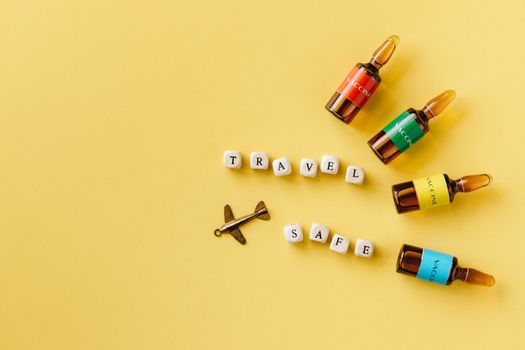
The Invisible Upgrade: Why Your Next Trip Will Feel Different
I stepped off the red-eye at Singapore Changi, bracing for that familiar mid-transit grime—the sticky armrests, the recycled air, the frantic fumble for a passport. Instead, I was met with a scent of crisp eucalyptus and a breeze so filtered it felt like standing on a Swiss Alp. I didn't touch a single surface. My face was my boarding pass; a hidden array of UV-C lights sanitized the floor as I walked, and the air felt... expensive.
This isn't science fiction. This is the new reality of high-velocity transit. As we navigate the landscape of 2024, the new hygiene standards improving travel emerging this year are moving away from the "theatre" of deep cleaning and toward integrated, high-tech permanence.
1. The Death of the Paper Trail: Biometric Border Control
The most significant hygiene upgrade isn't a liquid; it's a lens. The "touchless" movement has graduated from a luxury perk to a global standard. At major hubs like London Heathrow and Dubai International, the goal is "curb-to-gate" biometrics.
The Tech:
We are seeing the widespread rollout of SITA’s Smart Path technology. This uses facial recognition to link your physical identity to your travel documents. No more handing a germ-laden passport to a customs officer or touching a kiosk screen that 500 people used before breakfast.
Pro-Tip:
Register your biometric data on your airline’s app before you reach the airport. In Tokyo Narita, the "Face Express" system can shave 20 minutes off your transit time while keeping your hands in your pockets.
2. Nanotechnology and the "Self-Healing" Surface
In the past, "clean" meant a janitor with a spray bottle. Today, it means the surface itself is fighting back. We are seeing a surge in antimicrobial coatings being applied to everything from tray tables to hotel remote controls.
The Science:
These aren't just disinfectants; they are organofunctional silane coatings. They create an invisible layer of "nanospikes" that physically puncture the cell walls of bacteria and viruses on contact.
Pro-Tip:
Look for hotels that advertise "Pure Room" certifications. These rooms undergo a patented seven-step process, including treating every surface with a long-lasting antimicrobial shield that lasts for months, not hours.
3. Breathing Easy: HEPA and Far-UVC Integration
If there’s one thing travelers are obsessed with now, it’s air quality. The new standard for 2024 is the integration of Far-UVC light within ventilation systems. Unlike traditional UVC, Far-UVC is safe for human exposure but lethal to airborne pathogens.
The Experience:
Onboard the newest Airbus A350s and Boeing 787s, the air is refreshed every two to three minutes. The local secret? Most travelers don't realize that the air flows downward, not lengthwise through the cabin. This "laminar flow" ensures that if the person in 12B sneezes, their germs go straight to the floor filters, not to you in 12A.
Pro-Tip:
If you’re sensitive to air quality, use the overhead vent. Keeping it on a low flow creates a small "air curtain" around your face, further isolating your breathing zone from the general cabin air.
4. The Robotic Housekeeping Revolution
Walk into a high-end hotel in Seoul or San Francisco this year, and you might encounter a "Whiz" or a "Rosie." These are autonomous vacuuming and disinfecting robots.
Why it matters:
Humans are fallible; robots are consistent. These bots use electrostatic sprayers to ensure that disinfectant wraps around curved surfaces—like the underside of a desk or the back of a chair—areas often missed by manual cleaning.
Insider Language:
In the industry, we call this "The White Glove 2.0." It’s not about replacing staff; it’s about the staff focusing on high-touch hospitality while the bots handle the microscopic heavy lifting.
5. Sustainable Hygiene: The End of the Plastic Mini
The "New hygiene standards improving travel emerging this year" are also hitting a green wall—in a good way. The era of the tiny plastic shampoo bottle is dead, replaced by high-end, wall-mounted dispensers that are tamper-proof and UV-sanitized.
The Local Vibe:
At boutique stays in places like Tulum or Bali, they are taking it a step further by using ozone-water generators for laundry. This eliminates the need for harsh chemicals while providing a level of sterilization that traditional detergents can't match. It leaves your linens smelling like a thunderstorm—fresh, ionized, and clinical-grade clean.
6. Quick Facts: The Logistics of Clean Travel
| Feature | Estimated Cost Impact | Best For | How to Get There |
| :--- | :--- | :--- | :--- |
| Biometric Boarding | Free (Included in ticket) | Speed & Hygiene | Opt-in via Airline App |
| Pure Room Upgrade | $20 - $50 per night | Allergy Sufferers | Select at Hotel Booking |
| Portable HEPA Filter | $100 - $250 (Purchase) | Personal Safety | Carry-on approved units |
| Private Airport Lounges | $50 - $100 (Day pass) | Avoiding Crowds | Priority Pass / Amex |
7. The Personal Protocol: How to Travel Like a Pro
While the industry does its part, the elite traveler has their own "local" hacks. I never travel without a small copper "no-touch" tool. Copper is naturally oligodynamic (it kills germs on contact). I use it for elevator buttons in Paris and ATM keypads in Rome.
The Hidden Entrance:
When arriving at a hotel, skip the main lobby elevator if there’s a secondary one near the gym or spa. These are often used less frequently and undergo more rigorous cleaning cycles due to their proximity to high-moisture areas.
Pro-Tip:
Visit the hotel gym at 2 PM. Most guests go early morning or late evening. At 2 PM, the staff has usually just finished a deep-clean cycle following the morning rush, and you’ll likely have the filtered air all to yourself.
The Verdict
The new hygiene standards improving travel emerging this year aren't just about avoiding a cold; they are about reclaiming the joy of movement. When the friction of travel—the dirt, the lines, the uncertainty—is removed by technology, we are left with the pure essence of exploration.
We are entering an era where the most luxurious thing a hotel or airline can offer you isn't a glass of champagne (though we'll take that too), but the absolute, data-backed peace of mind that your environment is pristine.
---