The Scent of Rain and Raw Cedar: My First Encounter with the Fusion
I stepped off the local train at Saga-Arashiyama, far from the selfie-stick-waving crowds of the Bamboo Grove. The air didn't smell like street food; it smelled of damp earth and freshly planed cedar. I was looking for a specific villa—a place recommended by a Copenhagen-based furniture designer who swore that the most "Nordic" building in the world wasn't in Oslo, but tucked away in a quiet fold of Kyoto’s western hills.
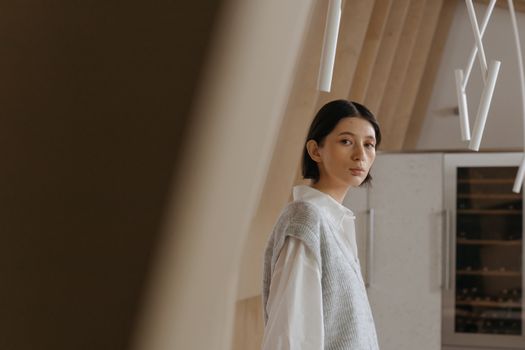
When I pushed open the heavy timber door, the silence was immediate. The floor was a seamless expanse of light Douglas fir, polished to a matte finish that felt like silk under my wool socks. Huge glass panes framed a single, moss-covered rock. No clutter. No gold leaf. Just the "Secret Fusion" of Nordic utility and Asian spiritualism.
This isn't just a "trend." It’s a global design shift that Asian experts are now recommending as the ultimate antidote to our hyper-digital lives. Here is how you can experience it.
1. The Philosophy: Why Scandi-Asian is the New Gold Standard
Design experts from Tokyo to Taipei are moving away from the "more is more" aesthetic. They are embracing a hybrid known as Japandi, but it goes deeper than a Pinterest board. It’s the marriage of the Scandinavian concept of Hygge (coziness and well-being) with the Japanese Wabi-sabi (finding beauty in imperfection).
Why it works:
* Functionality: Both cultures prioritize items that serve a purpose.
* Natural Materials: Think unbleached linen, light oaks, and hand-fired ceramics.
* Light as Architecture: In both Northern Europe and East Asia, the way light hits a wall at 4 PM is considered a decorative element in itself.
2. Kyoto: The Epicenter of "Silent Luxury"
Kyoto is where the fusion feels most ancient yet most modern. While the city is famous for its temples, design experts are currently obsessed with the Ace Hotel Kyoto, designed by Kengo Kuma. It’s a masterclass in how to blend a historic brick building with a soaring wooden grid system that feels distinctly Nordic in its clean lines.
The Hidden Spot: Stardust Kyoto
Forget the high-end malls. Head to Stardust in a quiet residential neighborhood. It’s a concept shop and vegan café housed in an old machiya (townhouse). The owner has curated a space where French linen meets Japanese pottery in a way that feels like a quiet sigh of relief.
Pro-Tip:
Visit Stardust at 11 AM just as they open. The light hits the vintage wooden tables in a way that makes every photo look like a Vogue Living spread.
3. Seoul: The "New Nordic" Capital of the East
If Kyoto is the soul of this movement, Seoul is its laboratory. In neighborhoods like Hannam-dong and Seongsu-dong, the concrete industrialism of the city is being softened by "New Nordic" influences.
Asian design experts are currently pointing everyone toward LCDC Seoul. It’s a multi-shop vertical space that feels more like a museum than a mall. Here, you’ll find Swedish fragrances sitting alongside Korean stationery, all housed in a building that celebrates raw concrete and natural light.
The Architect’s Choice: The Sieon-dang
Located on the outskirts of the city, this private library/stay is built entirely on the principle of "emptiness." It uses the Korean concept of Maegyeong (borrowed scenery), which mirrors the Scandinavian obsession with bringing the outdoors in.
4. The Materials: What to Look For
When you're walking through these spaces, don't just look—touch. The experts I spoke with emphasized three specific materials that define this Nordic-Asian fusion:
- Charred Timber (Shou Sugi Ban): A Japanese technique that provides a matte, black, textured finish that Scandi designers are now using for minimalist cabins.
- Matte Ceramics: Look for the lack of glaze. The "Secret" is in the tactile, stone-like feel of the clay.
- Paper Lighting: The iconic Noguchi lamps have been reimagined by Seoul designers using traditional Hanji paper, creating a glow that mimics a Swedish winter sun.
5. How to Live the Aesthetic: A 3-Day "Design Immersion" Itinerary
Day 1: The Arrival (Kyoto)
* Morning: Check into Maana Kiyomizu. It’s a restored townhouse that defines "Nordic-Zen."
* Afternoon: Walk to Kaikado Café. They take traditional Japanese tin tea caddies and serve coffee in a space that feels like a high-end Copenhagen loft.
* Evening: Dinner at Monk. A small, fire-centered restaurant where the design is as stripped-back as the seasonal menu.
Day 2: The Deep Dive (Kyoto to Seoul)
* Morning: Visit Ryoan-ji early (7:30 AM). The rock garden is the original minimalist blueprint.
* Afternoon: Fly to Seoul (Incheon).
* Evening: Explore Hannam-dong. Visit the Beaker flagship store for a masterclass in minimalist retail.
Day 3: The Modern Edge (Seoul)
* Morning: Coffee at Anthracite Coffee Roasters (Namsan branch). The raw, industrial-minimalist interior is legendary among architects.
* Afternoon: Visit the Amorepacific Headquarters designed by David Chipperfield. It’s a massive cube of light and air that feels like a futuristic Nordic temple.
6. Quick Facts & Logistics
| Feature | Details |
| :--- | :--- |
| Best Time to Visit | October–November (Dry, crisp air and perfect light for photography) |
| Estimated Budget | $$$ (Luxury design stays are pricey, but many "design walks" are free) |
| How to Get Around | Kyoto: Bicycle or Subway. Seoul: KakaoTaxi or the excellent Metro. |
| What to Pack | A neutral palette (grey, beige, black), slip-on shoes (lots of "shoes off" venues), and a high-quality camera. |
7. The Insider Secret: The "Hidden Entrance" Rule
In both Kyoto and Seoul, the best minimalist spaces don't have big signs. They follow the "Secret" rule: The more understated the entrance, the more incredible the interior.
For example, the entrance to Default Coffee in Seoul is essentially a blank grey wall with a tiny silver handle. To the uninitiated, it looks like a utility closet. To the design expert, it’s a portal to the most perfectly calibrated Scandi-Asian interior in the city. Don't be afraid to push doors that look "too quiet" to be businesses.
8. Why This Matters for Your Next Trip
Travel used to be about seeing as much as possible. But the Nordic-Asian fusion teaches us to see better, not more. It’s about the quality of the wood under your hand, the way the steam rises from a ceramic cup, and the luxury of an empty room.
When you follow the recommendations of these design experts, you aren't just taking a vacation; you're recalibrating your nervous system. You're bringing home a piece of that "Secret Fusion"—the realization that beauty doesn't need to shout to be heard.
---