The Trailhead Belongs to Everyone
I stepped off the transfer shuttle at the Sugarlands Visitor Center, and the sharp, clean bite of wet balsam fir instantly filled my lungs. Below me wasn't a standard, bumpy dirt track full of ankle-twisting roots. Instead, my wheels rolled smoothly onto a custom-engineered surface where the low hum of a dual-motor, all-terrain electric track chair was crunching effortlessly over gravel and pine needles. Nearby, a visitor with visual impairment traced their fingers along a heated, tactile bronze casting of the Little Pigeon River watershed while a synchronized audio guide narrated the ecology of the canopy above.
For decades, accessible travel in national parks meant settling for a paved pull-off, a coin-operated binocular station set too high, and a single token parking spot near a gift shop. That era is officially over.
A select group of national parks has moved far past minimum Americans with Disabilities Act (ADA) compliance. They aren't just checking legal boxes; they are rewiring the entire park experience through universal design, adaptive technology rentals, sensory-friendly infrastructure, and thoughtful engineering. Whether you are a wheelchair user, navigating low vision, managing sensory processing needs, or traveling with multi-generational family members, these national parks with accessibility beyond requirements worth considering offer world-class outdoor thrills without barriers.
---
1. Great Smoky Mountains National Park (Tennessee / North Carolina)
Crushing Mud and Traversing Creeks in Off-Road Track Chairs
The Smokies host millions of visitors a year, but its standout feature for adaptive adventurers isn't just the famous blue mist—it’s the park's ground-breaking motorized track chair program. Through partnerships with local non-profits, Great Smoky Mountains National Park offers free-to-reserve, off-road electric track chairs capable of rolling over exposed roots, mud, and stream crossings that would stop a standard wheelchair in its tracks.
```
[ Sugarlands Visitor Center ]
│
┌────────────────┴────────────────┐
▼ ▼
[ Track Chair Rental ] [ Sensory Nature Trail ]
│ │
└──────────────► ◄────────────────┘
│
▼
[ Deep-Forest Access ]
```
The Sugarlands Valley Nature Trail sets the gold standard. It is a half-mile paved loop designed specifically for individuals with mobility, visual, or hearing impairments. It features low-sloped wooden boardwalks, smooth asphalt, continuous guide-curbs for cane users, and braille interpretive signage detailing the hemlock forests and historic stone chimneys lining the path.
- Beyond-Requirements Feature: Free off-road track chair reservations and tactile interpretive exhibits inside the Sugarlands Museum.
- Pro-Tip: Book your track chair through the Knox County Parks and Recreation system or the official park site at least 30 days in advance. Request a morning slot at 8:30 AM to catch the fog lifting off the stream bank before afternoon crowds arrive.
---
2. Acadia National Park (Maine)
Ocean Breeze, Historic Carriage Roads, and Adaptive Kayaking
Acadia’s jagged pink granite coastline looks intimidating from a distance, but it houses one of the most accessible wilderness networks in North America. The crown jewel here is the 45-mile Carriage Road system. Gifted to the public by John D. Rockefeller Jr., these stone-surfaced roads are closed to motor vehicles and feature smooth, crushed-stone pathways with gentle grades under 5%. They allow handcyclists, electric wheelchair users, and adaptive strollers to penetrate deep into the heart of Mount Desert Island's backcountry.
```
+-----------------------------------------------------------------------+
| ACADIA ACCESSIBILITY MATRIX |
+--------------------------+--------------------------------------------+
| Feature | Implementation Beyond Compliance |
+--------------------------+--------------------------------------------+
| Carriage Roads | 45 miles of crushed-granite, fine-grade |
| | paths suitable for handcycles |
| Jesup Path Boardwalk | Ultra-wide elevated hemlock boardwalk with |
| | raised edge-guards and sensory cutouts |
| Echo Lake Beach | Beach Matting (Mobi-Mat) extending directly|
| | into the freshwater swim zone |
| Adaptive Kayaking | Transfer benches and kayak launches at |
| | Jordan Pond |
+--------------------------+--------------------------------------------+
```
Beyond the carriage roads, the Jesup Path offers a wide boardwalk through a lush white birch forest. It uses thick, edge-guarded hemlock planks that eliminate vibration for power-chair users while providing visual contrast edges for low-vision hikers. Over at Echo Lake Beach, the park installs long roll-out Mobi-Mats every summer, extending all the way into the calm freshwater waves.
- Beyond-Requirements Feature: Adaptive kayak launches at Jordan Pond featuring transfer benches, specialized hand-grips, and outriggers managed by certified adaptive guides.
- Pro-Tip: Park at the Hulls Cove Visitor Center and hop aboard the free Island Explorer bus. Every single bus in the fleet is equipped with automatic ramps and low-floor kneeling mechanisms.
---
3. Grand Canyon National Park (Arizona)
Tactile Vistas, Audio-Described Rims, and Barrier-Free Shuttle Systems
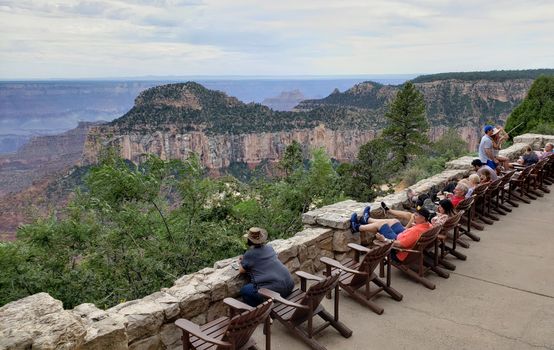
Standing on the edge of a 6,000-foot chasm is an overwhelming experience, and Grand Canyon National Park ensures every visitor feels that pulse-quickening thrill regardless of ability.
```
[ Grand Canyon Accessibility Architecture ]
│
┌────────────────────────┼────────────────────────┐
▼ ▼ ▼
[ Trail of Time ] [ Audio Description ] [ Tactile Maps ]
(13-km Paved Rim) (Solar-Powered App) (Bronze Topography)
```
The Trail of Time is a paved, 13-kilometer rim path connecting Mather Point to Yavapai Geology Museum. The trail is meticulously flat, exceptionally wide, and equipped with continuous bronze inserts embedded in the pavement representing millions of years of geological time. At regular intervals, large, tactile rock specimens collected directly from the canyon depths are mounted at seat level, allowing visually impaired visitors to feel the distinct texture transitions between Coconino Sandstone and Vishnu Basement rocks.
- Beyond-Requirements Feature: Free handheld Audio Description Devices available at the visitor center, which trigger location-aware descriptive narrations of geological formations, colors, and lighting conditions as you move along the rim.
- Pro-Tip: Obtain a Scenic Drive Accessibility Permit at the entrance gate or visitor center. This pass unlocks restricted park roads like Hermit Road, allowing personal vehicles displaying a disability placard to drive down routes normally limited strictly to park shuttles.
---
4. Rocky Mountain National Park (Colorado)
Alpine Wilderness and High-Altitude Track-Chair Expeditions
Reaching sub-alpine lakes surrounded by snow-capped peaks used to require high-altitude scrambles. Rocky Mountain National Park changed that narrative by developing the Sprague Lake Loop and the Bear Lake Trail.
```
[Parking Area] ──(Paved Grade < 3%)──> [Sprague Lake Boardwalk]
│
├──> Braille Fishing Piers
└──> Off-Road Track Chair Zone
```
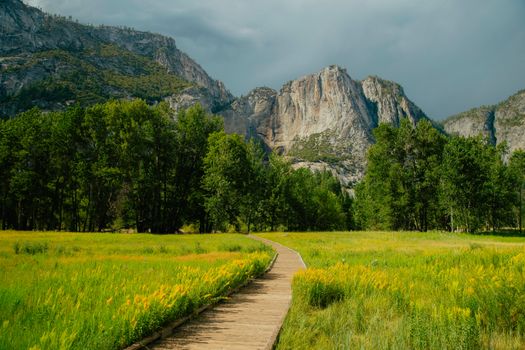
The Sprague Lake Loop is a 0.9-mile, wide, packed-dirt and boardwalk trail encircling a high-alpine mirror lake. The park incorporated continuous timber curbs along the water's edge and constructed multi-level wooden fishing piers designed specifically so manual and power wheelchair users can roll directly over the water to cast fly-lines for cutthroat trout.
- Beyond-Requirements Feature: RMNP collaborates with local adaptive organizations to offer high-traction, electric track chairs capable of traversing alpine snowpack and steep rocky grades toward Dream Lake.
- Pro-Tip: High elevation (8,000+ feet) can drain electric wheelchair batteries roughly 20-30% faster than sea-level operation due to cooler temperatures and motor strain. Pack a portable power station or spare battery pack in your gear bag!
---
5. Congaree National Park (South Carolina)
Floating Above the Swamps on Engineered Boardwalks
Congaree protects the largest intact expanse of old-growth bottomland hardwood forest remaining in the Southeastern United States. Navigating a flooded swamp seems inherently inaccessible, yet Congaree solved this with an architectural masterpiece: The Boardwalk Loop Trail.
```
~~~~~~~~~~~~~~~~~~~~~~~~~~~~~~~~~~~~~~~~~~~~~~~~~~~~~~~~~~~~~~~~~~~~~~~~~
[Old-Growth Cypress Forest] [Flooded Swamp Floor]
│ │
▼ ▼
[2.4-Mile Elevated Boardwalk Loop] ──► Low-Gradient Turnarounds
──► Recessed Benches
──► Tactile Bark Displays
~~~~~~~~~~~~~~~~~~~~~~~~~~~~~~~~~~~~~~~~~~~~~~~~~~~~~~~~~~~~~~~~~~~~~~~~~
```
This 2.4-mile elevated wooden boardwalk winds above the muddy basin, through towering bald cypress trees and ancient loblolly pines. The entire loop maintains a strict grade under 5%, complete with low, smooth handrails, kick-plates along every inch of the edges, and frequent recessed resting nooks every 200 feet so self-propelled wheelers can pause without blocking traffic.
- Beyond-Requirements Feature: The Harry Hampton Visitor Center provides tactile maps of the swamp canopy and offers free loaner sound-dampening headphones for visitors with neurodivergent or sensory-processing needs.
- Pro-Tip: Visit during late October through November. The swamp mosquitoes drop off significantly, fall colors blanket the bald cypress needles in rusty oranges, and humidity drops into an ultra-comfortable zone.
---
Quick Facts & Logistics Guide
Use this handy reference guide to plan costs, transit options, and peak seasons for these elite accessible parks:
| Park Name | Best Time to Visit | Transportation Access | Adaptive Tech Offered | Est. Entrance Cost |
| :--- | :--- | :--- | :--- | :--- |
| Great Smoky Mountains | April – June, Sept – Oct | Accessible shuttle; Personal vehicle required for remote areas | Free All-Terrain Track Chairs, Tactile Exhibits | Free (Parking tag: $5/day) |
| Acadia | July – September | 100% Accessible Island Explorer shuttle network | Adaptive Kayaks, Beach Mobi-Mats, Handcycles | $35 per vehicle (Free with Access Pass) |
| Grand Canyon | March – May, Sept – Nov | Accessible Shuttle Fleet + Scenic Drive Permit | Audio Description Devices, 3D Tactile Maps | $35 per vehicle (Free with Access Pass) |
| Rocky Mountain | June – September | Accessible Hiker Shuttle (Timed Entry System) | Off-Road Track Chairs, Low-Height Fly Fishing Piers | $30 per vehicle (Free with Access Pass) |
| Congaree | October – April | Personal vehicle required (Columbia, SC airport 30 mins away) | Elevated Boardwalks, Sensory Kits, Sound Headphones | Free |
---
Insider Travel Hacks: Maximizing Your Accessible National Park Trip
1. Secure the Interagency Access Pass First
If you are a U.S. citizen or permanent resident with a permanent disability, do not pay standard entrance fees! Apply for the America the Beautiful Interagency Access Pass.
- Cost: Free for life (a $10 processing fee applies if ordered online).
- Perk: Provides free entry for the pass holder and up to three adults in a single non-commercial vehicle at all national parks, plus discounts on expanded amenity fees like camping.
2. Leverage the "NPS Accessibility App" Features
Before you step onto a trail, open the official National Park Service (NPS) App and toggle the "Accessibility" setting. This unlocks offline downloadable maps containing precise details on:
* Cross-slope percentages of trails.
* Exact location of companion-care accessible restrooms.
* Audio-described exhibits and sign locations.
3. Call Park Disability Coordinators Directly
Every major national park has a designated Accessibility Coordinator. Don't rely solely on general web pages. Call the park's main line and request to speak with the coordinator 2-3 weeks before your trip. They can arrange tailored shuttle pickups, reserve adaptive gear, and provide real-time updates on trail maintenance or ramp repairs.
---
Final Thoughts: The Future of Universal Outdoor Adventure
The myth that true wilderness exploration must be rugged, treacherous, and exclusionary is crumbling. Parks like Acadia, Grand Canyon, and the Great Smoky Mountains prove that thoughtfully engineered boardwalks, tactile exhibits, and high-tech track chairs don't destroy nature—they unlock it.
Whether you're gliding along Acadia’s crushed-granite carriage roads, smelling the mountain dampness of the Smokies from an electric track chair, or tracing the ancient stone lines of the Grand Canyon with your fingertips, these national parks with accessibility beyond requirements worth considering offer pure, uncompromising freedom. Pack your gear, claim your Access Pass, and get out on the trail—it’s built for all of us.
---