The Breaking Point in Oia
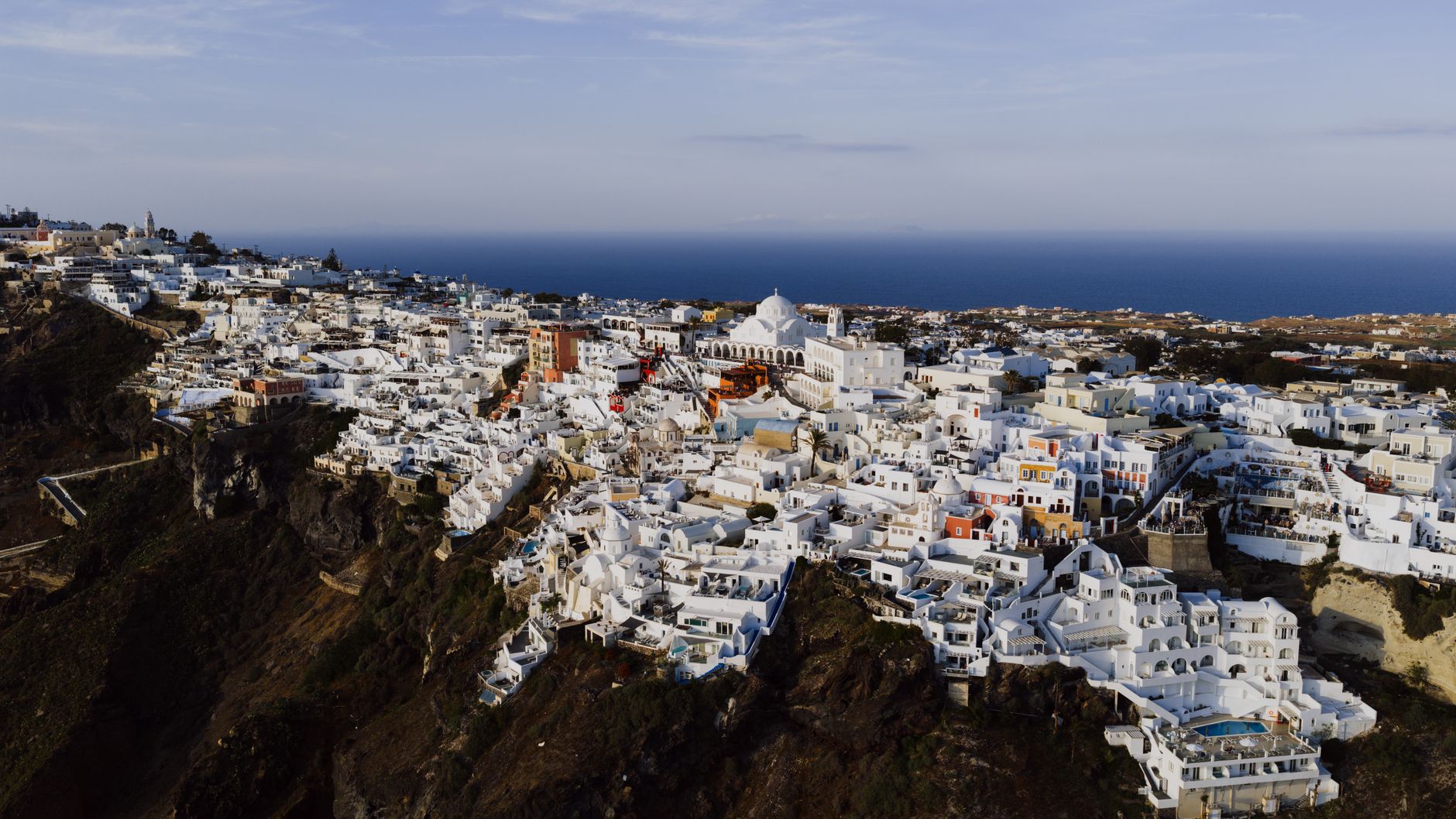
I was elbowed in the ribs by a tourist holding an iPad, stepped on by a bridal party's assistant, and suffocated by a fog of diesel exhaust mixed with melted sunblock. It was 7:45 PM in Oia, Santorini. I had spent three hours pinned against a blistering whitewashed wall just to catch a glimpse of the famous sunset. When the sun finally dipped below the horizon, the crowd didn't sigh in awe—they clapped frantically, turned their backs instantly, and surged toward the narrow alleyways like water bursting through a broken dam.
That wasn't travel; it was an endurance sport.
Two days later, I boarded an early morning SeaJets catamaran and fled north. As the volcanic caldera faded into the exhaust haze, I realized something vital: Santorini’s postcard image is real, but its soul has been traded for high-yield tourism and Instagram photo queues.
If you dream of marble-paved alleyways where wild bougainvillea actually has room to bloom, taverna owners who know your name by night two, and dramatic cliffside vistas uninterrupted by selfie sticks, you need to change your flight path. Here are six far superior, authentic alternatives to overcrowded Santorini worth considering for your next Aegean escape.
---
1. Milos: The Volcanic Showstopper Superior to Oia
If you are traveling to Santorini strictly for dramatic geological formations and surreal volcanic landscapes, cancel that booking and redirect your focus to Milos.
Milos is where the iconic Venus de Milo was unearthed, and its landscape is nothing short of otherworldly. While Santorini’s volcano created a massive crater surrounded by high cliffs, Milos boasts over 70 distinct beaches, each defined by wildly different rock formations, colorful minerals, and blinding white sea caves.
```
_____
/ \ MILOS: SARAKINIKO COAST
| () () | Blinding white volcanic pumice
___\ ^ /___ drops into electric turquoise waters.
/ \ Zero cruise ship crowds at sunrise.
```
What Makes It Better
Santorini’s beaches are largely underwhelming—hot black sand or dark volcanic pebbles crammed with $100-a-day sunbeds. Milos offers Sarakiniko, a coastal expanse of polished, bone-white pumice stone that looks like the surface of the moon dropped into an electric-blue ocean.
The Insider Experience
Base yourself in Pollonia, a sleepy fishing village on the northeastern tip, or the cliffside capital of Plaka. At sunset, skip the crowds in Plaka's main square and hike up to the Utopia Café or the ruins of the Venetian Castle (Kastro). You get the exact same panoramic Aegean sunset as Oia, accompanied by quiet jazz music, a chilled glass of Assyrtiko wine, and breathing room.
- Pro-Tip: Rent a 125cc scooter or small 4x4. To reach Tsigkrado Beach, you must descend through a narrow cliff cleft using a wooden ladder and a thick rope. Arrive before 8:30 AM to have the pristine turquoise cove entirely to yourself.
- Local Flavor: Head to O! Hamos! in Adamas. The menu is hand-written on notebook paper, and they serve goat baked in parchment paper (Kleftiko) paired with cheese aged in their own mountain cave.
---
2. Folegandros: The Untouched Cliffside Fortress
When seasoned Greece travelers speak about Folegandros, they do so in low tones, terrified that the island will become the next victim of mass tourism. Located just a 45-minute ferry ride northwest of Santorini, Folegandros shares the exact same terrifying sheer cliff geography, but retains a fiercely protected, slow-paced Cycladic soul.
```
/\ CHORA, FOLEGANDROS
/ \ Perched 200 meters straight up on a vertical cliff face.
/ /\ \ 3 interconnected car-free squares lined with plane trees.
/ / \ \
/_/____\_\
```
What Makes It Better
The main town, Chora, is built directly on the edge of a vertical cliff dropping 200 meters straight down into the sea. Unlike Santorini’s main drag, which feels like an open-air luxury shopping mall featuring Gucci and Rolex, Chora in Folegandros is completely car-free. It consists of three interconnected, stone-paved plazas shaded by leafy plane trees and lined with family-run tavernas.
The Insider Experience
Every evening at dusk, locals and clod-shod hikers walk the winding, zig-zagging whitewashed path up to the Church of Panagia, perched high on a rock pinnacle above the town. As the sky shifts from dusty rose to deep indigo, the bell chime echoes across the valleys. There are no velvet ropes, no VIP lounges—just people quietly taking in the sheer vastness of the southern Aegean.
- Pro-Tip: Skip the windy public buses and hike the ancient donkey trails (kalderimia) down to Katergo Beach. Bring plenty of water and an umbrella; there are zero beach bars, zero sunbeds, and zero noise.
- Local Flavor: Seek out a tiny taverna in the hamlet of Ano Meria and order Matsata—fresh homemade ribbon pasta served with slow-braised rooster or goat in a rich, cinnamon-laced tomato sauce.
---
3. Sifnos: The Unrivaled Culinary Capital of the Aegean
While Santorini charges $40 for mediocre frozen calamari served on a high-density terrace, Sifnos feeds your soul with slow-cooked culinary traditions that date back centuries. Sifnos is the birthplace of Nikolaos Tselementes, the chef who wrote the foundational Greek cookbook in the 1920s, and the island remains the undisputed gastronomic center of the Cyclades.
What Makes It Better
Sifnos trades flash and luxury brands for world-class ceramic craft and rich agricultural heritage. The island smells of wild oregano, thyme, and woodsmoke from clay ovens. Its architecture features whitewashed walls balanced by dark terracotta chimneys (flaros) crafted by local potters.
The Insider Experience
Spend your afternoon exploring Kastro, a fortified medieval village built continuously on a rocky dome above the ocean. Its narrow alleyways are so tight that houses form the outer defensive walls. After watching the blue hour set over the tiny Church of Seven Martyrs protruding into the sea, head to Apollonia for dinner.
```
+-------------------------------------------------------+
| SIFNOS CULINARY HIGHLIGHTS |
+-------------------------------------------------------+
| • REVITHADA: Chickpeas slow-cooked 15 hours in clay |
| • MASTELO: Lamb soaked in red wine, cooked on vine |
| • MANOURA: Wine-soaked sheep's milk cheese |
+-------------------------------------------------------+
```
- Pro-Tip: Visit the pottery workshop of Atsonios in Vathi bay, operating continuously since 1870. You can watch master potters shape clay water jugs and cooking pots directly on the water's edge using techniques unchanged for thousands of years.
- Local Flavor: You cannot leave without trying Revithada—a chickpea soup slow-roasted in a terracotta pot (skoutali) inside a wood-fired oven for 15 hours overnight. Eat it on Sunday afternoons at Taverna Leonidas in Cherronisos.
---
4. Naxos: The Ancient Giant of Myth, Food, and Endless Beaches
If Santorini feels too cramped, sterile, or small, Naxos is the antidote. It is the largest island in the Cyclades, packed with dramatic granite mountains, fertile green valleys, ancient marble ruins, and endless stretches of golden, fine-sand beaches.
```
________
| | THE PORTARA OF NAXOS
| __ | A massive 2,500-year-old marble gateway
| | | | standing alone on an islet facing the sunset.
|__|__|__| No reservation required.
```
What Makes It Better
Naxos is self-sustaining; unlike Santorini, which must import almost all freshwater and produce, Naxos grows its own potatoes, raises cattle, produces exceptional wine, and crafts award-winning cheeses. Because the local economy relies heavily on agriculture rather than just tourism, prices remain remarkably low, and the hospitality feels genuine.
The Insider Experience
Walk out to the Portara at sunset—a massive, 2,500-year-old marble gateway to an unfinished temple of Apollo that stands alone on an islet connected to Naxos Town (Chora). Afterward, drive into the mountainous interior to villages like Apiranthos, where the streets are paved entirely in smooth white marble and elders sit outside playing backgammon (tavli).
- Pro-Tip: Head south past the organized beach clubs of Agios Prokopios to Plaka Beach or Hawaii Beach in Alyko. Here, sweeping sand dunes meet cedar forests dropping directly into crystal-clear waters without a single sunbed in sight.
- Local Flavor: Order a plate of Graviera Naxou (a creamy, nutty PDO cheese), fried local potatoes (world-famous among Greek foodies), and a glass of Kitron—a rare citrus liqueur distilled from the leaves of the citron tree at the historic Vallindras Distillery in Halki.
---
5. Amorgos: Deep Blue Solitude and Wild Mountain Beauty
Amorgos is the easternmost island of the Cyclades, famous as the primary filming location for Luc Besson’s classic free-diving film The Big Blue. It is an island of dramatic peaks, ancient monasteries built into shear rock faces, and deep, azure marine waters that make Santorini’s boat tours look like overcrowded waterparks.
```
/||\
/ || \ MONASTERY OF PANAGIA HOZOVIOTISSA
/ || \ A 1,000-year-old white ribbon pinned
| [||] | 300 meters up a sheer rock cliff face.
|___||___|
```
What Makes It Better
Amorgos appeals to travelers seeking raw beauty, tranquility, and soul. There are no international airports, no large cruise piers, and zero corporate resort chains. The atmosphere is quiet, contemplative, and intensely atmospheric.
The Insider Experience
Hike the path to the Monastery of Panagia Hozoviotissa. Built in 1088 AD, this brilliant white structure is literally glued to the side of a vertical cliff 300 meters above the glittering sea. Climb the 300 narrow stone steps, enter the dark stone halls, and you will be greeted by resident monks who offer visitors cold water, sweet loukoumi (Turkish delight), and a shot of citrusy psoraki (local raki).
- Pro-Tip: Rent a car and drive down to the far southern tip of the island to swim around the Olympia Shipwreck, a rusty freighter half-submerged in a hidden turquoise cove.
- Local Flavor: Sit at a traditional kafeneio in the mountain village of Tholaria and order Patatato—a slow-simmered stew of local goat, potatoes, garlic, fresh tomatoes, and red wine cooked in heavy iron cauldrons.
---
6. Symi: Neoclassical Elegance in the Dodecanese
If you love the vertical, amphitheatrical layout of Santorini's towns but want a completely different, aristocratic aesthetic, jump over to the Dodecanese group and set anchor in Symi.
```
/^_^\ /^_^\ /^_^\ SYMI HARBOR (GIALOS)
| _ | _ | _ | Pastels of ochre, terracotta, and cream.
| | | | | | | | | | Neoclassical grand mansions cascading down
|_|_|_|_|_|_|_|_|_| steep cliffs into turquoise harbors.
```
What Makes It Better
Instead of the standard Cycladic white sugar-cube architecture, Symi’s harbor (Gialos) is lined with grand, 19th-century neoclassical mansions painted in warm tones of ochre, terracotta, dusty pink, and sky blue. Built by wealthy sponge-diving merchants and shipbuilders, the town rises dramatically up steep cliffs surrounding a deep-water bay.
The Insider Experience
Arrive via ferry late in the afternoon when day-trippers from Rhodes depart. The harbor transforms into a serene, romantic haven. Climb the Kali Strata—a grand marble staircase of 500 steps connecting the lower harbor to the historic upper village of Chorio. Watch the twilight illuminate the pastel facades as traditional fishing boats (kaikis) glide silently through the bay.
- Pro-Tip: Hire a water taxi from Gialos harbor to take you to Agios Georgios Dysalonas, a beach accessible only by sea, backed by a sheer, 300-meter vertical rock wall that plunges directly into translucent cobalt water.
- Local Flavor: You cannot leave without eating Symi Shrimp—tiny, delicate deep-water shrimp that are flash-fried whole in olive oil and garlic. You eat them whole, shells, tails, and heads included, like salty popcorn from the sea.
---
Comparative Guide: Logistics, Costs & Vibe Breakdown
To help you choose the ideal alternative for your travel style and budget, use this cheat sheet:
| Island | Key Vibe | Cost/Day ($) | Best Months | Getting There (From Athens) |
| :--- | :--- | :--- | :--- | :--- |
| Milos | Surreal Geology, Beaches | $180 - $350 | May–June, Sept–Oct | 3.5h Ferry (Piraeus) / 45m Flight |
| Folegandros| Cliffside Romance, Quiet | $150 - $280 | June, Sept | 4h High-Speed Ferry (Piraeus) |
| Sifnos | Gastronomy, Ceramics, Hiking| $140 - $260 | May–July, Sept | 2.5h High-Speed Ferry (Piraeus) |
| Naxos | Endless Beaches, History | $100 - $220 | May–October | 3.5h Ferry / 45m Flight |
| Amorgos | Dramatic Nature, Solitude | $90 - $180 | June–September | 5.5h Ferry (Piraeus) |
| Symi | Neoclassical Luxury | $160 - $320 | May–June, Sept–Oct | 1h Ferry from Rhodes (Fly to RHO) |
| Santorini | Overcrowded, Luxury | $400 - $1,200+ | April, November | Overcrowded Catamarans / Flights |
---
Actionable Strategy: How to Build Your "Anti-Santorini" Itinerary
Planning an authentic trip across the Greek islands requires a smart strategy to avoid logistics bottlenecks.
```
[ATHENS (Piraeus)]
|
v (2.5 hours)
[ SIFNOS ] ---> (Culinary & Ceramics)
|
v (40 minutes)
[ MILOS ] ---> (Volcanic Landscapes & Lunar Beaches)
|
v (1 hour)
[ FOLEGANDROS ] -> (Cliffside Romance & Quiet Sunset)
```
1. Master the Ferry System
Do not book multi-island ferry tickets through fragmented individual operator websites. Use aggregate booking tools like Ferryhopper to map out direct routes. High-speed catamarans (like SeaJets) save time, but conventional blue ferries (like Blue Star Ferries) are half the price, far more stable in high winds (Meltemi), and offer open-air decks for panoramic viewing.
2. Time Your Trip Correctly
Avoid late July and all of August at all costs. This is when all of Europe goes on holiday, temperatures spike above 35°C (95°F), and the dry northern wind (Meltemi) can ground small ferry boats. Target the shoulder seasons:
* Late May to late June: Long light, warm waters, blooming wildflowers, low prices.
* September to mid-October: Sea temperatures are at their warmest, crowds are completely gone, and grape harvesting is in full swing.
3. Fly Smart
Instead of flying in and out of Athens, book open-jaw international flights. Fly into Athens (ATH) and fly out of secondary international hubs like Mykonos (JMK), Rhodes (RHO), or Santorini (JTR). Use Santorini's airport strictly as a departure point back home—land, head straight to the ferry port, explore Milos or Folegandros, and only return to Santorini's airport 2 hours before your flight home without ever stepping foot in Oia.
---
The Verdict: Ditch the Hype, Keep the Magic
Santorini had its moment. But travel should feel like an adventure, an expansion of your world, and an authentic connection with local culture—not an overpriced obstacle course of selfie sticks and velvet ropes.
Whether you choose to swim along the white lunar shores of Milos, share a slow-cooked chickpea stew in Sifnos, or watch the dusk settle over the cliffside squares of Folegandros, you will discover the real Greece that Santorini lost long ago.
Pack your bags, skip the caldera queues, and experience the Aegean as it was meant to be.
---