The Ultimate Guide to Marine Protected Areas Offering Citizen Science That Are Trending This Summer
The Hook: A Morning on the Edge of the Reef
I stepped off the wooden dive skiff into the 24°C water of Cabo Pulmo, and the immediate scent of sun-baked salt, diesel exhaust, and wet neoprene evaporated instantly into the crisp Pacific air. Beneath me, the ocean didn't just look clear—it hummed. Down at eighteen meters, the sound hit my ears before my eyes fully adjusted: a dry, static-like crackle generated by millions of snapping shrimp, accompanied by the low, echoing thump of thousands of bigeye jacks moving as a single, silver organism.
In my left hand, I held an underwater slate secured with a coil lanyard; in my right, a waterproof camera housing configured for wide-angle photo identification. I wasn't just diving a vibrant marine sanctuary; I was working a transect line.
For decades, coastal travel followed a predictable blueprint: fly in, slather on sunscreen, consume local seafood, leave nothing behind but footprints, and take nothing home but photos. But this summer, a seismic shift has taken over the dive and eco-travel world. Travelers are no longer content playing passive spectators to the planetary crisis. We want skin in the game.
Enter the rise of Marine Protected Areas (MPAs) offering citizen science programs. These marine sanctuaries allow everyday travelers, recreational divers, and coastal hikers to collect vital scientific data—mapping thermal resilience in corals, recording marine mammal acoustics, and tracking endangered apex predators. If you are ready to make your summer travel genuinely high-impact, here are the six trending MPAs where your vacation days directly fund and fuel planetary recovery.
---
1. Cabo Pulmo National Park (Baja California Sur, Mexico)
The Science Focus: Apex Predator Photo-ID & Reef Recovery Metrics
Once devastated by severe overfishing in the 1980s, Cabo Pulmo is widely considered the world's most successful marine recovery story, boasting a staggering 460% increase in total fish biomass since its establishment as an MPA. Today, local community collectives work alongside marine biologists to track the return of apex predators, specifically bull sharks, nurse sharks, and massive shoals of predatory fish.
```
+------------------+-------------------------------------------------------+
| Activity | Bull Shark Photo-ID & Benthic Fish Censuses |
| Primary Platform | iNaturalist & Reef Check Protocols |
| Gear Required | 3mm Wetsuit, Underwater Slate, GoPro on Extension Pole |
+------------------+-------------------------------------------------------+
```
The Experience
When you log dives with certified local operators like Cabo Pulmo Beach Resort or Sustainable Baja Expeditions, you aren't just along for the ride. You are tasked with capturing clear, right-side lateral photographs of bull sharks at the Vencedor shipwreck site. These images are fed into regional database software to track individual shark movements, spot scar patterns, and monitor gestation cycles.
Pro-Tip
Book your dive slots at least four months in advance. To prevent overcrowding, the park strictly limits daily boat entries to sensitive sites like Los Frailes and El Bajo.
- Insider Logistics: Skip the high-end resorts of Cabo San Lucas. Rent a 4WD vehicle in La Paz or San José del Cabo, drive the dusty dirt road into the off-grid village of Cabo Pulmo, and stay in solar-powered casitas. Eat fresh pescado zarandeado at Tacos Los Tigres after your morning data-logging dives.
---
2. Ningaloo Coast Marine Park (Western Australia)
The Science Focus: Whale Shark Pattern Tagging & Turtle Hatchling Monitoring
Spanning 300 kilometers along Western Australia’s remote coast, Ningaloo Reef is one of the world's largest fringing coastal reefs. Unlike the Great Barrier Reef, which requires long boat rides to reach, Ningaloo sits mere meters from the shoreline. Summer and early autumn bring mass coral spawning events, triggering an influx of filter-feeding giants: whale sharks, manta rays, and humpback whales.
```
+------------------+-------------------------------------------------------+
| Activity | Whale Shark Spot-Pattern Bio-Logging |
| Primary Platform | Wildbook for Whale Sharks (ECOCEAN) |
| Gear Required | Snorkel Gear, Shorty Wetsuit, HD Underwater Camera |
+------------------+-------------------------------------------------------+
```
The Experience
Participating in Ningaloo’s citizen science program doesn't require scuba certification; it happens right at the surface with a snorkel and fins. When a whale shark is spotted by spotter planes overhead, you glide quietly into the turquoise water behind a guide. Your objective: swim parallel to the giant and photograph the distinct area of white spots located just behind the animal's fifth gill slit on its left flank.
Every photograph uploaded to the Wildbook for Whale Sharks database uses a pattern-matching algorithm originally built for mapping star constellations. The algorithm identifies individual animals, helping scientists map global migration corridors without invasive tagging techniques.
Pro-Tip
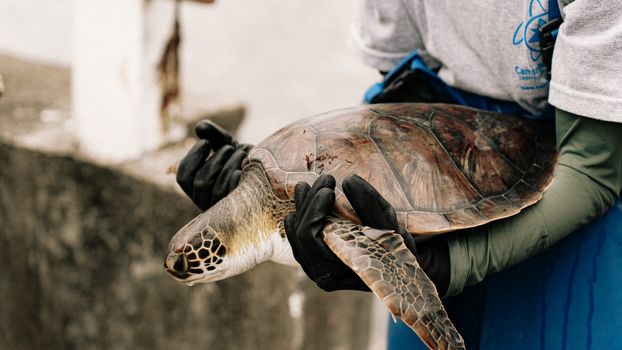
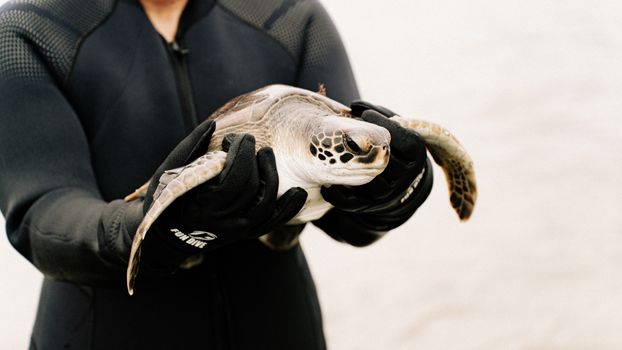
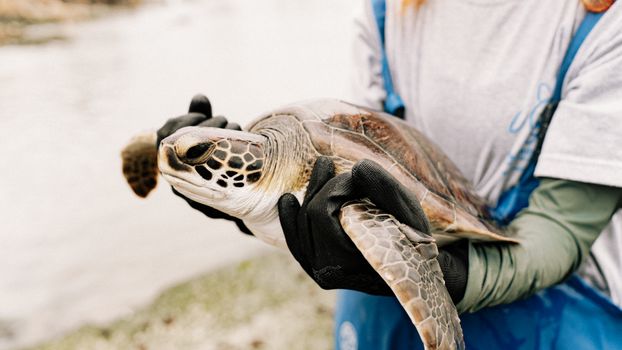
Head to Jurabi Turtle Centre near Exmouth during dusk or early morning hours. Volunteer park rangers will train you to conduct non-intrusive beach patrols to record green and loggerhead turtle nesting sites and protect hatchlings from light pollution.
---
3. Florida Keys National Marine Sanctuary (Florida, USA)
The Science Focus: Coral Outplanting & Heat-Resilience Monitoring
Stretching across 3,800 square nautical miles of coastal waters, the Florida Keys National Marine Sanctuary contains the third-largest living coral barrier reef system in the world. However, recent marine heatwaves have put immense thermal stress on these ecosystems, sparking an aggressive, science-backed restoration initiative to rebuild staghorn and elkhorn coral stocks.
```
+------------------+-------------------------------------------------------+
| Activity | Nursery Coral Maintenance & Outplant Tagging |
| Primary Platform | REEF Fish Survey Project / Coral Restoration Found. |
| Gear Required | Scuba Gear, Wire Brushes, Zip Ties, Underwater Slate |
+------------------+-------------------------------------------------------+
```
The Experience
Organizations like the Coral Restoration Foundation (CRF) and I.Care offer hands-on volunteer programs where recreational divers spend the morning attending a terrestrial workshop learning about micro-fragmentation techniques. In the afternoon, you board a dive boat to work in offshore coral nurseries.
Under the guidance of staff marine biologists, you will dive down to offshore underwater "coral trees," use wire brushes to scrub away algae that smothers young corals, and assist in securing resilient coral fragments onto degraded reefs using non-toxic epoxy and zip-ties.
Pro-Tip
If you prefer identifying fish species over underwater gardening, sign up for a REEF (Reef Environmental Education Foundation) Survey Trip out of Key Largo. Equipped with a survey slate, you will perform roving diver technique counts, submitting baseline biodiversity data used directly by NOAA managers.
- Insider Logistics: Fly into Miami, rent an electric vehicle, and take the Overseas Highway down to Islamorada. Stop at Mrs. Mac’s Kitchen in Key Largo for authentic key lime pie, and rent gear at local eco-certified dive shops that hold official Sanctuary Preservation Area permits.
---
4. Archipelagos Sanctuary, Aegean Sea (Greece)
The Science Focus: Posidonia Oceanica Seagrass Mapping & Acoustic Cetacean Tracking
While tourists crowd the cliffside infinity pools of Santorini, a quietly revolutionary marine conservation movement is taking place across the Eastern Aegean Sea. The Archipelagos Institute of Marine Conservation operates out of islands like Samos and Lipsi, overseeing marine sanctuaries that host massive underwater meadows of Posidonia oceanica (Neptune grass)—a vital carbon sink that sequesters carbon up to 35 times faster than tropical rainforests.
```
+------------------+-------------------------------------------------------+
| Activity | Seagrass Mapping & Hydrophone Cetacean Logging |
| Primary Platform | Marine Mammal Observer (MMO) Coastal Network |
| Gear Required | Snorkel Gear, GPS Handheld (Land), Waterproof Notepad |
+------------------+-------------------------------------------------------+
```
The Experience
Participants join marine research teams aboard traditional wooden caique boats converted into scientific research vessels. Your days are split between marine and terrestrial fieldwork. While snorkeling along shallow bays, you will map the density and health of Posidonia beds using calibrated quadrat frames and underwater cameras.
During offshore transits, you will take shifts sitting at the bow as a trained Marine Mammal Observer (MMO), logging sightings of short-beaked common dolphins and sperm whales using specialized visual logging software, while deploying towed hydrophone arrays to record bioacoustics.
Pro-Tip
Pack a light windbreaker and polarized sunglasses. The Meltemi winds blow across the Aegean throughout July and August, creating surface glare that makes visual tracking trickier—polarized lenses are essential for spotting fin breaks and blowholes against the whitecaps.
---
5. Port-Cros National Park (Var, France)
The Science Focus: Mediterranean BioBlitz & Microplastic Density Sampling
Established in 1963, Port-Cros is Europe's oldest coastal marine park. Located off the coast of the French Riviera near Hyères, this car-free island serves as a critical haven for Mediterranean biodiversity, housing rich ecosystems of dusky groupers, noble pen shells (Pinna nobilis), and marine avian life.
```
+------------------+-------------------------------------------------------+
| Activity | Coastal Microplastic Transects & BioBlitz Surveys |
| Primary Platform | BioLit Platform & Surfrider Foundation Europe Network |
| Gear Required | Fine-Mesh Neuston Net, Sample Vials, Magnifying Lens |
+------------------+-------------------------------------------------------+
```
The Experience
Port-Cros offers accessible citizen science initiatives for both divers and coastal walkers through the national BioLit program. Travelers can participate in scheduled "BioBlitz" events across the island's rocky intertidal zones. Using standardized sampling grids, you will record native species distributions while monitoring invasive algae species like Caulerpa taxifolia.
For those passionate about ocean health, morning boat charters run microplastic sampling transects using handheld neuston nets. Volunteers skim surface waters, isolate collected plastics, sort particles by size and polymer type, and log the findings into a Mediterranean-wide plastic pollution tracking database.
Pro-Tip
Cars are completely banned on Port-Cros. You must explore the island entirely on foot along shaded eucalyptus-scented trails or via electric dive boats.
- Insider Logistics: Take the high-speed TGV train to Toulon, head to the port of La Tour Fondue at the tip of the Giens Peninsula, and hop on the 15-minute passenger ferry to Port-Cros. Stay at Le Manoir de Port-Cros, an 18th-century stone hotel surrounded by pine trees, and order wild lavender honey and local Provençal rosé at dinner.
---
6. Faxaflói Bay Marine Area (Reykjavík, Iceland)
The Science Focus: Sub-Arctic Marine Mammal Identification & Seabird Dynamics
For those who prefer cold waters and wild, dramatic landscapes over tropical beaches, Iceland’s Faxaflói Bay presents an extraordinary summer citizen science frontier. Fed by nutrient-rich cold Arctic currents, these sub-arctic waters serve as a high-latitude feeding ground for humpback whales, minke whales, white-beaked dolphins, and Atlantic puffins.
```
+------------------+-------------------------------------------------------+
| Activity | Fluke Photo-ID & Seabird Population Density Mapping |
| Primary Platform | Happywhale & Seabird Count Portals |
| Gear Required | Thermal Base Layers, Telephoto Camera Lens (200-400mm)|
+------------------+-------------------------------------------------------+
```
The Experience
Partnering with research-focused outfits like Elding Whale Watching out of Reykjavík’s Old Harbour, passengers on sub-arctic research cruises play a hands-on role during standard tours. Armed with telephoto camera lenses, citizen scientists focus on capturing high-resolution photos of humpback whale flukes—the underside of the tail fin, which features unique black-and-white pigmentation patterns akin to human fingerprints.
You will learn to upload these images directly to Happywhale, a global tracking platform that uses computer vision to track individual whales as they migrate between Antarctic/Caribbean breeding grounds and sub-Arctic feeding zones.
Pro-Tip
Dress in warm, waterproof layers—even in mid-July, air temperatures on Faxaflói Bay hover around 8°C to 12°C with sharp wind chills. Most operators provide thermal floatation suits, but bringing your own thermal gloves and wool beanie is non-negotiable.
---
Logistics, Costs, and Booking Guide
Planning a citizen science expedition requires slightly different preparation than a standard beach holiday. Programs often require advance registration, brief training modules, and specific equipment.
At-a-Glance Field Comparison
| Destination | Best Travel Window | Expected Daily Cost ($ USD) | Required Skill Level | Primary Citizen Science Focus |
| :--- | :--- | :--- | :--- | :--- |
| Cabo Pulmo, Mexico | June – November | $180 – $320 | Advanced Open Water Scuba | Apex Predator ID / Benthic Cover |
| Ningaloo Reef, Australia | March – August | $250 – $450 | Basic Snorkeling | Whale Shark Pattern Tagging |
| Florida Keys, USA | May – October | $200 – $380 | Open Water Scuba | Coral Outplanting & Cleaning |
| Archipelagos, Greece | May – September | $120 – $220 | Snorkeling / Boating | Seagrass Mapping & Acoustics |
| Port-Cros, France | June – September | $160 – $310 | Beginner Snorkeling / Hiking | Microplastics & Intertidal Blitz |
| Faxaflói Bay, Iceland | June – August | $220 – $400 | Non-Swimmer / Coastal | Humpback Fluke Photo-ID |
---
Essential Gear Packing List for the Marine Citizen Scientist
To ensure your data collection is clean, accurate, and non-disruptive to the marine environment, bring these essential tools:
- Reef-Safe Mineral Sunscreen: Traditional chemical sunscreens containing oxybenzone and octinoxate bleach delicate coral reefs and alter marine invertebrate DNA. Stick strictly to non-nano zinc oxide formulas (e.g., Stream2Sea, Raw Elements).
- Slate with Waterproof Paper & Pencil: Crucial for writing down species counts, dive times, GPS coordinates, and depth metrics while submerged.
- Polarized Sunglasses: Reduces surface glare significantly, allowing you to spot marine life, shallow coral heads, and floating debris from the deck of a research vessel.
- Underwater Camera Housing with Lanyard: Ensure your action camera or DSLR housing is rated to the maximum depth of your dives and clipped securely to your BCD (Buoyancy Control Device) to avoid accidental loss on the sea floor.
- Data Apps Pre-Downloaded: Cell service is rarely available out on the water. Download iNaturalist, REEF Mobile, and Happywhale offline databases before heading off shore.
---
The Verdict: Why Your Summer Travel Strategy Needs to Shift
The era of passive travel is drawing to a close. As global marine ecosystems navigate unprecedented temperature spikes, coastal development pressures, and biodiversity loss, marine scientists are stretched thin. They desperately need eyes and ears in the water.
By choosing to spend your summer vacation inside a Marine Protected Area with an active citizen science program, you convert your travel budget into directly actionable conservation data. You walk away with far more than a suntan and souvenirs—you leave behind a real, measurable legacy of marine protection. Pack your fins, download your survey apps, and dive in.
---