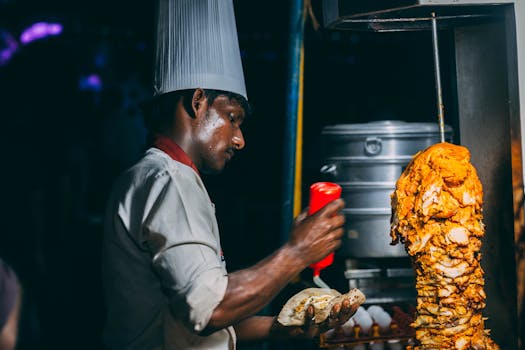
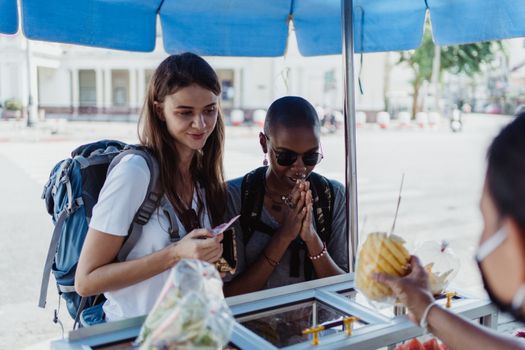
The aroma hit me first – a smoky, sweet, and savory symphony wafting through the humid Bangkok air. I followed my nose, dodging tuk-tuks and weaving through a lively crowd, until I found her: an elderly woman, her face a map of gentle wrinkles, expertly flipping noodles on a sizzling wok. She barely glanced up as I pointed to the Pad See Ew on her weathered sign. Minutes later, I was handed a steaming plate piled high with wide, chewy noodles, tender chicken, crisp gai lan, and a perfect char. I found a tiny plastic stool, sat down amongst a dozen chattering locals, and took my first bite.
Heaven. Pure, unadulterated, gastronomic heaven.
The best part? It cost me 40 Thai Baht – less than $1.50 USD.
That moment, perched on a wobbly stool on a bustling Bangkok street, was a revelation. It wasn’t just a meal; it was an immersion. It was the taste of a culture, a connection to a place, and a stark contrast to the bland, overpriced hotel buffet I’d endured the day before. And it taught me a crucial lesson: the most unforgettable culinary experiences often come with the smallest price tags.
For years, I've crisscrossed continents, driven by an insatiable wanderlust and an even hungrier stomach. And I’ve discovered that eating like a local for pennies isn't just a budget hack – it's the only way to truly experience a destination. It’s about discovering hidden gems, tasting authentic flavors, connecting with communities, and creating memories that no Michelin-starred restaurant could ever replicate.
This isn't about surviving on instant noodles (unless they're gourmet street instant noodles, of course). This is about feasting like royalty on a pauper's budget. It’s about the kind of food experiences you need to have before you die. Ready to dive in? Let's unlock the secrets to eating your way around the world for next to nothing.
The Philosophy of Pennies: Why Go Local & Cheap?
Before we get to the "how," let's reinforce the "why." Beyond the obvious financial savings (which, let's be honest, are a huge draw), there are profound benefits to embracing the local, cheap eats philosophy:
- Authenticity on a Plate: Tourist restaurants often dilute flavors or cater to a generalized palate. Local spots, especially street food vendors and mom-and-pop eateries, serve dishes exactly as they’re meant to be – packed with the true essence of the culture.
- Cultural Immersion: Food is a language. Eating where locals eat, sitting beside them, observing their dining rituals – it’s a direct portal into their daily life and traditions. You’ll learn more over a $2 bowl of pho than in any museum.
- Support Local Economies: Your pennies go directly into the pockets of local families, small business owners, and farmers, rather than multinational corporations. It’s ethical eating at its finest.
- Unexpected Discoveries: The best food adventures rarely happen in places listed in guidebooks. They happen down a hidden alley, in a bustling market, or at a tiny, nameless stall that simply smells too good to ignore.
- Flavor Explosions: Seriously, the flavors! The freshness, the spices, the unique combinations you'll find at local spots are often far superior to anything you’d get in a more upscale, generic restaurant.
Embrace the grit, the noise, the sometimes-unfamiliar smells. This is where the magic happens.
Section 1: The Art of the Street Food Hunt – Your Culinary Compass
Street food is the undisputed king of eating like a local for pennies. It’s fast, fresh, delicious, and incredibly cheap. But how do you navigate the endless stalls and find the best bites?
Tip 1: Follow the Crowds (Especially Locals!)
This is your golden rule. A long line, particularly one composed mostly of locals, is the strongest indicator of deliciousness and freshness. If a stall is empty at peak meal times, it's usually for a reason. Don't be afraid to queue up; the wait is part of the experience and often moves quickly.
- Anecdote: In Hanoi, Vietnam, I once waited 20 minutes for a bowl of Bun Cha (grilled pork with noodles) at a tiny stall. It was a chaotic scene of motorbikes and plastic stools, but the moment I tasted that perfectly smoky pork and tangy broth, I knew every second of that wait was worth it. It cost me about $2.50.
Tip 2: Observe and Trust Your Senses
Look for stalls where food is cooked fresh to order, not sitting around for hours. Is the cooking area clean? Are the ingredients vibrant and fresh? Does it smell amazing? Your nose is your best guide. If something smells off, move on.
Tip 3: Look for Limited Menus
Street food vendors who specialize in only one or two dishes often do them exceptionally well. They've perfected their craft over years, sometimes generations. Don't be put off by a lack of variety; it's a sign of mastery.
Tip 4: Embrace the Language Barrier (with a smile!)
Don't speak the local language? No problem! Pointing, smiling, and using basic phrases like "delicious!" ("aroi!" in Thai, "delicioso!" in Spanish) goes a long way. Many vendors are used to tourists and will be patient. Google Translate's image recognition feature can also be a lifesaver for deciphering menus.
Tip 5: Carry Small Bills and Coins
Street vendors rarely have change for large denominations. Always have small local currency on hand to make transactions smooth and quick.
Street Food Examples & Estimated Prices:
* Bangkok, Thailand: Pad Thai, Pad See Ew, Mango Sticky Rice (~$1.50 - $3.00)
* Mexico City, Mexico: Tacos al Pastor, Quesadillas, Elotes (~$0.50 - $2.00 per item)
* Hanoi, Vietnam: Pho, Banh Mi, Bun Cha (~$1.50 - $3.00)
* Rome, Italy: Pizza al Taglio (pizza by the slice) (~$3.00 - $5.00)
* Marrakech, Morocco: Tangia, Harira Soup, Snail Soup (Djemaa el-Fna square) (~$1.00 - $5.00)
Section 2: Market Magic – Your Culinary Playground
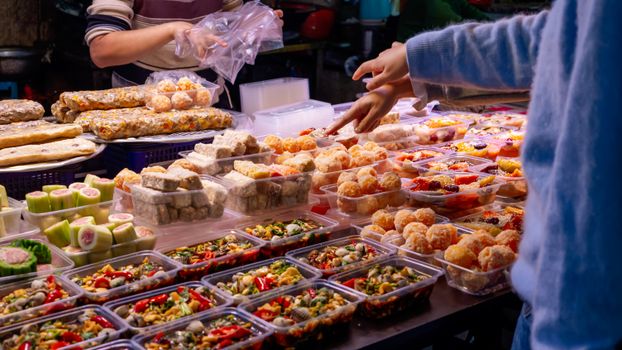
Beyond street stalls, local markets (wet markets, farmers markets, night markets) are treasure troves for cheap, authentic eats and ingredients. They are vibrant, sensory overload experiences that every food lover must explore.
Tip 1: Go Beyond the Produce Aisle
While fresh fruit and veggies are amazing, many markets have dedicated food sections or small eateries within them. You might find stalls selling freshly prepared meals, snacks, or ingredients you can turn into a fantastic, cheap picnic.
- Personal Story: In Florence, Italy, I spent an afternoon at Mercato Sant'Ambrogio. Instead of eating at the sit-down restaurants, I bought fresh focaccia, a hunk of local pecorino cheese, some sun-dried tomatoes, and a bottle of cheap Chianti. I found a park bench nearby and had an incredible, authentic Italian picnic for less than €10. It felt more Roman Holiday than any fancy restaurant.
Tip 2: Embrace the Sampling
Many vendors, especially at farmers' markets, offer samples. Don't be shy! It's a great way to discover new flavors and decide what to buy. Just be polite and don't over-sample without buying.
Tip 3: Look for Prepared Foods
Often, you'll find stalls selling pre-cooked items that are perfect for a quick lunch or dinner. Think roasted chicken, local salads, or delicious pastries. These are usually priced very reasonably.
Tip 4: Learn a Few Key Phrases
Knowing how to ask "How much?" ("¿Cuánto cuesta?" in Spanish, "Jǐn qián?" in Mandarin) and "Thank you" is incredibly helpful and respectful. You might even score a better price or a friendly smile.
Tip 5: Visit Early or Late
For the freshest produce and best selection, go early. For potential end-of-day discounts (especially on baked goods or perishable items), go closer to closing time.
Market Experiences & What to Look For:
* Mercado de San Juan, Mexico City: Exotic meats, insects (chapulines!), and gourmet ingredients. Try a taco de chapulines for about $1.50.
* Queen Victoria Market, Melbourne, Australia: Fresh produce, deli items, and a famous night market with diverse street food. Grab a borek for $5-7.
* La Boqueria, Barcelona, Spain: A feast for the eyes and stomach! Fresh juices (~€2), tapas, and seafood.
* Dong Xuan Market, Hanoi, Vietnam: A bustling market with a fantastic food court on the ground floor. Try Che (sweet dessert soup) for ~$1.
Section 3: Humble Eateries & Hole-in-the-Walls – The Unsung Heroes
Not all local food is on the street. Many destinations boast incredible, unassuming restaurants – often called "hole-in-the-walls" – that serve up authentic, delicious, and incredibly affordable meals. These are the places locals frequent for their daily sustenance.
Tip 1: Avoid Places with English Menus (Unless it's a specialty cuisine)
This is a strong indicator of a tourist trap. Local eateries will often have menus only in the local language, or perhaps a poorly translated, handwritten one. This is a good sign!
Tip 2: Seek Out "Menu del Día" or "Set Lunch" Deals
In many countries (especially in Europe and Latin America), restaurants offer a "Menu del Día" (menu of the day) or "Plat du Jour" (dish of the day) during lunch hours. These are multi-course meals (starter, main, dessert, sometimes a drink) for an incredibly low fixed price.
- Example: In Spain, I’ve had three-course Menu del Día meals with wine for as little as €10-12. In Colombia, a "Corrientazo" (daily lunch special) can be found for $3-5.
Tip 3: Look for Local Signifiers
Are there plastic tables and chairs? Is the decor simple, perhaps even a bit worn? Are there communal tables? These are all signs you’re in the right place. Fancy tablecloths and polished silverware often mean higher prices.
Tip 4: Ask Your Accommodation or Local Friends
Your guesthouse owner, hostel receptionist, or a friendly local you meet is an invaluable resource. Ask them where they eat. "Where do you go for good, cheap [local dish]?" is a question that will often lead you to gold.
- Anecdote: During a trip to Lisbon, Portugal, I asked my Airbnb host for a recommendation. She pointed me to a tiny, unassuming spot serving Bacalhau à Brás. It looked like nothing from the outside, but inside, it was packed with locals. The dish was incredibly flavorful, hearty, and cost me less than €8. It was the best cod I had in Portugal.
Tip 5: Don't Judge a Book by Its Cover
Some of the most incredible food experiences come from the most unappealing-looking establishments. Get past the aesthetics; focus on the food and the atmosphere created by the local patrons.
Section 4: Embrace the Unfamiliar – Your Adventurous Palate Awaits
Part of eating like a local for pennies is stepping outside your comfort zone. The most authentic (and often cheapest) dishes are sometimes those you’ve never heard of, or that might even initially seem a bit strange.
Tip 1: Research Local Specialties Before You Go
A little homework goes a long way. Look up the must-try regional dishes. Knowing what to expect, and what's considered a delicacy, makes you more confident in trying it.
Tip 2: Try the "Weird" Stuff (Within Reason)
Is it balut in the Philippines (a fertilized duck egg)? Chapulines (fried grasshoppers) in Mexico? Stinky Tofu in Taiwan? If it's a local delicacy, and it's prepared safely, give it a shot! These are the stories you'll tell for years. And often, these unique items are incredibly cheap.
- Personal Story: In Oaxaca, Mexico, I saw vendors selling chapulines (grasshoppers) by the handful. Initially, I was hesitant. But seeing locals munching on them like popcorn, I decided to be brave. I bought a small bag for about $1. They were crunchy, salty, and surprisingly delicious with a squeeze of lime! It was an experience I'll never forget and a great conversation starter.
Tip 3: Don't Be Afraid to Ask What It Is
If you're unsure, point and ask "What is this?" or "What's in it?" Most vendors or restaurant staff will be happy to explain, even with gestures or a few English words.
Tip 4: Start Small
If you're nervous about a new dish, order a small portion or share it with a travel buddy. That way, you're not committing to a whole plate if it's not to your taste.
Tip 5: Learn About Local Food Etiquette
Is it customary to eat with your hands? Slurp your noodles? Share dishes? A little knowledge of local dining customs shows respect and enhances your experience.
Section 5: Beyond the Bite – The Cultural Exchange
Eating isn't just about sustenance; it's a powerful tool for cultural connection. When you eat like a local, you don't just fill your stomach – you feed your soul with genuine human interaction.
Tip 1: Engage with Vendors and Staff
A smile, a "hello," and a "thank you" in the local language can open doors. Ask about their dish, where they learned to cook, or even for recommendations. You might get a free sample, a story, or even a new friend.
- Anecdote: In a small village in Laos, I stumbled upon a tiny noodle soup stall. The elderly woman running it spoke no English, and I no Lao. Yet, through smiles and gestures, we communicated. She insisted I try a local herb from her garden, adding it to my soup. It was a simple act, but it made that bowl of soup one of the most memorable meals of my life. It cost less than $2.
Tip 2: Observe and Participate
Watch how locals eat. Do they share? Do they use chopsticks, forks, or their hands? Try to emulate them. It’s a sign of respect and helps you blend in.
Tip 3: Share Your Own Food Culture (if appropriate)
Sometimes, a vendor might ask where you're from. Sharing a tiny bit about your own food or culture can create a lovely moment of exchange.
Tip 4: Be Patient and Flexible
Things might move slower than you're used to, or dishes might not come out in the order you expect. Embrace the pace and the differences. It's all part of the adventure.
Tip 5: Document Responsibly (Instagram-Worthy, but Respectful)
Yes, get those amazing photos! But always ask permission before snapping pictures of people, especially vendors. A quick gesture and a smile usually suffice. Be mindful not to disrupt their work or other diners.
Section 6: Practicalities & Safety – Feast Smart, Not Foolishly
While eating like a local for pennies is incredible, a few practical considerations will ensure your adventure is delicious and safe.
Tip 1: Water Safety is Key
Always drink bottled water, or water that you know has been filtered/boiled. This is non-negotiable in many developing countries. Use it for brushing your teeth too.
Tip 2: "Cooked, Peeled, or Forget It"
This old adage is a good general rule, especially for fresh produce in areas with questionable water quality. Stick to foods that are hot and freshly cooked, or fruits you can peel yourself (like bananas, oranges, mangoes). Avoid salads or raw vegetables unless you're confident in the hygiene.
Tip 3: Trust Your Gut (Literally)
If a place looks unsanitary, if the food has been sitting out uncovered for too long, or if something smells off, trust your instincts and walk away. A few dollars saved isn't worth a day (or more) of sickness.
Tip 4: Pack a Small First-Aid Kit
Include anti-diarrhea medication, rehydration salts, and any personal medications. Better safe than sorry!
Tip 5: Watch Out for Ice
In some regions, ice might be made from unfiltered tap water. If you're unsure, politely ask for drinks without ice, or stick to bottled beverages.
Tip 6: Don't Be Afraid to Ask for "Less Spicy"
If you're sensitive to heat, learn how to say "not spicy" or "less spicy" in the local language. Many street food dishes are packed with chilies!
The Unforgettable Taste of Discovery
Eating like a local for pennies is more than just a budget strategy; it’s a philosophy of travel. It’s about stripping away the curated, sanitized experiences and diving headfirst into the raw, vibrant heart of a destination. It’s about the joy of discovery, the thrill of a new flavor, the warmth of human connection over a shared, simple meal.
I've eaten ceviche on a beach in Peru for $4, dal bhat in Nepal for $2, and a mind-blowing Khao Soi in Chiang Mai for $1.75. Each one of these meals wasn't just cheap; it was a profound experience. These are the moments that truly stick with you, long after the souvenir t-shirt has faded.
So, on your next adventure, bypass the glossy menus and the familiar chains. Wander down that bustling alley. Brave that crowded market. Point, smile, and trust your senses. You're not just saving money; you're embarking on a culinary quest that will enrich your travels in ways you never imagined. These are the tastes, the smells, the connections, and the stories that you absolutely need to experience before you die.
Now it's your turn! What's the most incredible, cheap local meal you've ever had while traveling? Share your stories and tips in the comments below! Let's inspire each other to eat more authentically and deliciously on a budget.
---