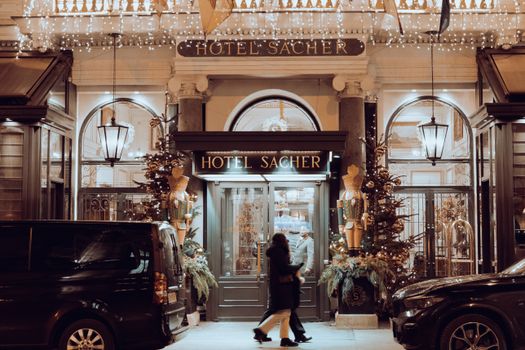
Picture this: You’ve just checked into a hotel you booked on a budget, expecting a standard room with a view of the car park. But then, the front desk agent smiles, keys in hand, and says, "Mr./Ms. [Your Name], we've gone ahead and upgraded you to our Executive Suite with panoramic city views. Enjoy your stay!"
That heart-stopping moment? That's not just a dream, my friends. It's my reality, time and time again, and it can be yours too.
For years, I was that traveler, meticulously comparing prices, always opting for the cheapest decent room, and secretly envying those who seemed to effortlessly glide into lavish suites. Then, during a particularly underwhelming stay in a cramped room in Paris, I decided enough was enough. I started asking questions, observing patterns, and, frankly, experimenting with every theory I could conjure. What I uncovered was a goldmine of hotel booking secrets – strategies so effective, so consistently rewarding, that they've transformed my travel experiences from good to absolutely glorious.
These aren’t your grandma’s "ask nicely at check-in" tips. These are the next-level maneuvers, the subtle nudges, the strategic plays that put you in prime position for an upgrade before anyone else even thinks about it. They're the secrets that guarantee you're sipping champagne on a private balcony, not staring at a brick wall. And today, exclusively for Tripsora, I'm pulling back the curtain on these game-changing tactics.
Ready to unlock a world of complimentary luxury? Let’s dive in.
*
1. The Power of the Pre-Arrival Email: Crafting Your Upgrade Narrative
Most travelers book their room and then forget about it until check-in. Big mistake. Your journey to an upgrade often begins before you even arrive, with a carefully crafted pre-arrival email. This isn't about begging; it's about building rapport and subtly highlighting why you'd be an ideal candidate for an upgrade.
My Secret Sauce:
Around 3-5 days before my stay, I send a polite, well-structured email directly to the hotel’s reservations or guest services manager. I always find their direct contact info on the hotel's website or by calling the front desk and asking for the "best email for pre-arrival requests."
What to Include:
- Your Booking Details: Clearly state your name, reservation number, and arrival/departure dates.
- Express Excitement: Start by expressing genuine excitement for your upcoming stay. "My partner and I are absolutely thrilled for our upcoming stay at your beautiful [Hotel Name] from [Date] to [Date]! We’ve heard wonderful things about your hospitality."
- Subtly Mention a Special Occasion (if applicable): This is gold. Anniversary, birthday, honeymoon, celebrating a new job – anything! "We're celebrating our 5th wedding anniversary during our visit, and we can't imagine a more perfect place to mark the occasion." Even if it's a minor celebration, make it sound special.
- Specific, Non-Demanding Requests: This is where you hint at an upgrade without explicitly asking for one. "We were wondering if it might be possible to request a room on a higher floor or with a particularly nice view, if available? We're hoping to capture some beautiful photos for our travel blog [or just 'to remember our special trip']."
- Offer Flexibility: "We understand that upgrades are based on availability, but any consideration would be so greatly appreciated."
- Professional Closing: "Thank you for your time and we look forward to a memorable stay."
A Real-Life Win:
Last year, for my birthday trip to the St. Regis Rome, I used this exact email strategy. I booked a standard deluxe room. My email mentioned my birthday celebration and a subtle request for a "quiet room with natural light." Lo and behold, upon arrival, I was handed keys to a stunning Grand Deluxe room, a two-category upgrade, complete with a private balcony overlooking the city. The cost difference for that room if I’d booked it outright? Over €200 a night! The email took me 5 minutes to write.
*
2. The Direct Booking Advantage: Cut Out the Middleman, Reap the Rewards
This one might seem obvious, but its power is consistently underestimated. Booking directly with the hotel – either on their website or by calling their reservations line – gives you a significant edge over those who use Online Travel Agencies (OTAs) like Expedia, Booking.com, or Agoda.
Why Direct Booking Wins:
- Hotel Profit Margins: Hotels pay hefty commissions to OTAs (often 15-30%). When you book direct, they keep more of your money. This makes you a more valuable customer from their perspective.
- Flexibility & Relationship: Direct bookings offer more flexibility for changes and cancellations, and it’s easier to communicate special requests. More importantly, it creates a direct relationship between you and the hotel.
- Upgrade Priority: When a hotel has limited upgrades available, who do you think they’ll prioritize? The guest who booked directly and potentially joined their loyalty program, or the anonymous booking from a third-party site? It’s almost always the direct booker.
- Access to Loyalty Programs: You can only earn points and accrue elite status for loyalty programs (Marriott Bonvoy, Hilton Honors, World of Hyatt, etc.) when you book directly. And elite status, even the lowest tier, is a golden ticket for upgrades.
My Golden Rule:
Even if an OTA is slightly cheaper, I always check the hotel’s direct price. If it’s within a reasonable margin (say, 5-10%), I book direct. Then, I make sure to join their loyalty program. Even as a "member" with zero stays, you're already ahead.
A Direct Success Story:
During a trip to Tokyo, I booked a standard room at the Park Hyatt Tokyo directly through their website. I mentioned in my booking notes that it was my first time in Japan and I was incredibly excited. At check-in, the agent not only confirmed my standard room but then, with a knowing smile, said, "We've noted your excitement for your first visit. We'd love to offer you a complimentary upgrade to one of our Deluxe Twin rooms on a higher floor for an even better view of the city." It wasn't a suite, but it was a significantly larger room with an iconic view of Mount Fuji, a perk I would have paid hundreds for. That direct booking made all the difference.
*
3. Leverage (Even Low-Tier) Loyalty Status: Your Passport to Perks
This is where many travelers miss out. You don't need to be a road warrior with top-tier elite status to benefit from hotel loyalty programs. Even base-level membership can open doors.
How to Play the Loyalty Game:
- Join Everything: Sign up for every major hotel loyalty program (Marriott Bonvoy, Hilton Honors, World of Hyatt, IHG One Rewards, Accor Live Limitless, etc.). It's free, and you never know when you'll stay at one of their properties.
- Status Matching: If you have elite status with one chain, leverage it to get matched status with another! Many programs offer status matches to entice you to switch. For example, if you have Hilton Gold, you might be able to get matched to Marriott Silver or even Gold. A quick Google search for "hotel loyalty status match" will reveal current opportunities.
- Credit Card Status: Many travel credit cards automatically grant you elite status. For instance, the Chase Sapphire Reserve offers complimentary Relais & Châteaux Club 5C membership, while various Amex Platinum and Marriott Bonvoy cards offer Marriott Gold or Hilton Gold status. These statuses often include perks like complimentary breakfast, late checkout, and, you guessed it, room upgrades.
- Mention Your Status (Subtly): When booking direct or sending your pre-arrival email, include your loyalty program number. At check-in, simply state, "I'm a [Your Status Tier] member with [Loyalty Program Name]." This signals to the front desk that you're a valuable customer.
My Hilton Gold Win:
I achieved Hilton Gold status simply by holding a specific credit card. While staying at a DoubleTree by Hilton in Edinburgh, I booked a standard room. At check-in, after mentioning my Gold status, I was immediately upgraded to an Executive Room, which included access to the Executive Lounge with free breakfast, evening canapés, and drinks. It felt like I was getting a full-service experience for the price of a budget room, all thanks to a credit card perk.
*
4. Timing is Everything: The Off-Peak & Last-Minute Upgrade Play
The hotel industry is all about occupancy. An empty premium room generates no revenue, but an upgraded guest might leave a stellar review, become a repeat customer, and spend more at the hotel's amenities. This is where strategic timing comes in.
The Off-Peak Advantage:
- Mid-Week Stays: Weekends are typically busier, especially in leisure destinations. Booking a Monday-Wednesday stay (or similar non-peak days) significantly increases your chances of an upgrade, as hotels have more premium inventory available.
- Shoulder Seasons: Travel during the "shoulder season" – just before or after peak season. For example, visiting Santorini in late May or early September instead of July/August. The weather is still fantastic, but crowds are thinner, and hotels are more eager to fill their best rooms.
- Major Events: Avoid dates with major conventions, festivals, or sporting events in town, as hotels will be fully booked and upgrade chances plummet.
The Last-Minute/Early Check-In Gambit:
- Last-Minute Upgrade: Sometimes, booking a day or two before arrival can yield results if the hotel has unsold premium inventory they want to fill. This is a bit riskier as popular hotels might be fully booked, but it can pay off, especially for business hotels on weekends.
- Early Check-In: Arriving a few hours before the standard check-in time (e.g., 1 PM instead of 3 PM) can be a secret weapon. If your booked room isn't ready, but a higher-category room is available and clean, they might offer it to you to avoid making you wait. Always ask politely if any rooms are ready and if there are "any options with a better view or more space."
My Bali Bungalow Upgrade:
I once booked a standard garden-view room at a boutique resort in Ubud, Bali, during the low season (early April). I arrived around 1 PM. My garden room wasn't quite ready. After a short wait and a complimentary welcome drink, the front desk manager apologized for the delay and offered, "As a token of our appreciation for your patience, we'd like to move you into one of our private pool villas. It just became available." A private pool villa for the price of a garden room? Yes, please! The low season and early arrival combination was pure magic.
*
5. The "Magic Words" at Check-In: Politeness, Specificity, and a Smile
Even with all the pre-arrival groundwork, the check-in interaction is crucial. This is your final chance to seal the deal.
The Art of the Ask:
- Be Polite and Friendly: The front desk agent holds the keys to your upgrade. A warm smile, eye contact, and genuine politeness go a long way. Start with a friendly greeting.
- Reiterate Your "Narrative": Briefly and subtly mention any special occasion you highlighted in your email (if applicable). "We're so excited to be here for our anniversary!"
- Ask About Availability, Not a Demand: Never demand an upgrade. Frame it as a question about availability. "I was wondering if there might be any availability for a room with a bit more space or a nicer view today?" or "Are there any complimentary upgrades available for [Loyalty Program] members today?"
- Be Specific (but flexible): If you have a specific type of upgrade in mind (e.g., "a room with a balcony" or "a higher floor"), mention it. But also convey flexibility. "If anything with a view of the [landmark] is open, that would be wonderful, but no worries if not!"
- The "Is There Anything Better?" Approach: My personal favorite. After confirming your booked room, lean in slightly and, with a friendly, hopeful tone, ask, "Is there anything even better available tonight?" This open-ended question often prompts them to look at their inventory for higher categories.
- Express Gratitude: Whether you get an upgrade or not, always thank the agent for their time and assistance. A positive interaction can still lead to other perks later in your stay.
My London Suite Upgrade:
I was checking into The Langham, London, a truly magnificent hotel. I had booked a standard Executive Room. At check-in, I smiled, greeted the agent warmly, and mentioned, "We're so excited to be staying at The Langham; it's our first time here. We also just got engaged last month, so this trip feels extra special." Then, with a hopeful tone, I asked, "Is there any possibility of an upgrade to a room with a bit more space or a view, if anything is available today?" The agent paused, typed a few things, and then said, "Congratulations on your engagement! We'd be delighted to offer you a complimentary upgrade to our one-bedroom Executive Suite. We hope you enjoy celebrating with us." My jaw nearly hit the floor. That suite typically costs upwards of £1000 a night!
*
6. The Instagram & Social Media Nudge: A Modern Upgrade Tactic
In the age of social media, hotels are increasingly aware of the power of influencers and positive online buzz. Even if you're not a mega-influencer, a subtle social media play can sometimes tip the scales in your favor.
How to Use Social Media for Upgrades:
- Pre-Arrival Tag: A few days before your stay, post an Instagram Story or Tweet expressing your excitement about your upcoming trip to the hotel. Tag the hotel's official account. "So excited for my stay at @[HotelName] in [City] next week! Can't wait to experience your famous hospitality!"
- Polite DM: If you're feeling bold, you can send a polite direct message to the hotel's Instagram account after booking, reiterating your excitement and any special occasion. "Hi @[HotelName], just wanted to say how thrilled we are for our stay next week (booking ref: XXXX). We're celebrating our anniversary and are so looking forward to it!"
- Positive Engagement: During your stay, if you experience excellent service or love a particular amenity, post about it and tag the hotel. This positive reinforcement can sometimes lead to an unsolicited upgrade or a special perk (like complimentary drinks or a dessert).
- Post-Stay Review Promise: At check-in, you could subtly mention, "I'm a travel blogger/enthusiast, and I'm really looking forward to sharing my experience at your beautiful property on my channels." This isn't a demand, but it signals potential positive publicity.
My Santorini Caldera View:
While I don't have millions of followers, I do have a decent travel-focused Instagram. Before my trip to a stunning cave hotel in Santorini, I posted an aesthetic photo of the island with the caption, "Dreaming of the caldera views from @[HotelName] next month!" and tagged them. Two days later, I received a DM from the hotel saying, "We saw your post and are so excited to welcome you! We've made a special note on your reservation." When I arrived, my standard room had been upgraded to a truly breathtaking caldera-view suite with a private plunge pool. They clearly saw the potential for good publicity, and it cost me nothing more than a social media post.
*
7. The "Oops" Factor & Problem-Solving Upgrades: When Adversity Becomes Opportunity
Sometimes, things go wrong. Your room isn't ready, there's a minor issue with your booking, or something isn't quite right with your assigned room. This is where your calm demeanor and gracious attitude can turn a minor inconvenience into a major upgrade.
How to Leverage Minor Issues:
- Be Calm and Courteous: Never lose your temper. Approach the front desk agent with a calm, polite tone. Explain the issue clearly.
- Give Them a Chance to Fix It: Don't immediately demand an upgrade. Allow them to offer solutions. "It seems there might be a small issue with [X] in our room. Is there anything that can be done to address this?"
- Accept Solutions Gracefully: If they offer a small fix, accept it graciously. If they offer an upgrade, even better!
- Subtle Hint for a "Better" Solution: If their initial fix isn't ideal, you can gently ask, "Would there perhaps be another room available that doesn't have this issue, maybe one that's a bit larger or on a different floor?"
My Paris Suite Redemption:
On a trip to Paris, I checked into a highly-rated boutique hotel. My booked room, while charming, had a persistent, subtle sewage smell coming from the bathroom. I politely informed the front desk. The agent was apologetic and offered to send maintenance. I said, "Thank you, but perhaps if there's another room available that doesn't have this issue, that might be a better solution?" She looked at her system, paused, and then said, "You know what? We have our Presidential Suite available tonight, and it's vacant. It's much larger and, I assure you, has no such issues. We'd like to offer you that for your troubles." What started as a minor complaint ended with me in a suite bigger than my apartment, complete with a sprawling living area and a view of the Eiffel Tower. All because I was polite and gave them an opportunity to exceed expectations.
*
The Bottom Line: Be Proactive, Polite, and Persistent
These hotel booking secrets aren't about being entitled or demanding. They're about being strategic, proactive, and understanding how the hotel industry works. It's about building a positive rapport, making yourself a valuable guest, and subtly positioning yourself for the perks you deserve.
The travel landscape is always evolving, and these strategies are still largely under-the-radar. While some might become mainstream eventually, you, my fellow Tripsora traveler, now have the inside track.
So, next time you're planning a trip, don't just book a room. Book an experience. Apply these secrets. Watch as your standard stay transforms into a luxury escape. And when you're sipping that complimentary champagne in your upgraded suite, remember to raise a glass to smart travel!
---
Ready to transform your next trip?
Bookmark this guide, try these secrets on your next hotel booking, and share your upgrade triumphs with us using #TripsoraUpgrades on Instagram and Twitter! We can't wait to see your luxurious new digs!