The Breath of the Gods: Why Your Brain Craves the Woods
I stepped off the local train at Yakushima, and the air didn’t just hit me; it inhaled me. It smelled of damp granite, ancient cedar resin, and a sharp, citrusy ozone that made my city-clogged lungs feel suddenly, embarrassingly small. My heart rate, which usually hums at a caffeinated "NYC baseline," dropped ten beats before I even reached the trailhead.
This isn't just "granola" magic. It’s Shinrin-yoku.
In the 1980s, the Japanese Ministry of Agriculture, Forestry, and Fisheries coined the term "forest bathing" to describe the practice of immersing oneself in nature to combat tech-induced burnout. Since then, peer-reviewed studies have confirmed that spending time in specific forests increases "Natural Killer" (NK) cells—the frontline soldiers of our immune system—and slashes cortisol levels. But not every patch of trees is created equal. To get the maximum biological ROI, you need specific ecosystems.
Here are the forest bathing trails scientifically proven effective travel advisors suggest for those seeking a total nervous system reboot.
---
1. Yakushima, Japan: The Moss-Draped Origin Story
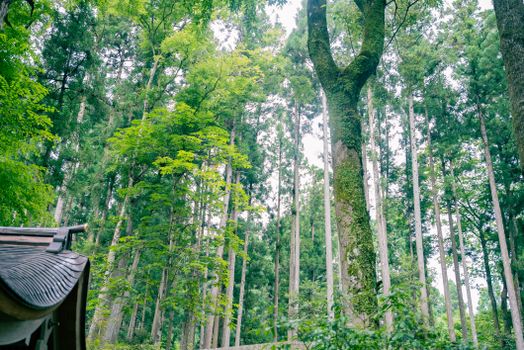
If you want the "OG" experience, you go to Yakushima. This UNESCO World Heritage site inspired the lush, haunting landscapes of Studio Ghibli’s Princess Mononoke. The island is home to the Yakusugi—ancient Japanese cedars, some over 7,000 years old.
The Science:
These cedars are hyper-productive of phytoncides—antimicrobial organic compounds. When you breathe them in, your body responds by ramping up anti-cancer protein production.
The Insider Experience:
Skip the crowded Jomon Sugi trail if you want true silence. Head instead to the Shiratani Unsuikyo Ravine.
* Pro-Tip: Arrive at the trailhead at 6:30 AM. The "Mononoke-hime no Mori" (Princess Mononoke Forest) is best experienced when the morning mist is still clinging to the 600 species of moss. It’s so quiet you can hear the deer (Yaku-shika) chewing on the ferns.
* The Vibe: It’s not just green; it’s a thousand shades of emerald that seem to glow from within. The air feels heavy, like a wet wool blanket that somehow helps you breathe easier.
---
2. The Black Forest (Schwarzwald), Germany: The European Powerhouse
German "Kurort" (spa town) culture has integrated forest therapy into its medical system for centuries. The Black Forest isn't just for cuckoo clocks and cherry cake; it’s a dense, coniferous sanctuary.
The Science:
Research from the University of Munich suggests that the specific terpenes found in the Black Forest’s silver firs and pines are exceptionally effective at reducing blood pressure and improving sleep quality.
The Insider Experience:
Head to Baden-Baden and walk the Lichtentaler Allee, then push upward into the deeper woods toward the Geroldsau Waterfall.
* Pro-Tip: Look for the "Kneipp" stations—small, cold-water foot baths built into the streams. The "hydrotherapy + forest air" combo is a localized secret for resetting the circulatory system.
* The Detail: The trails here are meticulously groomed. You’ll notice the scent of pine resin is almost aggressive—it’s like walking through a bottle of high-end apothecary bitters.
---
3. The Hoh Rainforest, USA: The Sound of Silence
Located in Washington State’s Olympic National Park, the Hoh is one of the few temperate rainforests in the world. It’s also home to "One Square Inch of Silence," allegedly the quietest place in the United States.
The Science:
Acoustic ecology is a branch of forest bathing science. Constant "noise pollution" keeps our amygdala in a state of high alert. The Hoh’s massive Sitka spruces and Western hemlocks act as natural sound baffles, creating a "silence" that allows the parasympathetic nervous system to finally take the wheel.
The Insider Experience:
Everyone hits the "Hall of Mosses," and for good reason. But for true immersion, take the Hoh River Trail five miles in.
* Pro-Tip: Visit in late October. The crowds are gone, and the elk are bugling. The "Big Leaf Maples" turn a neon yellow that contrasts violently with the deep green clubmoss hanging from the branches.
* The Detail: The ground isn't dirt; it’s a "duff" of decaying organic matter that feels like walking on a four-inch-thick yoga mat.
---
4. Redwood National Park, California: The Cathedral of Giants
There is a specific psychological phenomenon called "Awe-Induced Prosocial Behavior." Standing beneath a 380-foot tall Coast Redwood triggers a "small self" perspective that scientifically reduces inflammation and symptoms of depression.
The Science:
The sheer scale of the Redwoods forces a shift in cognitive processing. Studies at UC Berkeley found that "awe" is a potent anti-inflammatory.
The Insider Experience:
Avoid the tourist-heavy Lady Bird Johnson Grove. Instead, drive the Howland Hill Road in Jedediah Smith Redwoods State Park. It’s an unpaved road that winds through trees so close you can touch them from your window.
* Pro-Tip: Park at the Stout Grove trailhead. The "hidden entrance" is a small, unmarked path to the left of the main stairs that leads down to the Smith River—the water is crystal clear and perfectly complements the red-tinted bark of the giants.
* The Detail: The light here doesn't fall; it filters. It’s called "crepuscular rays," and it makes the entire forest look like a cathedral during high mass.
---
5. The Blue Mountains, Australia: The Eucalyptus Haze
Just outside Sydney, the Blue Mountains get their name from a literal chemical reaction. The vast forests of Eucalyptus trees release oil droplets that mix with dust and water vapor, scattering short-wave blue light.
The Science:
Eucalyptus oil (cineole) is a natural bronchodilator. For travelers with respiratory issues or "city lung," breathing this air is like a pharmaceutical-grade nebulizer treatment.
The Insider Experience:
Head to Leura instead of Katoomba. The Sublime Point trail offers views without the "Three Sisters" selfie-stick crowds.
* Pro-Tip: Go after a light rain. The moisture causes the Eucalyptus trees to "off-gas" more intensely, turning the blue haze into a thick, fragrant fog.
* The Detail: Listen for the Lyrebird. It can mimic anything from a chainsaw to a camera shutter, but in the deep valleys, its song is an eerie, beautiful orchestral performance.
---
Quick Facts: Logistics for the Modern Forest Bather
| Destination | Best Time to Visit | Estimated Cost ($) | How to Get There |
| :--- | :--- | :--- | :--- |
| Yakushima, Japan | May - November | $$$ | Flight from Kagoshima or Ferry (Toppy) |
| Black Forest, Germany | June - September | $$ | Train to Baden-Baden from Frankfurt |
| Hoh Rainforest, USA | April - June | $ | 4-hour drive from Seattle |
| Redwood NP, USA | Year-round | $ | Fly to Crescent City (CEC) |
| Blue Mountains, AU | Sept - November | $$ | 2-hour train from Sydney Central |
---
The Protocol: How to Actually "Bathe"
You don't just walk. You arrive. Travel advisors who specialize in wellness suggest the following protocol to ensure the forest bathing trails are scientifically effective for you:
- The Digital Altar: Turn your phone off. Not on silent—off. If you must take a photo, do it in the first five minutes, then put the device at the bottom of your bag.
- The Five Senses Check-In: Stop every 15 minutes. What do you smell? (Is it damp earth or dry pine?) What do you hear? (The wind in the canopy or a distant stream?)
- The Pace of a Snail: If you’re sweating, you’re going too fast. This isn't a "hike" for cardio; it’s a "saunter" for the soul.
- Touch the Texture: Run your hands over the bark. Feel the difference between the flaky skin of a Madrone and the rugged armor of a Douglas Fir.
Final Thought: The Return to the Wild
We spent 99.9% of human evolution in the woods. Our current obsession with concrete and blue light is a historical anomaly. When you visit these forest bathing trails scientifically proven effective, you aren't "escaping" reality. You are returning to it.
The trees are waiting. They’ve been breathing for you; it’s time you went and joined them.
---