The Hook: A Tuesday Morning in Funchal
I stepped off the terrace of my rental in Funchal, Madeira, and the air didn't just smell like salt—it smelled like roasting Blue Mountain coffee and blooming hibiscus. It was a Tuesday in May 2026. While my former colleagues in London were likely battling a drizzly commute on the Jubilee line, I was watching a local fisherman haul in the morning’s black scabbard fish. I opened my laptop, the screen bright against the Atlantic horizon, and realized that "home" isn't a coordinate anymore; it’s a Wi-Fi signal and a residency card.
The world has changed. The "Digital Nomad Visa" isn't a novelty anymore; it’s a competitive product sold by nations hungry for talent. If you’re looking for the best countries where remote workers get residence permits in May 2026, you’re looking for more than just a stamp—you’re looking for a lifestyle upgrade that doesn't break the bank.
---
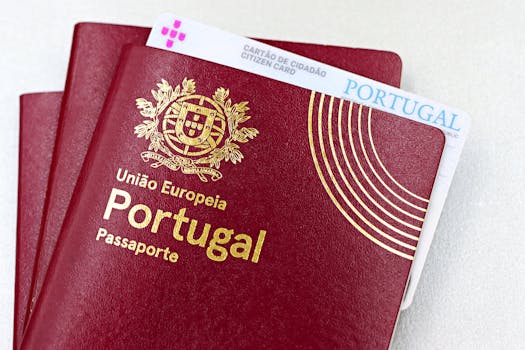
1. Portugal: The D8 Visa and the Rise of the Silver Coast
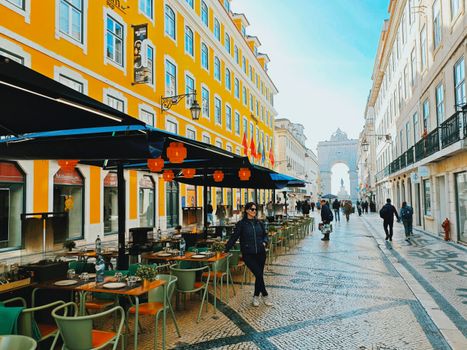
Portugal remains the heavyweight champion of remote work, but the strategy has shifted. Forget the overpriced rentals of downtown Lisbon. In 2026, savvy nomads are heading to the Silver Coast (Costa de Prata).
The D8 Visa (Digital Nomad Visa) is your golden ticket. It requires a monthly income of four times the Portuguese minimum wage. By May 2026, expect this to sit around €3,400 per month.
The Insider Vibe:
Don't just settle for a co-working space. Head to the town of Caldas da Rainha. It’s an hour from Lisbon, famous for its quirky ceramics and a daily fruit market that feels like a time capsule.
* Pro-Tip: Get your NIF (tax number) before you arrive via a proxy service. It saves you three weeks of bureaucratic headaches at the Finanças office.
2. Spain: The "Beckham Law" Lite
Spain’s Digital Nomad Visa (DNV) has matured into one of the most efficient systems in Europe. What makes Spain irresistible in May is the weather—it’s that perfect 24°C (75°F) sweet spot before the July heatwave turns Madrid into an oven.
The Spanish DNV allows for a 15% tax rate for the first four years under certain conditions (a variation of the famous Beckham Law). You’ll need to prove an income of roughly €2,600 per month.
The Meat:
Focus on Valencia. It was voted the healthiest city in the world for a reason. The Turia Park—a riverbed turned into a 9km green ribbon—is where you’ll do your best brainstorming.
* Pro-Tip: When applying, ensure your contract specifically states you can work "remotely from Spain." Spanish bureaucrats are notoriously literal; if that phrase is missing, they’ll reject it.
3. Montenegro: The Balkan Rising Star
By May 2026, Montenegro is the "it" destination for those who found Croatia too crowded and expensive. Their remote work permit is straightforward and offers a path to residency in a country that is eyeing EU membership.
The cost of living here is roughly 40% lower than in Western Europe. You can snag a stone villa overlooking the Bay of Kotor for the price of a studio in Brooklyn.
Authenticity:
The smell of Montenegro in May is wild thyme and woodsmoke. Visit the village of Perast at 7 AM. The tour buses don't arrive until 10 AM, giving you three hours of silence to sip a domaća kafa (Turkish-style coffee) by the water.
* Pro-Tip: The "hidden entrance" to the Upper Kotor Walls is behind the old Venetian quarry—it’s free, steep, and offers the best sunset view in the Balkans.
4. Thailand: The 10-Year LTR and the DTV
Asia has fought back against the European surge. Thailand’s Destination Thailand Visa (DTV), which gained massive traction in late 2024 and 2025, is now the standard for May 2026. It allows for a 5-year stay with multiple entries.
If you’re a high-earner, the LTR (Long-Term Resident) visa is even better, offering a 10-year stay and a 17% flat tax rate for personal income.
Logistics:
Chiang Mai remains the digital nomad capital, but for 2026, look at Koh Lanta. It has fiber-optic internet that rivals Seoul and a community that values "slow travel" over "party travel."
* Pro-Tip: Use the 'Grab' app for everything, but for the best Khao Soi, look for the lady with the yellow umbrella near the North Gate. If there’s a line of locals, you’re in the right place.
5. Costa Rica: The Pura Vida Permit
Costa Rica’s digital nomad law is designed for simplicity. If you make $3,000 USD per month, you’re in. The best part? You are exempt from local income taxes on your foreign earnings.
May is the start of the "green season." While there’s a stray afternoon shower, the landscape explodes into a vibrant, neon green that feels like a scene from Jurassic Park.
The Vibe:
Head to Nosara. It’s the intersection of high-speed internet and high-level surfing.
* Quick Fact: Electricity in Costa Rica is 99% renewable. You can run your AC guilt-free while watching a sloth navigate the power lines outside your window.
---
Quick Facts: The 2026 Residency Comparison Table
| Country | Min. Income (Approx) | Tax Perk | Best For... |
| :--- | :--- | :--- | :--- |
| Portugal | €3,400/mo | NHR 2.0 (Selected) | Community & Safety |
| Spain | €2,600/mo | 15% Flat Rate | Lifestyle & Food |
| Montenegro | €1,200/mo | Low Cost of Living | Nature & Budget |
| Thailand | $2,200/mo (DTV) | Foreign Income Exempt | Infrastructure & Value |
| Costa Rica | $3,000/mo | 0% Local Tax | Wellness & Adventure |
---
6. The Logistics: How to Actually Move
Moving abroad isn't just about the visa; it’s about the "soft landing."
- The Paperwork: You will need a background check (Apostilled) that is no older than 3-6 months. In May 2026, many countries now accept digital Apostilles, but always check the local consulate.
- Health Insurance: Most permits require "global coverage." Look for providers like SafetyWing or Genki, which are specifically tailored for the nomad lifestyle.
- The "May" Factor: May is the ideal month to move. You avoid the "moving season" price hikes of September and the logistical nightmare of the December holidays.
Authenticity Check: The "Hidden" Cost of Paradise
Don't be fooled by the Instagram reels. Moving to a country where remote workers get residence permits involves "The Wall." This is the moment, usually three weeks in, where the bureaucracy, the language barrier, and the fact that you can't find your favorite brand of peanut butter hit you.
In Portugal, it’s the Amanhã (tomorrow) culture. In Spain, it’s the 2 PM - 5 PM siesta where everything shuts down. Embrace it. If you wanted efficiency, you would have stayed in Zurich. You’re here for the soul of the place.
---