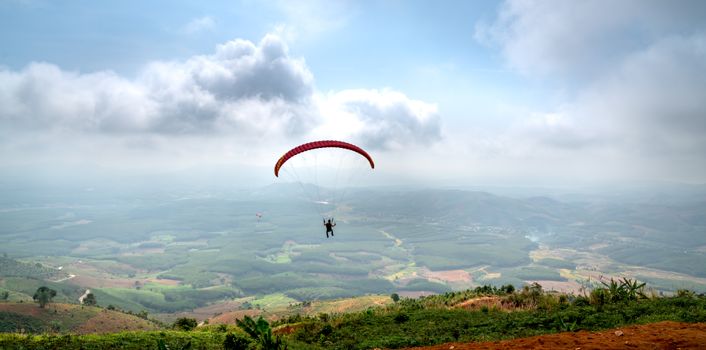
Extreme Sports for Beginners: How I Conquered Fear & Changed My Life Forever
There was a time, not so long ago, when my idea of an "extreme sport" was trying a new flavor of instant ramen. Seriously. I was the person who double-checked seatbelts on a roller coaster, who preferred a good book to a mountain hike, and whose comfort zone was less a zone and more a meticulously constructed fortress. The thought of voluntarily jumping out of a plane or hurtling down a river filled me with a primal, stomach-churning dread.
But life, as it often does, has a funny way of nudging you out of your self-imposed cocoons. I was stuck in a rut – a good job, a nice apartment, but a distinct lack of spark. Scrolling through endless Instagram feeds of adventurers living their best lives, I felt a pang of something I couldn’t quite name: envy, longing, perhaps even a whisper of courage. One dreary Tuesday, after watching a documentary about people overcoming their fears, a crazy thought popped into my head: What if I tried just one? Just one extreme sport. What’s the worst that could happen?
Spoiler alert: The worst didn't happen. The best did. That single, terrifying decision didn't just add a few thrilling anecdotes to my travel journal; it fundamentally reshaped who I am. It taught me that courage isn't the absence of fear, but the triumph over it. It showed me a world I never knew existed, both outside and within myself.
If you’re reading this, chances are a tiny, brave part of you is also wondering if you could do it. And I’m here to tell you: YES, YOU ABSOLUTELY CAN. Here’s my journey, the beginner-friendly extreme sports that changed my life, and how you can start your own adventure.
The First Step is the Hardest: Why I Said "Yes" to Adventure
My initial motivation was simple: prove to myself I wasn't a total coward. But as I dipped my toes into the world of adventure, my "why" evolved. It became about pushing boundaries, discovering resilience, and experiencing life in its rawest, most exhilarating form.
The biggest hurdle for most beginners, myself included, is fear. Fear of heights, fear of water, fear of injury, fear of looking foolish. My advice? Acknowledge it. Don't fight it. My hands were clammy, my heart pounded like a drum solo, but instead of letting it paralyze me, I started to see it as a signal – a sign that I was about to do something truly significant.
Practical Tip:
Start small. You don't need to sign up for an Ironman triathlon tomorrow. There are countless "gateway" extreme sports designed specifically for novices, offering all the thrill with maximum safety and guidance. And remember, every single seasoned adventurer started exactly where you are now.
My Skydiving Story: Freefalling into a New Me (Interlaken, Switzerland)
The Sport:
Tandem Skydiving
My Fear Level (1-10): A solid 9.5
My Reality Level (1-10): An exhilarating 10!
My first plunge into the world of extreme sports was skydiving, and I chose one of the most picturesque locations imaginable: Interlaken, Switzerland. I figured if I was going to face my deepest fear of heights, I might as well do it with a view that would distract me from hyperventilating.
I booked with Skydive Interlaken (highly recommended for their professionalism and stunning views) for about CHF 450-550 (approx. $500-600 USD), which included the jump, gear, and a video/photo package – because if you don't document it, did it even happen?
The briefing was straightforward: harness up, listen to your tandem instructor, arch your back, and try not to scream too much. My instructor, a jovial man named "Swiss Mike," had done thousands of jumps, which was both reassuring and terrifying. As the small plane climbed higher, past snow-capped peaks and turquoise lakes, my stomach did somersaults. My palms were sweating, my mouth was dry, and I questioned every life choice that led me to this moment.
Then, the door opened. The roar of the wind was deafening. Swiss Mike nudged me to the edge. "Ready?" he yelled over the wind. My brain screamed "NO!", but my mouth managed a weak "Yes!" And then we were out.
That first second of freefall was pure, unadulterated terror. But then, something shifted. The wind rushing past my face, the world spread out beneath me like a giant, vibrant map, the sheer audacity of what I was doing – it was intoxicating. Fear morphed into euphoria. For nearly a minute, I was flying. It wasn’t just a drop; it was an embrace of the impossible.
When the parachute deployed, the sudden quiet was startling. We floated gently, Swiss Mike pointing out Jungfrau and Eiger. I laughed, a raw, joyous sound I hadn't heard from myself in years. Touching down, my legs felt like jelly, but my heart was soaring. I had done it. I had faced the abyss and found joy.
Tips for Your First Skydive:
* Go Tandem: Always. You're strapped to an experienced instructor who handles everything.
* Choose Reputable Companies: Look for certifications (like USPA in the US, or local equivalents), good reviews, and experienced instructors.
* Breathe: Seriously, it's easy to hold your breath. Focus on deep breaths.
* Get the Video: Trust me, you'll want to relive that moment and show everyone!
* Dress Comfortably: Layers are good, closed-toe shoes are a must.
Whitewater Rafting: Navigating Rapids and Inner Doubts (Pacuare River, Costa Rica)
The Sport:
Whitewater Rafting (Class II-III)
My Fear Level (1-10): 7 (I'm not a strong swimmer)
My Reality Level (1-10): 9 (Exhilarating, but felt safer than expected!)
After skydiving, I felt like I could conquer anything. My next adventure took me to the lush rainforests of Costa Rica, specifically the Pacuare River. Known for its breathtaking scenery and exciting rapids, it also has sections perfect for beginners.
I booked a one-day trip with Exploradores Outdoors (a well-regarded local company) from San José, which included transportation, breakfast, lunch, and all gear for around $99-120 USD. Our guide, Carlos, was a seasoned pro with a wicked sense of humor and an uncanny ability to navigate the river's twists and turns.
Our group was a mix of ages and experience levels. After a thorough safety briefing, we learned basic paddle commands: "Forward!", "Backward!", "Hold On!", and the all-important "High Five!" (for celebrating after rapids). I was nervous about falling out, but Carlos assured us the water was warm, and rescue protocols were swift.
The river itself was stunning – emerald green water, dense jungle canopy teeming with monkeys and exotic birds, and the constant roar of approaching rapids. The Class II rapids were fun splashes, but the Class III sections were pure adrenaline. We paddled furiously, leaning into the waves, sometimes getting completely drenched as the raft plunged through a churning wave. There were moments where I genuinely thought we might flip, but Carlos's calm commands and our collective effort kept us upright.
The teamwork was incredible. Strangers became a cohesive unit, paddling in sync, laughing through the splashes, and cheering each other on. The feeling of successfully navigating a tricky rapid was immensely satisfying. It wasn't just about the thrill; it was about cooperation, trust, and the sheer joy of being fully present in nature.
Tips for Beginner Rafting:
* Choose the Right Class: Start with Class II-III rapids. Anything higher is for experienced rafters.
* Listen to Your Guide: They are the experts. Their commands are crucial for safety and fun.
* Wear Appropriate Gear: Life vest (provided), helmet (provided), quick-drying clothes, closed-toe shoes (water shoes or old sneakers are perfect).
* Hold On! When the guide yells it, grip those ropes!
* Embrace the Splash: You will get wet. It's part of the fun!
Rock Climbing & Bouldering: Finding My Grip (Indoor Gyms & Beginner Crags)
The Sport:
Indoor Rock Climbing & Outdoor Bouldering
My Fear Level (1-10): 6 (Not heights, but falling and lack of upper body strength)
My Reality Level (1-10): 8 (Challenging, but incredibly rewarding)
After the big, splashy adventures, I sought something that required more mental focus and physical endurance. Rock climbing and bouldering emerged as perfect candidates. I started, as most do, at an indoor climbing gym near my home.
A day pass at my local gym was about $20-30 USD, with shoe and harness rental around $5-10 USD. The gym was a vibrant, welcoming place, filled with people of all shapes and sizes scaling walls. I signed up for a beginner's belay class (essential for safety if you're doing roped climbing) which cost about $40-60 USD.
Indoor climbing taught me the basics: foot placement, body positioning, and how to trust the equipment. It’s a full-body workout that's also a puzzle. Each route (or "problem" in bouldering) is a challenge to solve, using strength, balance, and strategy. My initial fear of falling quickly dissipated as I learned to trust the rope and my belayer.
Once I felt comfortable indoors, I ventured out for some outdoor bouldering with an experienced friend. We went to a local park known for its beginner-friendly rock formations. Outdoor bouldering, which involves climbing shorter routes without ropes over crash pads, felt more primal. The texture of real rock, the fresh air, the natural light – it was a different beast entirely. We spent a glorious afternoon figuring out "problems," cheering each other on, and even failing spectacularly (and safely) a few times.
Climbing taught me perseverance. When a move seemed impossible, I had to break it down, try different angles, and sometimes just rest and try again. It's a powerful metaphor for life's challenges.
Tips for Beginner Climbing:
* Start Indoors: It's a controlled environment to learn techniques and build strength.
* Take a Belay Class: Essential for safety if you're doing roped climbing.
* Go with a Buddy: Climbing is a social sport, and a good partner is invaluable.
* Trust Your Feet: Beginners often rely too much on upper body strength. Your legs are powerful!
* Don't Be Afraid to Fall: It's part of the learning process. Crash pads and ropes are there for a reason.
Ziplining Through the Treetops: A Bird's Eye View of Fear (Monteverde, Costa Rica)
The Sport:
Ziplining
My Fear Level (1-10): 5 (More excitement than fear)
My Reality Level (1-10): 8 (Surprisingly thrilling and beautiful)
Returning to Costa Rica (I clearly have a soft spot for its adventures!), I couldn't miss out on ziplining in the cloud forests of Monteverde. While some might not consider it "extreme," the sheer height, speed, and length of some of these lines can certainly get your heart racing, especially for a beginner.
I chose the Selvatura Park canopy tour, known for its long lines and incredible views, for about $50-85 USD. The experience included multiple lines, some over a kilometer long and hundreds of meters high, soaring above the dense canopy.
After getting harnessed up and receiving a quick safety rundown, I stood at the first platform. The initial step off was a moment of hesitation, but then I was flying. The wind rushed past, the jungle blurred beneath me, and the misty cloud forest felt incredibly immersive. It wasn't just a ride; it was like being a bird, gliding effortlessly through the air.
One of the lines was a "Tarzan swing" – a freefall drop before swinging through the trees. That was a genuine gut-punch of adrenaline! But even then, the fear was quickly replaced by exhilaration. Ziplining felt like pure, unadulterated joy, a perfect blend of thrill and natural beauty.
Tips for Beginner Ziplining:
* Wear Closed-Toe Shoes: Essential for safety and comfort.
* Secure Loose Items: Phones, cameras, hats – make sure they're in zipped pockets or left behind. Many places offer helmet cams or photo services.
* Listen to Instructors: They'll tell you how to position yourself and when to brake (if necessary).
* Look Around! Don't just focus on the line. The views are often spectacular.
Discover Scuba Diving: Unveiling a Hidden World (Koh Lanta, Thailand)
The Sport:
Discover Scuba Diving (DSD)
My Fear Level (1-10): 8 (Fear of drowning, claustrophobia, unknown)
My Reality Level (1-10): 10 (Utterly magical and calming)
My final "extreme" adventure took me beneath the waves, an environment I'd always viewed with a mix of fascination and dread. The idea of breathing underwater, with all that heavy equipment, felt incredibly unnatural. But the allure of the vibrant marine world was too strong to resist.
I was in Koh Lanta, Thailand, a fantastic spot for beginner divers, and booked a Discover Scuba Diving (DSD) experience with Blue Planet Divers for about 2,500-3,000 THB (approx. $70-90 USD). This isn't a certification, but an introductory dive under direct supervision of an instructor.
The day started with a quick theory session in the dive shop, covering basic physics of diving, hand signals, and essential safety rules. Then, we headed out on a boat to a calm, shallow dive site. My instructor, Sarah, was incredibly patient and reassuring. We practiced breathing from the regulator and clearing our masks in the shallow water, getting used to the sensation.
The moment I descended below the surface, a profound sense of calm washed over me. The world above disappeared, replaced by an ethereal silence broken only by the sound of my own breathing. Schools of colorful fish darted past, vibrant coral formations stretched out in every direction, and the sunlight filtered through the water, creating a magical, otherworldly glow.
Sarah held my hand, guiding me through this new realm. We saw clownfish peeking out of anemones, graceful sea turtles gliding by, and countless other marine wonders. It wasn't scary; it was meditative. The fear of the unknown melted away, replaced by awe and wonder. I felt utterly weightless, a part of this incredible ecosystem. It was a stark reminder of the beauty and fragility of our planet.
Tips for Discover Scuba Diving:
* Choose a PADI/SSI Certified Center: These organizations ensure high safety standards and professional instructors.
* Be Honest About Fears/Medical Conditions: Your instructor needs to know if you have claustrophobia, ear problems, or other concerns.
* Relax and Breathe: Panicking uses more air and can make you uncomfortable. Focus on slow, deep breaths.
* Equalize Your Ears: This is crucial to prevent discomfort and injury. Your instructor will teach you how.
* Go Slow: Don't rush. Take your time to absorb the incredible underwater world.
Beyond the Adrenaline: The Life-Changing Lessons Learned
Each of these experiences was thrilling in its own right, but the true transformation happened far beyond the adrenaline rush.
- Conquering Fear: This is the most obvious. I learned that fear is often just a feeling, not a fact. It's a gatekeeper, not a wall. By walking through it, I discovered an incredible reservoir of courage I never knew I possessed.
- Building Resilience: When things went wrong (a paddle slipped, a climb felt impossible), I learned to adapt, to try again, to trust my instincts. This resilience now extends to every aspect of my life.
- Enhanced Confidence: Successfully completing something I once thought impossible gave me an immense boost in self-belief. If I can jump out of a plane, what else can I do?
- Appreciation for Nature: Being immersed in these incredible environments – mountains, rivers, forests, oceans – fostered a deep respect and love for the natural world. It made me a more conscious traveler and a more active advocate for conservation.
- Living in the Present: When you're freefalling or navigating rapids, your mind has no choice but to be fully present. This mindfulness was a refreshing break from the constant chatter of daily life and taught me the joy of being utterly in the moment.
- Connecting with Others: Sharing these intense experiences forged instant bonds with fellow adventurers and incredible guides. I met amazing people from all walks of life, united by a shared thirst for adventure.
- Embracing the Unknown: My comfort zone didn't just expand; it shattered. I now actively seek out new experiences, knowing that discomfort often precedes growth.
Your Adventure Awaits: Taking the Leap
My journey from ramen-loving couch potato to an adventurer seeking the next thrill wasn't instantaneous, but it started with a single, terrifying "yes." It wasn't about being fearless; it was about being brave enough to try.
If you’ve been dreaming of adventure, if you feel that familiar tug of longing for something more, please, take that first step. Research a beginner-friendly extreme sport that excites you, find a reputable operator, and book it. Don't wait for "the right time" or for fear to completely disappear. It won't. Just take the leap.
You might just find that the most extreme thing you do isn't jumping out of a plane, but discovering the incredible strength and spirit that was inside you all along.
What's your first extreme sport going to be? Share your adventure dreams (or past triumphs!) in the comments below! Let's inspire each other to live life to the fullest.
---