The Leap of a Lifetime: Why Your Extreme Sport Journey Starts Now!
I remember standing on that platform, my heart hammering a frantic rhythm against my ribs. Below me, a verdant canyon stretched out, a blur of green and shadow. The wind, a playful conspirator, tugged at my hair. My guide, a man whose smile seemed permanently etched into his face, gave me a thumbs-up. "Ready for the fastest way down, amigo?" he grinned. My knees felt like jelly, my palms were slick with sweat, and a tiny, terrified voice in my head screamed, "What have you done?!"
That was my first true zip-lining experience in Costa Rica, and it wasn't just a ride; it was a revelation. It was the moment I realized that "extreme" didn't have to mean "impossible" or "only for hardened daredevils." It meant pushing past a perceived boundary, embracing a moment of pure, unadulterated thrill, and emerging on the other side with a story that would make my eyes light up for years to come.
For too long, the world of extreme sports has been seen as an exclusive club, reserved for those with iron nerves and years of training. But what if I told you that some of the most exhilarating adventures on the planet are not only accessible to beginners but are specifically designed to introduce you to the rush in a safe, guided, and incredibly rewarding way?
Welcome to Tripsora, and welcome to your new adventure manifesto. Forget the 'someday' list; this is your 'before you die' list, curated specifically for the aspiring thrill-seeker. I've traversed continents, faced my own fears, and emerged a more confident, alive version of myself, all thanks to these incredible experiences. And now, I'm going to show you how you can too. Get ready to swap your comfort zone for a whole new kind of extraordinary!
---
1. Zip-lining: Soaring Through the Skies with a View
Let's kick things off with an adventure that offers immense thrills with a surprisingly low barrier to entry: zip-lining. This is often the gateway drug to more extreme pursuits, and for good reason. You're securely harnessed, gravity does most of the work, and the focus is often as much on the breathtaking scenery as it is on the speed.
My first zip-line, the one I mentioned earlier, was in the cloud forests of Monteverde, Costa Rica. The sheer scale of the lines, some stretching over a kilometer and hundreds of feet above the canopy, was daunting. But once I pushed off, the initial gasp turned into an uncontrollable grin. The wind whipped past, the jungle blurred beneath, and for those precious seconds, I was flying. Pure, unadulterated joy.
Why it's great for beginners:
You’re securely strapped into a harness, often seated, and the guides handle all the technical aspects. Your job? Hold on, enjoy the ride, and take in the incredible views. It’s an adrenaline rush without requiring specific athletic skills or complex training.
Practical Tips:
* What to wear: Comfortable, closed-toe shoes are a must. Avoid loose clothing that could snag.
* Listen to your guides: They are professionals and know the course inside out. Pay attention to safety briefings and hand signals.
* Go hands-free (if allowed): Many zip lines offer options for hands-free riding, allowing you to truly soak in the scenery or even capture epic photos/videos.
* Look around! It's easy to focus on the landing, but don't forget to appreciate the unique perspective you have.
Where to try it & estimated cost:
* Monteverde, Costa Rica: Home to some of the longest and highest zip lines, often combined with hanging bridges. Expect to pay $50-$85 USD for a tour.
* Maui, Hawaii, USA: Zip over lush valleys and past dormant volcanoes. Prices range from $100-$180 USD.
* Rotorua, New Zealand: Combine zip-lining with forest adventures. Around $90-$150 NZD.
---
2. Tandem Paragliding: Your First Flight, No Wings Required
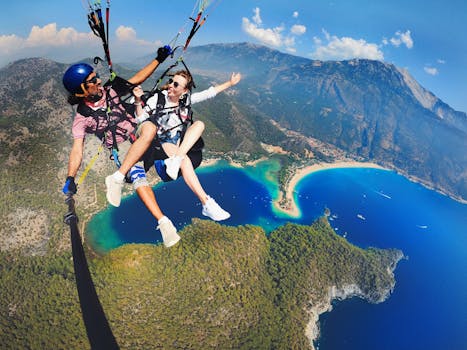
If you've ever dreamed of flying, truly flying like a bird, then tandem paragliding is your ticket. This is an experience that looks incredibly intimidating but is remarkably serene and accessible for beginners. You're strapped in with an experienced pilot who handles all the launching, steering, and landing. Your only job? Run a few steps, then sit back and enjoy the ride.
My first tandem flight was over the stunning turquoise waters of Oludeniz, Turkey. The take-off from Babadag Mountain felt like a graceful leap into the void. Then, silence. Just the gentle whoosh of the wind and the breathtaking panorama of the coastline unfurling beneath me. I remember feeling an almost spiritual calm, soaring hundreds of meters above the world, completely free. It’s an Instagram dream come true – just imagine those aerial shots!
Why it's great for beginners:
You require absolutely no prior experience. Your certified pilot is in full control, allowing you to relax and soak in the unparalleled views and the sensation of true flight. It’s less of an adrenaline shock and more of an awe-inspiring, gentle glide.
Practical Tips:
* Dress warmly: Even on a sunny day, it can be chilly at altitude. Layers are your friend.
* Wear sturdy shoes: You'll need to run a few steps during launch and landing.
* Relax and enjoy: Trust your pilot. They do this multiple times a day.
* Go for the photo/video package: This is an experience you'll definitely want to relive and share!
Where to try it & estimated cost:
* Oludeniz, Turkey: Famous for its stunning Blue Lagoon and ideal thermals. Expect to pay $100-$150 USD (often including photos/videos).
* Interlaken, Switzerland: Soar over pristine lakes and majestic Alps. Prices are higher, typically $150-$250 CHF.
* Queenstown, New Zealand: Another adventure capital offering incredible mountain and lake views. Around $199-$299 NZD.
---
3. Bungee Jumping: The Ultimate Leap of Faith
Alright, let's talk about the big one. The quintessential extreme sport that even non-adventurers know: bungee jumping. This is pure, unadulterated adrenaline, a moment of intense fear followed by an incredible rush of triumph. It’s short, sharp, and unforgettable. And yes, it’s absolutely doable for beginners.
My first bungee jump was at the iconic Kawarau Bridge in Queenstown, New Zealand, the birthplace of commercial bungee. Standing on that ledge, looking down at the river far below, my heart was a drum solo. The countdown felt like an eternity. 3... 2... 1... JUMP! That split second of freefall, the wind roaring past, the sudden snap of the cord, and then the incredible feeling of bouncing back up, laughing maniacally. It wasn't just a jump; it was a mental battle won, a boundary shattered.
Why it's great for beginners:
While terrifying, bungee jumping is highly regulated and incredibly safe. You don't need any special skills, just the courage to take the leap. It's a pure mental challenge, a test of will, and the payoff in terms of personal accomplishment is immense.
Practical Tips:
* Don't overthink it: The longer you stand there contemplating, the harder it gets. Trust the crew and just go for it when they say "jump!"
* Listen to the safety briefing: Pay close attention to instructions, even if your mind is racing.
* Scream! It helps with the adrenaline, trust me.
* Go with a reputable company: Look for well-established operators (like AJ Hackett, who pioneered commercial bungee).
Where to try it & estimated cost:
* Kawarau Bridge, Queenstown, New Zealand: The original commercial bungee site. Jumps start around $200-$250 NZD.
* Victoria Falls Bridge, Zambia/Zimbabwe: Jump with the majestic Victoria Falls as your backdrop. Approximately $180-$200 USD.
* AJ Hackett Macau Tower, China: One of the highest commercial bungee jumps in the world. A pricier option, around $400-$500 USD. (Many other AJ Hackett sites globally offer various heights and experiences).
---
4. Whitewater Rafting (Class I-III): Teamwork & Thrills on the River
If you prefer your adrenaline with a side of teamwork and stunning natural beauty, then whitewater rafting is calling your name. While there are extreme Class IV and V rapids, beginner-friendly trips often tackle Class I-III rapids, offering plenty of splashes and excitement without being overly dangerous.
I've rafted several rivers, but a memorable trip was on the Colorado River through parts of the Grand Canyon. Our guide was a seasoned pro, full of stories and expert at navigating the rapids. Paddling in sync with my fellow adventurers, feeling the spray of the water, and the exhilarating drop into a churning rapid was an incredible bonding experience. We worked together, laughed together, and got thoroughly soaked together. It’s an adventure that truly immerses you in nature's power.
Why it's great for beginners:
You're always with an experienced guide who steers the raft and gives paddling commands. You don't need any prior experience, just a willingness to paddle and get wet. It's a fantastic way to experience stunning river landscapes and work as a team.
Practical Tips:
* Wear quick-drying clothes: You will get wet. Swimwear and synthetic fabrics are ideal.
* Wear secure footwear: Water shoes or old sneakers are best.
* Listen to your guide's commands: "Paddle forward!" "Hold on!" "High five!" – these are crucial for navigating safely.
* Keep your sense of humor: Sometimes you'll get splashed, sometimes you'll paddle hard for nothing. It's all part of the fun!
Where to try it & estimated cost:
* Colorado River, USA (various sections): Many outfitters offer beginner-friendly half-day or full-day trips. Prices range from $70-$150 USD.
* Rio Pacuare, Costa Rica: Known for its lush rainforest scenery and exciting rapids. Full-day trips are around $90-$120 USD.
* Zambezi River, Zambia/Zimbabwe (below Victoria Falls): While some sections are extreme, there are beginner-friendly lower sections. Prices start around $100-$150 USD.
---
5. Introductory Scuba Diving (Discover Scuba Diving): Unveiling an Underwater World
Imagine breathing underwater, surrounded by vibrant coral reefs and schools of iridescent fish. This isn't a fantasy; it's a reality with Introductory Scuba Diving, often called a "Discover Scuba Dive" (DSD). You don't need to be certified to experience the magic of the underwater world for the first time.
My first DSD was off the coast of Koh Lanta, Thailand. After a brief land-based lesson on breathing and hand signals, and a shallow water practice session, I descended into the calm, warm Andaman Sea. The initial sensation of breathing through a regulator was strange, but then the silence enveloped me. A kaleidoscope of fish swam past, a curious sea turtle glided by, and the coral pulsed with life. It was like stepping into another dimension, a peaceful, alien world that immediately captivated me. I emerged from the water feeling like I'd unlocked a secret part of the planet.
Why it's great for beginners:
A certified instructor is with you every step of the way, holding your hand (sometimes literally) and managing all the equipment. You learn the very basics in a controlled environment, making it incredibly safe and allowing you to focus on the incredible sights.
Practical Tips:
* Choose a reputable dive center: Look for PADI or SSI certified centers with good reviews.
* Be honest about medical conditions: Certain conditions can prevent you from diving.
* Equalize your ears: Just like on a plane, you need to clear your ears as you descend to avoid discomfort. Your instructor will show you how.
* Relax and breathe: The calmer you are, the easier it is to breathe and enjoy the experience.
* Don't touch anything: Respect the marine environment; look, but don't touch.
Where to try it & estimated cost:
* Koh Lanta, Thailand: Calm, clear waters and abundant marine life. A DSD typically costs $70-$100 USD.
* Great Barrier Reef, Australia: An iconic bucket-list destination. DSDs are often part of larger boat tours, costing $150-$250 AUD (excluding the tour itself).
* Caribbean Islands (e.g., Bonaire, Belize): Known for vibrant reefs and gentle currents. Prices vary, typically $80-$120 USD.
---
6. Beginner Surfing Lessons: Riding the Ocean's Embrace
Few feelings rival the exhilaration of catching your first wave. Surfing is an iconic extreme sport that, at a beginner level, is incredibly fun, challenging, and deeply rewarding. Forget the pros carving massive barrels; your journey starts on gentle foam waves, learning balance and timing.
My first surfing lesson was on the mellow waves of Kuta Beach in Bali. It was humbling. I wiped out, swallowed mouthfuls of saltwater, and got tossed around like a rag doll. But then, after what felt like an eternity of trying, I felt the board glide, the wave push me forward, and for a glorious few seconds, I was up! Standing (mostly) on the board, riding that tiny wave into shore. The sheer joy and sense of accomplishment were addictive. It’s a full-body workout and a mental game of patience and perseverance.
Why it's great for beginners:
Lessons focus on safety, proper technique, and catching small, non-threatening waves. You'll likely start on a large, stable soft-top board, making it easier to pop up and maintain balance.
Practical Tips:
* Patience is key: You won't be a pro overnight. Embrace the wipeouts as part of the learning process.
* Listen to your instructor: They know the local conditions and the best techniques for beginners.
* Start on a soft-top board: These are safer and more stable than hard boards.
* Wear a rashguard: To protect your skin from the sun and board chafing.
* Stretch beforehand: Surfing uses muscles you didn't know you had!
Where to try it & estimated cost:
* Kuta Beach, Bali, Indonesia: Gentle, consistent waves and numerous surf schools. Group lessons are typically $30-$50 USD.
* Waikiki Beach, Hawaii, USA: Iconic, historical surf spot with beginner-friendly waves. Lessons range from $60-$100 USD.
* Lagos, Portugal (Algarve coast): Beautiful beaches and great beginner conditions. Group lessons around $40-$70 EUR.
* Santa Cruz, California, USA: Many spots perfect for learning. Lessons $50-$90 USD.
---
7. Indoor Rock Climbing & Bouldering: Conquer Heights, Build Strength
For an accessible and incredibly satisfying way to challenge both your body and mind, look no further than indoor rock climbing or bouldering. It's a fantastic entry point into a world of vertical adventure, all within a safe, controlled environment.
I discovered bouldering (climbing shorter routes without ropes, over padded mats) a few years ago at a local gym. My first attempts were clumsy, my forearms burning after just a few moves. But there's something incredibly addictive about solving a "problem" (a climbing route), figuring out the sequence of hand and foot placements, and finally reaching the top. The sense of accomplishment, even on a small wall, is immense. It's a puzzle, a workout, and a community all rolled into one. When I moved to roped climbing, the added element of height and trust in the belayer (the person holding the rope) added another layer of excitement.
Why it's great for beginners:
Indoor climbing gyms offer a safe, padded, and supervised environment. You can rent all the necessary gear (shoes, harness), and staff are always on hand to provide instruction and ensure safety. It’s a full-body workout that also hones problem-solving skills and builds confidence.
Practical Tips:
* Rent the gear: Don't buy anything until you know you love it. Gyms offer shoe and harness rentals.
* Start with easy routes: Look for "V0" for bouldering or 5.6/5.7 for roped climbing. Don't be afraid to ask staff for guidance.
* Learn basic techniques: Proper footwork and body positioning conserve energy and make climbing easier. Most gyms offer introductory classes.
* Go with a friend: If you're doing roped climbing, you'll need someone to belay you (after a quick certification course at the gym). Bouldering is great solo.
Where to try it & estimated cost:
* Local Climbing Gyms (Worldwide): Just search for "climbing gym near me." Most major cities have excellent facilities.
* Day Pass + Rental: Typically ranges from $20-$40 USD/EUR/AUD for a day pass and shoe/harness rental.
* Introductory Class: Many gyms offer a beginner package that includes gear and basic instruction for around $50-$80 USD.
---
Your Adventure Awaits: Don't Just Dream It, Do It!
There you have it – a curated list of extreme sports for beginners that promise thrills, incredible memories, and a profound sense of accomplishment. Each of these experiences offers a unique way to push your boundaries, connect with nature, and discover a strength within yourself you might not have known existed.
Life is too short for "what ifs." The greatest adventures often begin with a single, courageous step outside your comfort zone. Whether it's soaring above a rainforest, plunging towards a river, or breathing underwater, these experiences are more accessible than you think. They are safe, expertly guided, and designed to ignite your inner adventurer.
So, stop scrolling and start planning. Pick one, or pick them all! Research a reputable operator, book that ticket, and prepare for a journey that will not only take you to incredible places but will also transform you.
Which adventure will you conquer first? Share your extreme sport dreams in the comments below, and don't forget to tag #TripsoraAdventures when you take the leap! Let's inspire each other to live a life less ordinary.
---