The Great Nomad Land Grab: Why the World Wants Your Laptop
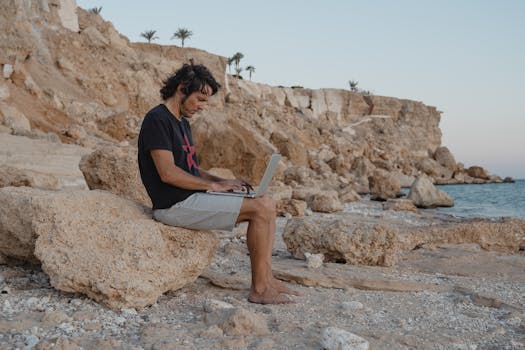
I stepped off the ferry in Funchal, Madeira, and the first thing that hit me wasn’t the scent of hibiscus or the salty Atlantic spray—it was the rhythmic, caffeinated clacking of a dozen mechanical keyboards. I was in Ponta do Sol, a cliffside village that has become the blueprint for a global phenomenon.
For decades, countries competed for tourists who stayed for a week and left. Now, the game has changed. Governments have realized that a digital nomad staying for a year is worth ten tourists staying for a weekend. They don't just buy a magnet; they pay rent, buy groceries, and contribute to the local economy without taking a local job.
Right now, we are witnessing a "Nomad Land Grab." Countries aren't just opening their doors; they are rolling out the red carpet with tax exemptions, cash grants, and free coworking spaces. If you’re still working from a grey cubicle in a high-tax city, you’re essentially leaving money on the table. Here is where the world is literally begging you to move.
---
1. Portugal’s Atlantic Oasis: The Madeira Experiment
Portugal was the first to truly "get it." While Lisbon is cooling off due to housing pressures, the island of Madeira is doubling down. They created the first "Digital Nomad Village" in Ponta do Sol.
When I lived there for three months, the perk wasn't just the view—it was the infrastructure. The government provided a free coworking space in a historic building, high-speed fiber internet (which is faster than what I had in London), and a dedicated community manager to help you navigate local bureaucracy.
The Perk:
Access to a curated community, free workspace, and the "Digital Nomad Visa" which allows for a 15% flat tax rate under the NHR (Non-Habitual Resident) scheme if you qualify.
Pro-Tip:
Don't stay in Funchal. Head to Ponta do Sol. Go to the "The Smallest Bar" at 6:00 PM on a Thursday. That’s where the real networking happens over a 2-euro poncha (the local firewater made of cane spirit, honey, and lemon).
---
2. Italy’s "Pay to Stay" Revolution: Sardinia and Calabria
Italy is tired of its beautiful hilltop towns turning into ghost cities. Their solution? Cold, hard cash.
The island of Sardinia recently announced a €15,000 grant for people moving to municipalities with fewer than 3,000 residents. Meanwhile, the region of Calabria has offered up to €28,000 over three years for remote workers under the age of 40 to relocate to underpopulated villages.
The Perk:
Direct cash grants to cover relocation and home renovation costs.
Insider Language:
This isn't just about the money; it’s about il dolce far niente (the sweetness of doing nothing). But beware: the "Bureaucratic Dragon" is real. You’ll need a Codice Fiscale (tax code) before you can even think about buying a loaf of bread on credit.
Pro-Tip:
Look for the "Blue Zone" villages in Sardinia. You’re not just getting a grant; you’re moving to a place where people regularly live to be 100. The secret? It’s the cannonau wine and the lack of Zoom fatigue.
---
3. The Greek Odyssey: A 50% Tax Cut for Seven Years
Greece isn't just for honeymooners anymore. The government launched a digital nomad visa with a kicker that makes accountants weep with joy: if you commit to staying for two years, you can receive a 50% exemption on your income tax for up to seven years.
Imagine earning $100k and only being taxed as if you earned $50k, all while sitting on a balcony in Crete overlooking the Libyan Sea.
The Perk:
Massive tax savings and a low cost of living compared to Northern Europe or the US.
Pro-Tip:
Avoid Santorini and Mykonos—they are overpriced theme parks. Head to Chania, Crete. The internet is stable, the "Sfakian pies" (cheese-filled pancakes with honey) are addictive, and the "Work from Crete" community is incredibly active.
---
4. Spain’s "Pueblos" Initiative: 15% Tax and a New Life
Spain finally launched its official Digital Nomad Visa in 2023, and it’s a game-changer. Beyond the visa itself, the "Red Nacional de Pueblos Acogedores" (National Network of Welcoming Villages) is a group of 30+ tiny towns offering free mentorship and "host" families to help nomads integrate.
The Perk:
Under the "Beckham Law" equivalent for nomads, you can be taxed at a flat 15% for the first four years, rather than the progressive rates that can hit 45%.
Logistics:
You need to prove you earn roughly €2,300 per month. The application is notoriously pedantic—ensure every document is apostilled and translated by a "Traductor Jurado" (sworn translator).
Pro-Tip:
Check out Genalguacil in Andalusia. It’s known as the "museum village." Every two years, the town invites artists to create installations that stay permanently on the streets. It’s the most creative remote work spot in Europe.
---
5. Japan’s New Frontier: The 6-Month Sprint
Japan recently entered the chat. As of April 2024, Japan offers a 6-month Digital Nomad Visa for those earning over 10 million yen (approx. $66,000) annually. While 6 months sounds short, the "perk" here is the unprecedented access to a culture that was previously very difficult to live in long-term without a corporate sponsor.
The Perk:
Ease of entry into one of the world’s most sophisticated economies. Some local prefectures, like Fukuoka, are offering "Startup City" perks, including free consultations on how to open a Japanese business bank account.
Pro-Tip:
Don't go to Tokyo. Go to Kyoto and find a "Machiya" (traditional wooden townhouse) to work from. The silence of a Zen garden is the ultimate productivity hack.
---
The Logistics: Quick Facts & Budget Table
| Country | Key Perk | Est. Monthly Cost | Best Time to Visit | Best For |
| :--- | :--- | :--- | :--- | :--- |
| Portugal (Madeira) | Free Coworking & Community | $1,800 - $2,500 | Year-round | Community Seekers |
| Italy (Sardinia) | €15,000 Cash Grant | $1,500 - $2,200 | May - September | Slow Living |
| Greece | 50% Tax Reduction | $1,400 - $2,000 | April - October | Tax Optimization |
| Spain | 15% Flat Tax Rate | $1,800 - $2,600 | March - June | Culture Vultures |
| Japan | New 6-Month Access | $2,500 - $3,500 | Oct - December | Tech & Foodies |
---
How to Actually Pull This Off (Without Losing Your Mind)
1. The "Apostille" Nightmare
Every country on this list will ask for a background check and proof of income. These documents must be apostilled. An apostille is essentially an international notary. Do not leave your home country without getting these done, or you’ll spend $200 on international shipping later.
2. The Internet Litmus Test
Never trust an Airbnb listing that says "Great WiFi." Before booking, ask the host to send a screenshot of a Speedtest.net result. You need at least 20 Mbps upload for seamless Zoom calls. In Madeira and Spain, fiber (100+ Mbps) is common, but in rural Italy, you might be relying on 4G dongles.
3. Community is Currency
The biggest mistake nomads make is living like a tourist. Join the "Digital Nomads [City Name]" Facebook groups or Slack channels before you land. In Madeira, the Slack channel is the lifeblood of the island—it’s where you find car rentals, hiking partners, and the best secret surf spots.
---
Final Thoughts: The Window is Closing
These perks exist because these countries have a problem (depopulation or economic stagnation). As soon as that problem is solved, the perks will vanish. Portugal has already begun tightening its NHR tax rules.
The best time to move was yesterday. The second best time is right now. Pack the laptop, grab your noise-canceling headphones, and go where you are treated best.
---