The Scent of Real Change: Why Your Next Trip Needs a Soul
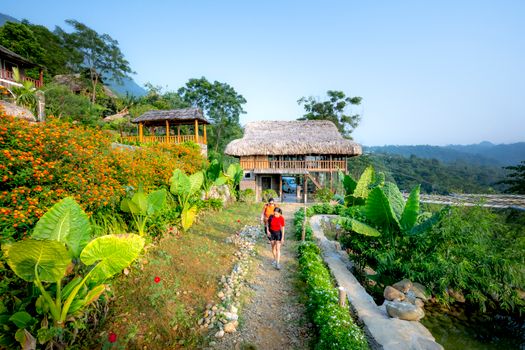
I stepped off the rickety wooden longtail boat in the Mekong Delta, and the first thing that hit me wasn't the heat—it was the smell of toasted coconut husks and fermented fish sauce wafting from Mrs. Hien’s kitchen. There were no gilded lobbies or "pillow menus" here. Instead, there was a hand-woven hammock, a cold glass of lime juice, and the knowledge that my $40-a-night stay wasn't being funneled into a corporate headquarters in London or New York. It was staying right here, in Ben Tre, paying for Mrs. Hien’s granddaughter’s university tuition.
For decades, the travel industry has been plagued by "tourism leakage." According to recent UNWTO data, in many developing nations, as much as $80 out of every $100 spent by tourists leaves the country. Community tourism flips the script. It’s about keeping the "Ripple Effect" local. When you choose a community-led lodge over a multinational chain, you aren't just a traveler; you're a micro-investor in a village’s future.
1. The Data Doesn't Lie: The Rise of the "Ripple Score"
If you want to know if your trip actually benefits the local economy, you need to look at the Ripple Score. Pioneered by G Adventures and the Planeterra Foundation, this metric tracks what percentage of a tour’s local costs stay within the community.
Recent 2023-2024 data shows that tours with a Ripple Score of 90 or higher result in a 35% increase in local household income within the first two years of operation. We’re seeing a massive shift: travelers are no longer satisfied with "looking" at a culture; they want to participate in its preservation.
Pro-Tip:
When booking, ask the operator: "What percentage of my spend goes directly to community-owned enterprises?" If they can’t answer, keep walking.
2. The Sacred Valley, Peru: Beyond the Selfie at Machu Picchu
Most people rush through the Sacred Valley on a train to Machu Picchu. They’re missing the point. In the high-altitude community of Ccaccacuro, a group of indigenous weavers has reclaimed their economic sovereignty.
Instead of selling mass-produced synthetic ponchos in Cusco markets, these women host travelers in a community-owned center. You’ll learn that the vibrant pink dye comes from crushed cochineal insects and the deep blues from indigo.
- The Insider Detail: Look for the "Tinkuy" pattern in the weaving—it represents the coming together of two rivers and symbolizes the relationship between the traveler and the host.
- Recent Data: Since the implementation of the community-run restaurant in nearby Parwa, the village has funded a clean water project that serves 60 families.
Pro-Tip:
Visit the Parwa Community Restaurant at 1:30 PM. The tour buses usually leave by 1:00 PM, giving you a quiet view of the mountains while you tuck into lomo saltado made with potatoes grown 50 yards from your table.
3. The Maasai Mara, Kenya: Conservancies vs. Crowds
The old model of African safaris often excluded the very people who lived alongside the wildlife. The new model? Community Conservancies.
In the Nashulai Maasai Conservancy, the land is owned by the Maasai people, not the government or a foreign developer. Recent data from the Kenya Wildlife Conservancies Association indicates that community-owned lands have seen a 20% higher rate of wildlife density than state-run parks, primarily because the local people have a direct financial stake in preventing poaching.
- Authenticity Check: You won't find 50 Land Rovers circling a bored lion here. You’ll go on "walking safaris" where a Maasai elder explains the medicinal uses of the Olea africana tree.
- The Logistics: It’s more expensive than a budget safari, but 100% of the "bed night" fees go toward local teacher salaries and predator-compensation funds.
4. Mirihi Island & Beyond, Maldives: The Guesthouse Revolution
The Maldives is the poster child for tourism leakage—luxury islands owned by foreign conglomerates. But a 2010 law change allowed locals to open guesthouses on inhabited islands like Dhiffushi and Ukulhas.
This has been a game-changer. Recent economic reports show that the "Guesthouse Sector" is the fastest-growing segment of the Maldivian economy, keeping nearly 60% more revenue within the local atolls compared to the private resort model.
- The Vibe: You’ll eat mas huni (tuna and coconut breakfast) at a local café for $5 instead of a $90 buffet.
- The Hidden Entrance: On Dhiffushi, head to the "north beach" behind the blue mosque. It’s where the locals swim at sunset, and the water is just as turquoise as the $2,000-a-night resort across the channel.
5. The "Leakage" Killer: Social Enterprise Dining
You don't have to go to a remote village to practice community tourism. In cities like Siem Reap, Phnom Penh, or Hanoi, "Training Cafés" are the gold standard.
Take Spoons in Siem Reap. It’s not just a restaurant; it’s a vocational school for underprivileged Cambodian youth.
* The Spice Blend: Order the Kroeung sea bass. The paste is hand-pounded in a mortar and pestle—you can hear the rhythmic thump-thump from the kitchen.
* The Impact: 100% of profits are reinvested into student scholarships. Recent 2024 impact reports show that 95% of graduates find high-paying jobs in the hospitality sector within three months.
Quick Facts: Planning Your High-Impact Trip
| Destination | Best Time to Visit | Est. Daily Cost (USD) | Primary Impact | How to Get There |
| :--- | :--- | :--- | :--- | :--- |
| Sacred Valley, Peru | May - Sept | $70 - $120 | Indigenous Women's Empowerment | Fly to Cusco, 1hr private transfer. |
| Mekong Delta, Vietnam | Oct - Jan | $40 - $60 | Rural Infrastructure & Education | 2hr bus from Ho Chi Minh City. |
| Maasai Mara, Kenya | July - Oct | $350 - $600 | Wildlife Conservation & Land Rights | Fly-in bush plane from Nairobi. |
| Dhiffushi, Maldives | Nov - April | $80 - $150 | Local Entrepreneurship | 45min speedboat from Malé. |
6. How to Spot "Community-Washing"
Just because a hotel puts a "locally made" soap in the bathroom doesn't mean it’s community tourism. To be a savvy traveler, look for these three red flags:
1. The "Human Zoo" Factor: If a tour involves staring at indigenous people without any interaction or fair payment, it’s not CBT.
2. Lack of Transparency: If the website doesn't explicitly state where the money goes, it’s likely going to a middleman.
3. The "All-Inclusive" Trap: If you never leave the resort gates, you aren't contributing to the local economy; you’re sequestered from it.
The Final Word: Travel as an Act of Rebellion
In an era of mass-produced, Instagram-filtered travel, choosing a community-led experience is a quiet act of rebellion. It’s a choice to value people over "amenities" and impact over "influence."
When you sit down at a communal table in a mountain village, smelling the woodsmoke and tasting the heirloom corn, you aren't just a tourist. You’re the bridge. And according to the data, that bridge is exactly what the world needs right now.
---