The Subterranean Pull of the Affineur
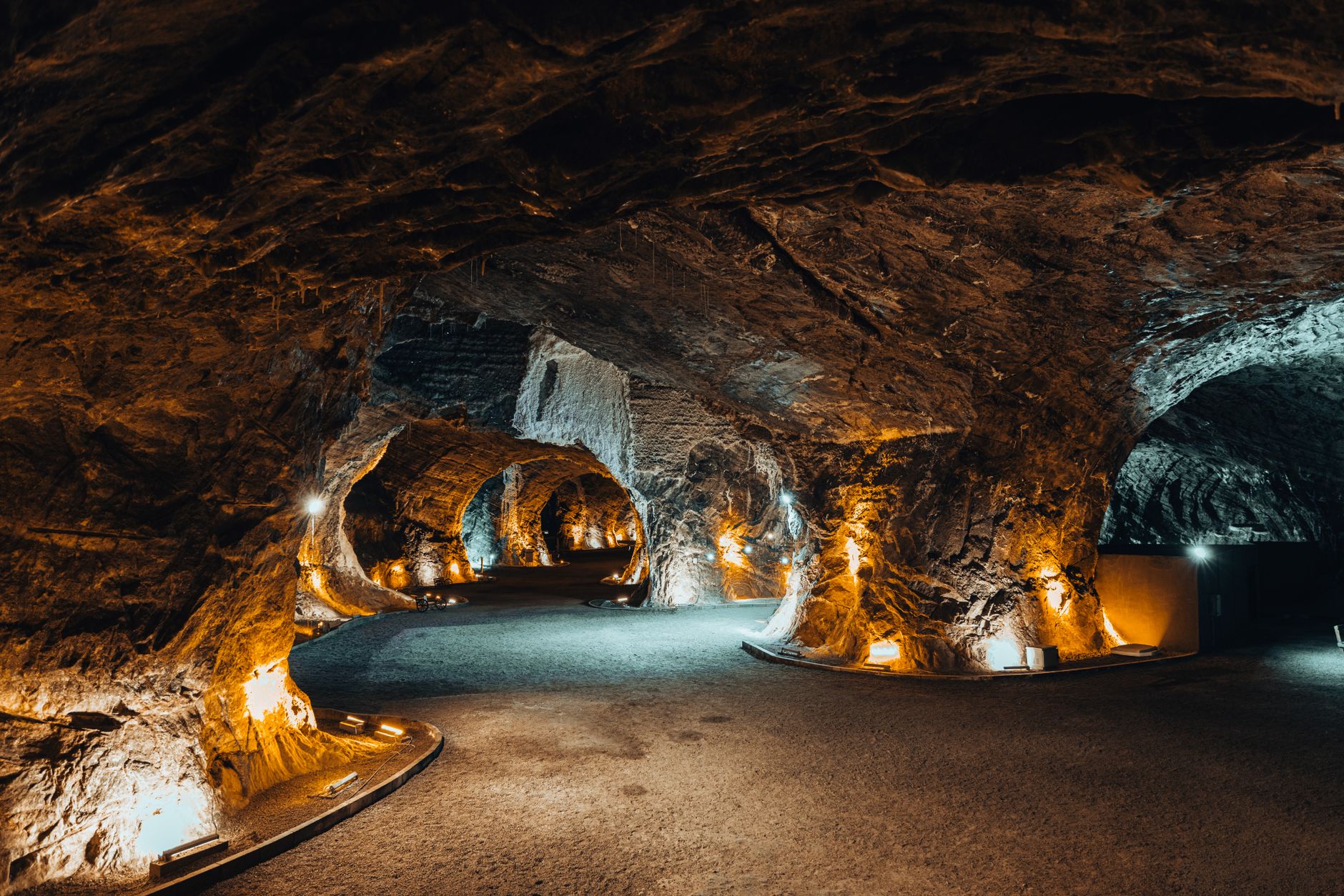
I stepped off the regional train at Saint-Affrique, the late-afternoon Southern French sun baking the asphalt to a shimmering haze. But as I wound my way up the steep, scree-covered flanks of Mont Combalou toward the tiny village of Roquefort-sur-Soulzon, the air began to change. Standing before a heavy, iron-studded oak door set directly into the living rock, I felt a sudden, icy draft.
When the head affineur pulled the door open, a rush of air hit me. It was 10°C (50°F), thick with 95% humidity, and smelling intensely of damp earth, calcified stone, and the unmistakable, sharp, metallic tang of Penicillium roqueforti.
This wasn’t a museum; it was a breathing, geological engine.
For centuries, humans have used the earth's natural thermal mass to do what no modern refrigerator can: coax complex, funky, and sublime flavors out of curdled milk. June is the absolute sweet spot to visit these subterranean cathedrals. It is the peak of the spring-milk cheesemaking season, meaning the caves are packed to their vaulted ceilings with young wheels, while the older vintages are hitting their prime maturity just as the summer heat makes these icy depths a welcome sanctuary.
If you want to elevate your culinary travels in June 2026, skip the standard wine tastings. Grab a fleece, lace up your boots, and head underground to these six legendary cheese caves.
---
1. The Limestone Cathedral: Caves de Roquefort Société (Aveyron, France)
```
___________________________________________
/ \
| "The fleurines are the lungs of the |
| mountain. Without them, there is no |
| Roquefort. Only moldy sheep's milk." |
\___________________________________________/
```
The Geologic Marvel
Millions of years ago, the collapse of the limestone plateau of Mont Combalou created a network of deep caves and giant fissures known as fleurines. These natural chimneys breathe constantly, drawing in outside air, filtering it through wet limestone, and keeping the caves at a permanent, self-regulating 10°C with near-saturated humidity.
Inside the Caves de Roquefort Société, wooden shelves stretch into the darkness, stacked with thousands of wheels of blue-veined sheep's milk cheese. The salt-cured loaves are pierced with hundreds of tiny needles to let the damp, spore-rich air penetrate, kickstarting the growth of the blue mold that has made this place famous since the time of Charlemagne.
The Tasting Experience
You’ll taste three distinct maturations of Roquefort. Look out for the Société Templier—it is incredibly creamy, with a balanced, peppery bite that lacks the harsh, chemical sting of mass-market blues. The texture is almost like cold butter, dissolving on the tongue with a clean, mineral finish.
- June 2026 Insider Tip: Book the 9:00 AM "Visite Privilège." You’ll access the historic Caves Templières, which are usually closed to the general public, before the tour buses from Toulouse arrive.
- The Secret Door: The entrance to the oldest, deepest vault is marked by a small, hand-carved stone crest of a sheep. Ask your guide to show you the "cave of the winds" where you can feel the raw draft of a active fleurine.
---
2. The High-Security Swiss Sanctuary: The Gstaad Cheese Grotto (Bernese Oberland, Switzerland)
The Alpine Bunker
In the glitzy mountain enclave of Gstaad, the most valuable assets aren't stored in Swiss bank vaults—they are aging 25 meters below the pine forests in a former military bunker. The Molkerei Gstaad converted this decommissioned WWII concrete fortress into a multi-level cheese sanctuary housing over 3,000 wheels of premium Alpkäse and Hobelkäse.
To enter, you must descend a steep, spiraling staircase into the damp chill. The walls are lined with glowing, amber-colored wheels of cheese, some dating back several years. The acoustics are eerie; the only sound is the rhythmic dripping of condensation and the hum of the climate-control systems maintaining a precise 12°C.
```
+-------------------------------------------------------------+
| MILITARY BUNKER MAP |
| |
| [Entrance] ---> [Decompression Chamber] ---> [Vault 1] |
| | |
| [Tasting Room] <--- [The "Sanctuary" Vault] <-----+ |
+-------------------------------------------------------------+
```
The Tasting Experience
Here, you will taste Hobelkäse—an extra-hard cheese that is aged until it is bone-dry. The affineur uses a specialized plane to shave the cheese into paper-thin, translucent curls that roll up like ancient parchment. The taste is intensely concentrated: nutty, caramelized, with distinct crunchy crystals of tyrosine (amino acids) that pop in your mouth.
- June 2026 Insider Tip: You cannot just show up here. The key is kept at the local dairy shop in the center of Gstaad. You must book your slot at least three weeks in advance via the local tourism board.
- Pro-Tip: Wear a thick wool sweater. Even though it's June outside, the concrete bunker retains a biting, damp cold that penetrates light jackets within ten minutes.
---
3. The Gorge-Aged Original: Gough’s Cave, Cheddar Gorge (Somerset, England)
The Subterranean Legend
This is the birthplace of Cheddar. While industrial producers have turned "cheddar" into a generic block process, the Cheddar Gorge Cheese Co. still makes it the traditional way: using unpasteurized grass-fed cow’s milk, cloth-wrapping the wheels, and carrying them deep into the limestone caverns of Gough’s Cave to age.
The humidity inside the cave allows wild molds to bloom on the cloth rinds, creating a protective barrier that lets the cheese breathe. The constant, cool breeze flowing through the gorge keeps the temperature at a steady 11°C, allowing the cheese to mature slowly and develop its signature earthy complexity.
```
_.._
.' '.
/ __ \ <- Clothbound Cheddar wheel
| / \ | Aging in Gough's Cave
| \__/ | (Somerset, England)
\ /
'.____.'
```
The Tasting Experience
Cave-matured Cheddar is a revelation. It is nothing like the plastic-wrapped blocks from the supermarket. It is crumbly, earthy, and deeply savory, with notes of wild mushrooms, wet soil, and a sharp, grassy tang that lingers on the back of your palate.
- June 2026 Insider Tip: The gorge gets incredibly crowded with hikers in June. Arrive at 8:30 AM, walk the stunning cliff-top path first to work up an appetite, and then head straight to the caves when they open at 10:00 AM.
- The Hidden Gem: Ask the shop assistant for "cave-matured scrapings"—these are the intensely flavorful, highly concentrated bits trimmed from the edges of the wheels during portioning. They are rarely put on display but are cheap and taste incredible over campfire jacket potatoes.
---
4. The Asturian Beast: Cueva del Queso Cabrales (Arenas de Cabrales, Spain)
The Vertiginous Climb
If you like your cheese with a side of adrenaline, this is your pilgrimage. Deep in the Picos de Europa mountains of northern Spain, the blue cheese known as Cabrales is aged in natural, high-altitude limestone caves that can only be reached by foot up steep, mist-shrouded mountain paths.
The caves here are wild and untamed. Water cascades down the rock walls, and the humidity regularly hits a dripping 98%. This extreme environment allows a cocktail of wild, indigenous molds to colonize the cheese naturally, without the need for manual injection.
```
/\_/\
____/ o o \
/~____ =ø= / <- Asturian mountain goat
( )__// (Source of the milk)
\____/
```
The Tasting Experience
Cabrales is not for the faint of heart. It is a raw, unpasteurized blend of cow, goat, and sheep milk. It is creamy, intensely pungent, spicy, and acidic, with a complex, barnyard profile that is balanced by a rich, fatty sweetness. It is best enjoyed smeared on crusty bread with a glass of dry Asturian cider poured from a height.
- June 2026 Insider Tip: June is the perfect month for this trek because the mountain passes are finally clear of snow, and the wildflowers are in full bloom.
- Pro-Tip: Wear sturdy hiking boots with excellent grip. The cave floors are slick with condensation, natural spring water, and "cheese sweat" (the whey run-off from the aging wheels). Do not wear suede or canvas shoes unless you want them to smell like Cabrales for the rest of your life.
---
5. The Modern Masterpiece: The Cellars at Jasper Hill (Greensboro, Vermont, USA)
The Technological Wonder
Tucked away in the rolling green hills of northern Vermont, The Cellars at Jasper Hill represents the absolute pinnacle of modern, scientific affinage. This is a custom-built, 22,000-square-foot underground concrete facility comprising seven distinct, vaulted microclimate chambers designed to mimic different European cave conditions.
Each arch is calibrated for a specific cheese style. One arch is humid and cool for spruce-bound cheeses; another is warmer and drier for hard, alpine-style wheels. It’s a bio-secure, high-tech cathedral of mold and bacteria.
```
THE CELLARS AT JASPER HILL (CROSS-SECTION)
[Hillside Pasture / Cows]
========================= Ground Level =========================
___ ___ ___ ___
/ \ / \ / \ / \
| Arch | | Arch | | Arch | | Arch | ...
| 1 | | 2 | | 3 | | 4 |
|Bloomy | |Spruce | | Alpine| | Blue |
\_____/ \_____/ \_____/ \_____/
```
The Tasting Experience
You’ll taste Harbison, a gooey, spoonable cheese wrapped in strips of native spruce bark harvested from the farm's own woods. The bark imparts a woodsy, resinous flavor that tastes like a walk through a damp Vermont forest, with a rich, mustardy, and sweet cream paste.
- June 2026 Insider Tip: Because this is a highly regulated, bio-secure food production facility, public tours of the active aging vaults are strictly limited. However, in June 2026, Jasper Hill is hosting exclusive "Affinage Masterclasses" for serious culinary travelers.
- The Backup Plan: If you can't secure a spot inside the vaults, visit the nearby Willey's Store in Greensboro—a legendary general store that stocks the entire Jasper Hill lineup fresh from the caves. Take your haul to the shores of Caspian Lake for an unforgettable lakeside picnic.
---
6. The Piedmontese Vaults: Beppino Occelli’s Caves of Valcasotto (Piedmont, Italy)
The Alpine Heritage
In the maritime Alps of Piedmont, the tiny, stone-built hamlet of Valcasotto was once a summer hunting retreat for the Kings of Savoy. Today, it is where master affineur Beppino Occelli has restored ancient, stone-walled cellars that have been used for aging mountain cheeses for centuries.
The cheeses here are aged on shelves made from local woods—specifically larch and applewood—which naturally harbor beneficial microflora. The mountain spring water flowing beneath the stone floors maintains a cool, damp microclimate that allows the cheeses to develop thick, rustic, and colorful rinds.
```
_________________________________
[ LARCHWOOD SHELVES FOR AGING ]
[=================================]
[ ( Wheel 1 ) ( Wheel 2 ) ] <- Infusing the cheese
[ Occelli Occelli ] with woody notes
[ al Barolo con Frutta ]
`---------------------------------'
```
The Tasting Experience
Occelli is famous for his experimental, boozy maturations. You must try the Occelli al Barolo, which is aged for months in oak barrels covered in the pressed grape must of Barolo wine. The cheese is dark purple, crumbly, and sweet, with a heady aroma of red fruit, spices, and toasted oak.
- June 2026 Insider Tip: June is the month of the transumanza—when the local Piedmontese cows are driven up from the valleys to the high alpine pastures (alpeggio). The milk at this time is incredibly sweet and herbaceous, packed with the flavors of fresh clover, wild thyme, and mountain buttercups.
- The Secret Spot: Stop by the local locanda (inn) in Valcasotto before your cave tour. Order the handmade potato gnocchi smothered in a rich, velvety sauce made from melted Castelmagno cheese aged in Occelli's cellars. It is a culinary masterpiece.
---
The Logistics & Budget Planner
Planning a subterranean cheese pilgrimage requires careful timing, transport, and budget allocation. Use this quick-reference guide to plan your June 2026 itinerary:
| Cave Location | Est. Cost ($ to $$$) | Best Time to Visit (June 2026) | How to Get There | Essential Gear |
| :--- | :--- | :--- | :--- | :--- |
| Caves de Roquefort Société (France) | $$ ($25 - $40 for tour & tasting) | Mid-June (warm outside, perfect contrast to the icy caves) | Fly to Toulouse; rent a car and drive 1.5 hours east via the Millau Viaduct. | A light windbreaker or fleece. |
| Gstaad Cheese Grotto (Switzerland) | $$$ ($80 - $120 including private guide) | Late June (when alpine hiking trails are fully open) | Take the scenic GoldenPass Express train directly to Gstaad station. | Warm wool sweater and closed-toe shoes. |
| Cheddar Gorge Caves (England) | $ ($15 - $25 entry fee) | Early June (to avoid the school holiday crowds) | Take the train from London Paddington to Bristol Temple Meads, then a local bus. | Comfortable walking shoes with good tread. |
| Cueva del Queso Cabrales (Spain) | $$ ($30 - $50 for guided trek & tasting) | Mid-to-Late June (for stable mountain weather) | Fly to Santander or Asturias Airport; rent a 4x4 and drive to Arenas de Cabrales. | Sturdy hiking boots and waterproof jacket. |
| The Cellars at Jasper Hill (USA) | $$$ ($150+ for exclusive Masterclass) | Late June (during the peak of the Vermont summer harvest) | Fly to Burlington; drive 1.5 hours northeast into the Northeast Kingdom. | Clean, closed-toe shoes (hairnets provided!). |
| Caves of Valcasotto (Italy) | $$ ($40 - $60 including lunch at the locanda) | Early June (to witness the alpine transhumance) | Fly to Turin; drive south toward Cuneo, then wind up into the Valcasotto valley. | An empty stomach and a camera for the mountain views. |
---
Final Thoughts: The Unspoken Rules of the Cave
Before you descend into these underground sanctuaries, remember that you are entering a delicate, living ecosystem. A single foreign spore brought in on dirty shoes or clothing can disrupt months of careful affinage.
Always follow these unwritten rules of the cheese cave:
1. Do not touch the rinds unless explicitly invited to do so by the affineur. The oils and bacteria on your hands can ruin a wheel's development.
2. Turn off your camera flash. Some delicate, soft-ripened cheeses are sensitive to light and temperature spikes.
3. Embrace the smell. Yes, it will be intense. Yes, it might smell like wet dog, ammonia, or ancient cellars. But that is the smell of life, fermentation, and pure flavor in the making.
Pack your bags, grab your fleece, and prepare to taste cheese the way nature intended: deep, dark, and wonderfully wild.
---