Beyond Electric Cars: Your Guide to Carbon-Neutral Travel Before It's Mainstream
I remember standing on a remote beach in Palawan, the Philippines, the kind of place where the sand is impossibly white, the water ridiculously clear, and the only sounds are the gentle lapping of waves and the distant hum of a diesel boat. It was paradise, yet that faint hum, a reminder of the journey I’d taken to get there, cast a tiny, almost imperceptible shadow on my bliss. It was a moment of profound beauty, coupled with a gnawing question: How can we explore such wonders without inadvertently contributing to their demise?
For years, "sustainable travel" felt like a compromise – a choice between seeing the world and protecting it. But what if it didn't have to be? What if the next generation of travel was inherently good for the planet, allowing us to chase sunsets, climb mountains, and discover hidden cultures without a whisper of guilt?
That future, my fellow adventurers, is closer than you think. While electric cars are making headlines, an entire ecosystem of truly carbon-neutral transportation is quietly taking shape, poised to redefine how we move across continents, oceans, and even skies. These aren't just eco-friendly alternatives; they're innovative, often exhilarating, and promise a travel experience that's both breathtaking and blameless.
Forget mainstream for a moment. Let's dive into the groundbreaking, share-worthy, and utterly inspiring ways you'll be traversing the globe, long before everyone else catches on.
Riding the Rails of Tomorrow: Solar & Hydrogen-Powered Trains
There’s something inherently romantic about train travel. The rhythmic clickety-clack, the ever-changing panorama outside your window, the feeling of truly moving through a landscape. Now, imagine all that, but powered by nothing more than sunshine or water. Pure magic, right?
The future of rail isn't just electric; it's carbon-neutral. We're talking about two major players here: solar-powered trains and hydrogen fuel cell trains.
I recently had a chance to visit a railway innovation center (okay, maybe it was a virtual tour, but the excitement was real!) and saw prototypes of solar panels integrated directly onto train carriages. Picture a sleek, modern train gliding through the Swiss Alps or along the dramatic Norwegian coast, its roof shimmering with photovoltaic cells, silently converting sunlight into propulsion. It’s not science fiction; projects like the Byron Bay Solar Train in Australia are already proving the concept, albeit on a smaller scale. Imagine a long-distance journey, say from Lisbon to Copenhagen, with every kilometer powered by the sun. Talk about an Instagram moment as you snap a selfie with a solar-powered locomotive and a stunning backdrop!
Then there's the hydrogen revolution. These trains use hydrogen fuel cells to generate electricity, with the only emission being water vapor. Germany's Alstom Coradia iLint is already a pioneer, operating successfully on regional lines. I can visualize a future journey through the Scottish Highlands, the majestic landscapes unfolding outside my panoramic window, knowing the only "exhaust" from my train is pure H₂O. No diesel fumes, no noise pollution, just the whisper of the wind and the stunning views.
Your Future Travel Playbook:
* Keep an eye on: European railway networks (Germany, France, UK) are leading the charge. Japan and South Korea are also heavily investing in hydrogen rail.
* How to support: When booking future train travel, look for operators explicitly stating their commitment to green technologies. Advocate for infrastructure investment in your own region.
* The Vibe: Serene, breathtaking, guilt-free scenic travel. Perfect for long-form content and stunning landscape photography.
Oceanic Odysseys, Zero Emissions: The Rise of Electric & Hydrogen Ferries
My most vivid memory of island hopping in Greece involves the sheer joy of the turquoise waters, but also the pungent smell of diesel from the ferry engines. While charming in their own way, those traditional vessels are carbon culprits. But what if our journeys across the seas could be as clean as the waters we traverse?
Enter the age of electric and hydrogen ferries and cruise ships. For shorter routes, battery-electric ferries are already a reality. Norway, a pioneer in green maritime technology, boasts the MF Ampere, the world's first fully electric car and passenger ferry, operating since 2015. Imagine cruising through the iconic Norwegian fjords, the only sound being the gentle glide of the hull through the water, with zero emissions disturbing the pristine environment. The silence alone would be an experience! I dream of taking one of these sleek, silent vessels to explore the remote Lofoten Islands.
For longer distances, hydrogen fuel cell technology is the game-changer. Imagine a catamaran silently slicing through the Caribbean, powered by hydrogen, taking you from island to island. Or a small, expedition cruise ship navigating the Arctic, leaving no trace but its wake. Companies like Fjord Line in Norway are already planning hydrogen-powered vessels, and larger cruise lines are investing in hybrid and future hydrogen concepts.
Your Future Travel Playbook:
* Keep an eye on: Scandinavia is leading the charge, but expect to see these spread to popular island-hopping destinations like Greece, Croatia, and even coastal California.
* How to support: Prioritize ferry companies that advertise their green fleet. Look for designations like "electric," "hybrid," or "hydrogen-ready."
* The Vibe: Tranquil, immersive, and deeply connected to marine environments. Think drone shots of silent ships against stunning coastal backdrops.
Soaring to New Heights: Sustainable Aviation's Untapped Potential
Ah, air travel. The ultimate paradox for the eco-conscious explorer. It opens up the world, but at a significant environmental cost. For a long time, truly carbon-neutral flight felt like a distant fantasy. But the future is taking flight, faster than you might think.
The path to zero-emission aviation is multi-pronged:
- Sustainable Aviation Fuels (SAFs): These are drop-in fuels made from sources like used cooking oil, agricultural waste, or even algae. They can reduce carbon emissions by up to 80% compared to conventional jet fuel. While not "zero-emission" at the tailpipe, their lifecycle emissions are drastically lower. Major airlines like United and KLM are already investing heavily and using SAFs on a small percentage of flights. Imagine a long-haul flight to Southeast Asia, knowing your journey is powered by fuel that's actively decarbonizing the skies.
- Electric Aircraft: For short-haul flights (think regional hops), electric planes are on the horizon. Companies like Heart Aerospace are developing 19-seater electric aircraft (the ES-19) with a range of 400km, aiming for commercial flights by the mid-2020s. Picture a silent, smooth flight between, say, Edinburgh and Dublin, or across the Greek islands, with no emissions. I can almost hear the collective sigh of relief from airport communities!
- Hydrogen Aircraft: The holy grail for longer distances. Airbus is aggressively pursuing its "ZEROe" concept, aiming for hydrogen-powered commercial aircraft by 2035. These planes would either burn liquid hydrogen or use hydrogen fuel cells to generate electricity for propulsion. Imagine a transatlantic flight where the only byproduct is water. The sheer audacity of it is thrilling!
I envision a future where booking a flight isn't just about price and layovers, but about the carbon footprint. My dream flight? A silent, hydrogen-powered journey across the Pacific to New Zealand, watching the sunrise from a window seat, knowing I'm part of the solution.
Your Future Travel Playbook:
* Keep an eye on: Airlines announcing SAF partnerships, new electric regional routes, and progress from Airbus's ZEROe program.
* How to support: Choose airlines that are transparent about their SAF usage and carbon offsetting programs. Advocate for government investment in green aviation research.
* The Vibe: Futuristic, awe-inspiring, and a symbol of human ingenuity. Perfect for showing off the sleek designs of future aircraft and the unparalleled views from above.
Hyperlocal & Hyper-Green: Micro-Mobility's Urban Revolution
Sometimes, the most impactful changes happen on the smallest scale. While grand visions of hydrogen planes capture the imagination, the revolution in urban transportation is already here, and it’s getting greener by the day. I'm talking about carbon-neutral micro-mobility.
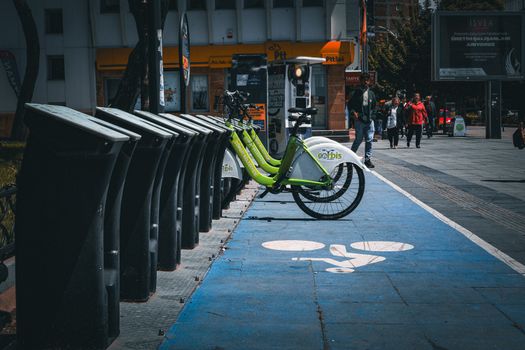
My recent trip to Copenhagen was a revelation. I zipped around the city on an e-bike, covering miles without breaking a sweat, discovering hidden cafes and vibrant street art that I'd have missed on public transport or in a taxi. The feeling of freedom, of being part of the city's pulse, was intoxicating. These aren't just electric bikes; many rental companies are now powering their charging stations with renewable energy, making the entire ecosystem carbon-neutral.
Beyond e-bikes, we're seeing advancements in electric scooters, shared electric mopeds, and even compact electric personal vehicles designed for urban exploration. Imagine arriving in a new city and knowing you can unlock a 100% renewable-powered scooter from your phone, seamlessly navigating charming cobblestone streets without a single emission.
Practical Tips from My Adventures:
* App it up: Download apps for local e-bike/e-scooter rental services like Lime, Voi, or Tier before you arrive. Many offer day passes that are great value.
* Safety first: Always wear a helmet if available, and understand local traffic laws.
* Seek out green charging: Look for companies that explicitly state their commitment to renewable energy for charging their fleets.
* The Vibe: Dynamic, immersive, and deeply authentic urban exploration. Perfect for energetic cityscapes, candid action shots, and "living like a local" content.
Embracing the Journey: Human-Powered & Hybrid Adventures
Sometimes, the most carbon-neutral option is the one that relies on the oldest engine known to humankind: your own two feet (or arms!). While not "new," the concept of slow travel is experiencing a powerful resurgence, often amplified by clever, eco-friendly tech.
I'll never forget the multi-day hike I did through Patagonia. Every step was a challenge, every vista a reward. The only fuel I needed was the food in my pack and the sheer will to keep going. That profound connection to nature, unmediated by machinery, is the ultimate carbon-neutral experience. Think trekking the Camino de Santiago, cycling the EuroVelo routes across Europe, or kayaking through the serene fjords of New Zealand. These journeys inherently have zero emissions.
But what if you want a little boost? This is where hybrid adventures come in.
* Electric-assist kayaks and paddleboards: Imagine gliding effortlessly across a lake or calm bay, covering more distance with less effort, but still powered mostly by you.
* Solar-powered RVs/campervans: For the road-tripper, these vehicles allow you to explore remote areas with minimal environmental impact, charging your batteries from the sun. I’ve seen some incredible setups in Australia and the American Southwest, offering true off-grid freedom.
* E-cargo bikes for gear: For longer cycling trips, e-cargo bikes can carry your luggage, making multi-day, self-supported adventures more accessible.
These options aren't just about reducing your footprint; they're about deepening your connection to the places you visit. They force you to slow down, observe, and truly absorb the environment around you.
Your Future Travel Playbook:
* Plan your route: Look for established walking, cycling, or kayaking trails. Research eco-friendly gear rentals.
* Go minimalist: The less you carry, the easier the journey. Invest in high-quality, durable, and ethically produced gear.
* Embrace the challenge: These trips are often about the journey, not just the destination. Be prepared for physical exertion and the immense satisfaction that follows.
* The Vibe: Raw, authentic, deeply personal, and incredibly rewarding. Think majestic landscapes, candid moments of effort and triumph, and the beauty of simplicity.
The Road Ahead: Making Every Journey a Testament to Our Planet
The world of carbon-neutral transportation is buzzing with innovation, and it's exhilarating to witness these technologies move from concept to reality. From silent train journeys powered by the sun to emission-free flights across oceans, the future of travel promises not just greener options, but often better experiences – quieter, smoother, and more deeply connected to the planet we cherish.
As travelers, we have a unique power. Our choices, our demands, and our willingness to embrace these nascent technologies can accelerate their mainstream adoption. By seeking out these pioneering options, supporting companies that invest in them, and advocating for greener infrastructure, we become active participants in shaping a more sustainable future for exploration.
So, as you dream up your next adventure, think beyond the conventional. Research those emerging green routes, imagine the thrill of a silent ferry ride, or the satisfaction of a human-powered journey. Let's make every journey a testament to our planet's beauty, not a burden.
What carbon-neutral travel option are YOU most excited to try? Share your green travel dreams in the comments below!
---