The crisp night air bites at my exposed cheeks, but I don't care. My gaze is fixed upwards, utterly lost in a tapestry of stars so dense, it feels like I could reach out and pluck them from the inky blackness. The silence is profound, broken only by the gentle rustle of wind through ancient, alien-looking rock formations. I’m not on another planet – not literally, anyway – but as I lay there, cocooned in my sleeping bag, watching meteor showers streak across the heavens, I could have sworn I was. This was my first night camping in the heart of Wadi Rum, Jordan, and it ignited a passion within me: to find every corner of our planet that feels like another.
For years, I've chased that feeling, trekking through landscapes that defy imagination, pitching my tent where the earth stretches into colors and forms unseen anywhere else. Forget your average forest campground; we're talking about places where geology, light, and sheer isolation conspire to create something truly extraterrestrial. If your wanderlust yearns for the bizarre, the beautiful, and the utterly unforgettable, then buckle up. Your next camping trip is about to take you on an intergalactic journey, right here on Earth.
1. Wadi Rum, Jordan: The Martian Desert Dreamscape
My adventure in Wadi Rum began with a dusty jeep ride deeper and deeper into the "Valley of the Moon." As the sun dipped, painting the towering sandstone mountains and vast, red sand dunes in fiery hues, I felt an almost spiritual connection to the place. It's no wonder The Martian and Dune were filmed here – the landscape is pure, unadulterated Mars.
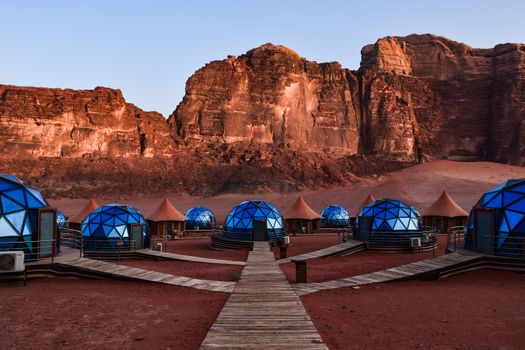
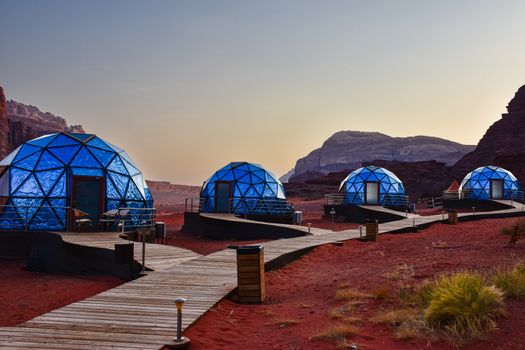
We set up camp near a colossal rock arch, the silence amplifying the vastness around us. That night, the stars were so brilliant, I spent hours just lying on a blanket, tracing constellations I barely recognized. The Bedouin hospitality is legendary, and while you can go full backcountry, many opt for Bedouin-run camps offering traditional meals, communal fires, and comfortable tents – some even with transparent roofs for stargazing! I opted for a mix, spending one night in a Bedouin camp and another wild camping with a local guide. The sheer scale and ancient feel of the place are humbling.
Why it feels alien:
Red sand, towering sandstone and granite rock formations eroded into bizarre shapes, vast open spaces, incredible night sky.
My personal tip: Hire a local Bedouin guide. They know the best hidden spots for camping, can lead you to ancient rock inscriptions, and their stories add an incredible layer of authenticity to the experience. Don't miss a sunrise hike up one of the smaller jebels (mountains) – the view is otherworldly.
Practical details:
* Best time to visit: Spring (March-May) or Autumn (September-November) for pleasant temperatures. Avoid summer's extreme heat.
* Camping options: Wild camping (with a guide), or numerous Bedouin camps offering varying levels of comfort (from basic tents to luxury glamping).
* Approx. Cost: A guided overnight tour including meals and a camp stay can range from $70-$150 USD per person.
* Instagram Moment: A silhouette shot of your tent against the Milky Way, or a wide-angle panorama capturing the endless red dunes.
2. Salar de Uyuni, Bolivia: Mirror to the Cosmos
Imagine waking up in a tent surrounded by an infinite expanse of white, where the sky merges seamlessly with the ground, creating a perfect, dizzying reflection. That’s Salar de Uyuni, the world's largest salt flat, and it’s truly a place that plays tricks on your mind. During the wet season (December-April), a thin layer of water transforms the salt pan into the world's largest natural mirror.
My group and I pitched our tents on a slightly raised "island" of rock, carefully chosen by our guide. As night fell, the mirror effect intensified. The stars above were reflected perfectly below, making it feel like we were floating in the middle of space, suspended between two cosmic realms. It was disorienting, exhilarating, and profoundly beautiful. The air is thin here, at over 3,600 meters (12,000 feet) above sea level, adding to the feeling of being far, far away from anything familiar.
Why it feels alien:
The vast, flat, reflective surface creates an optical illusion of endless sky, disorienting perspective. The sheer scale is mind-boggling.
My personal tip: Acclimatize to the altitude in Uyuni town for a day or two before your tour. Bring warm layers, as temperatures drop significantly at night, even in summer. And don't forget waterproof boots for walking in the shallow water!
Practical details:
* Best time to visit: Wet season (December-April) for the mirror effect. Dry season (May-November) for hexagonal salt patterns and clearer access to Incahuasi Island (cactus island).
* Camping options: Most overnight stays are part of multi-day jeep tours, often in basic "salt hotels" or designated camping areas. Wild camping is possible with an experienced guide.
* Approx. Cost: A 3-day, 2-night tour including accommodation, meals, and transport starts around $150-$250 USD per person.
* Instagram Moment: A "perspective" shot with tiny people and gigantic objects, or a stunning reflection of the sunset/sunrise with your tent in the foreground.
3. White Sands National Park, New Mexico, USA: A Gypsum Sea
Stepping onto the dazzling white dunes of White Sands National Park felt like landing on a moon made of sugar. These aren't your typical quartz sand dunes; they're composed of gypsum, creating a landscape that is both stark and incredibly beautiful. The dunes constantly shift and change, making each visit a unique experience.
I scored one of the backcountry camping permits, which are highly sought after. After a short hike into the heart of the dunes, away from the day-trippers, I found my designated spot. The silence here is profound, broken only by the whispers of the wind shaping the sand. As the sun set, the white dunes took on pastel hues of pink, purple, and orange before giving way to an unbelievably star-filled sky. There's something intensely peaceful about being surrounded by such pure, untamed beauty.
Why it feels alien:
The blinding white gypsum dunes are unlike any other desert, creating a stark, almost sterile, yet captivating environment.
My personal tip: Backcountry permits are limited and first-come, first-served. Arrive early or reserve well in advance if possible. Bring plenty of water (there's none available in the backcountry), and wear sunglasses – the glare is intense!
Practical details:
* Best time to visit: Spring and Fall offer milder temperatures. Summer can be scorching, winter nights can be very cold.
* Camping options: Ten primitive backcountry campsites are available on a first-come, first-served basis. Reservations are highly recommended if available (check NPS website).
* Approx. Cost: Park entrance fee ($25 per vehicle) + Backcountry camping permit ($3 per person).
* Instagram Moment: A lone figure silhouetted against the white dunes at sunset, or a close-up of the delicate ripple patterns in the gypsum.
4. Jökulsárlón Glacial Lagoon, Iceland: Land of Ice and Fire
Iceland is pretty much one giant alien planet, but Jökulsárlón Glacial Lagoon takes the cake. Here, colossal icebergs calve off the Vatnajökull glacier and drift slowly towards the sea, creating a surreal, ever-changing tableau of blues, whites, and even volcanic ash-streaked greys. The black sand beaches nearby (Diamond Beach) are strewn with ice chunks that sparkle like jewels.
While you can't wild camp directly beside the lagoon due to conservation efforts, there are several excellent campgrounds within a short drive (e.g., Skaftafell Campground in Vatnajökull National Park, or smaller private sites). My experience involved staying at a nearby campground and then driving back to the lagoon for sunrise and sunset. Watching the light play on the icebergs, hearing the creaks and groans of the ice, and seeing the northern lights dance above the lagoon – it felt like I was on a newly formed planet, where the elements were still shaping the landscape.
Why it feels alien:
Massive, ancient icebergs of varying shapes and colors, black volcanic sand, dramatic weather, and the potential for the Northern Lights.
My personal tip: Don't just visit during the day. Go for sunrise and sunset when the light is magical, and definitely try to catch the Northern Lights if visiting outside of summer. Bring a good telephoto lens for capturing the detail of the icebergs.
Practical details:
* Best time to visit: Summer for longer daylight hours and milder weather. Winter for potentially spectacular Northern Lights and even more dramatic ice formations.
* Camping options: Designated campgrounds nearby, such as Skaftafell Campground (part of Vatnajökull National Park). Advance booking is highly recommended during peak season.
* Approx. Cost: Campground fees typically range from $15-$25 USD per person per night.
* Instagram Moment: A long-exposure shot of the Northern Lights dancing over the icebergs, or a close-up of a sparkling iceberg on the black sand beach.
5. Atacama Desert, Chile: The Stargazer's Paradise
The Atacama Desert is one of the driest places on Earth, and its extreme aridity, combined with high altitude and minimal light pollution, makes it a prime location for stargazing. It’s home to some of the world’s most powerful observatories, and for good reason. Camping here isn't just about the landscape – it's about the sky.
I opted for a guided camping trip that took us deep into the Valle de la Luna (Moon Valley) and Valle de Marte (Mars Valley) near San Pedro de Atacama. The landscape of salt, sand, and rock formations sculpted by wind and water truly resembles lunar or Martian terrain. We set up our tents as the sun dipped, turning the valleys into a riot of reds, purples, and oranges. That night, lying under a blanket of stars so dense and clear, I could see the Magellanic Clouds with my naked eye. It was an overwhelming, humbling experience, truly connecting me to the vastness of the cosmos.
Why it feels alien:
Stark, arid landscape of salt flats, sand dunes, and volcanic rock formations. The incredibly clear night sky reveals galaxies and nebulae with astonishing clarity.
My personal tip: Take a stargazing tour with an experienced guide and telescope – they’ll point out constellations and nebulae you’d never find on your own. Also, bring layers; while days are hot, nights are freezing.
Practical details:
* Best time to visit: Year-round, but April-November offers clearer skies. Avoid full moon periods for optimal stargazing.
* Camping options: Designated campsites near San Pedro de Atacama, or guided backcountry camping tours. Some observatories offer overnight stays or glamping.
* Approx. Cost: Guided camping tours can range from $100-$300 USD, depending on duration and inclusions. Campsite fees are typically $10-$20 USD.
* Instagram Moment: A wide-angle shot of the Milky Way arching over the dramatic desert landscape, or a silhouette of your tent against a fiery sunset.
6. The Pinnacles Desert, Nambung National Park, Australia: Ancient Stone Sentinels
Imagine a landscape dotted with thousands of ancient limestone pillars rising eerily from a golden desert floor. That’s The Pinnacles Desert, and it feels like a scene from an archaeological dig on an uncharted planet. These natural formations, some reaching several meters high, were formed over thousands of years as sea shells broke down into lime-rich sand and wind/rain eroded the surrounding softer material.
While you can't camp within the Pinnacles Desert itself, the nearby Nambung National Park offers the excellent Hangover Bay campground, and there are several options in Cervantes and Jurien Bay. I camped at Hangover Bay, a short drive from the Pinnacles. Waking up early, I drove into the desert before sunrise. Watching the first rays of light illuminate the ancient pillars, casting long, dramatic shadows, was breathtaking. The silence, broken only by the chirping of insects, added to the surreal atmosphere. It felt like I was exploring the ruins of an ancient, long-lost civilization.
Why it feels alien:
Thousands of bizarre limestone pillars rising from the sand, creating an eerie, almost man-made, yet entirely natural, landscape.
My personal tip: Visit at sunrise or sunset for the best light and to avoid the crowds. The shadows cast by the pillars are incredibly dramatic. Keep an eye out for local wildlife like kangaroos and emus.
Practical details:
* Best time to visit: Spring (September-November) for wildflowers and milder weather, or Autumn (March-May).
* Camping options: Nambung National Park has designated campgrounds like Hangover Bay (basic facilities). Nearby towns like Cervantes offer more amenities.
* Approx. Cost: National Park entrance fee ($15 per vehicle). Campground fees typically around $11 USD per adult per night.
* Instagram Moment: A creative shot using the pillars for forced perspective, or a panoramic view of the desert floor dotted with these strange formations.
7. Valley of Fire State Park, Nevada, USA: Crimson Canyons of Another World
Just an hour's drive from the neon glow of Las Vegas lies a landscape so dramatically different, it feels like it belongs in a sci-fi movie. Valley of Fire State Park is Nevada’s oldest state park, renowned for its vibrant red Aztec sandstone outcrops that appear to be ablaze when the sun hits them just right. The formations are incredibly intricate, sculpted by millions of years of wind and water into arches, canyons, and vast, undulating waves of rock.
I spent a night at the Arch Rock Campground, one of two excellent campgrounds in the park. My tent was nestled amongst the fiery red rocks, and as the stars emerged, the contrast between the dark sky and the glowing crimson landscape was mesmerizing. Hiking through the Slot Canyon in the morning felt like exploring a passage on an alien planet, the narrow walls towering above, revealing ancient petroglyphs left by early inhabitants. It’s a powerful reminder of Earth’s geological artistry.
Why it feels alien:
Brilliant red, orange, and pink sandstone formations, intricate erosion patterns, and ancient petroglyphs that add to the sense of stepping back in time or onto another world.
My personal tip: Hike early in the morning or late in the afternoon to avoid the intense midday heat and for the best light for photography. Don't miss the Fire Wave and Elephant Rock. Book your campsite well in advance, especially during peak seasons.
Practical details:
* Best time to visit: Fall, Winter, and Spring (October-April) for comfortable hiking temperatures. Summer is extremely hot.
* Camping options: Two designated campgrounds, Arch Rock and Atlatl Rock, offer basic facilities (restrooms, water, shade shelters). First-come, first-served or reservations via ReserveAmerica.
* Approx. Cost: Park entrance fee ($10 per vehicle). Campsite fees are typically $20 USD per night (plus entrance fee).
* Instagram Moment: A wide-angle shot of the fiery red sandstone against a brilliant blue sky, or a dramatic selfie framed by one of the park's natural arches.
Beyond the Earthly: Practical Tips for Your Alien Camping Expedition
Venturing into these extraordinary landscapes requires a bit more planning than your average backyard campout. Here’s how to make sure your otherworldly adventure is safe, sustainable, and truly mind-blowing:
- Do Your Homework: Research permits, booking requirements, local regulations, and potential hazards for each location thoroughly. Some places require guides, others have strict "Leave No Trace" policies (which should always be followed!).
- Pack for Extremes: Many of these locations are deserts, high altitudes, or glacial environments. Expect significant temperature swings between day and night. Pack layers, a high-quality sleeping bag rated for cold temperatures, and appropriate sun protection (hat, sunglasses, high SPF sunscreen).
- Water is Life: Always carry more water than you think you'll need, especially in arid environments. Water sources can be scarce or non-existent.
- Navigation is Key: GPS, maps, and compass skills are crucial, especially if you're venturing into remote areas. Cell service can be unreliable or non-existent. Consider a satellite communication device for emergencies.
- Leave No Trace: This is paramount. Pack out everything you pack in. Stay on designated trails. Respect wildlife and natural formations. Leave these places as pristine as you found them for future "alien" explorers.
- Capture the Cosmos: For stargazing, bring a tripod and learn some basic long-exposure photography techniques. A headlamp with a red light setting will help preserve your night vision.
- Embrace the Silence: One of the most profound aspects of these locations is the quiet. Take time to simply sit, listen, and absorb the incredible atmosphere.
Ready for Liftoff?
These seven incredible camping spots are just a glimpse into the bizarre and beautiful landscapes our Earth has to offer. They challenge our perceptions, inspire awe, and remind us of the incredible diversity and raw power of nature. From the red dunes of Jordan to the icy lagoons of Iceland, each offers a unique opportunity to disconnect from the familiar and connect with something truly extraordinary.
So, what are you waiting for? Dust off your tent, pack your sense of adventure, and prepare for a journey that will blow your mind and fill your camera roll with images that look straight out of a sci-fi epic. Which "alien planet" will you visit first? Share your dream destination in the comments below, and don't forget to tag Tripsora in your out-of-this-world photos!
---