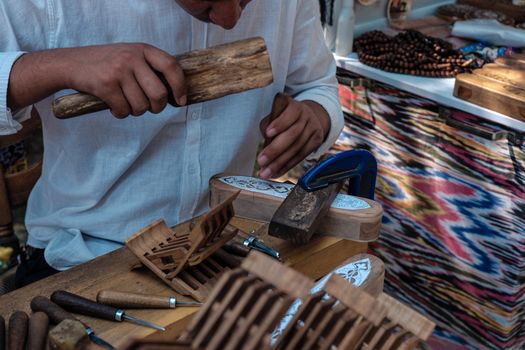
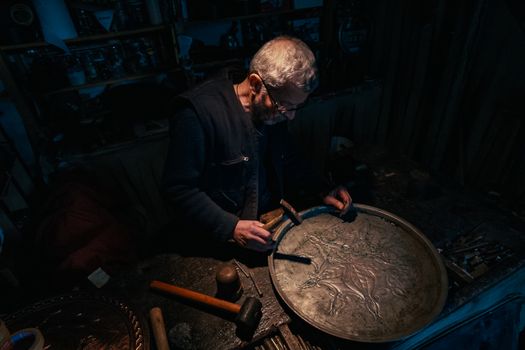
Remember that feeling of flipping through a travel brochure, seeing the same iconic landmarks, the same curated experiences? I do. For years, I chased those postcard moments, ticking off bucket list items like a dutiful tourist. But then, on a sweltering afternoon in a quiet alley of Marrakech, something shifted. I’d ducked into a small, unassuming doorway, escaping the sensory overload of the souk, and found myself in a dimly lit room filled with the scent of cedarwood. An elderly man, his hands gnarled with age but nimble with purpose, was carving intricate patterns into a wooden panel. There were no tour groups, no flashing cameras, just the rhythmic tap-tap-tap of his chisel. He looked up, smiled, and beckoned me closer. I watched, mesmerized, for what felt like hours. That day, I bought not a mass-produced trinket, but a small, imperfect piece he had just finished – a tangible piece of history, connection, and a craft I knew almost nothing about.
That moment ignited a new quest for me: to find the real stories, the real hands, the real crafts that locals often keep close to their hearts, away from the commercial glare of tourism. These aren't secrets kept out of malice, but often out of a desire to preserve authenticity, to protect ancient techniques, or simply because they cater to a clientele who truly understands and respects their art. They are the workshops where you don't just buy a souvenir; you become part of the story, learning a skill that has spanned generations. And trust me, these are the experiences that transform a trip into an odyssey.
The Lure of the Unseen – Why These Workshops Matter
The phrase "locals don't want tourists to know" might sound a little exclusive, even a bit naughty, but it really speaks to a deeper truth: the desire for genuine connection. In an age of over-tourism and homogenized experiences, finding a truly authentic craft workshop is like unearthing buried treasure. These are places where:
- Authenticity Reigns: You're learning from masters whose skills are inherited, not acquired from a quick online course. The tools are often traditional, the methods ancient.
- Cultural Immersion is Deep: You're not just observing; you're participating. You're learning about the history, philosophy, and cultural significance woven into every stitch, stroke, or carve.
- You Support Ethically: These small, often family-run workshops directly benefit the local economy, helping to preserve livelihoods and traditional practices that might otherwise fade away.
- Your Souvenir is a Story: Instead of a generic item, you take home something you made with your own hands – a tangible memory infused with personal effort and the spirit of the place.
- It's Slow Travel at Its Best: These experiences force you to slow down, be present, and engage with your surroundings in a meaningful way, far from the hurried pace of typical sightseeing.
My journey to uncover these hidden gems has taken me to bustling markets and tranquil villages, down cobbled alleys and up dusty paths. Each time, the reward has been immeasurable. Here are a few of my most cherished discoveries, places where you too can pull back the curtain and learn an ancient craft.
Oaxaca, Mexico – The Whispers of Natural Dyeing and Weaving
Stepping into Teotitlán del Valle, a Zapotec village just outside Oaxaca City, feels like entering a living museum. The air hums with the soft clack of looms and the earthy scent of natural dyes. While some workshops here cater to tour buses, the true magic lies in the smaller, family compounds tucked away on side streets.
I found myself at the home of the Santiago family, introduced by a local B&B owner who understood my quest for authenticity. Dona Julia, a woman whose hands told stories of a thousand textiles, welcomed me with a warm smile and a cup of tejate. Her family has been weaving and dyeing for generations, using techniques passed down from their Zapotec ancestors. The "secret" here isn't malicious; it's simply that their small scale and traditional methods aren't geared for mass tourism. They prefer to connect with individuals who genuinely appreciate their art.
My half-day workshop began with the vibrant world of natural dyes. Dona Julia, with her daughter translating occasionally, showed me how to extract brilliant reds from cochineal insects, rich blues from indigo, and sunny yellows from marigolds. It was a messy, fascinating process, stirring bubbling pots of natural ingredients. Then came the weaving. Sitting at a traditional backstrap loom, feeling the tension of the threads against my body, I learned the basic rhythm of Zapotec weaving. It’s a slow, meditative dance of warp and weft, each thread a testament to patience and precision. I didn't leave with a masterpiece, but with a small, imperfect coaster that I still treasure, imbued with the spirit of the Santiago family and the ancient colors of Oaxaca.
- The Craft: Zapotec natural dyeing and backstrap weaving.
- Why it's "Hidden": Many family workshops prioritize quality and tradition over commercial scale. They often operate from private homes and rely on word-of-mouth.
- Workshop Experience: Hands-on dye preparation, understanding natural materials, basic weaving techniques on a traditional loom. It's an intimate, immersive experience.
- Practical Details:
- Location: Teotitlán del Valle, Oaxaca, Mexico. Easily accessible by local bus or taxi from Oaxaca City.
- Duration: Half-day (approx. 3-4 hours) for an introductory session.
- Cost: ~$50-$80 USD, often includes materials and a small piece you create. Prices vary; always confirm directly.
- How to Find: Ask your guesthouse or a trusted local guide. Look for small, hand-painted signs off the main road, or ask market vendors.
- Instagram-worthy: The vibrant colors of dye pots, hands working with wool and natural materials, intricate patterns on looms, the warm smiles of the artisans.
Kyoto, Japan – The Art of Kintsugi: Repairing with Gold
In the quiet lanes of Kyoto's Gion district, away from the bustling geisha spotting tours, lies a profound philosophy embodied in a delicate craft: Kintsugi. This ancient Japanese art form involves repairing broken pottery with lacquer dusted or mixed with powdered gold, silver, or platinum. The break isn't hidden; it's celebrated, becoming part of the object's unique history.
The workshops for Kintsugi are typically small, serene, and often require an appointment. They don't advertise on giant billboards because the art demands a certain reverence and patience. I found a small studio, tucked behind a traditional teahouse, run by a soft-spoken sensei (master) named Kaito. He didn't speak much English, but his hands, steady and precise, communicated volumes.
My session was less about creating a perfect piece and more about understanding the philosophy. Kaito-sensei provided a small, pre-broken ceramic bowl. We carefully cleaned the edges, then applied layers of traditional Japanese lacquer (urushi), a natural tree sap. This process is slow, requiring immense patience as each layer dries. Finally, came the magic: dusting the still-tacky lacquer with iridescent gold powder, transforming the "flaw" into a shimmering vein of beauty. It was a meditative process, a lesson in embracing imperfection, and a profound cultural insight into the Japanese aesthetic of wabi-sabi.
- The Craft: Kintsugi (golden joinery), the art of repairing broken pottery with precious metals.
- Why it's "Hidden": It's a highly specialized and respected art form, not a mass-production craft. Workshops are often small, by appointment, and cater to those seeking a deeper, more reflective experience.
- Workshop Experience: A meditative, focused session learning the basic steps of lacquer application and gold dusting, often on a pre-broken piece. It’s more about the process and philosophy than a finished product.
- Practical Details:
- Location: Kyoto, Japan (often in Gion or quieter artisan areas).
- Duration: 2-4 hours for an introductory experience.
- Cost: ~$80-$150 USD, usually includes materials and a practice piece.
- How to Find: Search online for "Kintsugi workshops Kyoto" but look for smaller, independent studios. Ask your ryokan (traditional inn) host or a specialized cultural guide for recommendations. Booking well in advance is essential.
- Instagram-worthy: Close-ups of delicate gold lines, hands carefully applying lacquer, serene workshop aesthetics, the beautiful imperfection of the finished piece.
Fès, Morocco – Unearthing the Secrets of Tadelakt Plaster
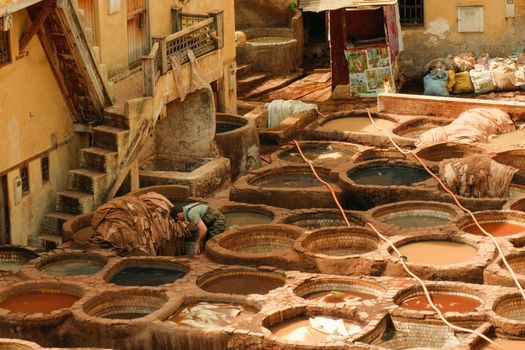
Fès, with its labyrinthine Medina, is a city steeped in ancient traditions. While the tanneries and ceramic factories are popular tourist stops, one of its most impressive crafts is often unseen by visitors: Tadelakt. This waterproof, lime-based plaster, polished with river stones and black soap, gives Moroccan hammams, riads, and palaces their distinctive, smooth, and sensual finish. It’s an ancient technique, labor-intensive and demanding, and artisans are often protective of their trade secrets.
My search for a Tadelakt workshop led me deep into the Medina, guided by a local friend. We eventually found a small, unmarked door that opened into a courtyard where two men were meticulously mixing lime, sand, and pigments. The air was thick with a fine dust, and the rhythmic sound of stones rubbing against plaster filled the space. This wasn't a commercial setup; it was a traditional workshop where apprentices learned from masters.
The artisan, a burly man named Omar, agreed to let me observe and even try my hand. The work was far more physical than I imagined. Mixing the precise ratios, applying the thick plaster with a trowel, then the painstaking process of polishing it with a smooth river stone until it gleamed – it was an art of strength, patience, and touch. Omar explained that the "secret" of Tadelakt lies not just in the ingredients, but in the specific feel for the material, the pressure of the stone, and the climate. It’s something learned through years of apprenticeship, not a weekend course. I left with aching arms but a profound respect for this ancient, living art form.
- The Craft: Tadelakt, a waterproof, polished lime plaster used in traditional Moroccan architecture.
- Why it's "Hidden": It's a highly specialized, physically demanding, and time-consuming craft. Artisans are often protective of their generational techniques, and workshops are typically not set up for casual tourist visits.
- Workshop Experience: Observing the mixing and application process, and possibly trying a small section under expert guidance. It’s an eye-opening experience into the physicality and precision of the craft.
- Practical Details:
- Location: Fès, Morocco (deep within the Old Medina).
- Duration: A full day or even multi-day for a more comprehensive understanding.
- Cost: ~$100-$200 USD per day, depending on the artisan and inclusions (often includes lunch). This is a more exclusive experience.
- How to Find: This is one where a local connection is almost essential. Ask your riad owner, a trusted local guide, or inquire discreetly in the artisan souks. Be prepared for a more rustic, less formal setup.
- Instagram-worthy: Textured walls, hands applying and polishing plaster, traditional tools, the transformation of raw materials, the earthy tones of the finished Tadelakt.
Bali, Indonesia – The Sacred Dance of Silver Filigree
Bali is renowned for its vibrant arts scene, and while many silver workshops in Celuk village cater to the tourist market, the true magic of Balinese silver filigree often hides in plain sight. This delicate craft, where fine threads of silver are twisted, curled, and soldered into intricate patterns, holds deep cultural and spiritual significance, often depicting Hindu deities or natural elements.
My journey led me to a small, family compound off a dusty side road in Celuk, far from the bustling showrooms. A young artist named Wayan, whose family had been silversmiths for generations, welcomed me. He explained that while the larger workshops focus on speed and volume, his family's pride was in the painstaking detail and traditional motifs of true filigree, a skill that takes years to master.
In his open-air workshop, surrounded by the gentle clang of hammers and the faint smell of melting silver, I spent a half-day learning the basics. Wayan patiently showed me how to draw and flatten silver wire, how to painstakingly curl it into tiny spirals and intricate shapes, and then, with a blowtorch and steady hand, solder them onto a base. It was a test of patience and fine motor skills. I left with a small, slightly lopsided but utterly unique silver pendant, a tangible piece of Balinese artistry and a deeply personal memory. The real "secret" here is finding the artisans who still prioritize the sanctity of the craft over quick sales.
- The Craft: Balinese silver filigree jewelry making.
- Why it's "Hidden": Many workshops are commercialized. The truly traditional, intricate filigree taught by masters is often found in smaller, family compounds that are not heavily advertised to mass tourism.
- Workshop Experience: Learning to draw, flatten, shape, and solder fine silver wire into intricate patterns, creating a small piece of jewelry.
- Practical Details:
- Location: Celuk village, Bali, Indonesia (look for workshops off the main road).
- Duration: Half-day (approx. 3-4 hours).
- Cost: ~$40-$80 USD, usually includes silver for a small piece you create.
- How to Find: Ask your homestay owner in Celuk or Ubud for a recommendation for a traditional silversmith. Look for smaller, less flashy signs.
- Instagram-worthy: Sparkling silver wire, intricate designs, focused hands at work, traditional tools, your own handmade creation shimmering in the Balinese sun.
Practical Tips for Unlocking Your Artisan Adventure
Finding these hidden workshops requires a little more effort than booking a standard tour, but the rewards are exponentially greater. Here's how to increase your chances of uncovering these cultural treasures:
- Start with Local Connections: This is your golden ticket. Ask your guesthouse owner, the host of your Airbnb, a trusted local guide, or even a friendly shopkeeper. Explain your genuine interest in learning a traditional craft, not just buying something. Word-of-mouth is powerful.
- Learn a Few Local Phrases: A simple "Hello," "Thank you," and "Do you know of a local artisan who teaches [craft]?" in the local language goes a long way in showing respect and opening doors.
- Research, but Don't Over-Plan: Do some preliminary online research for specific crafts in a region, but be prepared for serendipity. The best discoveries often happen when you're open to the unexpected.
- Be Patient and Respectful: These aren't fast-food experiences. Artisans are often busy with their work and may not be set up for instant tourist interaction. Approach with humility, patience, and genuine curiosity. If you're turned away, don't take it personally.
- Budget Realistically: These are often private or semi-private lessons, and the materials can be precious. While sometimes more expensive than a typical souvenir, consider it an investment in a unique skill and cultural exchange.
- Support Ethically: Pay fairly for the workshop and any materials. Don't haggle aggressively, as this devalues their skill and tradition. Your participation directly supports their livelihood.
- Dress Appropriately: You'll likely be in a working environment, possibly getting dirty. Dress comfortably and respectfully for the local culture.
- Be Open to Rustic Conditions: These aren't always pristine studios. Embrace the authenticity – the dust, the simple tools, the humble settings are all part of the experience.
- Document Responsibly: Always ask permission before taking photos, especially of people. A small gesture of gratitude (like sharing a photo with them if possible) is always appreciated.
- Embrace the Unexpected: Language barriers, different teaching styles, and cultural nuances are all part of the adventure. Let go of expectations and simply absorb the experience.
Your Hands, Their Heritage, Your Story
Learning an ancient craft from a local master is more than just a travel experience; it’s an act of cultural preservation, a personal journey of discovery, and a profound connection to humanity's shared heritage. You don't just leave with a handmade souvenir; you leave with a story etched into your memory, a skill in your hands, and a deeper understanding of the world. These are the moments that make travel truly transformative, the "secrets" that, once shared with respect and appreciation, enrich us all.
Which ancient craft will you uncover next? Will it be the rhythmic beat of a loom in Peru, the delicate brushstrokes of a calligrapher in Vietnam, or the earthy scent of clay in a remote Italian village? Share your dreams in the comments below, or better yet, start planning your own artisan adventure today and write your own unforgettable story. The world of hidden crafts is waiting for your touch.
---