Unearthing the Past: Why Learning an Ancient Trade is Your Next Travel Obsession
There's a secret language spoken in the quiet corners of the world, whispered through the rhythmic tap of a hammer, the gentle hum of a spinning wheel, or the earthy scent of clay. It’s the language of ancient trades, skills passed down through generations, often overlooked by the selfie-snapping crowds. I’m talking about the kind of authentic travel experiences that don't make it into the glossy brochures – the ones locals cherish and, quite frankly, don't necessarily want every tourist to know about.
My journey into this world began unexpectedly in a tiny alleyway in Oaxaca, Mexico. I was chasing the scent of mole, but instead stumbled upon an open doorway where an elderly woman, her hands stained indigo, was patiently teaching a small group how to dye textiles using natural pigments. The air buzzed with quiet concentration and shared smiles. I watched, mesmerized, for what felt like hours, a deep curiosity stirring within me. It wasn't just about the beautiful fabric; it was about the connection, the story, the sheer magic of creating something with your own hands, guided by someone whose ancestors had done the same for centuries.
That day sparked an obsession. I realized that the most profound souvenirs aren’t bought; they’re made. They're the skills you acquire, the stories you hear, and the tangible piece of culture you carry home. And guess what? You don't need weeks, or even days, to learn the basics of these incredible ancient trades. Many can be mastered enough in just a few hours to create something truly special, leaving you with a profound sense of accomplishment and a deeper appreciation for the place you're visiting.
So, ditch the typical tourist traps. Let's dive into some incredible ancient trades you can learn in a day – experiences that will transform your trip from a vacation into a true adventure.
1. The Indigo Magic: Dyeing Your World in Chiang Mai, Thailand
Imagine dipping a plain white cloth into a vat of murky liquid, only to pull it out moments later, watch it turn from green to a vibrant, mesmerizing blue as it oxidizes in the sun. This is the magic of indigo dyeing, an ancient craft practiced for millennia across Asia, Africa, and the Americas.
My first hands-on indigo experience was just outside Chiang Mai, Thailand, nestled in a lush, organic farm. I’d heard whispers of a place where local farmers taught traditional dyeing techniques, far from the tourist markets. After a bit of asking around (and a helpful tip from my guesthouse owner), I found myself at a rustic, open-air workshop.
The workshop, run by a soft-spoken woman named Mae, began with a brief history lesson on the indigo plant and the fermentation process. Then, it was straight to work. We learned simple shibori techniques – folding, twisting, and tying fabric with string and rubber bands to create intricate patterns. My hands quickly became stained a beautiful sapphire blue, a badge of honor.
The real thrill came with the dipping. The vat, a deep ceramic pot, held a living organism – the indigo dye bath. Mae taught us the proper way to submerge the fabric, gently squeezing out air bubbles, and then the slow, deliberate lift. As the fabric met the air, it transformed before our eyes, a chemical ballet of green turning to blue. My first piece, a simple tote bag, emerged with a surprisingly elegant starburst pattern. It wasn't perfect, but it was mine.
Practical Tips:
* Location: Look for organic farms or eco-tourism initiatives outside Chiang Mai city center. Some guesthouses can connect you. I paid around 1200 THB (approx. $35 USD) for a half-day session including materials (a scarf or tote bag).
* Duration: Half-day (3-4 hours) is usually enough to learn basic techniques and dye 1-2 items.
* What to Bring: Wear old clothes and shoes you don't mind getting stained. Sunscreen and insect repellent are a good idea.
* Instagram-Worthy Moment: The dramatic color change of the fabric as it oxidizes in the sun. #IndigoMagic #ChiangMaiCrafts
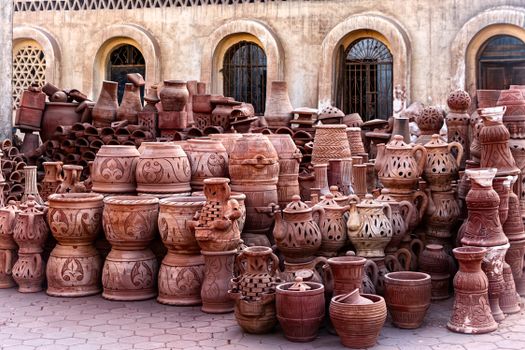
2. Hands in History: Pottery on the Rooftops of Fes, Morocco
There’s something profoundly grounding about working with clay, a material that has shaped human civilization since its very dawn. In the labyrinthine medina of Fes, Morocco, where centuries-old traditions still thrive, you can find workshops tucked away where the art of pottery is kept alive.
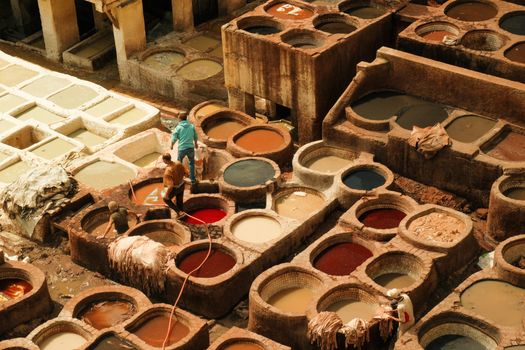
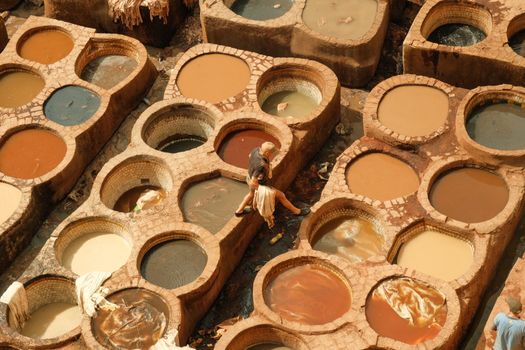
My Fes pottery adventure wasn't planned. I was lost – delightfully so – in the Chouara Tannery district, trying to find a specific spice shop. Instead, I heard the rhythmic whir of a potter's wheel and the gentle slap of clay. Following the sound, I found a multi-story building, its rooftop terrace offering breathtaking views of the medina. Downstairs, in a dimly lit workshop, a group of men were expertly throwing pots.
I approached a younger man, Hassan, who was meticulously painting intricate patterns on a tagine lid. With a mix of broken French and gestures, I asked if it was possible to try. He smiled, led me to a small, unused wheel, and with surprising patience, showed me the basics. It wasn't the electric wheel I'd used in a college art class; this was a kick wheel, powered by foot. It required a different kind of rhythm, a connection between body and clay that felt ancient.
My first attempts were disastrous, lumps of clay collapsing under my clumsy hands. But Hassan, with a twinkle in his eye, would gently reshape the clay, demonstrating the subtle pressure points, the dance of the fingers. After an hour of joyful struggle, I managed a small, wobbly bowl that resembled a misshapen cup. It was fired later that week and shipped to me, a constant reminder of the dusty, magical city and the kindness of a stranger.
Practical Tips:
* Location: Look for workshops in the Fes medina, especially around the Chouara Tannery or Ain Nokbi pottery quarter. Ask your riad host for recommendations; they often know local artisans who offer informal lessons. Expect to pay around 300-500 MAD (approx. $30-50 USD) for a 2-3 hour session.
* Duration: 2-3 hours is perfect for learning basic hand-building or trying a kick wheel.
* What to Bring: Clothes you don't mind getting messy.
* Instagram-Worthy Moment: Your hands covered in clay, the backdrop of the Fes medina from a rooftop workshop. #FesPottery #MoroccanCrafts
3. Weaving Wonders: Crafting a Basket in the Balinese Countryside
From humble rice baskets to intricate offerings, weaving is an integral part of Balinese life and culture. It’s a skill that teaches patience, rhythm, and an appreciation for natural materials. And the best part? Creating a simple, functional piece in a single day is entirely achievable.
My weaving journey took me deep into the rice paddies outside Ubud, Bali. I’d booked a workshop through a local community center that supported women artisans in rural villages. The drive itself was an experience, passing emerald-green fields and smiling villagers.
The workshop was held in an open-sided pavilion, surrounded by the sounds of nature. Our instructor, Ibu Wayan, spoke little English, but her hands were a language unto themselves. We started with strips of dried pandan leaves, softened and dyed with natural pigments. The initial steps felt like a complex puzzle: how to interlock the strips to form a sturdy base? Ibu Wayan demonstrated slowly, her fingers moving with practiced grace, and then patiently guided each of us.
The communal aspect was wonderful. We sat together, a small group of travelers and local women, sharing quiet conversation and bursts of laughter as we fumbled with the leaves. My fingers, initially clumsy, slowly found their rhythm. The repetitive motion was meditative, and the scent of the dried leaves was surprisingly calming. By the end of the half-day, I had woven a small, perfectly imperfect cylindrical basket, big enough for jewelry or keepsakes. It was a testament to patience and the power of tradition.
Practical Tips:
* Location: Look for community-based workshops or agritourism experiences around Ubud, Bali. Many guesthouses or local guides can arrange this. Expect to pay around 300,000-500,000 IDR (approx. $20-35 USD) for a half-day session.
* Duration: Half-day (3-4 hours) for a simple basket or placemat.
* What to Bring: Mosquito repellent, a hat, and an open mind.
* Instagram-Worthy Moment: The vibrant colors of the natural materials, your hands mid-weave, surrounded by lush Balinese scenery. #BaliWeaving #PandanCrafts
4. The Art of the Spoon: Carving a Connection in the Swedish Forests
There’s a quiet satisfaction in taking a raw piece of wood and transforming it into something beautiful and functional. Spoon carving, a traditional craft with roots in countless cultures (especially strong in Scandinavia), is surprisingly accessible for beginners and deeply meditative.
My craving for a truly unique, hands-on experience led me to a small, family-run craft school nestled deep in the forests of Dalarna, Sweden. I'd found it through a local tourism board website, focusing on sustainable and traditional crafts. It was a full-day workshop, but the skills learned felt timeless.
Our instructor, a bearded, gentle giant named Lars, introduced us to the tools: a carving axe, a straight knife, and a hook knife. He spoke passionately about respecting the wood, understanding its grain, and letting the material guide your hand. We started with a pre-cut spoon blank of birch, its fresh scent filling the air.
The initial axe work was surprisingly empowering, carefully roughing out the shape. Then came the intricate knife work, learning different grips and cuts to refine the bowl and handle. Lars emphasized safety, technique, and patience. It wasn't about speed; it was about connection to the wood, to the process.
Hours flew by. My hands, initially stiff, grew more confident. The repetitive scraping and shaping created a surprisingly smooth surface. By late afternoon, I held a beautifully rustic wooden spoon, its imperfections telling the story of my learning. It wasn't just a utensil; it was a piece of the Swedish forest, imbued with my effort and Lars’s wisdom. I still use it every day.
Practical Tips:
* Location: Look for craft schools or forest retreats in rural Sweden (e.g., Dalarna, Småland), Norway, or even parts of the UK or North America with strong woodworking traditions. These are often full-day experiences, costing around 800-1200 SEK (approx. $75-110 USD), including tools and materials.
* Duration: A full day is ideal for a good introduction and finishing a basic spoon.
* What to Bring: Comfortable, sturdy shoes, layers of clothing (especially if outdoors), and a willingness to focus.
* Instagram-Worthy Moment: Your hands carefully shaping the wood, the rustic tools, and the finished, unique spoon. #SpoonCarving #SwedishCrafts
5. Whispers on Paper: The Delicate Art of Washi in Kyoto, Japan
In a world dominated by digital screens, there's a profound beauty in the tactile experience of handmade paper. Washi, traditional Japanese paper, is renowned for its strength, delicate texture, and longevity. Learning its ancient secrets, even for a few hours, is a deeply respectful immersion into Japanese artistry.
My encounter with washi began in a quiet, unassuming workshop in Kyoto, a city brimming with artisan traditions. I'd found "Kamisuki-ya" (Paper Making House) through a small brochure at my ryokan, one of those places you'd never stumble upon without a local hint.
The workshop was run by a soft-spoken master, Mr. Tanaka, whose family had been making washi for generations. He explained the laborious process: the meticulous preparation of kozo (mulberry) fibers, the careful beating and rinsing, and finally, the delicate act of forming the sheets.
The hands-on part involved dipping a screen (a suketa) into a vat of milky pulp, gently shaking it to distribute the fibers evenly, and then carefully lifting it, allowing the water to drain. It required a steady hand and a surprising amount of grace. My first few attempts resulted in lopsided, uneven sheets, but Mr. Tanaka patiently guided my movements, showing me how to achieve a uniform thickness.
The sheets were then pressed and carefully peeled off onto drying boards. Watching my delicate paper dry, knowing the centuries of tradition behind each fiber, was truly magical. I left with a handful of my own handmade washi sheets, each one unique, each whispering a story of ancient craft and quiet dedication.
Practical Tips:
* Location: Look for traditional craft centers or small family workshops in Kyoto (e.g., around Arashiyama or the Nishijin textile district) or other craft-rich areas like Mino. Expect to pay around 3,000-5,000 JPY (approx. $20-35 USD) for a 2-3 hour introductory session.
* Duration: 2-3 hours is sufficient for learning the basic sheet-forming process.
* What to Bring: Just your curiosity. Aprons are usually provided.
* Instagram-Worthy Moment: The delicate wet paper on the screen, the serene workshop environment, your unique handmade sheets. #WashiPaper #KyotoCrafts
6. The Daily Bread: Baking Ancient Grains in Matera, Italy
Food is perhaps the most universal ancient trade, and few things connect you to a culture like breaking bread. In Matera, Italy, a UNESCO World Heritage site famous for its ancient cave dwellings (Sassi), the tradition of baking bread with local grains is deeply ingrained.
I stumbled upon my bread-making opportunity in Matera quite literally by following my nose. The irresistible aroma of freshly baked bread led me to a small forno (bakery) tucked into a Sassi cave. Inside, a bustling family was preparing their morning loaves. I inquired about a class, and after some enthusiastic gesturing, the nonna (grandmother) agreed to let me join for a few hours the next day.
It wasn't a formal class, but an immersion. I learned how to mix the local durum wheat flour with a centuries-old sourdough starter, passed down through generations. My hands kneaded the dough, feeling its elasticity, its life. Nonna showed me how to shape the traditional Matera bread, with its distinctive 'horns,' and how to score it with a simple cross.
The highlight was sliding my own shaped loaf into the ancient, wood-fired oven. The heat was intense, the smell intoxicating. While the bread baked, we shared strong coffee and stories, bridging language barriers with smiles and shared passion for food. Pulling out my golden, crusty loaf, still warm and fragrant, was an unparalleled joy. I ate half of it on the spot. It was more than just bread; it was history, family, and the soul of Matera, all baked into one perfect bite.
Practical Tips:
* Location: In Matera, look for small, family-run forni (bakeries) in the Sassi. Agriturismos in the surrounding Basilicata region also often offer bread-making experiences. Expect to pay around 50-80 EUR (approx. $55-90 USD) for a half-day experience, often including tasting.
* Duration: Half-day (3-4 hours) for mixing, kneading, shaping, and baking a traditional loaf.
* What to Bring: An empty stomach and a willingness to get floury!
* Instagram-Worthy Moment: Your hands kneading dough, the rustic cave bakery, and your golden, freshly baked loaf. #MateraBread #AncientGrains
Your Crafty Adventure: Practical Tips for Unearthing Hidden Workshops
So, how do you find these hidden gems, these experiences that locals might not immediately advertise to every tourist? It's all about going beyond the obvious.
- Ask Your Guesthouse/Airbnb Host: This is your secret weapon. Locals know best. Tell them you're interested in learning a traditional craft, not just buying a souvenir. They often have personal connections to artisans.
- Visit Local Tourism Offices (the small ones!): While big offices might push mainstream tours, smaller, regional ones often cater to niche interests and can connect you with local craft guilds or community workshops.
- Explore Airbnb Experiences & GetYourGuide (with a filter): While these platforms can be touristy, use keywords like "traditional workshop," "artisan class," "local craft," or "cultural experience" to unearth smaller, more authentic offerings. Read reviews carefully.
- Look for Small Signs & Open Doors: Wander off the main streets. Many artisans have workshops on quiet side alleys. If you see an open door and people working, politely inquire. A smile and a few words in the local language (even if translated by an app) go a long way.
- Search Local Craft Guilds or Associations Online: Before you travel, do some research. Many traditional crafts have local associations dedicated to preserving them. Their websites might list workshops or master artisans.
- Be Flexible & Respectful: These aren't always formal, scheduled classes. Be open to impromptu lessons, different teaching styles, and working around the artisan's schedule. Always be respectful of their time, their craft, and their pricing. Bargaining is generally not appropriate for educational experiences.
- Dress for the Job: Wear comfortable clothes you don't mind getting dirty or stained.
- Embrace the Imperfection: Your first piece won't be a masterpiece, and that's the beauty of it. The value is in the learning, the effort, and the story behind it.
Beyond the Souvenir: Why These Experiences Matter
Learning an ancient trade in a day isn't just about coming home with a unique souvenir (though that's a fantastic bonus!). It's about:
- Deeper Cultural Immersion: You're not just observing a culture; you're participating in it, understanding its rhythms and traditions firsthand.
- Connecting with Locals: These workshops offer genuine interactions with artisans, often leading to heartwarming conversations and shared laughter.
- Mindfulness and Presence: The focus required for these crafts pulls you away from distractions, grounding you in the present moment.
- A Sense of Accomplishment: There's immense satisfaction in creating something tangible with your own hands.
- Supporting Local Economies: Your participation directly supports local artisans and helps preserve ancient skills for future generations.
So, the next time you plan a trip, think beyond the checklist. Seek out the quiet workshops, the hidden studios, the family-run businesses where ancient hands still work their magic. Discover a skill, forge a connection, and create a memory that will last far longer than any postcard. What ancient trade will you master on your next adventure?
---