Beyond the Souvenir Shop: Unlock Ancient Trades You Can Learn in a Day
I used to be that traveler. The one who meticulously planned my itinerary, raced from landmark to landmark, snapped a hundred photos, and inevitably ended up in a souvenir shop, picking out something mass-produced that would inevitably gather dust on a shelf. Don’t get me wrong, seeing iconic sights is incredible, but after years of ticking off bucket lists, I started feeling… a little empty. I craved something deeper, something that would connect me not just to a place, but to its soul, its history, its people.
That craving led me down an unexpected path: the world of ancient trades. Imagine returning from a trip not just with a pretty trinket, but with the knowledge and skill to create that trinket yourself. To feel the clay between your fingers, to guide a pen with centuries of tradition, to weave threads into a story. It’s not just a souvenir; it’s an experience, a memory etched into your very being, and a skill you can carry with you long after your flight lands back home.
The best part? You don't need a year-long apprenticeship. Across the globe, incredible artisans and cultural centers are offering "learn in a day" workshops, designed specifically for curious travelers like us. These aren’t just classes; they’re portals to the past, offering a glimpse into skills that shaped civilizations and are now, thankfully, experiencing a vibrant resurgence. So, ditch the crowded tour bus for a day, roll up your sleeves, and let's dive into some of the most rewarding ancient trades you can master in a single, unforgettable day.
---
1. Clay & Form: The Potter's Wheel & Tile Art
There’s something profoundly meditative about working with clay. It's a primal connection to the earth, shaping something beautiful and functional from mere mud. From ancient Mesopotamia to the intricate tilework of Morocco, pottery and ceramics have told stories, preserved food, and adorned homes for millennia. And yes, you can get a fantastic introduction in just a few hours!
My first foray into ceramics was in Fes, Morocco, a city where the air itself seems to hum with ancient crafts. Tucked away in a labyrinthine alley of the medina, I stumbled upon a small, family-run workshop specializing in traditional Moroccan pottery and zellige (mosaic tile) making. For about 600-800 Moroccan Dirhams (approx. $60-80 USD), I signed up for a half-day session.
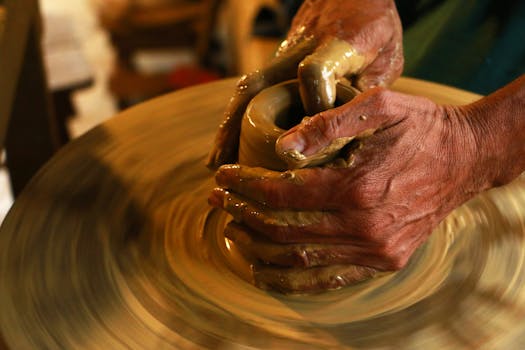
The workshop began with a master artisan, Abdellah, demonstrating the rhythmic dance of the potter's wheel. His hands moved with a fluid grace that made it look effortless. Then it was my turn. My first attempts were… lopsided, to say the least. The clay wobbled, collapsed, or shot off the wheel entirely. But Abdellah, with a patient smile and gentle guidance, helped me center the clay, apply the right pressure, and slowly, miraculously, a wobbly bowl began to take shape. The sensation of the spinning clay, the cool wetness, the smell of the earth – it was utterly captivating.
Beyond the wheel, I also tried my hand at zellige cutting, a painstaking art where geometric patterns are chipped from glazed tiles. While I certainly didn't create a masterpiece, learning to hold the hammer and chisel, and understanding the precision required, gave me an immense appreciation for the stunning tilework found all over Morocco.
Practical Tips for Clay Workshops:
* Wear old clothes: Clay is messy!
* Ask about firing: Some workshops will fire your piece and ship it to you (for an extra fee), others are just for the experience.
* Be patient: It takes practice, but the process is the reward.
* Where to find it: Look for workshops in regions famous for pottery like Fes (Morocco), Lisbon (Portugal) for azulejos, Kyoto (Japan) for Raku pottery, or Puebla (Mexico) for Talavera ceramics.
---
2. Ink & Spirit: Calligraphy & Mini Illumination
In an age of instant digital communication, the art of beautiful handwriting feels almost revolutionary. Calligraphy, the visual art of writing, transcends mere legibility; it's about conveying emotion, meaning, and reverence through strokes and curves. From the elegant brushwork of East Asia to the intricate illuminated manuscripts of medieval Europe, these ancient scripts are windows into philosophical and spiritual traditions.
One of my most serene travel memories involves a calligraphy workshop in Kyoto, Japan. Hidden down a quiet side street in Gion, a traditional wooden machiya house offered Shodo (Japanese calligraphy) lessons. For about 5,000-7,000 JPY (approx. $35-50 USD), I spent three hours immersed in the world of sumi ink, rice paper, and the delicate fude brush.
Our sensei, a woman named Akiko, spoke softly, guiding us through the history and philosophy behind each stroke. She taught us the correct posture, how to hold the brush, and the importance of breathing and focus. My first attempts at writing simple kanji characters were clumsy, but with each stroke, I felt a deeper connection to the present moment. There’s a profound discipline and mindfulness involved, a quiet meditation that forces you to slow down and truly see what you’re doing. The moment I finally managed a character that resembled Akiko's example, a wave of quiet triumph washed over me. I left not just with my humble, inked papers, but with a sense of inner calm I hadn't expected.
Similarly, in Dublin, Ireland, I once found a small studio offering introductory sessions to Celtic illumination, where you learn the basics of decorative initial letters, reminiscent of the Book of Kells. It was a fascinating dive into the intricate patterns and vibrant colors that adorned ancient texts.
Practical Tips for Calligraphy Workshops:
* Embrace imperfection: The beauty is in the journey, not just the perfect stroke.
* Focus on breathing: It helps with steadiness and concentration.
* Ask about styles: Different regions have distinct calligraphic traditions.
* Where to find it: Seek out workshops in Kyoto (Japan) for Shodo, Seoul (South Korea) for Seoye, Marrakesh (Morocco) for Arabic calligraphy, or Dublin (Ireland) for Celtic illumination.
---
3. Thread & Dye: Weaving & Natural Dyeing
Textile arts are as old as humanity itself. From the protective clothing of early humans to the elaborate tapestries of royalty, weaving, spinning, and dyeing have been fundamental to human civilization. These crafts are not just about creating fabric; they are about storytelling, cultural identity, and sustainable living.
My journey into textile arts took me high into the Andes, to a small village outside Cusco, Peru. The Quechua people are renowned for their vibrant, intricate textiles, and many communities offer immersive cultural experiences. I joined a full-day workshop for around 100-150 Peruvian Soles (approx. $25-40 USD), which included lunch and transport from Cusco.
The day began with a demonstration of natural dyeing. Women from the community gathered cochineal insects (for red), various plants, and minerals, showing us how they extracted stunning, earthy colors from nature. We even got to dip our own skeins of wool into bubbling pots, watching the fibers transform. The air was filled with the earthy scent of dye baths and the quiet chatter of the women.
Then came the weaving. Using a traditional backstrap loom, a technique passed down for generations, I attempted to create a small bracelet. It was far more complex than I anticipated! The tension, the pattern, the rhythm of the warp and weft – every step required focus and dexterity. My finished bracelet was crooked and imperfect, but it represented hours of patient guidance from a woman named Maria, whose hands moved with an almost magical speed. It taught me immense respect for the artistry and effort that goes into every single Andean textile.
Practical Tips for Textile Workshops:
* Be prepared for details: Weaving can be intricate, but even basic techniques are rewarding.
* Ask about materials: Learn about the local fibers and dyes used.
* Support local artisans: Many workshops directly benefit the communities.
* Where to find it: Explore Cusco (Peru) and the Sacred Valley for Andean weaving, Jaipur (India) for block printing and natural dyeing, Chiang Mai (Thailand) for silk weaving, or Bali (Indonesia) for batik.
---
4. Fire & Form: Simple Metalwork & Jewelry Making
The ability to shape metal with fire and hammer is one of humanity's most transformative ancient skills. From tools and weapons to intricate adornments, metalwork has driven technological advancement and expressed artistic beauty. While traditional blacksmithing might require more than a day, many workshops offer introductory sessions in smaller-scale metal crafts like jewelry making, where you can learn basic forging, soldering, and shaping techniques.
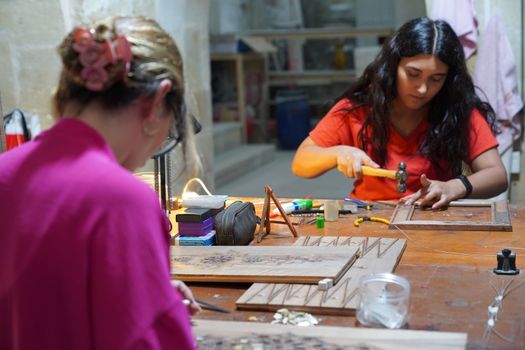
I recently tried a beginner's jewelry making workshop in New Orleans, Louisiana, specifically focusing on copper and brass. The studio, located in the vibrant Bywater neighborhood, offered a three-hour session for about $120-150 USD, where we learned to cut, texture, solder, and polish metal to create a simple pendant or ring.
Our instructor, a passionate local artisan named Chloe, walked us through the safety precautions and basic tools. Holding the tiny torch and watching the solder flow like liquid silver to join two pieces of metal was utterly mesmerizing. The sound of the hammer on the anvil, even for small pieces, felt powerful and ancient. I loved experimenting with different hammers to create textures on the copper, and then carefully filing and polishing my piece until it gleamed. It wasn't a sword, but the satisfaction of transforming a flat sheet of metal into a wearable piece of art was immense.
The workshop opened my eyes to the patience and precision involved in even the simplest metal designs. It's a craft that combines brute force with delicate artistry, and learning just the fundamentals gave me a newfound appreciation for handmade jewelry and metal sculptures.
Practical Tips for Metalwork Workshops:
* Safety first: Always pay attention to safety instructions, especially with heat and sharp tools.
* Wear closed-toe shoes: Essential for any workshop with tools or heavy objects.
* Don't be afraid to ask for help: Metal can be stubborn!
* Where to find it: Look for beginner jewelry making or basic metal stamping workshops in artisan communities in cities like New Orleans (USA), Portland (USA), or rural areas in the UK or Eastern Europe known for traditional crafts.
---
5. Taste & Tradition: Culinary Crafting
Food isn't just sustenance; it's culture, history, and a powerful form of expression. Many ancient culinary traditions, from bread-making to cheese-making, are complex crafts that have been perfected over centuries. Learning to prepare a traditional dish or drink from scratch connects you directly to the heritage of a place in a delicious, unforgettable way.
One of my most cherished "learning in a day" experiences was a pasta-making workshop in Bologna, Italy, the culinary heartland of Emilia-Romagna. For about €80-120 (approx. $85-130 USD), I joined a small group for a four-hour session that culminated in a shared meal.
Our nonna-like instructor, Isabella, welcomed us into her charming kitchen. She spoke with a passionate cadence, explaining the history of pasta and the importance of using fresh, local ingredients. We started by kneading dough from scratch – just flour and eggs, transformed by the rhythm of our hands. Isabella showed us how to roll out the thin sheets of pasta with a massive wooden rolling pin, then expertly cut them into tagliatelle and shape them into tortelloni. My hands ached, but the scent of fresh dough and the lively chatter made the effort pure joy.
The highlight was, of course, eating our creations. We cooked our handmade pasta with a rich Bolognese ragù, paired with local wine. It wasn't just a meal; it was a communal celebration of tradition, flavor, and the simple pleasure of making something delicious with your own hands. I left with a full stomach, a new skill, and a deep appreciation for the artistry behind Italian cuisine.
Practical Tips for Culinary Workshops:
* Come hungry: You'll likely get to eat your creations!
* Ask for recipes: Many instructors are happy to share their family secrets.
* Consider dietary restrictions: Inform the workshop in advance if you have any.
* Where to find it: Bologna (Italy) for pasta, Paris (France) for bread/pastry, Chiang Mai (Thailand) for authentic Thai cooking, Oaxaca (Mexico) for tortilla or mole making, or Sri Lanka for tea blending.
---
How to Find Your Own Ancient Trade Workshop
Ready to ditch the typical tourist traps and embrace a more authentic, hands-on travel experience? Finding these unique workshops is easier than you think!
- Local Tourism Boards & Cultural Centers: Start with the official tourism websites of your destination. They often list cultural experiences, artisan studios, and craft workshops.
- Specialized Platforms: Websites like Airbnb Experiences, GetYourGuide, Viator, and even local cooking school websites often feature these types of "learn in a day" workshops. Use keywords like "craft workshop," "artisan experience," "traditional skill," or "cultural class" plus your destination.
- Ask Locals (Online & Offline): Before you go, scour travel forums, Facebook groups for your destination, or Reddit's r/travel for recommendations. Once you're there, ask your hotel concierge, guesthouse owner, or even local shopkeepers. They often know the best hidden gems.
- Visit Artisan Markets: Many cities have vibrant artisan markets. Chat with the makers – they often teach classes or can point you to someone who does.
- Small Group Tours: Some specialized tour companies focus on cultural immersion and include hands-on workshops as part of their itinerary.
- Check Local Universities/Art Schools: Sometimes they offer short courses or community workshops that are open to visitors.
What to Look For When Booking:
* Reviews: Always check reviews from previous participants to ensure quality and authenticity.
* Class Size: Smaller groups generally mean more personalized attention.
* Instructor's Background: Is the instructor a local artisan with deep roots in the tradition?
* Inclusions: What's included in the price? Materials? Tools? A finished product? A meal?
* Duration: Make sure it fits your schedule – "learn in a day" usually means 2-6 hours.
* Language: Confirm the workshop is offered in a language you understand.
Budgeting for Workshops:
Prices can vary wildly depending on the craft, location, and duration. Expect to pay anywhere from $25 USD for a basic cooking class in Southeast Asia to $150-200 USD for a more specialized metalwork or extensive textile workshop in Europe or North America. Consider it an investment in a unique memory and a skill that will last a lifetime, far more valuable than any mass-produced souvenir.
---
The Ultimate Souvenir: A Skill, A Story, A Connection
The beauty of learning an ancient trade in a day isn't just about the tangible output, be it a wonky pot or a slightly crooked bracelet. It's about the process. It's about slowing down, engaging your hands and mind, and connecting with a tradition that has endured for centuries. It's about the shared laughter with fellow travelers, the quiet patience of an artisan, and the profound satisfaction of creation.
These experiences transform your trip from a passive observation into an active participation. You become a part of the story, not just an onlooker. You bring home not just photos, but a piece of yourself, enriched and expanded by a skill you never thought you’d possess. And trust me, that's the kind of souvenir that never gathers dust.
So, on your next adventure, dare to step off the beaten path. Seek out the workshops, the artisans, the quiet studios where history is alive and waiting to be learned. What ancient trade will you master first? Share your dreams in the comments below!