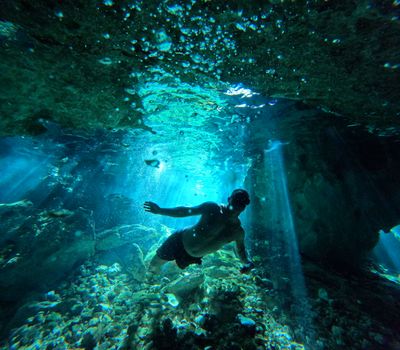
My Underwater Transformation: How I Explored the Deep Without Ever Learning to Swim
Let me tell you a secret, one that used to fill me with a quiet shame: I can’t swim. Not a stroke. Not a doggy paddle. The deep end of a pool has always felt like a bottomless chasm, and the ocean? A beautiful, terrifying enigma. For years, this inability haunted my travels. Friends would snorkel vibrant reefs, dive into turquoise lagoons, and return with tales of colorful fish and coral gardens, while I, perched on the boat or limited to the shore, felt a pang of longing mixed with intense FOMO.
I always thought the underwater world was reserved for the brave, the buoyant, the certified divers. My imagination painted vivid pictures of what lay beneath the surface, but my fear of drowning kept those images firmly in the realm of fantasy. "Maybe another life," I'd sigh.
But then, something shifted. Call it a quarter-life crisis, a sudden burst of courage, or simply being fed up with missing out. I decided to challenge my deepest fear. My mission? To experience the magic of the ocean, without learning to swim. And let me tell you, it wasn't just possible – it was profoundly, undeniably life-changing. If I, a lifelong landlubber, can do it, so can you. Prepare to have your perceptions, and perhaps your travel plans, completely rewritten.
Beyond the Surface: Redefining "Underwater Adventure" for Everyone
Before I embarked on this journey, my definition of "underwater adventure" was pretty narrow: scuba diving or snorkeling. Both require comfort in water, and at least some swimming ability. This limited perspective was my biggest barrier. What I soon discovered, however, is that the world is brimming with ingenious ways to explore the ocean's depths that require absolutely no swimming skills.
From dry, comfortable semi-submersibles to exhilarating helmet dives where you walk on the seabed, the options are far more diverse than you might imagine. It’s about finding the right vessel, the right gear, and the right mindset. You don't need to be an Olympic swimmer; you just need an open heart and a sense of adventure. This realization was my first major breakthrough – a crack in the wall of my fear, letting in a sliver of hope.
Walking on the Ocean Floor: My First Helmet Diving Experience in Bali
My first real plunge into the underwater world happened in Bali, Indonesia. I was staying near Sanur Beach, and kept seeing brochures for something called "Sea Walker" or "Helmet Diving." The idea sounded utterly insane to me: walk on the ocean floor? With a helmet? Without swimming? My curiosity, for once, outweighed my terror.
I booked a session with Bali Seawalker (now known as Bali Marine Walk), which operates out of Sanur. The price was around IDR 900,000 - 1,200,000 (roughly $60-80 USD), which felt like a small price to pay for potentially conquering a lifelong fear. The total experience takes about 2 hours, with approximately 30-45 minutes actually underwater.
The briefing was thorough and reassuring. They explained how the helmet works: it's a heavy, clear dome with a continuous supply of air pumped in from the surface. The weight of the helmet keeps you grounded, and the air pressure prevents water from entering. You can even wear your glasses! My heart was pounding as I descended a ladder into the surprisingly cool, clear water. Two friendly guides were on either side of me, their smiles radiating confidence.
Lowering the heavy helmet onto my shoulders was a strange sensation. The world became muffled, then silent, save for the gentle hiss of air. As I slowly descended, step by step, my ears popped, and then – whoosh – I was on the seabed.
It was utterly surreal. I was walking, as if on land, but surrounded by shimmering blue. Schools of vibrant fish, painted in every color imaginable, swirled around me. I could see their scales, their fins, their curious little eyes. The guides handed us pieces of bread, and suddenly, I was engulfed in a cloud of marine life, feeding fish directly from my hands. It was like living inside a nature documentary. I saw clownfish darting through anemones, delicate coral formations, and even a small, harmless reef shark gliding gracefully in the distance.
That first breath underwater, feeling completely safe and utterly immersed, was a moment I'll never forget. It wasn't just seeing fish; it was a profound connection to a world I thought was forever out of reach. My fear melted away, replaced by pure, unadulterated wonder.
Practical Tips for Helmet Diving:
* Location: Look for operators in Bali (Sanur), Phuket, Mauritius, Hawaii, or even the Caribbean.
* Safety First: Always choose a reputable operator with clear safety briefings and attentive guides. Ask about their certifications.
* What to Wear: Swimwear is fine; they usually provide special shoes. Avoid heavy makeup or hair products that could fog up the helmet.
* Communication: You can’t talk, but hand signals are easy to learn (thumbs up for 'okay,' thumbs down for 'go up').
* Ear Pressure: Remember to equalize your ears by pinching your nose and blowing gently, just like on an airplane.
* Photography: Most operators offer photo/video packages. It's worth it for the memories!
Deep Sea Discovery, Dry and Comfortable: The Atlantis Submarine in Grand Cayman
After Bali, I was hooked. My next adventure took me to the crystal-clear waters of Grand Cayman, home to the famous Atlantis Submarine. This wasn't about getting wet at all; it was about descending into the deep ocean in a real, passenger submarine.
The Atlantis Submarine tour departs from George Town. The cost is typically around $90-110 USD per adult for a 1-hour dive. The entire experience, including the boat transfer to the submarine, takes about 2 hours.
As we boarded the transfer vessel, I felt a different kind of excitement. This wasn't about overcoming a physical fear of water, but about venturing into the unknown depths. The submarine itself was impressive – sleek, white, with large viewing portholes lining both sides. We descended into the comfortable, air-conditioned cabin, taking our seats in front of our personal windows.
The dive began, and slowly, silently, we plunged deeper. The light outside shifted from bright blue to a mesmerizing twilight, then to a rich, deep indigo. The captain provided live commentary, pointing out incredible features through our windows. We saw towering coral reefs teeming with life, schools of barracuda, majestic sea turtles gliding by, and even a massive shipwreck – the Cali – resting eerily on the seabed. Seeing a 90-foot vessel from this perspective, knowing it had a history, was truly humbling.
The beauty of this experience is that it’s accessible to almost everyone – no physical exertion, no getting wet, just pure, unadulterated viewing pleasure. It’s perfect for families, those with mobility issues, or anyone who wants to see the deep ocean without any fuss.
Practical Tips for Submarine Tours:
* Booking: Book in advance, especially during peak season, as spots fill up quickly.
* Best Views: Try to get a seat near the front or back of the submarine for the clearest views.
* Photography: Bring a good camera! The light can be dim, so a camera with good low-light performance is a plus.
* Motion Sickness: If you’re prone to motion sickness, take precautions before boarding, although the ride is usually very smooth.
* Locations: Similar submarine tours can be found in places like Barbados, Aruba, and Maui.
Floating Among Giants: Guided Snorkeling with a Life Vest in the Maldives
My journey continued to the Maldives, a paradise renowned for its unparalleled marine life. Here, I wanted to push my boundaries slightly, but still within my comfort zone: snorkeling, but with a safety net. Many resorts in the Maldives offer guided snorkeling tours, and crucially, they provide life vests and often allow you to hold onto a guide or a floatation device.
I stayed at a beautiful resort (details are often resort-specific, but many offer this) that had house reefs easily accessible from the beach. I signed up for a guided snorkeling trip to a slightly deeper reef. The cost was usually included in my all-inclusive package, or a small fee of around $20-50 USD for a guided excursion.
Equipped with a full-face snorkel mask (a game-changer for non-swimmers, as it allows natural breathing through nose and mouth), a snug life vest, and a patient guide, I tentatively entered the water. My guide held a floatation ring, and I gripped onto it, letting the vest keep me effortlessly afloat.
The moment my face submerged, I gasped – not from fear, but from sheer awe. The water was impossibly clear, and beneath me lay an expansive garden of coral, vibrant and alive. Clownfish peeked from anemones, angelfish glided gracefully, and parrotfish munched on coral, their crunching audible even underwater. We spotted a majestic manta ray gliding past, its wings spanning several feet, and later, a gentle reef shark, completely uninterested in us, swimming by.
The feeling of weightlessness, of being part of that underwater world, was intoxicating. With the life vest, I felt completely secure, able to simply float and observe. My guide pointed out different species, enhancing the experience with his knowledge. It wasn't just about seeing; it was about being there, truly immersed, without the panic of needing to propel myself through the water.
Practical Tips for Non-Swimmer Snorkeling:
* Life Vest is Your Best Friend: Always wear a properly fitted life vest. Don't be shy about it!
* Full-Face Mask: These masks are fantastic for non-swimmers as they eliminate the need to bite down on a snorkel mouthpiece and allow natural breathing.
* Guided Tours: Opt for tours with guides who are aware of your non-swimming status and can offer assistance (holding hands, providing a float).
* Shallow Reefs: Start in calm, shallow areas with easy access and clear water.
* Practice: Get comfortable with the mask and breathing in a very shallow area first.
* Communicate: Let your guide know immediately if you feel uncomfortable or panicked.
The Gentle Gaze: Glass-Bottom Boats & Marine Park Aquariums
Sometimes, the simplest solutions are the most profound. Before I even considered helmet diving, my initial foray into "underwater" exploration was via glass-bottom boats. These aren't just for kids; they offer a fantastic, dry, and relaxing way to see marine life.
I’ve enjoyed glass-bottom boat tours in places like Key West, Florida, and even parts of the Great Barrier Reef in Australia. The prices vary widely, from $20-60 USD for a short local tour to more for comprehensive reef excursions. You sit comfortably in a boat with a large, clear panel in the floor, through which you can watch the world beneath the waves. Guides often provide commentary, identifying fish and coral. It’s a wonderful, low-impact way to appreciate the ecosystem.
Another fantastic option, especially if you're not ready for open water, is visiting a world-class aquarium or marine park. Places like the Georgia Aquarium in Atlanta, the S.E.A. Aquarium in Singapore, or the Oceanogràfic in Valencia, Spain offer massive tanks, walk-through tunnels, and immersive exhibits that bring the ocean to you. While not a "wild" adventure, it's an incredible way to learn about and appreciate marine life up close, sparking curiosity for future, more immersive experiences.
Practical Tips for Glass-Bottom Boats & Aquariums:
* Eco-Friendly Operators: Choose companies that prioritize marine conservation.
* Timing: For glass-bottom boats, clear, sunny days with calm waters offer the best visibility.
* Beyond the Glass: Many tours combine the glass-bottom view with opportunities to spot dolphins or seabirds from the deck.
* Aquarium Planning: Check feeding times or special shows at aquariums for an enhanced experience.
My Underwater Transformation: Don't Let Fear Keep You from the Ocean's Magic!
My journey from a terrified non-swimmer to a passionate underwater explorer has been nothing short of transformative. Each experience chipped away at my fear, replacing it with awe, wonder, and a profound respect for the ocean. I’ve discovered that the underwater world isn't an exclusive club for swimmers; it's a vast, vibrant realm waiting to be explored by anyone with a curious heart.
These adventures didn't just show me beautiful fish and coral; they taught me about pushing boundaries, trusting guides, and finding courage in unexpected places. They boosted my confidence in ways I never imagined, proving that true adventure often lies just beyond the edge of our comfort zone.
So, if you’re like the "old me" – watching from the sidelines, longing for the magic beneath the waves but held back by an inability to swim or a deep-seated fear of water – please, take this as your sign. There’s a whole universe waiting for you. Start small, be brave, and choose an adventure that feels right for you. Whether it’s walking on the seabed, descending in a submarine, or floating with a life vest, the ocean has a way of changing you forever.
Which underwater adventure will you try first? Share your fears and your dreams in the comments below! Let's inspire each other to dive into the extraordinary.