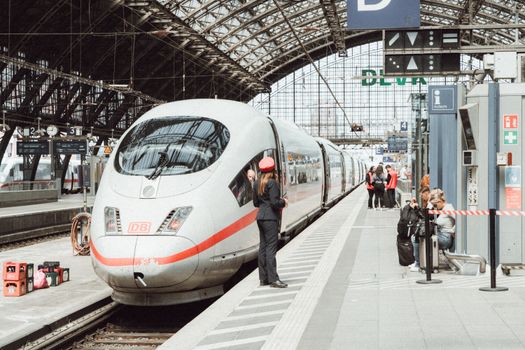
I stepped off the Frecciarossa 1000 onto the shimmering platform of Milano Centrale, the aroma of freshly pulled espresso and warm brioche from a nearby pasticceria hitting me before the train doors had even fully slid shut. No baggage carousel wait. No taxi queue on a distant, wind-whipped highway. Just three hours and ten minutes prior, I had been sipping a macchiato in Rome, watching the late-morning sun hit the Tiber.
If I had flown, I’d still be shuffling through security at Fiumicino, taking off my belt, or stuck in bumper-to-bumper traffic on the A24 highway.
Data from the European Environment Agency and national rail operators confirms this isn't just my personal preference; it's a structural realignment of global travel. In corridors across Europe and East Asia, high-speed rail has systematically decimated short-haul flight routes. When rail travel times drop under four hours, airlines lose up to 80% of their market share. When it drops below two and a half hours, flights virtually disappear.
Here is the definitive guide to the global rail routes that have successfully dethroned short-haul aviation.
---
1. Paris to Lyon: The Pioneer of France's Flight Ban
In May 2023, France made international headlines by officially banning domestic flights on routes that can be traveled by train in under two and a half hours. The undisputed king of this green revolution is the Paris-to-Lyon corridor.
The Data Behind the Shift
This route is where the TGV (Train à Grande Vitesse) first debuted in 1981. Today, trains run almost hourly, covering the 400-kilometer gap in just 1 hour and 56 minutes. According to French transport authority data, the train captures over 90% of the passenger market on this corridor, rendering air travel practically obsolete.
Insider Booking Strategies
Don't book the generic TGV Inoui if you want to save cash. Instead, opt for Ouigo, SNCF’s low-cost rail brand, which offers tickets starting as low as €10. However, be aware of strict baggage limits similar to budget airlines. If you want luxury, book a first-class seat on the standard TGV Inoui and head straight to the Voiture Bar (dining car) for a cafe au lait and a pastry curated by Michelin-starred chefs.
- Pro-Tip: At Paris Gare de Lyon, bypass the chaotic main Hall 1 entrance. Head down to the lower level (Hall 3) near the metro connections. It is quieter, has shorter lines for ticket validation, and leads directly to the platforms via escalators.
---
2. Madrid to Barcelona: The Flight-Killer AVE
Historically, the Puente Aéreo (Air Bridge) between Madrid and Barcelona was the busiest domestic air route in the world, with planes taking off every 15 minutes. Then came the AVE (Alta Velocidad Española) in 2008.
The Data Behind the Shift
Before the high-speed rail link, only 12% of travelers chose the train. Today, that number has surged to over 80%. With a travel time of just 2 hours and 30 minutes, the train eliminates the trek to Madrid-Barajas and Barcelona-El Prat, both located far outside their respective city centers.
Navigating the Spanish Rail Price Wars
The Spanish rail market is now deregulated, meaning massive price wars benefit travelers. You have four choices: Renfe (the state-run AVE), Avlo (low-cost Renfe), Ouigo España, and Iryo.
Iryo is the gold standard here. Their trains are ultra-modern, featuring red leather seats and a superb dining car (Haizea) serving actual tapas and Spanish wines.
- Pro-Tip: When departing from Madrid Atocha, don't sit in the crowded main waiting room. Head to the tropical garden inside the station—a literal greenhouse with thousands of plants—and grab a cold caña (small draft beer) at the kiosk hidden near the back path.
---
3. Rome to Milan: How the Frecciarossa Killed Alitalia
If you want to understand how rail can bankrupt an airline, look at Italy. The fierce competition between Italy’s state-owned Trenitalia (operating the Frecciarossa) and the private operator Italo on the Rome-to-Milan line was a primary catalyst in the demise of Italy’s national airline, Alitalia.
The Data Behind the Shift
In 2008, planes held a 50% market share between Italy's political and financial capitals. By 2019, trains had captured 75% of the market. The journey takes just 2 hours and 59 minutes on non-stop "Fast" services.
Deciding Between Trenitalia and Italo
Both operators are fantastic, but they offer different vibes. Italo feels like a sports car—designed by Ferrari's former chairman, it features sleek, low-slung trains. Trenitalia's Frecciarossa 1000 is the heavy hitter.
If you book Trenitalia, splurge on "Executive" or "Business" class. Executive class includes a rotating leather armchair, a dedicated meeting room, and a high-quality three-course meal designed by chef Carlo Cracco, complete with unlimited Italian wine.
- Pro-Tip: At Milano Centrale, the platform gates can get incredibly congested. If you have an Executive or Business ticket (or a Cartafreccia gold card), use the fast-track lane on the far left of the security barriers. It saves up to 20 minutes during rush hour.
---
4. Tokyo to Kyoto & Osaka: The Shinkansen Blueprint
While Europe is making headlines now, Japan perfected this formula decades ago. The Tokaido Shinkansen, connecting Tokyo to Nagoya, Kyoto, and Osaka, is the global benchmark for high-speed rail.
The Data Behind the Shift
Despite intense competition from Japan's low-cost carriers, the Shinkansen commands over 85% of the market share between Tokyo and Osaka. The Nozomi train covers the 515-kilometer journey in 2 hours and 30 minutes, running up to 12 times per hour with an average delay of less than a minute.
Booking Hacks for Foreign Travelers
Do not buy the standard Japan Rail (JR) Pass if you only plan to do this route; recent price hikes make it uneconomical. Instead, purchase individual Nozomi tickets via the SmartEX app.
- Pro-Tip: Book a seat on the "E" side (or "D" and "E" in Green Car) of the train to get a spectacular, unobstructed view of Mount Fuji as you speed past Shizuoka.
- The Culinary Hack: Do not buy standard train station snacks. Go to the basement of Tokyo Station (Depachika) and buy an upscale Ekiben (station bento box) containing regional specialties like Wagyu beef or Kyoto-style pickled vegetables. Pair it with a cold can of local craft beer.
---
5. Berlin to Munich: The VDE 8 Breakthrough
For years, traveling between Germany's capital and its southern economic hub was a slog. The train took over six hours, making flying the only viable option for business travelers. That changed in late 2017 with the completion of the VDE 8 high-speed rail project.
The Data Behind the Shift
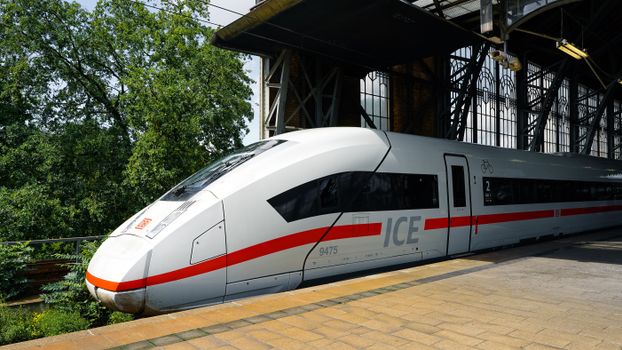
The travel time dropped from six hours to 3 hours and 55 minutes on the ICE Sprinter services. Consequently, Deutsche Bahn (DB) saw passenger numbers double almost overnight, snatching nearly 50% of the market share from airlines like Lufthansa.
Surviving Deutsche Bahn
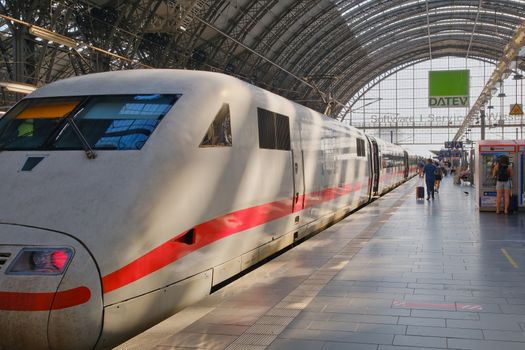
German trains are notorious for delays due to aging infrastructure, but the ICE Sprinter services (which make fewer stops) are prioritized on the tracks. Always reserve a seat (it's not included in standard German tickets) and choose the "Ruhebereich" (Quiet Zone) if you want to work or sleep without hearing phone calls.
- Pro-Tip: If you travel First Class (on a flex fare), you get access to the exclusive DB Lounge at Berlin Hauptbahnhof or München Hauptbahnhof. The Berlin lounge has a premium area with complimentary draft beer, wine, and hot meals served directly to your armchair.
---
6. London to Paris & Brussels: The Classic Eurostar
Crossing the English Channel used to mean enduring tedious ferry crossings or boarding cramped turboprops. Eurostar changed the game, proving that international borders are no barrier to high-speed rail dominance.
The Data Behind the Shift
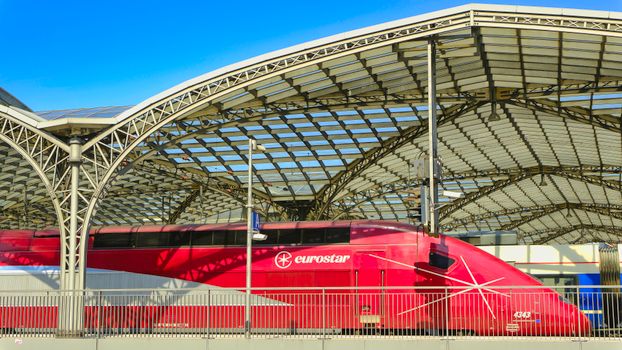
Eurostar captures over 80% of the combined air-and-rail market between London and Paris, and London and Brussels. The journey from London St. Pancras to Paris Gare du Nord takes just 2 hours and 16 minutes, avoiding the nightmare of Heathrow, Charles de Gaulle, or Beauvais.
The Border Control Survival Guide
Arrive at St. Pancras International at least 90 minutes before departure. Unlike domestic European trains, Eurostar requires passport control and security screening because the UK is outside the Schengen Zone.
- Pro-Tip: If you want to skip the massive queues, upgrade to Eurostar Premier (formerly Business Premier), which features a dedicated 10-minute fast-track gate and access to the superb lounge featuring gin bars designed by Raymond Blanc.
- The Luggage Advantage: Unlike airlines, Eurostar has no weight limits for bags, and you can bring up to two large suitcases plus hand luggage for free. You can even bring a bottle of wine or champagne on board without liquid restrictions.
---
The Transit Showdown: Rail vs. Air Logistics
| Route | Train Time | Flight Time (Incl. Transit)* | Avg. Train Cost ($) | Avg. Flight Cost ($) | CO2 Savings per Passenger |
| :--- | :--- | :--- | :--- | :--- | :--- |
| Paris to Lyon | 1h 56m | 3h 45m | $25 - $80 | $70 - $150 | ~95% |
| Madrid to Barcelona | 2h 30m | 4h 10m | $19 - $90 | $45 - $120 | ~90% |
| Rome to Milan | 2h 59m | 4h 00m | $35 - $110 | $60 - $140 | ~85% |
| Tokyo to Osaka | 2h 30m | 4h 15m | $95 - $135 | $65 - $120 | ~88% |
| Berlin to Munich | 3h 55m | 4h 05m | $30 - $120 | $80 - $180 | ~92% |
| London to Paris | 2h 16m | 4h 30m | $55 - $220 | $40 - $130 | ~90% |
\*Flight Time includes 2 hours pre-flight airport arrival plus transit times from central city locations to airports.
---
The Green Reality Check
Why does this shift matter? The environmental math is brutal for aviation. A train journey from Paris to Lyon emits about 0.8 kg of CO2 per passenger. The equivalent flight emits approximately 85 kg—a staggering 99% reduction in your carbon footprint for that leg of your journey.
As high-speed rail networks expand—with projects like the EuroMed corridor in Spain and the Chuo Shinkansen maglev in Japan—the sky is no longer the limit. The future of travel is firmly on the tracks.
---