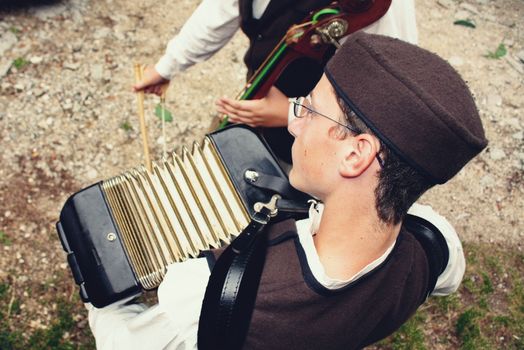
The scent of incense hung heavy in the humid air of Varanasi, mingling with the distant chants from the ghats. My fingers, clumsy and unaccustomed, fumbled over the strings of the sitar, trying to coax out a simple, ancient melody. Across from me, my guru, a man whose eyes held the wisdom of generations of musicians, smiled patiently. "Feel the vibration, my friend," he murmured, his own fingers dancing effortlessly, creating a sound that resonated deep within my chest. In that moment, surrounded by the echoes of a timeless tradition, I wasn't just learning notes; I was learning history, spirituality, and a profound connection to a culture far richer than any postcard could convey.
That single, unforgettable lesson sparked an obsession: to seek out master musicians across the globe and learn the traditional instruments that tell the stories of their lands. Forget tourist traps and generic souvenirs; these experiences are the ultimate form of cultural immersion, a bucket-list adventure that will enrich your soul and leave you with skills and memories that last a lifetime. Are you ready to trade your headphones for a hands-on journey into the world's most captivating musical traditions? Let's dive in.
The Call of the Kora: West Africa's Harp-Lute Heartbeat (Senegal & The Gambia)
Imagine a 21-stringed instrument, a hybrid between a harp and a lute, whose sound is as enchanting as a whispered secret. This is the kora, the voice of the Griots – West African hereditary storytellers, praise singers, and poets. Learning the kora isn't just about music; it's about understanding a lineage, a living library of history.
My first encounter with the kora was in a bustling market in Dakar, Senegal. A Griot elder, his hands gnarled with age, played a melody so intricate and beautiful it stopped me in my tracks. I knew then I had to try. I found myself in a small, vibrant compound outside Banjul, The Gambia, under the tutelage of Amadou, a descendant of a long line of Griots.
My Experience:
Amadou started me with the basics, teaching me the unique plucking technique with my thumbs and index fingers. It was surprisingly difficult to coordinate, my fingers feeling like independent, rebellious entities. He emphasized listening, not just playing. "The kora speaks," he'd say, "you must learn its language." We started with simple rhythmic patterns, then moved to a basic folk tune. Each session was punctuated by his stories of ancient kings and epic battles, the music weaving seamlessly into the narrative. It wasn't just a lesson; it was an oral history session, a spiritual exchange. By the end of the week, I could stumble through a few phrases, enough to feel the magic of the instrument resonate through me.
Where to Learn & What to Expect:
* Locations: Dakar (Senegal), Banjul (The Gambia), or smaller villages where Griot families reside. Cultural centers like the Centre Culturel Français in Dakar sometimes offer workshops, but private lessons are often arranged through local guides or word-of-mouth.
* Cost: Expect to pay anywhere from $20-$50 USD per hour for private lessons, depending on the master's reputation and your negotiation skills. Package deals for a week or more might be available. Instrument rental is usually included or very cheap.
* Tips:
* Respect the tradition: Griots are highly respected. Show deference and an open mind.
* Be patient: The kora is complex. Focus on rhythm and listening first.
* Record: Ask permission to record your lessons; it's invaluable for practice.
* Immerse: Attend local ceremonies or performances where kora music is played to truly appreciate its context.
Instagram-Worthy Moment:
A close-up shot of your hands on the kora, with the master's hands gently guiding yours, against a backdrop of a vibrant West African village or a sun-drenched courtyard. #KoraLessons #GriotTradition #WestAfricanMusic
Flamenco's Fiery Heartbeat: Strumming with Soul in Andalusia (Spain)
Flamenco isn't just music; it's a raw, passionate expression of the soul, born from the melting pot of cultures in Andalusia. The intricate guitar work, the soulful cante (singing), and the electrifying baile (dance) combine into an art form that demands to be felt, not just heard. Learning flamenco guitar is a deep dive into Spanish history and emotion.
My journey into flamenco began in Seville, the heartland of this art. I'd seen countless performances, but I wanted to understand the duende – the spirit, the raw emotion – from the inside. I signed up for a week of intensive lessons.
My Experience:
My teacher, Ricardo, was a man whose calloused fingers moved with breathtaking speed and precision. He didn't just teach notes; he taught rhythm, attitude, and the art of 'feeling' the music. We started with basic rasgueados (strumming techniques) and golpes (percussive taps on the guitar body). My fingers ached, my wrist rebelled, but the sheer joy of creating even the simplest flamenco rhythm was exhilarating. He'd tell me stories of the barrios where flamenco was born, of the gypsies who poured their lives into every chord. One evening, after a particularly challenging session, he took me to a tiny, unadvertised peña (flamenco club) where locals gathered. The raw, unfiltered passion of the performers, the spontaneous clapping, the cries of ¡Olé! – it solidified everything he had taught me. Flamenco is a living, breathing entity.
Where to Learn & What to Expect:
* Locations: Seville, Granada, and Jerez de la Frontera are the epicenters. Schools like Taller Flamenco or Casa de la Guitarra in Seville, or the Carmen de las Cuevas in Granada, offer excellent programs.
* Cost: Group classes can range from $25-$50 USD per session, while private lessons with a renowned master can be $60-$100+ USD per hour. Many schools offer intensive week-long or month-long courses.
* Tips:
* Start with palmas: Flamenco rhythm is paramount. Learn the clapping patterns first.
* Attend live shows: Immerse yourself in the live experience. Go to smaller, more authentic peñas if possible.
* Don't be afraid to try dance: Even basic footwork can help you understand the rhythm.
* Bring a good guitar: Or rent one from the school. Flamenco guitars have a distinct sound.
Instagram-Worthy Moment:
A dynamic shot of your hands on a flamenco guitar, perhaps with a vibrant mantón (shawl) or a traditional Spanish tile backdrop. Bonus points for capturing the intense focus on your face! #FlamencoGuitar #AndaluciaVibes #Duende
The Soulful Sitar: Meditative Melodies of India (Varanasi & Delhi)
The sitar, with its long neck, resonant gourd, and sympathetic strings, produces a sound that is both deeply meditative and incredibly complex. It's the quintessential instrument of North Indian classical music, an art form rooted in ancient ragas (melodic frameworks) and talas (rhythmic cycles). Learning the sitar is a journey into discipline, patience, and spiritual connection.
My experience in Varanasi, as mentioned in the intro, was profound. But I also spent time in Delhi, seeking out a different perspective on this ancient instrument.
My Experience:
In Varanasi, my guru focused heavily on the spiritual aspect, emphasizing how each note, each raga, was a path to inner peace. We started with basic finger exercises, learning to glide across the frets (meend) and pluck the strings with the mizrab (wire plectrum) worn on the index finger. It was challenging to maintain the posture and the delicate balance of pressure. In Delhi, my teacher, a younger, more pragmatic musician, delved deeper into the theoretical structures of ragas, teaching me the precise scales and melodic phrases. Both experiences were invaluable, showing me the dual nature of Indian classical music: its spiritual depth and its rigorous intellectual framework. Practicing by the Ganges at sunrise, with the sitar's echoes blending with the morning prayers, was a truly transcendental experience.
Where to Learn & What to Expect:
* Locations: Varanasi (often considered the spiritual home of Indian classical music), Delhi, Kolkata, and Mumbai. Many smaller towns also have excellent gurus. The International Music Centre in Varanasi is well-regarded.
* Cost: Private lessons can range from $15-$40 USD per hour, with discounts for longer commitments. Some gurus prefer a donation-based system. Sitar rental is usually inexpensive.
* Tips:
* Find a good guru: This is crucial. Ask for recommendations, listen to them play.
* Be respectful: Indian classical music is a sacred art. Show humility and dedication.
* Learn basic theory: Understanding ragas and talas will greatly enhance your learning.
* Practice daily: Even 30 minutes makes a huge difference.
* Listen widely: Immerse yourself in different sitar masters' recordings to develop your ear.
Instagram-Worthy Moment:
You, sitting cross-legged with a sitar, perhaps by the Ganges at sunrise or in a serene, incense-filled room, capturing the meditative quality of the instrument. #SitarLessons #IndianClassicalMusic #VaranasiVibes #RagaLife
Gamelan's Hypnotic Rhythms: Communal Harmony in Bali (Indonesia)
Gamelan is not a single instrument but an orchestra of percussive instruments – gongs, metallophones, drums, and sometimes flutes and strings – that creates a mesmerizing, interlocking soundscape. Originating in Indonesia, particularly Java and Bali, gamelan music is deeply intertwined with spiritual ceremonies, dance, and storytelling. It's a communal experience, where each musician plays a vital, interconnected part.
My first encounter with gamelan was during a temple ceremony in Ubud, Bali. The rich, shimmering layers of sound were unlike anything I'd ever heard, both powerful and delicate. I knew I had to be part of that sonic tapestry.
My Experience:
I joined a local community group in a small village near Ubud that welcomed foreigners. There wasn't a "teacher" in the traditional sense; it was more of an elder guiding us, teaching by example and gentle correction. I was assigned to a gangsa, a bronze metallophone. The challenge was to play my specific, often simple, part with precise timing, listening intently to how it interlocked with everyone else's. My initial attempts were a cacophony, but slowly, as I learned to listen more than I played, the magic happened. The individual notes dissolved into a single, breathtaking wave of sound. It was a lesson in humility, teamwork, and the power of collective creation. We practiced in an open-air pavilion, surrounded by lush rice paddies, the sounds of nature blending with our music.
Where to Learn & What to Expect:
* Locations: Ubud, Gianyar, and surrounding villages in Bali are excellent places to find gamelan workshops or community groups. Many cultural centers and even some hotels offer introductory sessions.
* Cost: Often, these are part of cultural workshops (which might include dance or cooking) ranging from $30-$70 USD for a half-day session. Some community groups might accept a small donation.
* Tips:
* Embrace the group: Gamelan is about collective harmony. Your part is crucial, but the whole is greater than the sum.
* Listen, listen, listen: The interlocking patterns require intense listening to the other musicians.
* Be open to different instruments: You might start on a simple metallophone and move to gongs or drums.
* Attend ceremonies: See gamelan played in its traditional context during temple festivals.
Instagram-Worthy Moment:
A wide shot of the gamelan ensemble, with you among the intricate instruments, perhaps with Balinese temple architecture or lush greenery in the background. Capture the vibrant colors and the focused energy. #GamelanLessons #BalineseCulture #UbudMusic #CommunalHarmony
Highland Pipes & Irish Fiddle: Celtic Echoes in the Mist (Scotland & Ireland)
The haunting wail of the bagpipes, the lively jig of the Irish fiddle – these instruments are the very soul of Celtic music, steeped in centuries of history, folklore, and spirited celebrations. Learning either is to connect with the rugged landscapes and the resilient spirit of Scotland and Ireland.
I've always been drawn to the melancholic beauty of the pipes and the infectious energy of the fiddle. My journey took me to both Edinburgh and a small pub in County Clare.
My Experience (Bagpipes):
In Edinburgh, I found a retired pipe major who offered lessons. He started me not on the full bagpipes, but on a practice chanter – a small, reed instrument that teaches finger work and basic melodies without the lung-busting effort of the full pipes. "Patience is key, lad," he'd gruffly advise, his eyes twinkling. Learning the intricate grace notes and embellishments was challenging, a true test of dexterity. After a week, I could play a few simple marches, the sound still raw but undeniably Scottish. The thought of eventually mastering the full bagpipes, feeling the drone against my shoulder, was a powerful motivator.
My Experience (Irish Fiddle):
Later, in a cozy pub in Doolin, County Clare, I stumbled upon a fiddle workshop led by a local musician. Unlike the structured bagpipe lessons, this was more organic. We learned by ear, sitting around a roaring fire, sharing tunes and stories. The fiddle, or violin as it's known elsewhere, felt more intuitive to me. We focused on traditional jigs and reels, learning the bowing techniques that give Irish fiddle its characteristic lilt. The best part was joining in a spontaneous céilí (traditional Irish social gathering) later that evening, my fledgling fiddle skills adding to the joyous chaos.
Where to Learn & What to Expect:
* Locations:
* Bagpipes: Edinburgh, Glasgow (Scotland). The National Piping Centre in Glasgow is world-renowned.
* Irish Fiddle: Dublin, Galway, Doolin (Ireland). Many towns have local music schools or community groups. Comhaltas Ceoltóirí Éireann has branches globally and is a great resource.
* Cost:
* Bagpipes: Practice chanter lessons typically run $30-$60 USD per hour. Full bagpipe lessons are more specialized and can be more expensive.
* Irish Fiddle: Group workshops are often $20-$40 USD per session. Private lessons can range from $40-$70 USD per hour.
* Tips:
* Pipes: Start with a practice chanter. It's essential before moving to the full instrument.
* Fiddle: Learn by ear if possible. Attend local sessions (informal jam sessions) to immerse yourself.
* Embrace the culture: Go to ceilidhs, visit historical sites, and listen to local stories.
* Dress warmly: Especially in Scotland, you might be practicing outdoors!
Instagram-Worthy Moment:
* Pipes: You holding a practice chanter, perhaps with a Scottish castle or misty Highland landscape in the background.
* Fiddle: A candid shot of you playing the fiddle in a cozy Irish pub, surrounded by fellow musicians and pints of Guinness. #HighlandPipes #IrishFiddle #CelticMusic #ScotlandTravel #IrelandAdventures
Okinawan Sanshin: Island Tales on Three Strings (Japan)
Far from mainland Japan's classical instruments, the Okinawan sanshin (a three-stringed, banjo-like instrument with a snakeskin-covered body) carries the distinct, vibrant spirit of the Ryukyu Islands. Its unique sound is synonymous with Okinawan folk music, telling tales of island life, love, and community.
My trip to Okinawa was initially for its stunning beaches and unique cuisine, but the moment I heard the sanshin's distinctive twang, I was hooked. It sounded simultaneously joyful and melancholic, much like the island's history.
My Experience:
In Naha, the capital, I found a small sanshin shop whose owner also offered lessons. He was a jovial man named Kenji, who spoke little English but communicated volumes through his music. He taught me a simple folk song, "Tinsagu nu Hana" (Balsam Flowers), which is often taught to children. The sanshin's fretless neck required precise finger placement, and the plucking technique with the bachi (a horn plectrum) was unique. Kenji would sing the verses in the local Okinawan dialect, his voice raspy and full of character, and I'd try to follow on the instrument. We'd finish each lesson with a cup of sanpin-cha (jasmine tea) and a shared laugh. Learning the sanshin felt like unlocking a secret part of Japan.
Where to Learn & What to Expect:
* Locations: Naha, Okinawa, and other towns across the Ryukyu Islands. Many souvenir shops that sell sanshins also offer lessons, or can direct you to local teachers.
* Cost: Private lessons can range from $25-$50 USD per hour. Some cultural centers might offer group workshops. Sanshin rental is usually available.
* Tips:
* Embrace the dialect: Many Okinawan folk songs are in the local dialect; learning a few phrases will enhance your experience.
* Listen to local artists: Immerse yourself in Okinawan pop and folk music.
* Visit local festivals: Sanshin music is central to many Okinawan celebrations.
* Consider buying one: A sanshin makes a truly unique and playable souvenir.
Instagram-Worthy Moment:
You, with a sanshin, sitting on an Okinawan beach at sunset, or in a traditional Okinawan house with its distinctive red-tiled roof. #OkinawaMusic #Sanshin #RyukyuIslands #IslandVibes #JapanTravel
Practical Tips for Your Musical Quest
Embarking on a musical journey of this kind requires a little planning. Here's how to make it a harmonious experience:
- Research Teachers in Advance: Don't just show up hoping to find a master. Use online forums, expat groups, and local tourism boards to find reputable teachers or schools. Look for reviews and recommendations.
- Learn Basic Local Phrases: A simple "hello," "thank you," and "music lesson" in the local language goes a long way in building rapport with your teacher.
- Budget for More Than Just Lessons: Consider instrument rental (or purchase if you're serious!), transport to and from lessons, and attending local performances to deepen your understanding.
- Be Open-Minded and Patient: Learning a new instrument, especially one from a different cultural tradition, takes time and humility. Embrace the challenges and enjoy the process.
- Record Your Lessons (with Permission!): This is invaluable for practice later. A simple voice recorder or phone app is sufficient.
- Immerse Yourself in the Local Music Scene: Attend concerts, visit local pubs or peñas, and seek out informal jam sessions. This will give context to your lessons and introduce you to new sounds.
- Consider Online Lessons Before/After Travel: If you're serious about continuing, many masters now offer online lessons, allowing you to get a head start or continue your learning from home.
- Pack Light, But Smart: You might want to bring a small, foldable music stand or a portable tuner.
The Ultimate Souvenir: A Song in Your Heart
Learning a traditional instrument from a master is more than just acquiring a new skill; it's an act of cultural exchange, a bridge built between worlds. It's a challenging, humbling, and ultimately incredibly rewarding experience that will forever change the way you perceive music and travel. You won't just bring home photos; you'll bring home melodies, rhythms, and a deep understanding of a culture that no ordinary tourist ever gets to experience.
So, ditch the typical souvenir shop. Choose the path less traveled, the melody less heard. Feel the vibration, listen to the stories, and let the music of the world become a part of your own.
Which instrument will call to your soul first? Share your musical travel dreams with us using #TripsoraTunes – we can't wait to hear your stories!
---