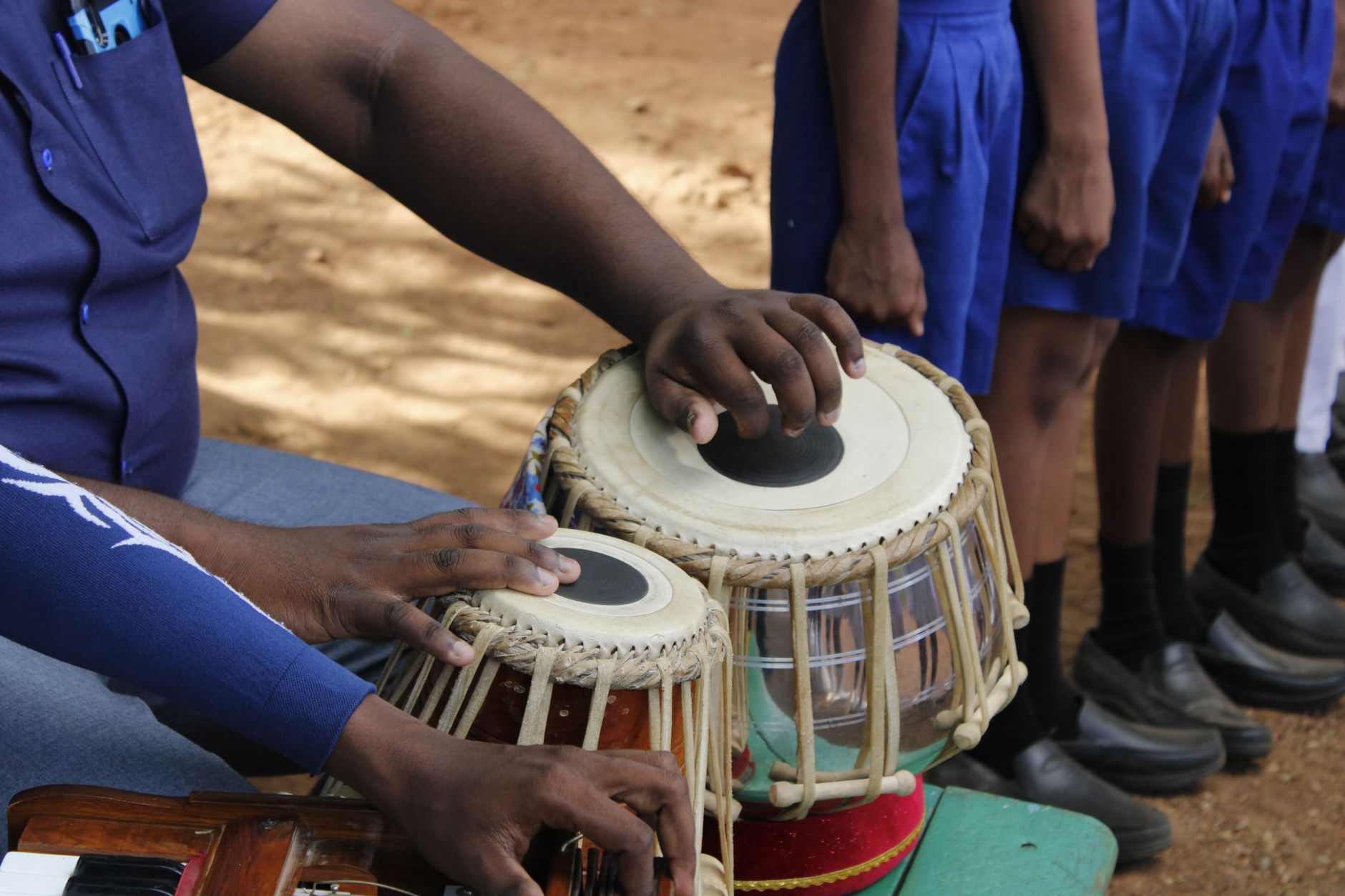
The air in the narrow, sun-drenched alleyway in Marrakech was thick with the scent of spices, mint tea, and something else… something ancient and utterly captivating. It was a melody, weaving through the chaos of the souk, pulled from the strings of a guembri – a three-stringed bass lute unique to Gnawa music. The sound was hypnotic, soulful, and deeply spiritual. I stood there, mesmerized, a sudden, overwhelming urge washing over me: I didn't just want to listen to this music; I wanted to understand it, to feel the vibrations of its history in my own hands.
That moment wasn't just a travel memory; it was a revelation. It sparked a quest, a series of journeys that have taken me far beyond the usual tourist trails, into the homes and hearts of master musicians around the world. These aren't your average music classes; these are profound cultural immersions, direct transmissions of centuries of knowledge, emotion, and tradition. They are, quite simply, experiences that will blow your mind, reshape your understanding of a culture, and leave you with a skill – and a story – that lasts a lifetime.
Welcome, fellow travelers, to the ultimate guide to finding and learning traditional music from the living legends who keep these ancient art forms alive. Are you ready to trade your headphones for a hand drum, your Spotify for a sitar, and your tourist gaze for the focused intensity of a learner? Let’s dive in.
Why Traditional Music Lessons Are the Ultimate Cultural Deep Dive
Forget museums and monuments for a moment. While they offer glimpses into a culture’s past, traditional music offers a living, breathing pulse. It’s the soundtrack to daily life, sacred rituals, celebrations, and storytelling. When you learn traditional music, you’re not just acquiring a skill; you’re unlocking a profound understanding of a people’s history, philosophy, and collective soul.
Authenticity Beyond Compare:
In a world increasingly homogenized, traditional music remains fiercely authentic. It’s often passed down through generations, embodying the unique spirit of its origin. Learning it from a master means receiving this knowledge directly, untainted by commercialism or mass tourism. You’re not just observing; you’re participating in a living heritage.
Building Bridges, One Note at a Time:
There’s an immediate, powerful connection that forms when you share a musical experience with a local. The language barrier often melts away, replaced by the universal language of rhythm and melody. My teachers have become friends, mentors, and guides, opening doors to local life that no guidebook ever could. They’ve invited me into their homes, shared meals, and recounted stories that bring their culture to vivid life.
A Transformative Personal Journey:
Beyond the cultural insights, learning a new instrument or musical tradition challenges you in unexpected ways. It demands patience, discipline, and a willingness to embrace imperfection. It hones your listening skills, sharpens your focus, and offers a unique form of meditation. Plus, the sheer joy of producing sounds that connect you to an ancient lineage is an incomparable reward.
Finding Your Maestro: The Hunt for Authenticity
So, you’re convinced. You want to embark on this incredible journey. But how do you find these elusive masters? It’s not always as simple as a quick Google search, and that’s part of the adventure!
1. Go Local, Ask Around:
This is by far the most effective method.
* Guesthouse Owners & Locals: The people who live there know best. Ask your hostel owner, your B&B host, the friendly shopkeeper, or even taxi drivers. Be specific: "I'm looking to learn [instrument name] or [music style] from a local teacher."
* Cultural Centers & Institutes: Many countries have national or regional cultural centers dedicated to preserving traditional arts. These are goldmines for finding reputable teachers and workshops. Universities with ethnomusicology departments are also great resources.
* Music Festivals & Performances: Attend local music festivals or seek out traditional performances. After a show, approach the musicians (respectfully!) and express your interest in learning. They might teach themselves or know someone who does.
* Online Communities: Search expat forums, local Facebook groups, or specialized music forums for the region you're visiting. Someone might have a recommendation.
2. Specialized Schools & Workshops:
For some traditions, dedicated schools offer structured learning.
* Examples: Flamenco schools in Spain (like Fundación Cristina Heeren in Seville), Gamelan workshops in Bali, or traditional Irish music centers. While these might be slightly more formal, they often employ master teachers and provide a solid foundation.
3. Red Flags & Green Flags:
* Green Flags: Teachers who are passionate about their tradition, emphasize cultural context, teach by ear, and are recommended by multiple locals. Look for those who perform regularly in their community.
* Red Flags: Teachers who seem overly focused on money, offer "fast-track" tourist lessons without depth, or can’t provide any local references. Be wary of places that feel like a conveyor belt for tourists. A true master is often humble and more interested in the transmission of knowledge than a quick buck.
Pre-Departure Prep:
Do some basic research on the instrument or music style you're interested in. Listen to recordings, learn a few key phrases in the local language (especially "hello," "thank you," and "I want to learn music"), and understand the basic etiquette of the culture. This shows respect and enthusiasm.
My Journey to the Rhythm: Anecdotes & Experiences
My quest has led me to some incredible corners of the world, each lesson a unique tapestry woven with music, history, and human connection.
1. The Hypnotic Heartbeat of Bali: Gamelan in Ubud, Indonesia
Imagine the humid air, the scent of frangipani, and the shimmering, percussive orchestra of Balinese Gamelan. My first encounter with Gamelan was in a temple ceremony, and I was instantly captivated by its complex, interlocking rhythms and its spiritual resonance.
The Maestro:
I found Pak Made, a gentle man with an infectious smile and decades of experience, through a recommendation from my guesthouse owner in Ubud. He taught in an open-air pavilion behind his family compound, surrounded by lush greenery and the sounds of village life.
The Experience:
Pak Made didn't just teach notes; he taught the philosophy behind the music. We sat on the floor, me with a gangsa (a bronze metallophone), him demonstrating on various instruments. He taught by ear, repeating phrases patiently, urging me to feel the rhythm rather than just intellectualize it. The challenge was immense – Gamelan is a communal music, where each instrument plays a small, intricate part that interlocks with others to create a whole. My first attempts were clumsy, but Pak Made's encouragement was unwavering. He spoke of gotong royong (mutual cooperation) and how the music reflected the Balinese way of life. By the end of a week of daily lessons, I could play a simple melody and felt a deep, almost spiritual connection to the music and the island.
Practical Details:
* Location: Ubud, Bali, Indonesia. Many cultural centers and even some hotels offer workshops. I recommend seeking out independent teachers through local connections.
* Cost: Expect to pay around IDR 150,000 - 300,000 (approx. $10-20 USD) per hour for a private lesson. Group workshops might be less.
* Instagram-Worthy: A shot of you intently playing a gangsa or kendang (drum) in a traditional Balinese pavilion, with the lush backdrop of rice paddies or temple carvings. #BalineseGamelan #UbudMusic #CulturalImmersion
2. The Fiery Soul of Spain: Flamenco Guitar in Seville, Andalusia
From the serene spirituality of Bali to the raw passion of Andalusia, my next musical pilgrimage led me to the heart of Flamenco. The soulful cries of the canto, the intricate footwork of the baile, and the blistering speed of the toque (guitar playing) – Flamenco is a force of nature.
The Maestro:
In Seville, the birthplace of Flamenco, I enrolled in a week-long intensive workshop at a renowned school (Taller Flamenco came highly recommended, though I found my specific teacher, Antonio, through a local cafe owner who was a keen aficionado). Antonio was a stoic man with calloused fingers and eyes that held the history of a thousand juergas (Flamenco parties).
The Experience:
Learning Flamenco guitar is not for the faint of heart. Antonio started me on the basics: the rasgueado (strumming technique), the golpe (percussive tapping on the guitar body), and the complex compás (rhythmic cycle). He didn't just teach chords; he taught the feeling, the duende – that untranslatable sense of heightened emotion and soul. He'd demonstrate a phrase, his fingers a blur, then demand I replicate it, not just mechanically, but with feeling. He shared stories of legendary guitarists, of late-night sessions, and the profound sadness and joy embedded in every note. My fingers ached, my brain struggled with the complex rhythms, but every breakthrough felt like a triumph.
Practical Details:
* Location: Seville, Granada, or Jerez de la Frontera, Andalusia, Spain. These cities are the epicenters of Flamenco.
* Cost: Private lessons range from €40-€70 per hour. Intensive week-long courses can be €200-€500, depending on the school and hours.
* Instagram-Worthy: A close-up of your hands attempting a rasgueado on a classical guitar, with a shadowy figure of your maestro in the background, or a shot of a traditional Flamenco guitar leaning against an ancient stone wall in a patio. #FlamencoGuitar #SevilleMusic #Duende
3. The Lively Heartbeat of Ireland: Bodhrán in Doolin, County Clare
After the intensity of Flamenco, I craved the convivial, storytelling spirit of Irish traditional music. And where better to find it than Doolin, a tiny village on Ireland’s wild west coast, famed for its pubs and sessions?
The Maestro:
I stumbled upon Martin, a jovial, white-bearded man who played the bodhrán (Irish frame drum) with a mischievous twinkle in his eye. I met him during a session at Gus O’Connor’s Pub, where he agreed to give me a few lessons between pints of Guinness.
The Experience:
Martin’s lessons were as much about the craic (fun) and storytelling as they were about the drumming. He taught me the basic 'roll' and 'tap' strokes, emphasizing the importance of playing with the melody, not just to it. He spoke of the history of the bodhrán, how it was once a humble kitchen utensil, now a cornerstone of traditional sessions. The real learning happened during the pub sessions themselves. Martin would sit beside me, occasionally nudging my arm, whispering encouragement, or sharing a quick tip as the fiddles, flutes, and accordions swirled around us. It wasn't about perfection; it was about joining in, feeling the collective energy, and contributing to the joyous, spontaneous music. By the end of my time in Doolin, I could hold a basic rhythm and, more importantly, felt like I was part of something truly special.
Practical Details:
* Location: Doolin, County Clare, Ireland, or any village with a strong traditional music scene (e.g., Westport, Galway, Ennis).
* Cost: Often informal, around €30-€50 per hour for a private lesson. Many pubs also offer free introductory workshops.
* Instagram-Worthy: A shot of your bodhrán resting on a pub table with a pint of Guinness, or a candid shot of a lively pub session with you in the background, trying to keep up! #IrishTrad #Bodhran #DoolinMusic #TheCraic
The Practicalities: What to Expect and How to Prepare
Embarking on this musical adventure requires a bit of planning and a healthy dose of open-mindedness.
1. Language Barrier? Embrace It!
* Music is a universal language. Many teachers will use demonstration, gestures, and a few key English phrases. Don't let a language barrier deter you. I've had some of my most profound lessons with teachers with whom I shared very few spoken words. Translation apps can help with complex explanations, but often, the learning is purely auditory and imitative.
2. Cost & Duration:
* Varies Wildly: As seen above, prices can range from $10 to $70+ per hour, depending on the country, the teacher's reputation, and the formality of the setting. Always clarify rates upfront.
* Negotiation: In some cultures, polite negotiation is expected, especially for longer lesson packages.
* Duration: Consider your travel style. Do you want a single, memorable introductory lesson, or a week-long immersion? I recommend at least 3-5 lessons to get a real feel for the instrument and the teacher.
3. Instrument Access:
* Borrow/Rent: Most teachers will have spare instruments for you to use during lessons. Some schools offer rentals for practice outside of class.
* Buy: For a deeper commitment, consider purchasing a local instrument. This is a fantastic souvenir and supports local artisans. Just be mindful of airline baggage restrictions!
4. Etiquette & Respect:
* Punctuality: Always be on time, if not early.
* Dress Code: While often informal, observe how locals dress for similar activities and dress respectfully.
* Humility & Patience: You are a guest learning a sacred tradition. Approach with an open mind, be patient with yourself, and show immense respect for your teacher and their heritage. It's not about being a virtuoso overnight; it's about the journey.
* Gift-Giving: A small, thoughtful gift from your home country can be a lovely gesture of appreciation, especially if you form a strong connection.
5. Mindset is Key:
* Let Go of Expectations: You won't become a master in a week. Focus on the experience, the connection, and the small victories.
* Embrace the Unfamiliar: Traditional music often has different scales, rhythms, and philosophies than Western music. Lean into the challenge.
* Record (with Permission): Ask your teacher if you can record parts of the lesson (audio or video) to help you practice later. This is invaluable!
Beyond the Notes: The Deeper Impact
The melodies may fade, and your fingers might forget a complex chord, but the impact of learning traditional music from a master will stay with you forever.
Personal Growth:
You'll develop incredible patience, discipline, and a deeper appreciation for diverse cultures. You'll learn to listen more intently, both to music and to people.
Unforgettable Travel Memories:
These experiences become the vibrant threads in the tapestry of your travels. They're far more profound and lasting than any souvenir, offering a direct, participatory connection to a place's soul.
New Perspectives:
Music is a window into a culture's worldview. Understanding its nuances can illuminate aspects of history, religion, and social structure that you might otherwise miss.
Community & Connection:
The bonds formed with your teachers, fellow students, and the local community through music are incredibly rich. You'll gain new friends and a sense of belonging in unfamiliar places.
Bringing It Home:
You'll return not just with photographs, but with a new skill, a deeper understanding, and a story that truly sets your travels apart. Perhaps you'll even continue your practice, sharing the beauty of these traditions with others.
Ready to Make Music? Your Journey Awaits!
Stepping into the world of traditional music lessons is more than just a travel activity; it's an act of profound cultural engagement, a testament to the power of human connection, and an unforgettable personal adventure. It’s about listening, learning, and letting the ancient rhythms of the world blow your mind, one note at a time.
So, ditch the tourist brochure for a moment. Close your eyes, listen to the sounds around you, and imagine yourself not just observing, but creating music. What instrument calls to you? Which culture's melody whispers to your soul?
Tell us in the comments below!
Where would you go to learn traditional music from a master? Have you had an incredible musical learning experience while traveling? Share your stories and inspire fellow wanderers!
Don't just travel; immerse yourself. Don't just listen; learn. This is your invitation to a journey of sound, soul, and unforgettable discovery.
---