The first time I heard the haunting, ethereal notes of a Japanese shakuhachi flute, I wasn't in a concert hall; I was huddled in a tiny tea house in Kyoto, rain pattering softly against the paper screens. The musician, an elderly gentleman with eyes that held centuries of stories, played with such profound serenity that time seemed to dissolve. In that moment, something shifted within me. It wasn't just music; it was a conversation with history, a whisper from the soul of a culture. I knew then that simply listening wasn't enough – I wanted to learn.
That desire sparked an idea that has since become my favorite way to travel: seeking out traditional music masters to learn their craft firsthand. It’s more than a lesson; it’s an immersion, a living dialogue with heritage. And let me tell you, friends, there's no better time to embark on such a profoundly enriching journey than November 2025.
Why November, you ask? Because it's a sweet spot. The summer crowds have long dispersed, the scorching heat of many regions has mellowed into pleasant warmth, and the pre-holiday rush hasn't yet begun. This means better access to sought-after teachers, more intimate class settings, and often, a vibrant local cultural scene gearing up for winter festivals. You’re not just learning music; you’re experiencing the authentic pulse of a place.
Join me as we explore some of the world’s most captivating destinations, where you can sit at the feet of true masters and let their ancient melodies become a part of your own story. Trust me, this isn't just a trip; it's a transformation.
Why November 2025 is Your Musical Moment
Let's talk logistics and magic. November offers a unique confluence of factors perfect for deep cultural dives. Airfares and accommodation often dip after the peak autumn foliage season and before the Christmas holiday surge, making your dream trip more accessible. The weather in many of our target destinations, from the mild Mediterranean warmth of Spain to the crisp, clear days in Japan, is simply delightful for exploring, practicing, and reflecting.
Crucially, this is a time when local communities settle into a rhythm that allows for more focused interaction. Many master musicians, who might be busy with summer festivals or touring during peak season, often have more availability for private lessons and workshops in November. You're getting an unparalleled opportunity for one-on-one tutelage that might be impossible at other times of the year. Plus, imagine the photos – golden autumn light, cozy interiors, and instruments that tell tales of generations. Pure Instagram gold, my friends!
But remember, "November 2025" might sound far off, but the best masters, the most authentic experiences, and the most charming accommodations get booked fast. Start your research and outreach now to secure your spot. This isn't a last-minute whim; it's a carefully crafted adventure.
The Soulful Serenity of Shakuhachi in Kyoto, Japan
My journey into the world of traditional music began with that shakuhachi player in Kyoto, and it remains one of the most profound experiences of my life. The shakuhachi, a Japanese end-blown flute made from bamboo, isn't just an instrument; it's a vehicle for Zen meditation, its sound often described as the "voice of the void." Learning to play it is less about technical prowess and more about finding your inner breath, your ma (empty space), and connecting with a deep spiritual tradition.
My Anecdote:
I remember my first lesson with Sensei Hiroshi, a soft-spoken master in his late 70s, whose home dojo overlooked a miniature rock garden. He didn't start with scales or complex fingerings. Instead, he simply asked me to breathe, to listen to the silence between breaths, and then to coax a single, sustained note from the bamboo. It was frustratingly difficult, yet utterly captivating. The sound, when it finally emerged, was raw, imperfect, but undeniably mine. Each lesson was a masterclass in patience, mindfulness, and the beauty of imperfection. He taught me not just how to play, but how to feel the instrument and the air passing through it.
Finding Your Master:
In Kyoto, centers like the Kyoto Traditional Musical Instrument Association or smaller private dojos are excellent starting points. Many masters teach from their homes, and finding them often involves local connections or referrals. Websites like Kyoto Journal or specialized traditional arts directories can also be helpful. For November 2025, I’d suggest contacting them as early as spring 2025, or even late 2024, to inquire about private lessons.
Practical Details:
* Instrument: You can often rent a shakuhachi for your lessons, but if you’re serious, consider purchasing a beginner’s model (around ¥20,000-¥50,000 / $130-$330 USD) once you arrive.
* Lesson Cost: Private lessons with a respected master can range from ¥7,000-¥15,000 (approx. $45-$100 USD) per hour. Group workshops are sometimes available at a lower rate.
* Booking Tips: Be respectful and formal in your initial inquiries. A polite email (translated into Japanese if possible) explaining your sincere interest is best. Ask about a series of lessons rather than just one, as consistency is key for this instrument.
* Instagram Moment: Imagine your shakuhachi propped against the backdrop of a serene Zen garden, steam rising from a cup of matcha, or a candid shot of you focusing intently with your sensei. Truly evocative.
Flamenco Fire: Strumming with Maestros in Seville, Spain
From meditative calm to fiery passion, our next stop takes us to the heart of Andalusia: Seville, Spain. Flamenco isn't just music and dance; it's a way of life, a raw expression of joy, sorrow, and everything in between. Learning the Flamenco guitar (or even the cajón, the rhythmic box drum) here is an experience that will ignite your soul.
My Anecdote:
My first Flamenco lesson in Triana, Seville’s historic gypsy quarter, was less about theory and more about duende – that untranslatable feeling of heightened emotion and authenticity. My teacher, Paco, a man with calloused fingers and eyes that danced with every strum, barely spoke English. But his guitar spoke volumes. He’d demonstrate a rasgueado (a powerful strumming technique) and then simply say, "¡Siente! Feel it!" I remember my fingers aching, my wrist burning, but the sheer exhilaration of producing those complex, percussive rhythms was addictive. We ended each session with a shared café con leche, listening to stories of legendary cantaores and bailaores.
Finding Your Maestro:
Seville is teeming with Flamenco schools and private teachers. Renowned institutions like Fundación Cristina Heeren de Arte Flamenco or Taller Flamenco offer intensive courses ranging from a few days to several weeks, perfect for an immersive November 2025 experience. For private lessons, explore the Triana or Macarena neighborhoods, where many independent maestros teach from their studios. Ask at local guitar shops or at a traditional peña (Flamenco club) for recommendations.
Practical Details:
* Instrument: Most schools provide guitars for lessons, but you might want to buy or rent one for practice if you're staying for an extended period. A decent student Flamenco guitar can start from €300-€500 ($320-$530 USD).
* Lesson Cost: Private lessons typically cost €30-€60 ($32-$65 USD) per hour. Week-long intensive workshops can range from €200-€500 ($215-$530 USD), often including multiple daily classes.
* Booking Tips: These schools are popular, so booking well in advance for November 2025 is essential, especially for longer courses. Many offer online registration. For private teachers, an email or WhatsApp message is usually sufficient to start.
* Instagram Moment: Capture the vibrant energy of a tablao performance, a close-up of your hands on the guitar fretboard, or the colorful streets of Seville with your instrument case in hand.
Echoes of Eternity: Sitar & Tabla in Sacred Varanasi, India
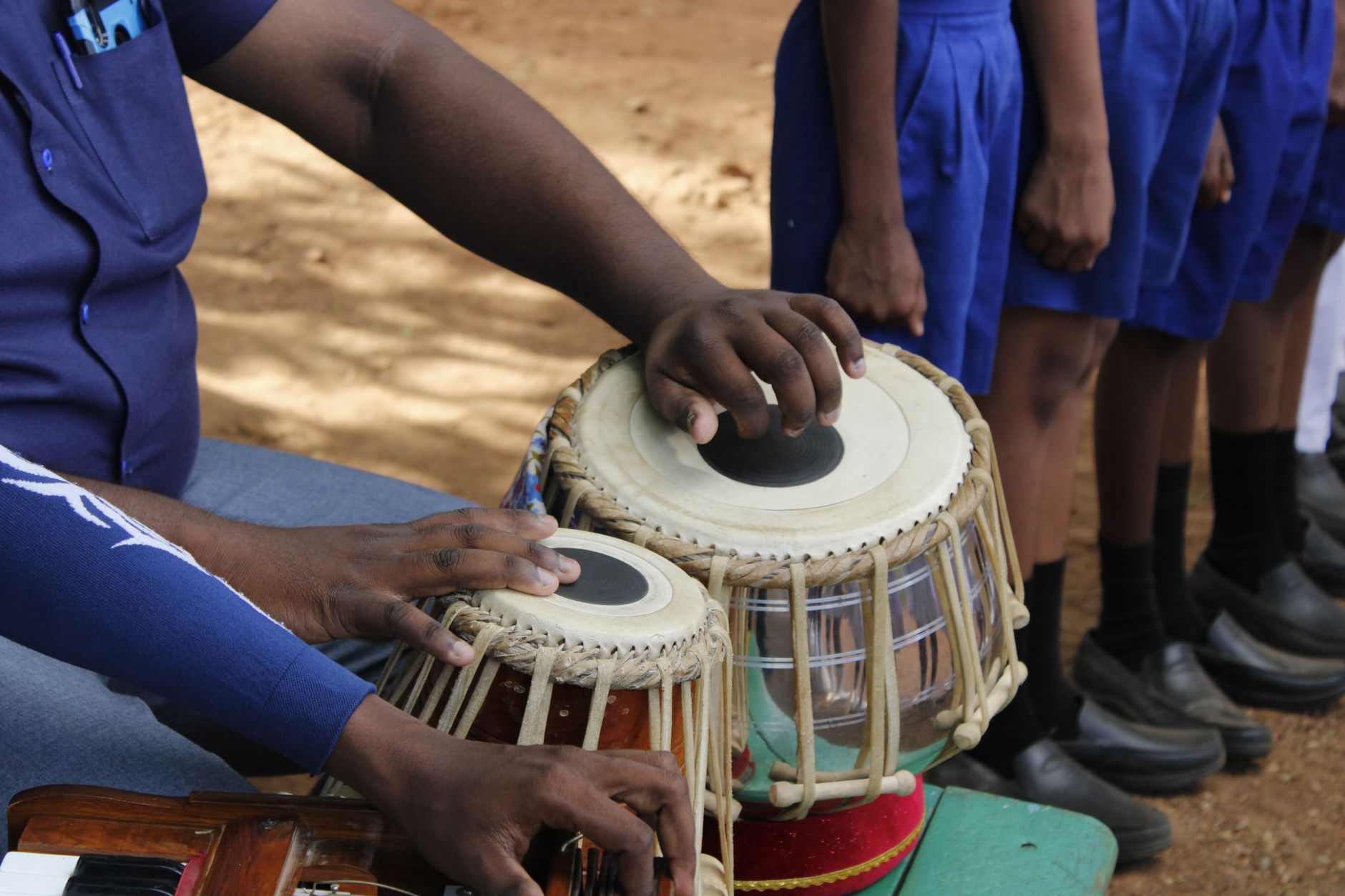
For a truly profound and ancient musical journey, there’s no place like Varanasi, India. Situated on the banks of the sacred Ganges, this city is a living tapestry of spirituality, history, and classical Indian music. Learning the Sitar (a multi-stringed lute) or Tabla (a pair of hand drums) here is an act of devotion, connecting you to a tradition stretching back millennia.
My Anecdote:
My morning lessons with Guru ji (a term of respect for a teacher) in Varanasi were an experience unlike any other. We’d begin just after sunrise, the air still cool, the sounds of temple bells and chanting drifting from the ghats. My Sitar teacher, a man whose family had been musicians for generations, would guide my fingers over the frets, demonstrating the intricate ragas and taalas. It wasn’t just about the notes; it was about the emotion, the spiritual narrative each raga conveyed. I remember the sheer intensity of the Tabla lessons – the rapid-fire finger movements, the subtle shifts in tone. It felt less like learning music and more like learning a secret language of the universe. The highlight was practicing by the Ganges in the late afternoon, the setting sun painting the sky as my tentative notes mingled with the city's ancient hum.
Finding Your Guru:
Varanasi has numerous music schools, particularly around Assi Ghat, catering to both beginners and advanced students. The International Music Centre Ashram and Shiv Nadar Music Academy are well-known, offering various programs. However, for a truly authentic experience, seek out private gurus. Local guesthouses or cafes popular with travelers often have connections. Word-of-mouth is powerful here.
Practical Details:
* Instrument: You can rent a Sitar or Tabla for your lessons, but if you plan an extended stay, purchasing a student instrument (Sitar: ₹15,000-₹30,000 / $180-$360 USD; Tabla: ₹8,000-₹15,000 / $95-$180 USD) is a good investment.
* Lesson Cost: Private lessons with a reputable guru typically cost ₹500-₹1500 (approx. $6-$18 USD) per hour. Prices can be negotiable for longer-term commitments. Group classes are generally cheaper.
* Booking Tips: It's often best to arrive and then arrange lessons in person, as many gurus prefer face-to-face interaction. However, for November 2025, you can certainly send introductory emails to established schools beforehand. Be prepared for a different pace of communication. Be respectful of local customs and traditions.
* Instagram Moment: A serene shot of your Sitar by the Ganges at sunrise, intricate carvings on a Tabla, or a candid photo of your guru teaching amidst the vibrant chaos of Varanasi.
Ceol agus Craic: Fiddling & Bodhrán in Galway, Ireland
For a taste of lively, communal music, head to the west coast of Ireland, specifically Galway. Here, traditional Irish music (known as 'Trad') isn't confined to concert halls; it spills out of cozy pubs during spontaneous sessions. Learning the Irish fiddle or the bodhrán (a frame drum played with a beater) is your ticket into this warm, welcoming world of ceol agus craic (music and fun).
My Anecdote:
My first attempt at the bodhrán in a bustling Galway pub was a hilarious disaster. I was trying to keep time with a group of seasoned musicians, my hand flailing, my beater (called a tipper) refusing to cooperate. But the beauty of Irish sessions is their inclusivity. An older gentleman, seeing my struggle, leaned over with a grin and gave me a quick, patient lesson on the basic roll. By the end of the night, I wasn't a master, but I was contributing, tapping into that joyous, infectious rhythm. My fiddle lessons were equally memorable, often taking place in a small music shop, the scent of wood and rosin filling the air as my teacher, Maeve, showed me the nuances of a jig or a reel.
Finding Your Teacher:
Galway is a hub for Irish Trad. Organizations like Comhaltas Ceoltóirí Éireann have local branches that offer lessons. Local music shops (like Powell's Music Shop or Matt O'Sullivan's Music) often have lists of private teachers. The best way to find a teacher for November 2025 is to start contacting these places a good 6-9 months in advance. Don't be shy about asking around in pubs known for sessions – musicians are often happy to recommend teachers.
Practical Details:
* Instrument: Fiddles can be rented from music shops (€20-€30 / $21-$32 USD per week), or you can buy a beginner's model (€150-€300 / $160-$320 USD). Bodhráns are more affordable to purchase outright (€50-€150 / $55-$160 USD).
* Lesson Cost: Private lessons generally cost €30-€50 ($32-$55 USD) per hour. Group lessons or weekend workshops can be found for €100-€250 ($107-$270 USD).
* Booking Tips: Many teachers are independent, so direct email or phone calls are common. Inquire about a package of lessons to get a better rate and more consistent learning. Consider combining your lessons with a traditional music tour or a visit to the Galway International Arts Festival if dates align (though GIAF is typically in summer, November might have smaller, local festivals).
* Instagram Moment: A cozy pub interior with musicians mid-session, your fiddle or bodhrán against a backdrop of the Wild Atlantic Way, or a close-up of your hands learning a new tune.
Essential Preparation for Your Musical Odyssey
Embarking on a musical journey like this requires a bit of foresight and planning, especially for November 2025. Here’s a checklist to ensure your adventure hits all the right notes:
- Visa & Travel Insurance: Check visa requirements for your chosen destination(s) well in advance. Travel insurance is non-negotiable – cover for medical emergencies, trip cancellations, and even instrument damage is crucial.
- Budgeting: Beyond lessons, factor in flights, accommodation, food, local transport, instrument rental/purchase, and general sightseeing. Research average costs for your chosen cities.
- Language Basics: Learn a few key phrases in the local language ("hello," "thank you," "how much," "music lesson"). Even a little effort goes a long way in showing respect and fostering connection.
- Research Your Instrument: Spend some time online watching videos, listening to the music, and understanding the basics of your chosen instrument. This will help you hit the ground running and show your teacher you're serious.
- Set Realistic Expectations: You won't become a master in a week or even a month. The goal is immersion, appreciation, and gaining a foundational understanding. Enjoy the process, the cultural exchange, and the small victories.
- Pack Smart: Bring a small notebook and pen for jotting down notes, a recording device (your phone is fine) to capture lessons (ask permission!), and comfortable clothes suitable for both lessons and exploring.
- Cultural Sensitivity: Be aware of local customs, etiquette, and dress codes, especially when interacting with masters and visiting sacred spaces. A respectful attitude enhances your entire experience.
- Flexibility: While planning is key, be open to unexpected opportunities. Some of the best experiences happen spontaneously!
Your Symphony Awaits
Learning traditional music from masters is more than just acquiring a new skill; it's about unlocking a deeper understanding of a culture, connecting with people on a profoundly human level, and discovering a new part of yourself. It's about the stories whispered through ancient melodies, the calloused hands that have preserved traditions for generations, and the sheer joy of creating something beautiful.
November 2025 is calling. It's your chance to step away from the tourist trails and into the heart of a living art form. Imagine returning home not just with souvenirs, but with the ability to play a soul-stirring tune, a new language in your fingertips, and memories that will resonate for a lifetime.
So, what are you waiting for? Start planning your musical odyssey today. Reach out to those teachers, book those flights, and prepare to let the world's most beautiful traditions sing through you. And when you do, don't forget to share your journey with #TripsoraMusicMasters – we can't wait to hear your story!
---