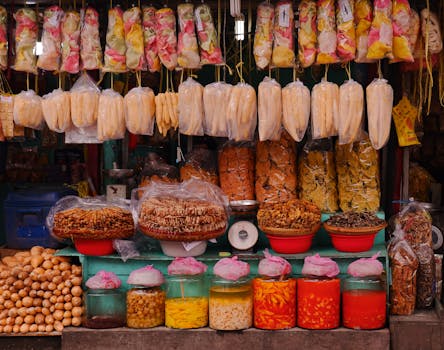
"Don't even think about it," my guide, Hiroshi, warned, his eyes twinkling with a mix of amusement and genuine concern. We were in Tokyo's bustling Tsukiji Outer Market, and I was pointing, with perhaps a little too much enthusiasm, at a pristine display of fugu – the infamous pufferfish. "Unless you have a death wish, and a license to prepare it, it's best admired from afar."
That moment stuck with me. It wasn't just about the pufferfish; it was about the allure of the forbidden, the mystique of foods so potent, so controversial, that they are deemed illegal in most parts of the world. Yet, paradoxically, these very foods are sparking a global conversation, trending across social media, documentaries, and adventurous travel blogs. Why? Because they represent the extreme edges of human culinary curiosity, cultural heritage, and sometimes, sheer audacity.
As your resident Tripsora explorer, I've crisscrossed continents, tasted the sublime, and skirted the scandalous. Today, we're embarking on a journey into the heart of the forbidden, not to encourage reckless consumption (far from it!), but to understand the stories, the science, and the sheer fascination behind foods that are illegal in most countries but are undeniably trending right now. Let’s unravel the delicious dangers and cultural complexities that make these culinary rebels so captivating.
The Allure of the Forbidden: Why Are These Foods Trending?
In an age where every meal is a potential Instagram post and every travel experience a story, the "forbidden" holds an undeniable appeal. It's not just about eating something dangerous; it's about the narrative, the history, the cultural context, and the sheer rarity. These foods often carry a legacy of tradition, a whisper of rebellion, or a testament to human ingenuity in taming (or attempting to tame) nature's most potent ingredients.
The "trend" isn't necessarily about people illegally sourcing these items. Instead, it's about a growing global awareness, fueled by documentaries, food shows, and the internet's insatiable appetite for the unusual. Travelers are increasingly curious about the world's most unique culinary traditions, and these "illegal" foods often sit at the apex of that curiosity. My goal today is to shed light on them responsibly, understanding why they're restricted and where (and under what strict conditions) they might be encountered legally.
Let's dive into some of the most talked-about, legally complex, and utterly fascinating foods making waves in the culinary consciousness.
1. Fugu: Japan's Deadly Delicacy
The Legend:
My encounter with fugu in Tsukiji was just a glimpse into its legendary status. This Japanese pufferfish is renowned for its exquisite taste and, more famously, for the potent tetrodotoxin in its organs, which can be 1,200 times deadlier than cyanide. A single wrong cut can mean instant paralysis and death.
Why It's Illegal (Mostly):
Due to its extreme toxicity, importing or preparing fugu is illegal in most countries, including the entire European Union and many parts of the United States. Even in Japan, where it’s a highly prized delicacy, only specially trained and licensed chefs, who undergo years of rigorous apprenticeship, are permitted to prepare it.
The Trend:
Fugu trends because of its high-stakes reputation. It embodies the pinnacle of culinary artistry and risk. Food thrill-seekers and cultural enthusiasts are drawn to its story, its precision preparation, and the sheer audacity of a dish that flirts with danger. It's the ultimate "I tried it (safely, with a licensed chef!)" story.
My Experience & Tips:
While in Tokyo, I chose not to eat fugu myself, primarily due to cost and a slight aversion to voluntary risk. However, I spent an entire afternoon watching a master fugu chef, Chef Tanaka, at a small, unassuming restaurant in Ginza. The precision, the surgical cuts, the almost ritualistic plating – it was like watching a culinary samurai. He explained that a single fugu can cost upwards of ¥10,000 (about $70-$80 USD) for a multi-course meal, a price that reflects not just the ingredient but the unparalleled skill and liability of the chef.
- Actionable Advice: If you are determined to try fugu, only do so in Japan and only at a reputable restaurant with a certified, licensed fugu chef. Look for establishments displaying their license prominently. Do your research, read reviews, and understand that you are engaging in a culinary experience with inherent risks, albeit highly mitigated by expert preparation. Don't, under any circumstances, try to prepare it yourself or consume it from unregulated sources.
2. Casu Marzu: Sardinia's Maggot Cheese
The Legend:
Imagine a cheese teeming with live insect larvae. That's Casu Marzu (literally "rotten cheese" or "maggot cheese"), a traditional Sardinian sheep's milk cheese. The larvae of the cheese fly (Piophila casei) are introduced to the cheese, aiding fermentation and breaking down fats, giving it a unique, intensely pungent flavor and a creamy texture. The maggots, often jumping when disturbed, are typically eaten along with the cheese.
Why It's Illegal (Mostly):
Casu Marzu is banned for commercial sale by the European Union due to hygiene regulations, as it's considered unsafe for human consumption due to the presence of live insects and potential for bacterial contamination. The maggots themselves can survive stomach acid and cause intestinal discomfort or "pseudomyiasis."
The Trend:
This cheese trends because it challenges every conventional notion of appetizing food. It's gross, it's fascinating, and it's a testament to extreme culinary traditions. The "ick" factor combined with its cultural significance makes it a viral sensation whenever someone dares to try it.
My Experience & Tips:
During a road trip through rural Sardinia a few years ago, I heard whispers of Casu Marzu. I asked my host, an elderly woman named Nonna Elena, if she knew anything about it. She chuckled, then, with a wink, produced a small, pungent wheel from her cellar. "It's not for sale, cara mia," she whispered, "but it is for sharing." The experience was… memorable. The cheese was incredibly sharp, almost burning, and the texture was undeniably alive. I tried a small piece, the maggots indeed wriggling, and while it was an experience, it’s not one I’m rushing to repeat.
- Actionable Advice: Casu Marzu is a deeply ingrained part of Sardinian culture but is illegal to buy or sell. If you encounter it, it will likely be in a private, informal setting, often made for personal consumption or shared amongst close friends and family. Be aware of the health risks, including potential for intestinal issues. If you are offered it, proceed with extreme caution and at your own risk. It's a prime example of a food that exists outside commercial regulations, rooted in tradition rather than modern food safety standards. Perhaps admire it for its cultural tenacity, rather than its taste.
3. Ortolan Bunting: France's Forbidden Songbird
The Legend:
The Ortolan Bunting, a small songbird, holds a mythical status in French haute cuisine. Traditionally, these birds were force-fed until they swelled to four times their size, drowned in Armagnac, roasted whole, and then eaten entirely, bones and all, under a napkin to savor the aroma and hide the "indecency" of the act. It was a dish for the most discerning (and wealthy) gourmands.
Why It's Illegal (Mostly):
The Ortolan Bunting is a protected species under the European Union's Birds Directive due to severe population decline. Hunting, capturing, and selling them is strictly forbidden across the EU. While there have been historical periods of lax enforcement in France, the ban is now largely respected, and conservation efforts are paramount.
The Trend:
The Ortolan trends because it represents the ultimate forbidden luxury, a ghost of a bygone era of extreme fine dining. Its story, the ritual of its consumption, and its current protected status make it a symbol of both culinary excess and conservation triumphs. It's a powerful narrative about how our relationship with food evolves.
My Experience & Tips:
My closest encounter with the Ortolan was not eating it, but discussing it with a Michelin-starred chef in Lyon, Chef Dubois, who had tasted it in his youth before the ban. He spoke of it with a mix of reverence and regret, acknowledging its "unforgettable" flavor but fully supporting its protected status. "Some things," he mused, "are best left to memory, or to history books." The price, even back then, was exorbitant, often hundreds of euros per bird.
- Actionable Advice: Do not attempt to seek out Ortolan Bunting for consumption. It is illegal, unethical, and contributes to the decline of a protected species. Instead, appreciate its place in culinary history from a distance. Learn about the conservation efforts protecting it. If you encounter any establishment offering it, report them to local authorities. This is a food that should remain firmly in the past.
4. Unripe Ackee: Jamaica's Delicious Danger
The Legend:
Ackee, Jamaica's national fruit, is a vibrant, pear-shaped fruit that, when perfectly ripe and properly prepared, is a delicious and integral part of dishes like Ackee and Saltfish. Its buttery texture and mild flavor are unique. However, unripe ackee contains a potent toxin called hypoglycin A, which can cause "Jamaican Vomiting Sickness," leading to severe hypoglycemia, coma, and even death.
Why It's Illegal (Mostly):
Due to the danger of the unripe fruit, importing fresh ackee into many countries (including the U.S. for a long time, though restrictions have eased for processed, canned ackee) is heavily regulated or illegal. The fruit must be naturally ripened and then prepared correctly (only the arils, the yellow fleshy parts around the black seeds, are edible, and only after the fruit has naturally opened on the tree).
The Trend:
Ackee trends because it’s a staple of vibrant Jamaican cuisine, but its dangerous side provides a fascinating cautionary tale. It highlights the importance of traditional knowledge in food preparation and the fine line between sustenance and poison. It’s a powerful reminder that even natural foods can be lethal if misunderstood.
My Experience & Tips:
During a trip to Jamaica, I was fascinated by the ackee. My host, a wonderful woman named Auntie Beverly in Port Antonio, showed me her ackee tree. She patiently explained how to tell when it was ready: "See how it's splitting open? That's when you know. Never pick one that's still closed, darling. That's trouble." We prepared a glorious Ackee and Saltfish for breakfast, the creamy fruit perfectly offsetting the salty fish and Scotch bonnet peppers. It was one of the most memorable breakfasts of my life, tasting of sunshine and island wisdom.
- Actionable Advice: If you're in Jamaica, enjoy ackee at reputable restaurants or from trusted local cooks who understand proper preparation. Never pick or consume ackee directly from a tree unless you are absolutely certain of its ripeness and how to prepare it safely. When buying fresh ackee, ensure it has naturally opened. Otherwise, stick to canned ackee from reputable brands, which has been processed to remove the toxins.
5. Sassafras: The Root with a Secret
The Legend:
Sassafras root bark has a long history in North American folk medicine and cuisine, famously used to make traditional root beer and sassafras tea. It has a distinctive, sweet, and slightly spicy aroma.
Why It's Illegal (Mostly):
The FDA in the United States banned sassafras oil and safrole (a compound found in sassafras) for use in food and beverages in 1960, after studies indicated that safrole was carcinogenic in rats and could cause liver damage. Furthermore, safrole is a precursor chemical used in the illicit manufacture of MDMA (ecstasy), adding another layer of restriction. Many other countries also restrict its use.
The Trend:
Sassafras trends due to renewed interest in foraging, traditional remedies, and the craft beverage movement. People are rediscovering its historical uses, but often without full awareness of the reasons for its modern restrictions. It's a classic example of a natural ingredient with a hidden danger and a complex regulatory history.
My Experience & Tips:
Growing up in the American South, sassafras tea was a nostalgic, albeit rare, treat. My grandmother would occasionally brew it from roots she'd gathered, swearing by its "blood-thinning" properties. The aroma was intoxicating. Today, I understand the risks better. Modern root beer is typically flavored with artificial sassafras flavor or safrole-free sassafras extract.
- Actionable Advice: Avoid consuming sassafras tea or products made from sassafras bark or oil unless explicitly labeled as "safrole-free." While small, occasional consumption might not be immediately harmful, long-term or high-dose intake carries potential health risks due to its carcinogenic properties. If you're foraging, stick to edibles that are unequivocally safe and legal.
6. Absinthe: The Green Fairy's Comeback (with a Twist)
The Legend:
Absinthe, the iconic "Green Fairy" spirit, was notorious in 19th-century Europe for its supposed hallucinogenic properties and for driving artists and writers to madness. Made with wormwood, anise, and fennel, its high alcohol content and unique ritual of preparation (dripping water over a sugar cube) added to its mystique.
Why It Was Illegal (Mostly):
Absinthe was banned in many countries (including the US and much of Europe) in the early 20th century, largely due to temperance movements and unsubstantiated claims about its psychoactive compound, thujone, causing madness. Modern science has largely debunked these claims, attributing the "madness" more to the extreme alcohol content and poor-quality spirits of the era.
The Trend:
Absinthe has experienced a massive resurgence, trending as a historical curiosity and a sophisticated, artisanal spirit. The "forbidden" aspect of its past, combined with its unique flavor profile and ritualistic serving, makes it incredibly appealing to modern drinkers and cocktail enthusiasts.
My Experience & Tips:
In Prague, I stumbled into a small, dimly lit absintherie. The bartender, a man with a handlebar mustache and a theatrical flair, performed the traditional drip ritual. The cloudy green liquid, the sweet aroma of anise, the slow drip of water over the sugar cube – it was an experience. The taste was potent, herbaceous, and utterly unique. It certainly wasn't hallucinogenic, but it was strong!
- Actionable Advice: Traditional absinthe is now legal in most countries, but with strict regulations on thujone content. When traveling, look for reputable brands and establishments. In Europe, especially France, Switzerland, and the Czech Republic, you can find high-quality, legal absinthe. Always drink responsibly – absinthe has a very high alcohol proof. If you're looking for the "forbidden" thrill, focus on the history and the ritual, not illegal variations.
The Responsible Explorer's Ethos: Curiosity, Not Consumption
The world of food is vast, diverse, and sometimes, dangerous. The fascination with these "illegal" and trending foods isn't about breaking laws or risking your health. It's about understanding cultural practices, historical contexts, and the incredible diversity of human-food relationships. It's about appreciating why certain foods are revered in one place and reviled (or restricted) in another.
My Ultimate Takeaway:
As a travel blogger for Tripsora, my mission is always to inspire informed and responsible exploration. These foods offer a window into complex narratives, but they also come with serious warnings.
- Educate Yourself: Understand the laws and health risks associated with any exotic or controversial food.
- Respect Local Culture & Laws: If a food is illegal or restricted, there's usually a very good reason (conservation, public health, safety).
- Prioritize Safety: Never consume anything that puts your health at undue risk or comes from an unregulated source.
- Seek Out Experts: If you're curious about a food that requires specialized preparation (like fugu), only trust licensed professionals in countries where it's legal.
The true adventure isn't in consuming the forbidden; it's in understanding it. It's in the stories, the history, the culinary skill, and the cultural tapestry woven around these fascinating, often dangerous, delicacies. So, go forth, explore, learn, and share – but always do so with wisdom and respect.
What's the most unusual or "forbidden" food story you've encountered on your travels? Share your experiences and insights in the comments below! Let's keep the conversation going, responsibly, about the world's most captivating culinary curiosities!
---