The Ultimate Playbook: 7 Traditional Games Locals Will Teach You (Before You Die!)
The scent of grilled street food hangs heavy in the humid air, the cacophony of a bustling market surrounds me, and a group of teenagers are kicking what looks like a woven rattan ball with gravity-defying grace. I’m in a small village in Northern Thailand, far from the polished resorts and predictable tours. I’d come seeking "authentic," but what I found was far more profound: a spontaneous invitation to play.
"Mai kooi, krap!" (Come, friend!) a young man called out, gesturing to the circle. My initial hesitation quickly melted into curiosity. I watched, mesmerized, as they used their feet, knees, and even heads to keep the ball aloft, a ballet of athleticism and precision. When it was my turn, I fumbled, laughed, and eventually, with much encouragement and many cheers, managed a wobbly kick. That evening, sharing sticky rice and cold beer, I felt a connection deeper than any guided tour could offer. I wasn't just a tourist; I was a participant, a temporary member of their world.
This, my fellow adventurers, is the magic of traditional games. They are not just pastimes; they are living histories, cultural touchstones, and the most incredible conduits for genuine human connection you'll ever find on your travels. Forget your bucket list of monuments; these are the experiences that will truly fill your soul. So, pack your sense of adventure (and maybe some comfortable shoes), because here are 7 traditional games you absolutely need to experience before you die.
---
1. Sepak Takraw: The Aerial Ballet of Southeast Asia
What it is:
Imagine volleyball, but instead of hands, you use only your feet, knees, chest, and head. That’s Sepak Takraw, a high-flying, acrobatic sport played with a woven rattan ball (or synthetic equivalent). It's a mesmerizing display of agility, power, and teamwork. The name itself is a blend: "Sepak" means "kick" in Malay, and "Takraw" means "woven ball" in Thai.
Where to find it:
This electrifying sport is the unofficial national sport of Malaysia, Thailand, and Laos, and widely popular across Southeast Asia, including Vietnam, Cambodia, Indonesia, and the Philippines. You’ll find impromptu games in village squares, parks, beaches, and even urban alleys. Look for a small court with a net, and the distinctive 'thwack' of the ball.
My Story:
I first properly watched Sepak Takraw in a small park in Bangkok, near Lumphini Park. A crowd had gathered, oohing and aahing at the incredible bicycle kicks and head spikes. I was captivated. Later, traveling through rural Laos, I stumbled upon a game being played by men of all ages. They were less formal, more forgiving. I tentatively approached, and after a few minutes of watching, one of the players, a jovial man named Boun, tossed me the ball. My first attempts were disastrous – the ball seemed to have a mind of its own. But with Boun's patient guidance and the infectious laughter of the group, I started to get the hang of basic 'juggling' with my feet. The feeling of finally connecting with the ball, even for a few seconds, was exhilarating. It wasn't about winning; it was about the shared effort and the joy of the moment.
Practical Tips:
* Approach: Don't be shy! Most players are incredibly proud of their sport and happy to share. A simple "Sawasdee krap/ka" (hello in Thai) or "Sabai dee" (hello in Lao) with a smile goes a long way.
* Observe First: Watch for a bit to grasp the basic rules and flow.
* Join In: If invited, give it a go! Don't worry about being good; effort and enthusiasm are what count.
* Cost: Free! Just bring your energy. You might offer to buy a round of water or soft drinks afterwards as a gesture of thanks.
* Instagram Moment: The mid-air bicycle kicks are iconic. Capture the dynamic movement and the focused expressions of the players.
---
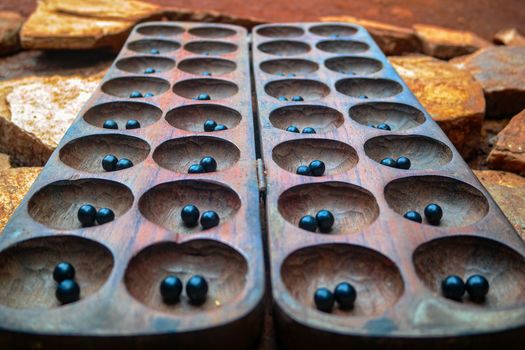
2. Mancala (or Congkak/Oware): The Ancient Seed Game of Strategy
What it is:
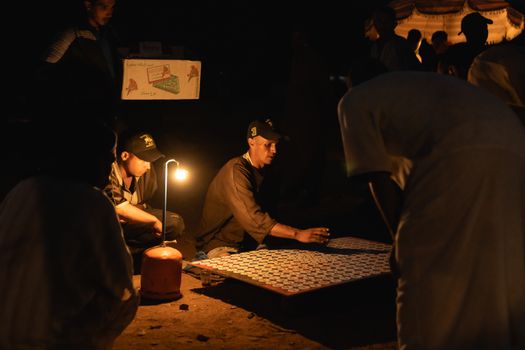
Mancala is not just one game, but a family of ancient board games played around the world, often called "seed games" or "count-and-capture" games. The basic premise involves distributing seeds, beans, or stones into a series of pits on a board, with the goal of capturing more pieces than your opponent. It's a game of strategy, foresight, and sometimes, a little bit of luck.
Where to find it:
Mancala variations are incredibly widespread. You'll find Congkak played in Southeast Asia (Malaysia, Indonesia, Singapore, Brunei, Philippines), often on beautifully carved wooden boards. Oware is popular in West Africa and the Caribbean. Other variations exist across the Middle East (e.g., Kalah), North Africa, and even parts of Europe. Look for people playing in village squares, tea houses, markets, or even just outside their homes.
My Story:
My introduction to Congkak was during a homestay in a small fishing village on Langkawi Island, Malaysia. My host, an elderly woman named Mak Cik Fatimah, had a worn wooden board carved with intricate designs. After a delicious home-cooked meal, she brought out a bag of tamarind seeds. Her grandchildren were already gathered, eager to play. Mak Cik Fatimah patiently explained the rules, her hands demonstrating the rhythmic "sowing" of seeds. The game was deceptively simple at first, but quickly revealed layers of strategy. I lost, predictably, but each round was a lesson, not just in the game, but in the gentle art of Malaysian hospitality. We communicated mostly through gestures and smiles, but the shared focus on the game transcended any language barrier. It felt like tapping into an ancient wisdom, passed down through generations.
Practical Tips:
* Patience: The rules can vary slightly between regions and even families. Be patient and willing to learn their specific version.
* Observe: Watch a few rounds to understand the flow before jumping in.
* Ask: A simple "Boleh saya belajar?" (Can I learn? - Malay) or "Can you teach me?" with a smile is usually met with enthusiasm.
* Cost: Almost always free. Sometimes people sell beautiful carved boards as souvenirs if you want to take a piece of the experience home.
* Instagram Moment: The beautiful, often handcrafted boards themselves are very photogenic, as are the focused faces of players. Capture the tactile nature of the game with the seeds.
---
3. Pétanque: The Art of French Leisure and Precision
What it is:
Pétanque is a quintessential French game of boules (metal balls), similar to Italian bocce. Players take turns throwing hollow metal boules as close as possible to a small wooden target ball called a cochonnet (piglet). It's a game of skill, strategy, and a surprising amount of subtle psychology, often played with a glass of pastis in hand.
Where to find it:
While undeniably French, Pétanque is played throughout Europe, particularly in Italy (where it's called Bocce), Spain, and even in former French colonies in Africa and Southeast Asia (e.g., Vietnam, Laos, Cambodia). In France, you'll find it in village squares, public parks, and specially designated boulodromes in virtually every town and city, especially in the south.
My Story:
During a road trip through Provence, France, my partner and I stumbled upon a bustling place in a small village called Roussillon. Under the shade of ancient plane trees, a group of elderly men, their faces weathered by sun and laughter lines, were deeply engrossed in a game of Pétanque. The rhythmic clinking of metal balls, the quiet murmurs of strategy, and the occasional burst of good-natured banter created an irresistible atmosphere. We watched for a while, sipping coffee, feeling like we’d stepped into a postcard. Eventually, one of the men, seeing our interested gazes, beckoned us over. "Vous voulez essayer?" (Do you want to try?). Monsieur Dubois, as I learned his name, handed me a heavy boule and showed me the stance. The game was harder than it looked – getting the right weight and trajectory takes practice. But the joy wasn't in winning (we didn't), it was in the camaraderie, the shared focus, and the feeling of participating in a timeless French ritual. We ended up sharing a bottle of local rosé and many stories, my French improving with every throw.
Practical Tips:
* Etiquette: It’s a social game. Be respectful of the players' concentration. Don't walk in front of players who are about to throw.
* Approach: A polite "Bonjour, puis-je regarder?" (Hello, may I watch?) is a good start. If invited, accept with enthusiasm.
* Learn the Basics: The goal is to get your boule closest to the cochonnet. You can also try to knock your opponent's boules away.
* Cost: Free to play. If you're serious, you can buy a set of boules, but most locals will lend you some. Consider buying a round of drinks if you join a game.
* Instagram Moment: The iconic scene of players gathered under plane trees, boules in hand, often with a glass of wine or pastis nearby. Capture the relaxed, social atmosphere.
---
4. Jianzi (Chinese Shuttlecock): The Graceful Dance of Footwork
What it is:
Jianzi, or Chinese Shuttlecock, is a traditional Chinese national sport that's a bit like badminton but played entirely with your feet, knees, and sometimes chest/shoulders. The shuttlecock (also called a jianzi) is weighted with rubber or plastic at the bottom and has feathers for flight. Players aim to keep the shuttlecock airborne using various parts of their body, displaying incredible agility and control.
Where to find it:
Jianzi is a common sight across China, particularly in parks, public squares, and open spaces in cities like Beijing, Shanghai, and Chengdu. It’s also popular in other East Asian countries like Vietnam (where it's called đá cầu), and parts of Southeast Asia. Look for groups of people, often retirees or young adults, forming circles and gracefully kicking the shuttlecock.
My Story:
I was wandering through Beijing's Temple of Heaven Park, a place bustling with tai chi practitioners, kite flyers, and singers. It was there I saw my first serious Jianzi game. A circle of about six men, some in their 60s, were performing an intricate dance, keeping the shuttlecock aloft with effortless flicks of their ankles and powerful kicks. It was less about competition and more about cooperation and flow. I stood mesmerized for a long time. Later, in a smaller park in Chengdu, I saw a less formal group, and emboldened by my previous observation, approached. A kind-faced woman in a bright tracksuit, noticing my interest, motioned for me to join. She handed me a spare Jianzi, and with a smile, demonstrated a basic kick. My attempts were clumsy, often sending the shuttlecock wildly off course, but the group patiently retrieved it, offering encouraging nods and gestures. The feeling of finally getting a clean kick, however rare, was immensely satisfying. It was a beautiful, non-verbal exchange of culture and joy.
Practical Tips:
* Attire: Wear comfortable shoes and clothing that allows for movement.
* Observe & Learn: The footwork can be intricate. Watch how locals use their instep, heel, and even the side of their foot.
* Start Simple: Don't try fancy tricks immediately. Focus on keeping the shuttlecock up with basic kicks.
* Cost: Free! Jianzis are cheap to buy if you want your own, but locals will usually lend you one.
* Instagram Moment: Capture the graceful, balletic movements of players, especially when multiple people are cooperating to keep the Jianzi aloft. The vibrant colors of the shuttlecocks against a park backdrop are also great.
---
5. Kabaddi: The Intense Tag-Team of South Asia
What it is:
Kabaddi is a contact team sport originating in ancient India. Two teams occupy opposite halves of a field. A "raider" from one team runs into the opposing team's half, attempts to tag as many defenders as possible, and returns to their own half, all while holding their breath and chanting "Kabaddi, Kabaddi, Kabaddi!" The defenders try to tackle and prevent the raider from returning. It’s a thrilling blend of wrestling, tag, and strategy, requiring immense stamina and quick thinking.
Where to find it:
Kabaddi is hugely popular in India, Bangladesh, Pakistan, and Nepal. It's often played in rural areas, village fields, and during festivals. Professional leagues (like the Pro Kabaddi League in India) have also brought it to urban stadiums. Look for large groups of young men playing in open fields, especially in the late afternoon or early evening.
My Story:
My first encounter with Kabaddi was in a small village outside Jaipur, Rajasthan, during a local fair. The atmosphere was electric. Drums beat, spectators cheered wildly, and two teams of muscular men, stripped to their vests, were locked in an intense, dusty battle. The raider's chant, the sudden bursts of speed, the desperate tackles – it was raw, visceral, and utterly captivating. I didn't play that day; the intensity was too high for a novice. But I did return a few days later to a less formal game. A group of teenagers were playing on a dusty patch of ground. I watched, fascinated, and eventually, one of them, a bright-eyed boy named Rohan, explained the rules in broken English. He even let me try a "raid." Holding my breath, I ran into the 'enemy' territory, awkwardly tried to tag someone, and was promptly tackled to the ground amidst hoots of laughter. It was a brief, humbling, and incredibly fun experience that gave me a taste of the sport's physicality and the community's passion.
Practical Tips:
* Observe from a Distance: Kabaddi is a contact sport. Watch from the sidelines first to understand the rules and intensity.
* Ask to Watch: A polite request to observe is usually welcomed.
* Joining In: Only join if explicitly invited and you feel comfortable with the physicality. Most informal games are more forgiving, but it’s still demanding.
* Cost: Free to watch and play.
* Instagram Moment: Capture the sheer intensity and athleticism of the players, especially during a tackle or a successful raid. The dusty fields and vibrant team colors make for powerful images.
---
6. Chhoung: The Cambodian Festival Game of Friendship
What it is:
Chhoung is a traditional Cambodian throwing and catching game, often played during Khmer New Year (Chaul Chnam Thmey) and other festivals. It's typically played by two teams, usually boys and girls, forming two lines facing each other. The "chhoung" itself is a piece of cloth rolled tightly into a ball or cylinder. The game involves throwing the chhoung back and forth, with players trying to catch it and avoid being hit. If you're hit, you might have to sing, dance, or perform a small forfeit, which adds to the fun and social interaction.
Where to find it:
Chhoung is most commonly seen in rural Cambodia and during festive occasions across the country, particularly during the Khmer New Year in April. You’ll find it in temple grounds, village fields, and community gathering spaces.
My Story:
I was fortunate enough to be in Siem Reap during Khmer New Year. The city was alive with celebrations, but I ventured out to a local village recommended by my guesthouse owner. There, amidst the sounds of traditional music and the smell of festive food, I saw a large group of young people playing Chhoung. The two lines of boys and girls were laughing, teasing, and expertly throwing the cloth ball. It was a beautiful, innocent scene of community bonding. A young woman named Srey Leap, seeing me observing, gestured for me to join her team. I was hesitant, worried about my lack of coordination, but her infectious smile won me over. The rules were simple enough: catch the chhoung, throw it back. If you miss or get hit, you might have to sing a song. My singing was terrible, to everyone's amusement, but the joy of participating in such a cherished cultural tradition was immense. It felt like being welcomed into a large, happy family.
Practical Tips:
* Timing: Your best bet for finding Chhoung is during Khmer New Year (mid-April). Ask locals or your guesthouse about local celebrations.
* Enthusiasm: The game is all about fun and social interaction. Be ready to laugh at yourself and participate in any lighthearted forfeits.
* Cost: Free.
* Instagram Moment: Capture the vibrant energy of the festival, the colorful traditional clothing (if worn), and the joyous expressions of the players. A wide shot showing the two lines of players is iconic.
---
7. Boules de Fort: The Unhurried, Quirky Game of the Loire Valley
What it is:
This is a truly unique French game, almost exclusively played in the Loire Valley region. "Boules de Fort" (Balls of the Fort) is played on a long, narrow, trough-like alley with curved sides. The "boules" (balls) themselves are distinctive: they are asymmetrical, with one side heavier than the other, causing them to roll in a curve. The goal, like pétanque, is to get your boule closest to a small target ball (the maître or petit). It's a slow, deliberate, and highly strategic game, often played in specific "sociétés" (clubs) with a very strong sense of tradition.
Where to find it:
This is where it gets specific! You must go to the Loire Valley in France, particularly around Angers, Saumur, and Tours. Look for "Sociétés de Boules de Fort" – these are often unassuming, sometimes subterranean clubs, identifiable by their unique, long, curved alleys.
My Story:
I'd read about Boules de Fort in a quirky travel guide, intrigued by its regional exclusivity and unique balls. On a cycling trip through the Loire Valley, I made it my mission to find a "Société." After asking around in a small village near Saumur, a kind café owner pointed me towards a discreet door, explaining it was "La Société des Amis Réunis" (The Society of Reunited Friends). Inside, a dimly lit, vaulted room revealed the incredible curved alley. A handful of older gentlemen, wearing their traditional smocks, were deep in concentration. I cautiously approached, and after a moment, one of them, Monsieur Jean-Pierre, invited me to observe. He explained the game, the special boules, and the unwritten rules of the club – silence during play, a toast after each round. When he eventually offered me a boule, I was thrilled. The asymmetrical ball felt alien in my hand, and my first roll veered wildly off course, bouncing off the curved wall. But with Jean-Pierre's gentle corrections, I slowly started to understand the physics of it. It was less about brute force and more about subtle touch and understanding the 'fort' (the heavy side of the ball). This wasn't just a game; it was a living piece of regional heritage, and I felt privileged to share in its quiet, unhurried charm.
Practical Tips:
* Location Specificity: You must be in the Loire Valley. Ask locals or tourist information offices for "Sociétés de Boules de Fort."
* Respect Tradition: These clubs are often steeped in tradition. Be quiet during play, respectful of the older members, and appreciative of their willingness to share.
* Language: A little French will go a long way here, as many older players may not speak English.
* Cost: Free to watch and play. Many societies have a small bar where you can buy a drink (often local wine or a soft drink) as a thank you.
* Instagram Moment: The unique curved alley itself, the distinctive asymmetrical boules, and the focused, often smock-wearing players. Capture the sense of timeless tradition.
---
Your Playbook for Authentic Connection: How to Find and Join the Game
Ready to ditch the guidebooks and dive into the real heart of a destination? Here’s your actionable advice for seeking out and joining these incredible traditional games:
- Look for Open Spaces: Parks, village squares, temple grounds, beaches, schoolyards, and even wide streets are prime locations for spontaneous games.
- Ask Locals: This is your best resource. Ask your guesthouse owner, café staff, market vendors, or taxi drivers. A simple "Do people play traditional games here?" or "Where can I see local games?" with a smile often opens doors.
- Visit During Festivals: Many traditional games are tied to specific cultural festivals or holidays. Research local calendars before you go.
- Observe First: Don't just barge in. Watch for a while, get a feel for the game, and show genuine interest.
- Be Polite & Respectful: A friendly smile, a simple greeting in the local language, and respectful body language go a long way. Wait to be invited, or politely ask if you can join.
- Embrace the Language Barrier: Don't let a lack of shared language deter you. Games are a universal language. Gestures, laughter, and shared focus will bridge the gap.
- Don't Fear Looking Silly: You're a beginner! Locals will appreciate your effort and enthusiasm far more than your skill. Embrace the laughter, especially your own.
- Offer Thanks: A sincere "thank you" (in their language if possible) is crucial. Offering to buy a round of drinks or snacks, or even a small, appropriate gift, is a wonderful gesture of appreciation.
- Be Present: Put your phone away (unless you're taking a quick, respectful photo). Engage fully in the moment. This isn't just a photo opportunity; it's a chance for genuine connection.
---
The Game of Life: Why You Need These Experiences
Traveling isn't just about seeing famous sights; it's about feeling the pulse of a place, connecting with its people, and understanding its soul. Learning a traditional game isn't just a fun activity; it's a profound act of cultural immersion. It breaks down barriers, fosters understanding, and creates memories that are far richer and more meaningful than any selfie in front of a landmark.
These are the moments that will stay with you long after your tan fades and your souvenirs collect dust. These are the stories you'll tell for years. These are the experiences that remind you of our shared humanity, one friendly game at a time. So, go forth, explore, and play. Because some of the best adventures aren't found on a map, but in the simple, joyful invitation to join a game.
What traditional game will you seek out first? Share your thoughts and inspire others in the comments below! And don't forget to share this guide with your fellow adventurers!
---