Beyond the Postcard: How Traditional Games Unlocked My Most Authentic Travel Moments
The sun was setting over the bustling ghats of Varanasi, painting the Ganges in hues of orange and purple. I sat sipping chai, feeling a familiar traveler’s dilemma: I was there, in the thick of it, but still felt like an observer. Then, a rhythmic thwack-thwack-slide caught my ear. A group of men, young and old, were gathered around a polished wooden board, their faces a mix of intense concentration and easy laughter. It was Carrom, a game I’d only vaguely heard of.
Hesitantly, I approached. A young man, noticing my curiosity, gestured for me to watch. Soon, a seasoned player, his fingers calloused from years of striking, looked up and, with a welcoming smile, offered me a seat. “Aao, khelo!” he invited, "Come, play!" My Hindi was rudimentary, his English limited, but in that moment, language barriers dissolved. With a few hand gestures and shared laughs at my clumsy attempts, I was part of their circle, flicking a striker, celebrating a pocketed piece, and feeling a connection far deeper than any guided tour could offer. That evening, amidst the ancient rituals of Varanasi, I discovered the profound magic of traditional games – a magic that transformed my trip from observation to immersion.
This isn't just about passing time; it's about unlocking a destination's soul. Traditional games are living artifacts, woven into the fabric of daily life, community, and history. They are universal languages of joy, strategy, and camaraderie. So, next time you travel, put down your phone, look around, and ask a local, "What are you playing?" You might just discover the most unforgettable part of your trip.
Why Play? The Unexpected Magic of Local Games
Why bother learning a new game when you could be ticking off bucket-list landmarks? Because traditional games offer something far more profound:
- Deep Cultural Immersion: Games are microcosms of culture. They reflect values, social structures, and even historical events. Understanding a game’s rules often means understanding a bit more about the people who play it.
- Breaking Language Barriers: Laughter and shared focus on a game transcend words. You’ll communicate through gestures, smiles, and the universal language of friendly competition.
- Building Genuine Connections: Forget superficial interactions. Playing a game creates a shared experience, fostering real bonds and often leading to invitations for chai, meals, or deeper conversations.
- Stress Relief and Pure Joy: Travel can be intense. Taking a break to simply play, to engage your mind in a different way, is incredibly refreshing. The pure, unadulterated joy of a good game is a powerful antidote to travel fatigue.
- A Unique Souvenir: You won't bring home a trinket, but a memory. The feeling of belonging, the story of learning from a local, the shared laughter – these are the souvenirs that truly last.
My experience with Petanque in a small French village perfectly illustrates this. I was initially intimidated by the stoic-looking locals, but once I joined their game, the ice broke instantly. They patiently corrected my throws, cheered my lucky shots, and soon, we were sharing wine and stories as if we’d known each other for years. It was a simple game, but it opened a door to genuine connection.
The Art of Finding Your Game: How to Get Invited
So, you’re ready to play! But how do you find these hidden gems and, more importantly, get invited to join?
- Be Open and Observant: Look for groups gathered in parks, town squares, market stalls, or even quiet street corners. Listen for distinctive sounds like the clack of stones, the thwack of a striker, or rhythmic chants.
- Ask Questions (Respectfully): A simple, "What are you playing?" (even with gestures) or "Can I watch?" is often enough. Show genuine interest.
- Learn Basic Local Phrases: "Hello" (Bonjour, Namaste, Marhaba), "Thank you" (Merci, Dhanyawad, Shukran), "Please" (S'il vous plaît, Kripya, Min fadlak), and "Can I join?" (Puis-je me joindre?, Kya main shamil ho sakta hoon?, Hal yumkinuni al-inḍimām?) go a long way.
- Look for Community Hubs: Festivals, local markets, community centers, tea houses, and even some guesthouses are prime spots. In many cultures, games are a social cornerstone.
- Leverage Digital Tools (Carefully): Ask in local expat or traveler Facebook groups. If you're using Couchsurfing, ask your host if they know of any local games or if they play one themselves.
- Offer to Contribute: If it's appropriate, offer to buy a round of drinks, some snacks, or help set up/clean up. A small gesture of goodwill can open many doors.
Remember, a genuine smile and an open demeanor are your best tools. Most people are delighted to share their culture, especially through something as universally enjoyable as a game.
Game On! Mind-Blowing Traditional Games to Seek Out
Ready to dive in? Here are some incredible traditional games from around the world that locals would love to teach you, offering a window into their culture and a whole lot of fun.
1. Carrom (India & South Asia): The Finger-Flicking Chess
- What it is: Often called "finger billiards," Carrom is a tabletop game where players flick a "striker" disc with their fingers to pot lighter "carrom men" into four corner pockets. It's a game of immense skill, strategy, and precision.
- Where to find it: Ubiquitous across India, Pakistan, Bangladesh, Sri Lanka, and Nepal. You’ll see it in tea stalls, community centers, homes, and even impromptu games set up on sidewalks. I first encountered it in Varanasi but saw it everywhere from bustling Mumbai markets to quiet Kerala villages.
- My Story: After my initial hesitant foray in Varanasi, I became obsessed. I spent an entire afternoon in a small village near Jodhpur, learning from a group of Rajput farmers. They taught me the different "cuts" and "strikes," patiently correcting my technique. The satisfaction of a perfectly executed "thumb shot" (using your thumb to flick the striker) is immense!
- Actionable Tip: Watch closely how locals hold and flick the striker. There are specific techniques for power and accuracy. Don't be afraid to ask them to demonstrate slowly. It's harder than it looks, but incredibly rewarding when you get it right!
2. Petanque (France & Mediterranean): The Art of the Boule
- What it is: A classic French game (part of the boules family) where players take turns throwing hollow metal balls (boules) as close as possible to a small wooden target ball called the cochonnet (piglet). Strategy involves both precise throws and knocking opponents' boules away.
- Where to find it: Everywhere in France, especially in the south, but also popular across the Mediterranean (Italy, Spain, North Africa). Look for sandy or gravelly courts in village squares, parks, and near cafes.
- My Story: In a sleepy Provençal village, I stumbled upon a group of elderly men playing under the shade of plane trees, the rhythmic clink of boules against each other filling the air. They were sipping pastis and chatting animatedly. One of them, a man with a twinkle in his eye and a beret perched on his head, noticed me watching. He beckoned me over, handed me a boule, and gave me a quick, gruff lesson in French. The game was intense but punctuated by laughter and good-natured teasing. By the end, I felt like a true local, sharing in their daily ritual.
- Actionable Tip: Observe the stance and throwing technique. Many players throw underhand with a backspin to control the boule's landing. Don't be afraid to get your hands dirty, literally!
3. Sepak Takraw (Southeast Asia): Volleyball with Your Feet (and Head!)
- What it is: A spectacular and acrobatic sport native to Southeast Asia, Sepak Takraw is played with a woven rattan ball over a net, much like volleyball, but players can only use their feet, knees, chest, and head – no hands or arms allowed! It’s a breathtaking display of agility and coordination.
- Where to find it: Commonly played in Thailand, Malaysia, Indonesia, Singapore, Laos, and the Philippines. You’ll see games on beaches, in open fields, community parks, and dedicated courts.
- My Story: On a sun-drenched beach in Koh Lanta, Thailand, I watched in awe as a group of young men performed gravity-defying bicycle kicks and headers to keep the ball in play. I was mesmerized. Eventually, one player, noticing my wide-eyed fascination, tossed me the rattan ball. My attempt to emulate their moves was, to put it mildly, pathetic. The ball bounced off my knee in an uncontrolled trajectory, sending the players into fits of laughter. But it was a good-natured laugh, and they spent the next half hour patiently (and hilariously) trying to teach me basic foot control. I never got good, but the shared experience was priceless.
- Actionable Tip: Start by simply trying to keep the ball up with your feet or knees. Focus on gentle touches and control before attempting any fancy moves. Be prepared to look silly – it’s part of the fun!
4. Mancala / Oware / Awalé (Africa & Middle East): Ancient Seeds of Strategy
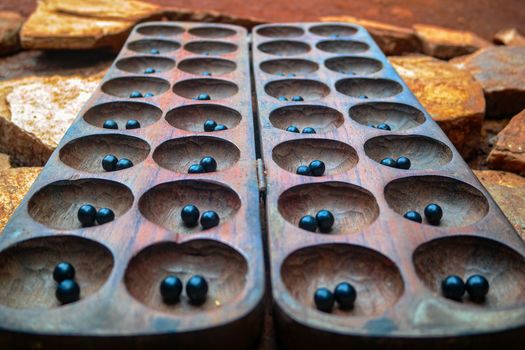
- What it is: "Mancala" is a family of ancient board games played with small stones, seeds, or beans and a board typically featuring two or four rows of pits. The goal is generally to capture more of the opponent's pieces. It's incredibly strategic, requiring foresight and planning.
- Where to find it: Widespread across Africa, the Middle East, and parts of Asia and the Caribbean. You’ll find beautifully hand-carved boards in markets, homes, and community gatherings. Specific names vary by region (e.g., Oware in Ghana, Awalé in Côte d'Ivoire, Bau in East Africa).
- My Story: During a quiet evening in a traditional riad in Fes, Morocco, my host family brought out a beautifully carved wooden board. The patriarch, with a knowing smile, began to teach me Kalah, a popular Mancala variant. The game seemed simple at first – pick up seeds from a pit and distribute them one by one into subsequent pits. But the strategy quickly deepened, revealing layers of foresight and tactical thinking. It was a meditative, engaging experience that offered a glimpse into an ancient form of entertainment and intellectual challenge.
- Actionable Tip: Don't be intimidated by the number of seeds or pits. The core mechanic is usually "sowing" (distributing) and "capturing." Ask the local to play a few rounds slowly, explaining each move.
5. Tug-of-War (Worldwide, but culturally significant variations): More Than Just Strength
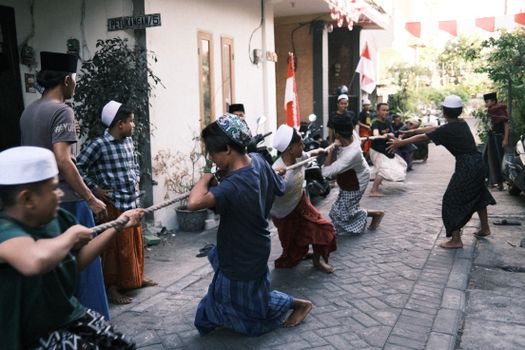
- What it is: While seemingly universal, many cultures have unique, traditional variations of Tug-of-War that are deeply embedded in their festivals, rituals, and community building. These aren't just about brute strength but often involve specific chants, techniques, or symbolic meanings.
- Where to find it: Festivals, harvest celebrations, and community events worldwide. Look for large ropes and enthusiastic crowds! For example, the Julgido (rope pulling) tradition in Korea is a UNESCO Intangible Cultural Heritage.
- My Story: In a remote village in Nepal during the Dashain festival, I found myself unexpectedly pulled into a giant Tug-of-War. It wasn't just a game; it was a community ritual, a symbolic battle for good fortune. The rope was thick, made of woven bamboo, and the teams were immense, spanning generations. The ground vibrated with the collective effort, the shouts, and the sheer joy of participation. It was less about winning or losing and more about the incredible feeling of communal effort and belonging.
- Actionable Tip: Listen to the local calls and chants – they often provide rhythm and motivation. Get low, dig your heels in, and pull with your entire body. It's an incredible way to experience collective energy!
6. Bao (East Africa): The Swahili Strategy Game
- What it is: A complex, strategic board game from the Mancala family, particularly prevalent in coastal East Africa (Kenya, Tanzania). Bao is known for its intricate rules and deep strategic possibilities, often considered one of the most challenging traditional board games.
- Where to find it: Coastal towns and villages of Kenya and Tanzania, especially Zanzibar. You’ll see men (and sometimes women) playing in shaded areas, under trees, or in social clubs.
- My Story: In Stone Town, Zanzibar, I noticed a group of elders engrossed in a game of Bao. The board was beautifully carved, and the players moved their seeds with a fluid, almost meditative rhythm. Intrigued, I sat and watched for a long time. Eventually, a younger man, who spoke excellent English, explained some of the basic movements. It was clear this was a game of immense depth and cultural significance, passed down through generations. Though I only grasped the surface, the concentration and respect among the players were palpable.
- Actionable Tip: Bao has very specific starting setups and capture rules. It’s best to learn from a patient local who can walk you through the nuances. Don't expect to master it quickly; simply appreciate the depth and history.
7. Congkak (Malaysia/Indonesia): The Ancient Shell Game
- What it is: Another member of the Mancala family, Congkak is typically played with a wooden board featuring two rows of seven holes and two larger "store" holes at each end. Players distribute cowrie shells or marbles, aiming to collect the most. It's a game often associated with women and children, emphasizing foresight and resource management.
- Where to find it: Commonly found in homes, community centers, and even resorts in Malaysia, Indonesia, Brunei, and Singapore.
- My Story: During a homestay in a rural Malaysian village, the matriarch of the family introduced me to Congkak after dinner. The board was smooth from years of use, and the cowrie shells clinked softly as we played. She explained the rules with a mix of Malay and hand gestures, her patience endless as I tried to calculate my moves. It was a serene and intimate experience, a quiet moment of connection that felt truly authentic.
- Actionable Tip: The game is often played quickly once mastered, but take your time as a beginner. Focus on understanding how "sowing" the shells leads to captures and how to protect your own "store."
Beyond the Game: The Cultural Threads You'll Unravel
Playing traditional games isn't just about the rules; it's about understanding the stories, the history, and the social fabric they represent.
- History and Origins: Many games have ancient roots, reflecting historical events, agricultural practices, or philosophical ideas. Asking about a game's origin can lead to fascinating historical insights.
- Social Significance: Some games are played during specific festivals, rites of passage, or as a way to resolve disputes. Others are simply a daily ritual for bonding and leisure.
- Local Etiquette and Traditions: There might be specific ways to sit, to offer a piece, or to congratulate a winner. Observing and respecting these nuances shows genuine respect for the culture.
- Community Building: These games are powerful tools for community cohesion, bringing together different generations and fostering a sense of shared identity.
I remember learning about the symbolic meaning behind some of the moves in Mancala, how they mimicked the planting and harvesting of crops, reflecting the agrarian roots of the community. These layers of meaning enrich the entire experience, making it far more than just a game.
Practical Tips for a Seamless Game Experience
To make the most of your traditional game adventure:
- Respect the Rules (and the Players): Even if you don't fully grasp everything, try your best to follow along. Be patient with yourself and with your teachers.
- Be a Good Sport: Win or lose gracefully. A sincere smile and a handshake (if appropriate) are universal signs of good sportsmanship.
- Language is No Barrier: Don't let a language gap deter you. A smile, gestures, and a willingness to laugh at yourself go a long way.
- Observe First: Before jumping in, watch a few rounds to get a feel for the pace, the strategies, and the local customs.
- Offer Help/Contribute: If you're invited to join, offer to help set up, clean up, or contribute in a small way (e.g., buying a round of drinks if others are having them).
- Don't Be Afraid to Look Silly: You're learning something new! Embrace the awkwardness and the inevitable mistakes. It's often where the best laughs and connections happen.
- Be Mindful of Your Belongings: Especially in crowded public spaces, keep an eye on your personal items while you're engrossed in the game.
- Capture the Moment (Respectfully): If you want to take photos or videos, always ask permission first. A quick thumbs-up gesture is usually understood. Candid shots are great, but avoid intrusive close-ups without consent.
Your Next Adventure: Beyond the Tourist Trail
My journey through traditional games has been one of the most rewarding aspects of my travels. From the competitive intensity of Carrom in India to the serene strategy of Mancala in Morocco, each game opened a unique window into a culture and forged connections that transcended words. These aren't just games; they're invitations to participate, to connect, to truly belong, however fleetingly.
So, next time you're planning a trip, add a new item to your itinerary: "Learn a local game." Seek out those spontaneous gatherings in parks, markets, or village squares. Take that leap, ask to join, and immerse yourself in the joy of shared play. You'll not only have a blast, but you'll also carry home a treasure trove of authentic memories, new skills, and perhaps even a few new friends.
What's your favorite traditional game you've learned on your travels, or one you're eager to try? Share your stories in the comments below!
---