Unleash Your Inner Local: 9 Traditional Games Locals Will Teach You in November 2025
I remember standing in a bustling market square in Marrakech, a sea of vibrant colors, exotic spices, and the hypnotic calls of street vendors. I was trying to capture the "perfect" Instagram shot, feeling a familiar disconnect – observing, but not truly participating. Then, I saw them: a group of older men huddled around a simple wooden board, their faces alight with concentration and friendly banter. Intrigued, I edged closer. One of them caught my eye, smiled, and gestured for me to join. With a hesitant nod, I stepped into their circle, and in that moment, the market transformed from a spectacle into a shared experience. That day, I learned my first traditional Moroccan game, and it taught me more about the local culture, hospitality, and joy than any guided tour ever could.
That’s the magic of traditional games, my fellow wanderlusters. They are the ultimate icebreakers, the purest form of cultural exchange, and a secret passport to genuine local connection. Forget scrolling through endless itineraries; this November 2025, I challenge you to ditch the typical tourist checklist and seek out these timeless pastimes. Trust me, learning a game from a local isn't just an activity; it's an unforgettable memory, a shared laugh, and often, the beginning of a beautiful friendship.
Ready to play your way into the heart of a destination? Let’s dive into some of the most engaging traditional games you absolutely must try to learn this November.
---
Why Play? The Ultimate Cultural Icebreaker
Before we jump into specific games, let’s talk about why this experience is so profoundly rewarding. In a world increasingly dominated by screens, traditional games offer a tangible, human connection. They transcend language barriers, break down social walls, and reveal insights into a culture's history, values, and humor.
Imagine trying to explain complex political nuances to a local in a foreign language. Now imagine trying to teach them a simple hand-clapping game. The latter is instant, intuitive, and universally understood. When you sit down to play, you're not just moving pieces or throwing objects; you're engaging in an act of shared humanity. You’re showing respect for their culture, demonstrating humility, and opening yourself up to an experience far richer than any selfie could capture.
November is a fantastic time to travel, with pleasant weather in many parts of the world and fewer crowds than peak summer. This makes it ideal for lingering in parks, cozying up in cafes, or exploring bustling markets where these games often come alive. So, pack your curiosity and your sense of humor – it’s game on!
---
Asia’s Playgrounds: From Strategic Skill to Dynamic Dexterity
Asia is a continent brimming with ancient traditions, and its games are no exception. From intricate board games that test your intellect to dynamic physical challenges, you’ll find endless opportunities for playful engagement.
1. Carrom (India)
- What it is: Often described as "finger billiards" or "pool without cues," Carrom is a tabletop game played on a square wooden board. Players use a 'striker' disc to flick other discs (carrom-men) into corner pockets, much like billiards. It's a game of precision, strategy, and a surprisingly satisfying 'thwack!' sound.
- My Story: My first encounter with Carrom was in a small chai shop in Jaipur. The air was thick with the scent of spices and sweet tea, and the rhythmic tapping of the striker against the carrom-men created a soothing soundtrack. I watched for what felt like an hour, mesmerized by the dexterity of the players. Eventually, a young man, noticing my interest, motioned for me to take a seat. He patiently showed me how to hold the striker, how to aim, and the basic rules. We didn't speak much English, but his encouraging nods and my clumsy attempts created a shared language of smiles and laughter. I was terrible, but I learned that day that sometimes, losing is the most fun.
- Where to find it (November 2025): Carrom is ubiquitous across India. You'll find boards in local cafes, community centers, parks, and even on street corners, especially in smaller towns and residential areas. Look for groups gathered around a low table, often with a small crowd observing.
- Tips for Travelers:
- Observe First: Watch a few rounds to grasp the rules and local etiquette.
- Be Humble: Don’t be afraid to admit you’re new. Locals love to teach.
- Offer a Treat: If you’re in a chai shop, offer to buy a round of tea or snacks for the table. It's a small gesture that goes a long way.
- Embrace the Dust: Boards might be a bit dusty, but that’s part of the authenticity!
- Instagram Moment: A close-up of hands flicking the striker, or a wide shot of a bustling street scene with a Carrom game at its heart.
2. Da Cau (Vietnam)
- What it is: Imagine badminton, but instead of rackets, you use your feet, knees, chest, and head to keep a colorful shuttlecock (called a jionzi or da cau) airborne. It’s a graceful, athletic, and incredibly fun game that looks like a beautiful dance.
- My Story: I was jogging along West Lake in Hanoi one crisp November morning. The air was cool, and the city was slowly waking up. Suddenly, I saw a group of men and women, ranging from teenagers to seniors, forming a circle. They were effortlessly kicking a vibrant feathered shuttlecock back and forth with incredible precision and style. It looked like a martial art. I stopped, captivated. Within minutes, one of the players, a spry woman with a radiant smile, waved me over. My attempts were, to put it mildly, pathetic. The shuttlecock would rocket off my foot in unpredictable directions. But they cheered every time I even made contact, and patiently retrieved it. We communicated through gestures and laughter, and by the end, I could (barely) keep it in the air for a second or two. My legs burned, but my heart soared.
- Where to find it (November 2025): Da Cau is a common sight in parks, public squares, and open spaces across Vietnam, especially in the mornings and late afternoons. Look for groups in cities like Hanoi, Ho Chi Minh City, and Da Nang. November is the dry season, making it perfect for outdoor play.
- Tips for Travelers:
- Wear Comfortable Shoes: Or be prepared to kick barefoot.
- Start Simple: Don't try fancy moves right away. Focus on keeping the shuttlecock up.
- Smile and Nod: Even if you don't speak Vietnamese, a friendly demeanor is key.
- Be Ready to Sweat: It’s a great workout!
- Instagram Moment: A slow-motion video of a player gracefully kicking the shuttlecock, or a dynamic shot of the game in progress against a scenic park backdrop.
---
Latin American Rhythms: Games of Agility and Camaraderie
Latin America buzzes with energy, and its traditional games reflect this vibrant spirit – often involving a dash of competition, a lot of laughter, and sometimes, a little bit of noise!
3. Tejo (Colombia)
- What it is: Tejo is Colombia's national sport, and it's unlike anything you've ever played. It involves throwing heavy metal discs (tejos) at a target ring embedded in a clay pit, with the ultimate goal of hitting a small, gunpowder-filled triangle called a mecha. The reward for hitting the mecha? A satisfying, loud explosion!
- My Story: "Boom!" The sound startled me, even though I was expecting it. I was in a cancha de tejo (tejo hall) in Bogotá, surrounded by the clinking of beer bottles, the thud of metal discs hitting clay, and the occasional, exhilarating bang. My Colombian friends had brought me here, insisting it was a quintessential experience. The first few throws were embarrassingly off-target, the heavy disc barely making it halfway. But after a few cervezas and some patient coaching, I started to get the hang of it. Then, it happened. My tejo landed with a direct hit on the mecha. A collective cheer erupted, and the gunpowder exploded with a triumphant KABOOM! The smell of sulfur filled the air, and I felt an incredible rush. It was loud, a little dangerous, and utterly thrilling.
- Where to find it (November 2025): Tejo halls are common throughout Colombia. In Bogotá, you can find popular spots like Club de Tejo La 76. In smaller towns, just ask locals for the nearest cancha de tejo. November generally offers pleasant weather across much of Colombia, making it a great time for this (often covered) outdoor activity.
- Tips for Travelers:
- Go with Locals: This is key. They'll teach you the rules, help with ordering, and enhance the social experience.
- Safety First: Stand clear when others are throwing.
- Enjoy the Beer: Tejo and beer (often Pola) go hand-in-hand. Expect to buy a few rounds.
- Embrace the Noise: The explosions are part of the fun!
- Instagram Moment: A slow-motion video of a tejo hitting the mecha and exploding, or a group photo with everyone holding their tejos and a local beer.
4. Lotería (Mexico)
- What it is: Often called "Mexican Bingo," Lotería is a game of chance played with a deck of 54 illustrated cards and boards (tablas) with a 4x4 grid of images. A caller shouts out the name of each card, often with a riddle or poetic phrase, and players mark off the corresponding image on their tabla. The first to fill a pattern and shout "¡Lotería!" wins.
- My Story: It was early November in Oaxaca, just after the whirlwind of Dia de los Muertos, and the city still hummed with festive energy. I was staying at a small family-run guesthouse, and one evening, the abuela (grandmother) invited me to join their nightly game of Lotería. The cards were beautifully illustrated – "El Sol," "La Luna," "La Sirena," "El Borracho." The caller, the abuelo, had a theatrical flair, improvising rhymes and jokes with each card. I barely understood half the Spanish, but the images were clear, and the family’s laughter was infectious. They patiently helped me identify cards, and when I finally shouted "¡Lotería!" (albeit a bit late), everyone cheered as if I’d won the lottery itself. It felt like being part of their family, even for just an hour.
- Where to find it (November 2025): Lotería is a beloved family and community game in Mexico. While you might not find organized public games as easily as Tejo, staying in a guesthouse, homestay, or joining a local community event (especially in smaller towns or during festivals) increases your chances. Many markets sell Lotería sets cheaply – buy one and ask your host to teach you!
- Tips for Travelers:
- Learn Basic Spanish: Knowing the names of the cards helps, but the images are often enough.
- Listen to the Caller: Their riddles are a cultural insight in themselves.
- Be Enthusiastic: Shout "¡Lotería!" with gusto when you win!
- It's About Family: Embrace the communal, multigenerational aspect of the game.
- Instagram Moment: A colorful spread of Lotería cards and tablas, or a candid shot of a family playing, full of smiles and concentration.
---
African Traditions: Storytelling and Strategy
Africa’s games are often deeply rooted in history, community, and storytelling, offering a window into ancient wisdom and communal bonds.
5. Oware (Ghana & West Africa, a Mancala variant)
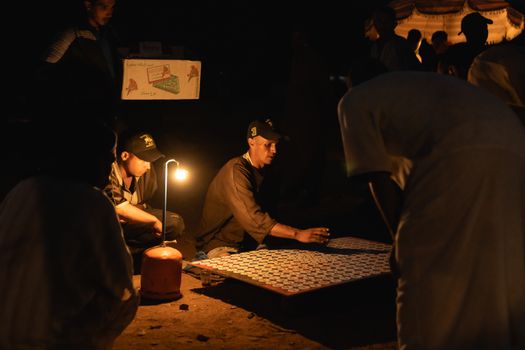
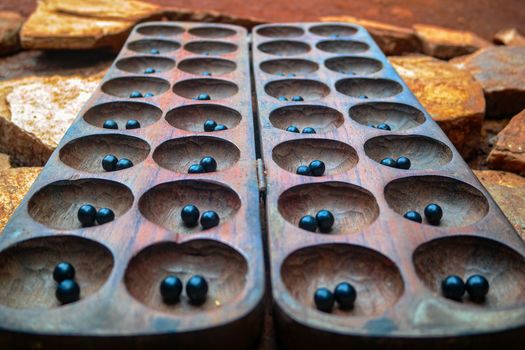
- What it is: Oware is a strategic board game belonging to the Mancala family, played with a wooden board featuring two rows of six pits and a large scoring pit at each end. Players 'sow' seeds (or stones, beans) from their pits into others, attempting to 'capture' opponents' seeds. It’s a game of foresight, mathematics, and tactical thinking.
- My Story: In a small village outside Kumasi, Ghana, under the shade of a sprawling mango tree, I found an elder patiently teaching Oware to a group of children. The board was beautifully carved, worn smooth by generations of hands. I sat quietly, observing the intricate movements and the children's focused expressions. The elder, noticing me, offered me a seat and a gentle smile. He spoke Twi, and I spoke English, but through gestures and the universal language of play, he guided my hand, showing me the rhythm of sowing and capturing. It wasn't just about winning; it was about the process, the shared concentration, and the quiet wisdom passed down through generations. The November weather in Ghana is pleasant, marking the end of the rainy season, perfect for outdoor community gatherings.
- Where to find it (November 2025): Oware is prevalent throughout Ghana and West Africa. You'll often find people playing in villages, local markets, cultural centers, and even at guesthouses. Ask your hosts or guides; they’ll likely be delighted to introduce you.
- Tips for Travelers:
- Be Patient: It’s a game of strategy, so take your time and observe.
- Ask Questions: Show genuine interest in the history and significance of the game.
- Appreciate the Craft: Many Oware boards are beautiful pieces of art.
- Slow Down: This game encourages a relaxed, contemplative pace.
- Instagram Moment: A close-up of hands moving seeds on a carved wooden Oware board, or a shot of the game being played under a large, shady tree.
6. Khamsa (Five Stones / Knucklebones) (Morocco & North Africa)
- What it is: Khamsa is a dexterity game played with five small stones (or sometimes bones or small bags of sand). Players toss, catch, and manipulate the stones in a series of increasingly complex patterns. It’s a simple game that requires surprising hand-eye coordination and quick reflexes.
- My Story: Wandering through the labyrinthine alleys of Fes's medina, I heard bursts of high-pitched laughter. Around a sun-drenched corner, a group of children were playing Khamsa, their small hands deftly tossing and catching the smooth stones. They were so engrossed, their focus absolute, yet their joy was palpable. As I paused, one of the girls, no older than seven, confidently scooped up her stones and, with a mischievous grin, challenged me with a gesture. My clumsy attempts were met with giggles, but they patiently slowed down, demonstrating each step. It was a fleeting, unscripted moment of pure connection, teaching me that the simplest interactions are often the most profound. November in Morocco offers mild, sunny weather, perfect for kids playing outdoors.
- Where to find it (November 2025): You’ll often see children playing Khamsa in parks, courtyards, medina alleys, and public squares across Morocco and other North African countries. It’s less about finding an organized game and more about observing and being open to an impromptu invitation.
- Tips for Travelers:
- Be Playful: Don't be afraid to look a bit silly; it's all part of the fun.
- Bring Your Own Stones: If you want to practice, small, smooth pebbles work perfectly.
- Connect with Kids: This is a wonderful way to interact with local children (always with parental supervision or in public spaces).
- Instagram Moment: A candid shot of children's hands mid-air with the stones, or a vibrant scene of kids playing in a bustling medina.
---
Europe’s Hidden Gems: Playful Pastimes
Europe might be famous for its grand monuments, but its local games offer a charming glimpse into everyday life, often played with a glass of wine or a pint of beer in hand.
7. Pétanque (France)
* What it is: Pétanque is a popular form of boules (bowls) played on a variety of surfaces, usually dirt or gravel. Players stand within a circle and take turns throwing hollow metal balls as close as possible to a small wooden target ball called a cochonnet (little pig). It's a game of skill, strategy, and often, lively conversation.
* My Story: The late afternoon sun cast long shadows across the dusty square in a small Provençal village. The air was cool, but the camaraderie was warm. I’d wandered into a game of Pétanque, the metallic clinking of the boules echoing through the sleepy village. A group of older gentlemen, berets perched jauntily on their heads, were deep in concentration, a glass of pastis at their feet. One of them, seeing me watching, offered me a boule and a quick lesson in French. "Tu lances comme ça," he explained, demonstrating the underhand throw. The gentle competition, the strategic discussions, the shared sips of pastis – it was an idyllic snapshot of French village life. November can be chilly in Provence, but often sunny, making a brisk game of Pétanque a perfect way to spend an afternoon.
* Where to find it (November 2025): Look for boulodromes (Pétanque courts) in public parks, village squares, and dedicated clubs throughout France, especially in the south. Many cafes and bars will have courts nearby.
* Tips for Travelers:
* Observe Etiquette: There are unwritten rules. Watch how others play and respect the turn-taking.
Learn Basic Phrases: "Bonjour," "Merci," and "Cochonnet!" will go a long way.
* Join In: Don't be shy. A polite "Puis-je jouer?" (May I play?) is often welcomed.
* Enjoy the Ambiance: It's as much about the social interaction as the game itself.
* Instagram Moment: A picturesque shot of players on a dusty Pétanque court with charming French architecture in the background, or a close-up of hands holding the metal boules.
8. Ring Board (Ireland)
- What it is: A traditional pub game, Ring Board involves throwing small rubber rings at a board with numbered hooks. The goal is to hook the rings onto specific numbers to achieve a certain score, often played in teams. It’s a game of skill, precision, and plenty of friendly banter.
- My Story: The wind was biting, and the November drizzle was setting in as I ducked into a cozy pub in rural County Clare, Ireland. The peat fire crackled, and the air was thick with the scent of Guinness and conversation. In a corner, a group of locals were engrossed in a game I’d never seen before – Ring Board. They were throwing rubber rings with surprising accuracy onto a small wooden board. A friendly local, seeing me nursing my pint and watching, invited me to join their next round. He patiently explained the scoring, handed me a ring, and with a wink, said, "Don't be shy, now!" My first few throws were embarrassingly off-target, but the lads offered encouragement and good-natured ribbing. By the end of the evening, I was (slightly) better, and felt like I’d been a regular for years.
- Where to find it (November 2025): Ring Board is predominantly found in traditional pubs, especially in rural areas across Ireland. Just ask the bartender or look for the distinctive board on a wall. November is perfect for cozying up indoors in a warm pub.
- Tips for Travelers:
- Buy a Round: It’s good etiquette to offer to buy a round of drinks for the players.
- Embrace the Craic: The banter and conversation are as important as the game itself.
- Listen to the Rules: Scoring can be specific; pay attention!
- Be Friendly: Irish hospitality is legendary; reciprocate it.
- Instagram Moment: A warm, inviting shot of the Ring Board in a dimly lit, traditional Irish pub, perhaps with a pint of Guinness in the foreground.
9. Kubb (Sweden & Scandinavia)
- What it is: Often called "Viking Chess," Kubb is an outdoor lawn game where the objective is to knock over wooden blocks (kubbs) by throwing wooden batons. The ultimate goal is to knock over the "King" kubb, but only after all the opponent's kubbs have been toppled. It combines strategy, precision, and a bit of luck.
- My Story: It was a surprisingly mild November day in a park near Stockholm. The leaves had mostly fallen, but the air was crisp and invigorating. I spotted a family, bundled in sweaters, setting up a game of Kubb on a patch of grass. The wooden pieces looked simple, yet the game seemed to involve intense focus. Curiosity piqued, I approached. The father, noticing me, warmly invited me to join their two teams. He explained the rules, which were more intricate than they looked, involving "field kubbs" and a "king." My throws were initially wild, but the tactile satisfaction of hitting a wooden block with a baton was immense. We played for almost an hour, the family patiently guiding me, and the fresh air and friendly competition were a delightful break from city sightseeing.
- Where to find it (November 2025): Kubb is a popular backyard and park game in Sweden and other Scandinavian countries. While it's more common in summer, you might still find families or friends playing on milder November days. Look for groups in public parks or ask locals at guesthouses or community centers.
- Tips for Travelers:
- Dress Warmly: November in Scandinavia can be chilly; layers are key for outdoor play.
- Team Up: Kubb is best played in teams, so be ready to collaborate.
- Learn the Strategy: It's more than just throwing; placement and tactics matter.
- Enjoy the Outdoors: It’s a great way to experience Scandinavian nature and culture.
- Instagram Moment: A dynamic shot of a wooden baton mid-air, aimed at the Kubb blocks, with a beautiful autumnal park setting.
---
How to Find Your Game: Practical Tips for the Adventurous Traveler
So, how do you go from reading about these games to actually playing them in November 2025? Here’s your actionable guide:
- Be Open and Approachable: The most important tip! Smile, make eye contact, and project a friendly demeanor. Locals are more likely to invite you if you seem open to interaction.
- Ask, Ask, Ask: Don't be afraid to politely ask. A simple "Do you play any traditional games here?" or "Can you teach me how to play?" (in their local language, if possible, even just a few words) can open doors.
- Look for Groups: Keep an eye out in parks, public squares, markets, community centers, and even quieter streets. If you see people gathered around a game, linger respectfully and watch.
- Stay Local: Opt for guesthouses, homestays, or smaller, locally run hotels. Your hosts are often a fantastic resource and might even teach you a game themselves.
- Join Local Tours/Workshops: Some cultural tours specifically include interactive experiences. While less spontaneous, they guarantee an opportunity.
- Learn a Few Phrases: "Hello," "Thank you," "Please," and "Can you teach me?" in the local language show respect and can bridge communication gaps. Google Translate is your friend!
- Offer to Share: If you know a simple game from your home country, offer to teach them in return! It’s a wonderful two-way exchange.
- Don't Fear the Language Barrier: Games are a universal language. Gestures, smiles, and shared laughter will carry you through.
- Be Present: Put your phone away (unless you’re taking a quick, respectful photo). Engage fully in the moment.
---
Your Next Adventure Starts with a Game
This November 2025, let your travels be defined not by the landmarks you photograph, but by the hands you shake, the laughs you share, and the games you learn. These traditional pastimes are more than just entertainment; they are living threads of culture, community, and connection. They offer a chance to step off the well-trodden tourist path and into the heart of a destination, creating memories that will resonate long after you've returned home.
So, which game will you seek out first? Will you be flicking carrom-men in India, exploding mechas in Colombia, or mastering the art of the cochonnet in France? The world is waiting, and it’s ready to play.
Now, tell us in the comments below: Which traditional game are you most excited to learn this November 2025? Share your travel plans and let's inspire each other!
---