The Hook: A Stain That Doesn't Wash Away
I stepped off the local train in Tokushima, Japan, and was immediately hit by an odor I didn't expect: a rich, earthy, slightly sweet scent reminiscent of wet hay and dark beer. I followed my nose down a narrow gravel lane, past weathered cedar houses, until I stood before a low-slung workshop with steam rising from its tiled roof.
Inside, my hands plunged into a deep, bubbling vat of dark liquid. The surface was covered in a thick, iridescent violet foam—what the locals call ai no hana, or the "indigo flower." When I pulled my hands out, the raw linen fabric I held transformed from a pale green to a deep, electric cobalt right before my eyes as it met the oxygen in the air. My fingernails remained stained a stubborn, beautiful blue for weeks.
That stain was my introduction to the fragile world of traditional craft revivals. Around the globe, ancient techniques that require decades of muscle memory are being pushed to the brink of extinction by cheap, synthetic imitations and fast-fashion supply chains. But a new wave of conscious travel is offering a lifeline.
Here are the five traditional craft revivals that elite travel experts are urging travelers to support right now.
---
1. The Fermented Blue: Awa Ai Indigo Dyeing in Tokushima, Japan
```
▲ [The indigo fermentation vat: a living ecosystem of bacteria and bran]
```
The Craft & The Crisis
True Japanese indigo, or Awa Ai, is not just a dye; it is a living, breathing ecosystem. Unlike the synthetic indigo used to color modern denim, authentic Awa Ai relies on sukumo—indigo leaves that have been composted, watered, and turned by hand for over 100 days. The dye vats are kept alive with sake, limestone powder, and wheat bran, requiring daily feeding and temperature monitoring.
Synthetic dyes and cheap imports almost wiped this art out in the mid-20th century. Today, only a handful of master dye houses remain in Tokushima prefecture on Shikoku Island. They are fighting to keep this organic, chemical-free process alive, but they desperately need travelers to bypass the souvenir shops of Tokyo and engage with the source.
The Insider Experience
To truly understand Awa Ai, you must visit the rural town of Kamiita. Here, young collectives are bridging the gap between ancient farming and modern design. You can dye your own canvas tote or linen scarf in vats that have been fermenting for months, feeling the slick, cool texture of the living dye.
- Pro-Tip: Book a private workshop at Buaisou in Kamiita. They grow their own indigo, harvest it with hand-scythes, ferment it, and design their own products. Slots open exactly 30 days in advance on their website at 9:00 AM JST and sell out within minutes.
- The Hidden Detail: Look closely at the surface of the vat. If the bubble cluster in the center is vibrant and blue-violet, the vat is healthy and "hungry." If it is flat and grey, the bacteria are sleeping.
---
2. The Rhythm of the Treadle: Harris Tweed in the Outer Hebrides, Scotland
```
▲ [A traditional foot-powered treadle loom in a stone croft on the Isle of Harris]
```
The Craft & The Crisis
In the wind-scoured outer reaches of Scotland’s Outer Hebrides, the air smells of peat smoke and salt spray. This is the birthplace of Harris Tweed, the only fabric in the world protected by its own Act of Parliament. By law, true Harris Tweed must be made from 100% virgin wool, dyed and spun in the Outer Hebrides, and handwoven by the islanders at their homes.
The crisis here is generational. The physical demands of operating heavy, double-width manual treadle looms for eight hours a day mean that younger islanders are opting for digital careers mainland. Without a steady stream of travelers buying directly from the weavers' crofts, this legendary textile could easily become a museum curiosity.
The Insider Experience
To experience this, rent a rugged 4x4 and drive the "Golden Road" along the east coast of the Isle of Harris. The landscape is otherworldly—barren gneiss rock formations meeting turquoise Atlantic bays. As you drive, look for small, hand-painted wooden signs at the ends of gravel driveways reading "Tweed for Sale" or "Weaving Demonstration."
- Pro-Tip: Drive to the tiny settlement of Luskentyre and seek out the croft of Donald John Mackay. He was awarded an MBE for his services to the Harris Tweed industry. If his workshop door is open, you are welcome to step inside, listen to the rhythmic clack-clack-clack of his Hattersley loom, and purchase tweed directly off the roll.
- The Hidden Detail: Smell the wool. Authentic Harris Tweed retains a faint, comforting scent of sheep’s lanolin and the peat smoke used to heat the crofts where it was woven.
---
3. From Fire and Quartz: Barro Negro Pottery in Oaxaca, Mexico
```
▲ [Polishing unfired clay with a smooth quartz stone in San Bartolo Coyotepec]
```
The Craft & The Crisis
In the village of San Bartolo Coyotepec, located in the dry, cactus-studded valleys of Oaxaca, artisans coax a metallic, obsidian-like sheen out of raw grey clay. This is Barro Negro (black clay) pottery. The craft dates back to the Monte Albán period (500 BC), but it was revolutionized in the 1950s by a local woman named Doña Rosa, who discovered that polishing the clay with a smooth quartz stone before firing sealed the pores and turned the clay a brilliant, metallic black.
The market is currently flooded with cheap, chemically painted black pottery imported from overseas and sold to unsuspecting tourists in Oaxaca City. This undercuts the local artisans who spend up to a month digging the clay, purifying it by hand, shaping it on primitive dual-plate wheels, burnishing it for hours with stones, and firing it in underground pits.
The Insider Experience
Skip the tourist markets in Oaxaca City and take a 30-minute collectivo taxi south to San Bartolo Coyotepec. Walk past the commercialized showrooms on the main highway and head deep into the residential grid of the town to find the smaller, family-run workshops.
- Pro-Tip: Visit the Colectivo Alfarero located two blocks west of the municipal temple. Here, you can watch artisans use ancient Mesoamerican "wheel" techniques—two clay plates balanced on top of each other—to spin the clay using only their hands for balance.
- The Hidden Detail: To test if a piece of Barro Negro is authentic and fired traditionally rather than painted, gently tap the rim with your fingernail. Authentic, pit-fired pieces will emit a clear, metallic ring, almost like a crystal glass, due to the high-temperature reduction firing.
---
4. Threading the Ancestors: Backstrap Weaving in Chinchero, Peru
```
▲ [A master weaver in Chinchero adjusting the warp threads on a backstrap loom]
```
The Craft & The Crisis
High in the Andes, where the air is thin and crisp, the women of Chinchero weave the history of the Inca Empire into vibrant textiles. Using a backstrap loom—a simple system of sticks, straps, and a waist belt—they tension the loom with their own body weight. The complex geometric patterns, known as pallay, are memorized and passed down through generations; there are no written patterns.
The threat here is two-fold: the lure of city jobs for the younger generation and the proliferation of cheap, synthetic acrylic textiles sold as "baby alpaca" in the tourist hubs of Cusco and Machu Picchu. These fake textiles use toxic chemical dyes that pollute local waterways, whereas authentic Chinchero textiles use 100% natural dyes derived from plants, minerals, and insects.
The Insider Experience
To support the true revival, bypass the mass-market textile demonstrations arranged by large tour operators. Instead, travel independently to the town of Chinchero on a non-market day (Tuesday or Thursday) when the streets are quiet.
- Pro-Tip: Seek out the Centro de Textiles Tradicionales del Cusco (CTTC) cooperative, founded by Nilda Callañaupa Alvarez. Here, you can watch the entire process: from spinning raw alpaca fiber using a drop spindle (phuska) while walking, to boiling the wool with cochineal (parasitic scale insects that live on cacti) and lemon juice to create brilliant scarlet hues.
- The Hidden Detail: Look for the Awana (the weaving space). A master weaver can spend up to three months completing a single table runner. If you buy directly from the cooperative, 100% of the profit goes back to the specific weaver who made it, marked on a tag with her name and village.
---
5. Chiseling the Infinite: Zellige Tilework in Fez, Morocco
```
▲ [A maâlem master hand-chiseling a terracotta tile into a complex geometric star]
```
The Craft & The Crisis
The historic medina of Fez is a labyrinth of sensory overload: the smell of roasting cumin, the braying of donkeys, and the sharp clink-clink of steel hammers hitting clay. This is the sound of Zellige creation. These hand-chiseled terracotta tile mosaics have adorned Moroccan mosques, riads, and fountains since the 10th century.
Each tiny tile fragment is individually cut from a larger baked clay slab by a master craftsman, or maâlem, using a heavy, razor-sharp hammer called a manqach. The shapes are based on complex Islamic geometric principles, requiring immense mathematical visualization.
The crisis is physical. The maâlems sit cross-legged on the floor for up to ten hours a day, breathing in clay dust and risking severe joint damage. As younger Moroccans seek modern, digital career paths, the pool of apprentices is shrinking. Without tourists actively seeking out and paying fair wages for authentic, hand-cut tile workshops, the art of Zellige is being replaced by flat, printed ceramic tiles.
The Insider Experience
Do not buy Zellige from the polished showrooms of Casablanca or Marrakech. Go to the source in the industrial potters' quarter of Fez, known as Ain Nokbi, located just outside the old medina walls.
- Pro-Tip: Hire a licensed local guide specifically to take you to the workshop of Maâlem Mohamed near the Sidi Harazem road. Here, you can watch the apprentices mix the grey clay harvested from the nearby Fez riverbeds, stamp it into square tiles, glaze them, and then watch the master chisel them into intricate star shapes without a single guideline drawn on the clay.
- The Hidden Detail: Watch how the mosaic is assembled. The pieces are laid face down on the ground, smooth side down, based entirely on the master's memory of the pattern. They are then cemented together from the back. The weavers of these stone tapestries do not even see their final work until it is lifted and flipped over.
---
The Global Artisan Map: Logistics, Costs, and Best Times to Visit
To help you plan your next conscious travel itinerary, here is a breakdown of the logistics, costs, and optimal timing for visiting these five craft revivals.
| Destination | Craft Revival | Best Time to Visit | Est. Daily Budget (USD) | How to Get There |
| :--- | :--- | :--- | :--- | :--- |
| Tokushima, Japan | Awa Ai Indigo Dyeing | October to November (Mild weather, harvest season) | $120 - $200 | Take the Shinkansen from Osaka to Tokushima, then rent a local car or take the JR Tokushima Line to Kamiita. |
| Outer Hebrides, Scotland | Harris Tweed Weaving | May to September (Long daylight hours, less rain) | $150 - $250 | Fly into Stornoway (Isle of Lewis) from Glasgow, or take the CalMac ferry from Uig on the Isle of Skye to Tarbert (Isle of Harris). |
| Oaxaca, Mexico | Barro Negro Pottery | November to February (Dry season, Dia de los Muertos is busy but vibrant) | $50 - $100 | Fly into Oaxaca International Airport (OAX), then take a local colectivo or private taxi south to San Bartolo Coyotepec. |
| Sacred Valley, Peru | Backstrap Weaving | May to September (Dry Andean winter, clear skies) | $70 - $130 | Fly into Cusco, then take a shared van (colectivo) from Pavitos Street in Cusco directly to Chinchero (45 mins). |
| Fez, Morocco | Zellige Tilemaking | September to November or March to May (Avoids summer heat) | $60 - $120 | Fly into Fès–Saïss Airport (FEZ), then take a registered petit taxi to the Bab Bou Jeloud entrance of the medina. |
---
Beyond the Souvenir: Why Experts Urge Us to Step In
When you purchase a piece of handwoven Harris Tweed, a hand-burnished Barro Negro vase, or a naturally dyed Andean textile, you are not just buying a souvenir. You are acting as a direct patron of human history.
```
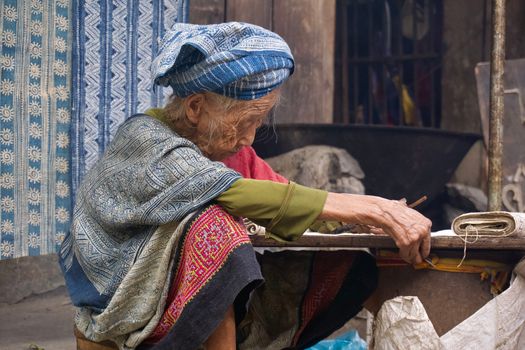
▲ [The hand of a master: preserving history through physical touch]
```
The economic reality is simple: if these artisans cannot make a dignified living wage from their craft, they will stop. Their children will move to cities for service jobs, and the physical knowledge—the exact weight of the chisel, the precise fermentation level of the indigo vat, the tension of the backstrap loom—will be lost forever.
By traveling to these regions, booking hands-on workshops, and buying directly from the makers, we prove to local communities that their heritage is globally valued. Travel has the power to destroy local cultures through overtourism, but when channeled toward craft preservation, it becomes the ultimate tool for cultural survival.
Pack your bags, step off the beaten path, and let your hands get dirty. The future of these ancient crafts is in our hands—and our travel itineraries.
---