The Death of the Short-Haul Flight
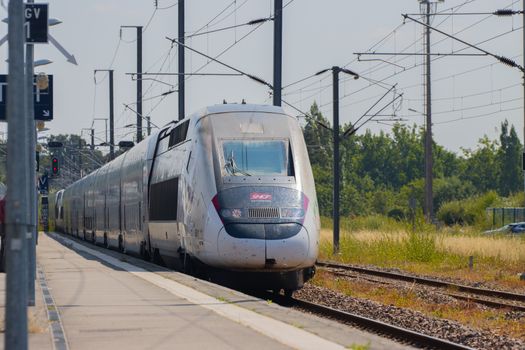
I stepped onto Platform 7 at Paris Gare de Lyon, warm croissant in hand, precisely eleven minutes before departure. There were no shoes to remove, no 100-milliliter liquid limits to calculate, and zero soul-crushing lines at a security gate. As the TGV InOui smoothly accelerated out of the station, humming softly along the rails at 186 miles per hour, I popped open my laptop, took a sip of fresh espresso, and watched the golden light wash over the rolling vineyards of Burgundy.
Meanwhile, travelers heading to Charles de Gaulle for a flight to Barcelona were likely sitting on a tarmac, crammed into middle seats, paying $40 for checked bags, and bracing for a two-hour transit delay.
As a travel journalist, I've watched a massive cultural shift happen across the globe over the past few years. Flight shaming combined with the sheer speed of modern high-speed rail has transformed how smart travelers move. Top travel advisors no longer recommend regional flights for distances under 500 miles. Why? Because when you calculate city-center-to-city-center travel times, high-speed rail almost always wins—not to mention providing wide seats, working Wi-Fi, and stunning landscapes.
If you want to upgrade your journey, here are the top train routes that replaced short flights travel advisors suggest you book immediately.
---
1. Paris to Barcelona: The Mediterranean High-Speed Express
- Replaces: Paris (CDG/ORY) to Barcelona (BCN)
- Train Operator: TGV InOui / Renfe
- Travel Time: 6 hours 45 minutes (City Center to City Center)
```
+-------------------+--------------------+--------------------+
| Metric | Flight (CDG - BCN) | Train (TGV InOui) |
+-------------------+--------------------+--------------------+
| Transit to Station| 45 mins | 15 mins |
| Security/Buffer | 120 mins | 15 mins |
| Travel Duration | 110 mins | 405 mins |
| Baggage Claim | 40 mins | 0 mins |
| Total Door-to-Door| ~5 hrs 35 mins | ~7 hrs 15 mins |
+-------------------+--------------------+--------------------+
```
While a direct flight claims to take under two hours, the reality of getting to Paris Charles de Gaulle and out of Barcelona El Prat adds at least three and a half hours of sheer hassle. The direct TGV InOui connects Paris Gare de Lyon to Barcelona Sants in a single, gorgeous daylight journey.
The Route Experience
You sweep through the heart of the French countryside, past the volcanic hills of the Massif Central, before hugging the dramatic coastline of the Mediterranean Sea. Near the border town of Perpignan, you’ll catch glimpses of flamingos dancing in the saline lagoons while the snow-capped Pyrenees loom in the background.
Travel Advisor Pro-Tips
* Seat Selection: Book an upper-deck seat (Etage Haut) on the left side of the train when traveling south toward Barcelona. This guarantees front-row views of the Mediterranean coastline near Narbonne.
* Dining Hack: Skip the café car snack boxes. Pack a gourmet lunch from the food hall at Gare de Lyon's Le Train Bleu takeaway kiosk—think duck terrine, fresh baguettes, and artisanal French cheeses.
---
2. London to Amsterdam: The Channel Crossing Masterclass
- Replaces: London (LHR/LGW) to Amsterdam (AMS)
- Train Operator: Eurostar
- Travel Time: 3 hours 52 minutes
```
+-------------------+--------------------+--------------------+
| Metric | Flight (LHR - AMS) | Train (Eurostar) |
+-------------------+--------------------+--------------------+
| Transit to Station| 45 mins | 15 mins |
| Security/Buffer | 120 mins | 45 mins |
| Travel Duration | 75 mins | 232 mins |
| Baggage Claim | 30 mins | 0 mins |
| Total Door-to-Door| ~4 hrs 30 mins | ~4 hrs 52 mins |
+-------------------+--------------------+--------------------+
```
Flying from London to Amsterdam used to be the default choice for quick European weekend getaways, but high-speed direct Eurostar service rendered that flight route obsolete. Departing from the magnificent St Pancras International, you drop under the English Channel and arrive directly at Amsterdam Centraal, mere steps from the famous canal rings.
The Route Experience
The journey is remarkably smooth. After popping out of the Channel Tunnel into northern France, the train rockets through flat Flemish pastures, past historic Belgian towns like Brussels and Antwerp, before gliding seamlessly into the heart of the Netherlands.
Travel Advisor Pro-Tips
* Booking Window: Tickets open up to 330 days in advance. Fares start as low as $55 (£44) one-way if booked early, whereas last-minute seats can top $300.
* Fast-Track Border Control: Upgrade to Eurostar Premier (formerly Business Premier) for 10-minute check-ins, lounge access with free-flowing champagne, and curated menus by Michelin-starred chef Raymond Blanc.
---
3. Milan to Rome: The Bullet Train That Killed an Airline
- Replaces: Milan (Linate/Malpensa) to Rome (Fiumicino)
- Train Operator: Frecciarossa 1000 / Italo
- Travel Time: 2 hours 59 minutes
```
+-------------------+--------------------+--------------------+
| Metric | Flight (LIN - FCO) | Train (Frecciarossa|
+-------------------+--------------------+--------------------+
| Transit to Station| 30 mins | 10 mins |
| Security/Buffer | 90 mins | 10 mins |
| Travel Duration | 70 mins | 179 mins |
| Baggage Claim | 35 mins | 0 mins |
| Total Door-to-Door| ~3 hrs 45 mins | ~3 hrs 19 mins |
+-------------------+--------------------+--------------------+
```
This route made history: the high-speed rail competition between state-owned Frecciarossa and private operator Italo was single-handedly responsible for bankrupting Italy's flag carrier airline, Alitalia, on its domestic flagship route. Today, taking a flight between Milan and Rome is widely viewed by locals as a major tactical error.
The Route Experience
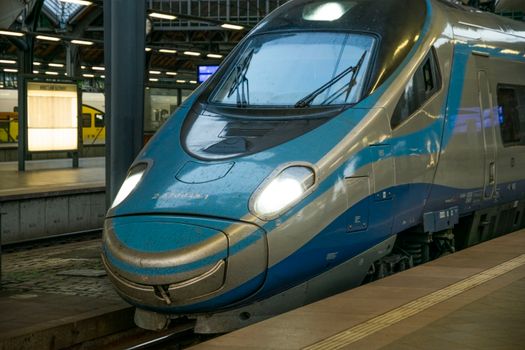
Leaving Milan Centrale—a masterclass in Art Deco rail architecture—the Frecciarossa 1000 reaches speeds of 190 mph (300 km/h). The train cuts through Lombardy, zips past the historic towers of Bologna, slices through the Apennine mountains via high-speed tunnels, and skirts the golden hills of Tuscany before pulling into Roma Termini.
Travel Advisor Pro-Tips
* Class Selection: On Frecciarossa, skip Standard and upgrade to Executive Class. It features only eight rotating leather armchair seats in the entire car, a private meeting room, and unlimited complimentary premium Italian wines and multi-course hot meals brought directly to your seat.
* Platform Hack: At Milano Centrale, skip the main security queue by utilizing the dedicated gate access if holding an Executive or Business Class ticket.
---
4. Tokyo to Kyoto: The Gold Standard of Rail Precision
- Replaces: Tokyo (Haneda/Narita) to Osaka/Kyoto (Itami/KIX)
- Train Operator: JR Central (Tokaido Shinkansen)
- Travel Time: 2 hours 15 minutes (via Nozomi service)
```
+-------------------+--------------------+--------------------+
| Metric | Flight (HND - ITM) | Train (Shinkansen) |
+-------------------+--------------------+--------------------+
| Transit to Station| 30 mins | 10 mins |
| Security/Buffer | 90 mins | 10 mins |
| Travel Duration | 65 mins | 135 mins |
| Baggage Claim | 30 mins | 0 mins |
| Total Door-to-Door| ~3 hrs 35 mins | ~2 hrs 35 mins |
+-------------------+--------------------+--------------------+
```
Japan’s Shinkansen (Bullet Train) is the world benchmark for railway efficiency. With an average annual delay measured in mere seconds, taking a domestic flight from Tokyo down to the Kansai region (Kyoto/Osaka) makes virtually no sense.
The Route Experience
The N700S series train glides silently out of Tokyo Station. Within 45 minutes, urban neon gives way to tranquil coastal bays and misty mountain peaks. The highlight comes around the hour mark: an unobstructed view of Mount Fuji towering over the tea plantations of Shizuoka Prefecture.
Travel Advisor Pro-Tips
* Mount Fuji View: When booking your seat, always select Seat E in Ordinary Class or Seat D in Green Class (First Class). This places you on the right-hand side when traveling south from Tokyo to Kyoto, giving you the perfect photo angle of Mount Fuji.
* Luggage Rules: If traveling with large suitcases (where total dimensions exceed 160cm up to 250cm), you must reserve a seat with an oversize baggage area (Reservable Oversized Baggage Seat). Otherwise, you face a 1,000 JPY penalty and luggage relocation.
* Culinary Must: Pick up an Ekiben (station bento box) at Tokyo Station's Matsuri store before boarding. Pair it with an ice-cold green tea or Japanese craft beer.
---
5. Madrid to Seville: The Original High-Speed Pioneer
- Replaces: Madrid (MAD) to Seville (SVQ)
- Train Operator: Renfe (AVE) / Iryo / Ouigo
- Travel Time: 2 hours 30 minutes
```
+-------------------+--------------------+--------------------+
| Metric | Flight (MAD - SVQ) | Train (AVE/Iryo) |
+-------------------+--------------------+--------------------+
| Transit to Station| 35 mins | 10 mins |
| Security/Buffer | 90 mins | 15 mins |
| Travel Duration | 65 mins | 150 mins |
| Baggage Claim | 35 mins | 0 mins |
| Total Door-to-Door| ~3 hrs 45 mins | ~2 hrs 55 mins |
+-------------------+--------------------+--------------------+
```
Launched for the 1992 Seville World Fair, Spain's AVE (Alta Velocidad Española) line revolutionized Iberian transit. Flying between Madrid and Andalucia is completely unnecessary when high-speed trains depart almost hourly from Madrid's lush, palm-tree-filled Atocha station.
The Route Experience
After leaving the Spanish capital, the train shoots south across the plains of La Mancha, speeding past ancient castles and vast groves of silver-green olive trees stretching to the horizon, before arriving at Santa Justa station in downtown Seville.
Travel Advisor Pro-Tips
* New Operator Savings: Renfe no longer holds a monopoly. Look at private operators Iryo and Ouigo. Iryo offers sleek Italian-built Frecciarossa trains with superior culinary offerings (Infinita Class) at half the price of traditional Renfe tickets.
* Station Secret: Arrive 30 minutes early at Madrid Atocha to relax inside the central concourse, which houses a massive 2,000-square-meter indoor tropical garden filled with over 7,000 plants.
---
Logistical Comparison & Quick Facts
Here is a quick snapshot to help you plan your ideal rail journey across these top advisor-recommended routes:
| Route | Recommended Train | Average Ticket Price ($) | Carbon Emissions Saved vs. Flight | Optimal Booking Window |
| :--- | :--- | :--- | :--- | :--- |
| Paris to Barcelona | TGV InOui | $45 - $160 | ~85% | 120 Days |
| London to Amsterdam | Eurostar | $55 - $280 | ~80% | 180-330 Days |
| Milan to Rome | Frecciarossa 1000 | $35 - $140 | ~75% | 60-90 Days |
| Tokyo to Kyoto | Tokaido Shinkansen | $95 - $145 | ~90% | 30 Days |
| Madrid to Seville | Iryo / Renfe AVE | $20 - $90 | ~80% | 60-90 Days |
---
Ultimate Hacks for Booking High-Speed Rail
- Avoid Third-Party Markups: Whenever possible, book directly with the national rail operator (e.g., Trenitalia, Renfe, Eurostar, or JR West) rather than online travel agencies that add processing fees and hide dynamic pricing discounts.
- Use Seat61 as Your Bible: For niche seat layouts, train composition maps, and localized rail quirks, consult The Man in Seat 61—the absolute gold standard of international train travel journalism.
- Download Rail Apps for Live Tracking: Apps like Trainline, DB Navigator (for Europe), or SmartEX (for Japan Shinkansen) provide real-time platform updates, digital QR tickets, and instant notifications on delays.
- Mind the Luggage Policies: Unlike airlines, train operators rarely weigh bags, but space on overhead racks is limited. If traveling heavy, aim to be among the first to board your rail car to secure rack space near the doors.
---
The Verdict: Why Flying Short-Haul Is Dead
When you trade a cramped regional airplane seat for a high-speed train, you win back precious vacation hours, eliminate airport transit friction, drastically cut your carbon footprint, and turn transit time into an integral part of your travel experience.
Next time you’re planning a multi-city itinerary, listen to travel advisors: skip the airport lounge, buy a train ticket, sit back with a fresh coffee, and watch the world glide by your window.
---