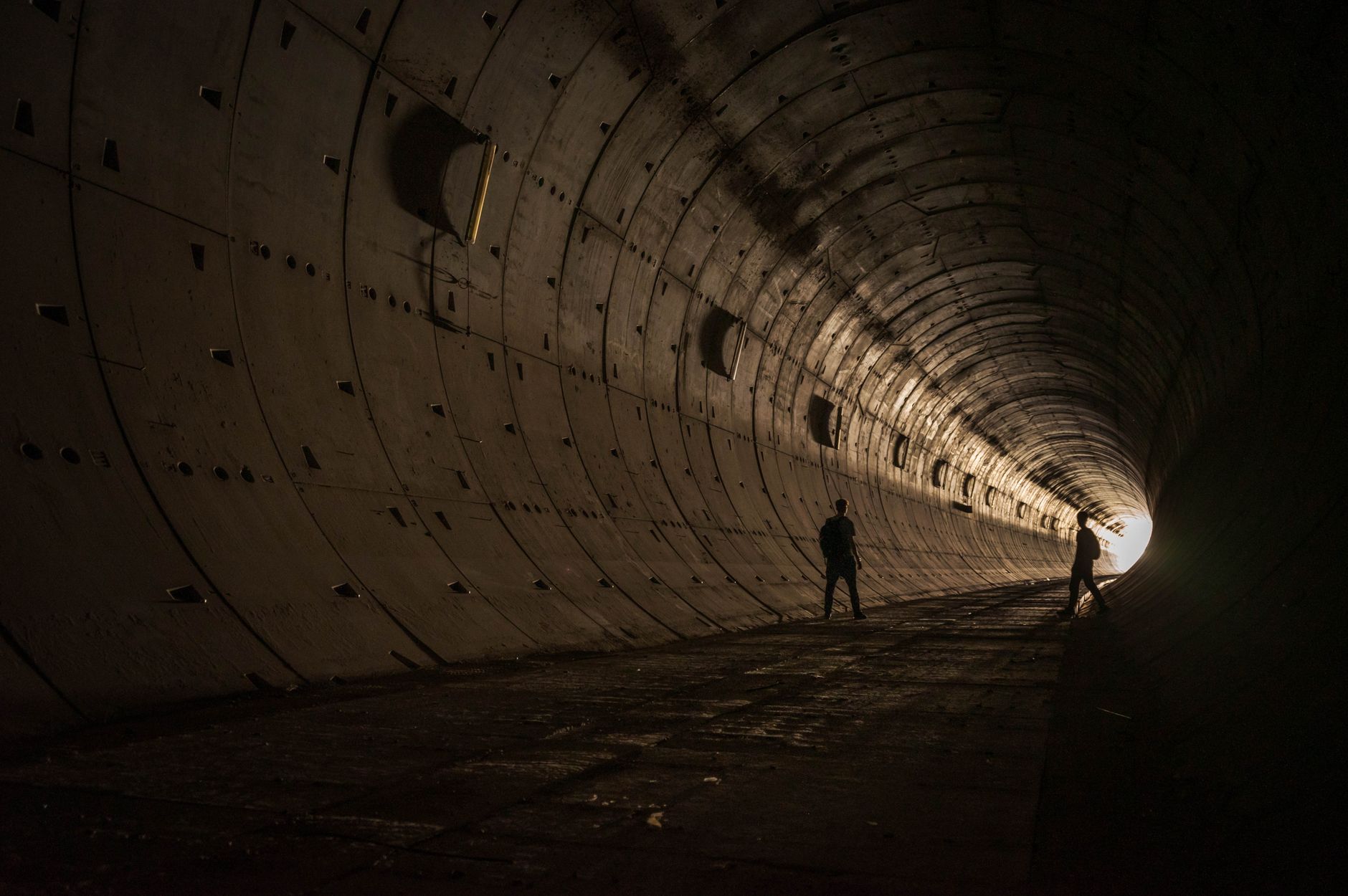
The rumble of the Parisian metro, the bustling markets of Naples, the ancient echoes of Rome – these are the sounds and sights we associate with iconic cities. But what if I told you that the true heart, the whispered histories, and the most breathtaking adventures often lie far beneath the surface, hidden from the everyday traveler?
I’ll never forget my first encounter with an underground world. It was a scorching summer day in Rome, and after hours of battling crowds at the Colosseum, a friend suggested we try something "a little different." We descended a narrow, unassuming staircase near the Trevi Fountain, and suddenly, the oppressive heat and noise vanished. We were in Vicus Caprarius, an ancient Roman apartment complex, complete with flowing water from the original Aqua Virgo aqueduct, dating back to the 1st century AD. The air was cool, the silence profound, broken only by the gentle gurgle of water. It was an instant, visceral connection to a past so deep, it felt like I’d stepped through a portal. That day, I realized something profound: some of the most extraordinary travel experiences aren't found by looking up at skyscrapers or grand monuments, but by looking down.
Since then, the allure of the subterranean has become a driving force in my travels. There’s a unique thrill in uncovering the hidden arteries, the secret chambers, and the forgotten cities that exist just meters below our feet. It's a journey into history, mystery, and often, a chilling brush with the past. If you’re ready to trade crowded piazzas for ancient catacombs and sun-drenched streets for labyrinthine tunnels, then buckle up. Here are the secret tunnels beneath famous cities you absolutely need to experience before you die.
1. Paris Catacombs: The Macabre Masterpiece
You think you know Paris? Think again. Beneath the city of lights, lies a sprawling, solemn ossuary, home to the remains of over six million Parisians. The Paris Catacombs are not just a historical site; they are a profound, chilling, and utterly unforgettable experience that will challenge your perceptions of life, death, and urban history.
My Personal Descent:
My first visit to the Catacombs was on a crisp autumn morning. The queue, even with pre-booked tickets, snaked down the street, a testament to its enduring fascination. As I descended 130 steps into the cool, damp earth, the sounds of Parisian traffic faded, replaced by a profound silence. The initial tunnels are just that – tunnels. But then, you reach the entrance to the ossuary, marked by a chilling inscription: "Arrête! C'est ici l'empire de la Mort" ("Stop! This is the Empire of Death").
What follows is an hour-long walk through carefully arranged stacks of femurs, skulls, and other bones, forming walls, arches, and even decorative patterns. It's not gruesome in a horror-movie sense; it's deeply respectful and strangely beautiful. The sheer scale is overwhelming, a stark reminder of human mortality and the ingenious solution the city found for its overflowing cemeteries in the 18th century. The air, though damp, feels heavy with history, and every corner turned reveals another corridor of silent witnesses. It truly feels like walking through time.
Practical Tips & Details:
* Location: The official entrance is at 1 Avenue du Colonel Henri Rol-Tanguy, 75014 Paris (Métro: Denfert-Rochereau).
* Booking: Crucial! Book your timed entry tickets online well in advance via the official website (catacombes.paris.fr) to avoid hours of queuing. Tickets typically cost around €29 for adults with an audio guide.
* What to Expect: The tour covers a 2km (1.2 mile) circuit, involving 130 steps down and 83 steps up. It can be cool and damp, so bring a light jacket. There are no toilets or cloakrooms. Not recommended for those with severe claustrophobia or young children who might be easily frightened.
* Instagram-Worthy: While respectful, the geometric patterns of the bones offer incredibly powerful and thought-provoking photo opportunities (flash photography is generally discouraged).
2. Edinburgh's Underground Vaults: Whispers of the Past
Edinburgh, a city steeped in folklore and spectral tales, hides a labyrinthine network of vaults beneath its bustling streets. These aren't just tunnels; they're the remnants of a desperate past, once home to taverns, workshops, and the city’s poorest, who lived and died in squalor and darkness. Today, they are renowned as one of the most haunted places in the world.
My Chilling Encounter:
My trip to the Edinburgh Vaults was with a 'ghost tour' company, and while I'm a skeptic, the atmosphere was undeniably unsettling. Our guide, a charismatic storyteller with a penchant for dramatic pauses, led us through the narrow, echoing passages of the Blair Street Underground Vaults. He painted vivid pictures of the residents – the prostitutes, the criminals, the families who lived and died in these damp, windowless spaces, often succumbing to disease or violence.
He spoke of the body snatchers, the secret societies, and the chilling reports of paranormal activity. In one particularly dark chamber, he turned off his torch, plunging us into absolute blackness, and asked us to listen. The silence was heavy, punctuated only by the drip of water and the thumping of my own heart. I swear I felt a cold brush against my cheek, though it could have been imagination playing tricks. Regardless, the palpable sense of human suffering and forgotten lives left an indelible mark. It’s a powerful experience that goes beyond mere history; it's an immersion into the very soul of a city’s darkest chapters.
Practical Tips & Details:
* Location: Multiple companies offer tours of different sections of the vaults. Popular ones include Mercat Tours (based near St Giles' Cathedral) and City of the Dead Tours (various meeting points).
* Booking: Highly recommended to book online in advance, especially during peak season. Prices range from £15-£25 depending on the tour and its focus (history, ghost stories, etc.).
* What to Expect: Tours typically last 1-1.5 hours. The vaults are dark, damp, and uneven underfoot. Wear comfortable, sturdy shoes and bring a jacket. Some tours are genuinely spooky, so consider your comfort level with ghost stories.
* Instagram-Worthy: The atmospheric lighting and ancient stone walls offer dramatic photo ops, especially if you can capture the sense of eerie mystery.
3. Rome Beneath the Surface: Unearthing Empires
Rome is a city built on layers – literally. Every time you dig, you find another stratum of history, from ancient Roman roads to early Christian catacombs and forgotten temples. Exploring Rome's underground is like peeling back the skin of millennia, revealing the heart of empires.
A Journey Through Time:
My most profound Roman underground experience wasn't a single site, but a series of discoveries. First, the Domus Aurea, Emperor Nero's Golden House, an opulent palace buried and built over by subsequent emperors. Walking through its vast, dimly lit chambers, seeing the faded frescoes that once adorned its walls, felt like uncovering a lost civilization. The sheer ambition of Nero, and the subsequent effort to erase him from history, is palpable.
Then, there were the Catacombs of San Callisto, vast underground cemeteries for early Christians. The narrow passages lined with burial niches, the crypts of popes, and the symbolic frescoes felt like a secret history of a burgeoning faith. It was a stark contrast to the grandeur of the Vatican above ground, a testament to humble beginnings.
And finally, my initial revelation at Vicus Caprarius, the 'City of Water' beneath the Trevi Fountain. Seeing the ancient Roman apartment block, the original aqueduct still flowing, felt like a secret handshake with history. You stand meters beneath the throngs at the fountain, and you are utterly alone with 2000 years of Roman life.
Practical Tips & Details:
* Domus Aurea: Located near the Colosseum. Access is highly restricted and only via guided tours (often only on weekends). Book months in advance at coopculture.it. Prices around €14.
* Catacombs: Several options exist (San Callisto, Priscilla, Domitilla, etc.). San Callisto is one of the largest. They are outside the city center, requiring a bus or taxi. Tours are usually guided and included in the ticket price (~€8-€10). Check specific opening times as they vary.
* Vicus Caprarius (City of Water): Located near the Trevi Fountain (Vicolo del Puttarello, 25). Easy to access, tickets around €4. No need to book far in advance.
* Other Sites: Explore the Roman Houses on the Celian Hill, the Crypta Balbi, or the Basilica of San Clemente (which has multiple layers of history beneath it).
* Instagram-Worthy: The scale of the Domus Aurea, the ancient art in the catacombs, and the flowing water at Vicus Caprarius offer stunning, atmospheric shots.
4. Cappadocia's Subterranean Cities: A World Apart
Cappadocia, Turkey, is famous for its fairy chimneys and hot air balloons, but beneath its moon-like landscape lies an even more astonishing secret: vast, multi-level underground cities carved into the soft volcanic rock. Derinkuyu and Kaymakli are the most famous, capable of sheltering thousands of people, their livestock, and supplies for months.
Lost in a Labyrinth:
Descending into Derinkuyu was like entering a giant ant farm, but one built for humans. The passages are narrow, sometimes requiring you to duck or even crawl, but they open into vast communal rooms, stables, churches, and ventilation shafts that plunge hundreds of feet to the surface. I imagined the fear and resilience of the early Christians who hid here from invaders, living entirely underground, grinding grain, cooking, and sleeping in the dark.
Our guide explained the ingenious design: massive circular stone doors that could be rolled into place to seal off levels, complex ventilation systems, and even a well to prevent poisoning. The sheer scale and ingenuity are breathtaking. You can easily get disoriented, and the feeling of being so deep within the earth, in a place built entirely by hand, is profoundly humbling. It’s a testament to human survival and adaptability.
Practical Tips & Details:
* Location: Derinkuyu and Kaymakli are about a 30-40 minute drive from Göreme, Cappadocia's main tourist hub.
* Booking: Most visitors explore these as part of a "Green Tour" or "Red Tour" package offered by local agencies in Göreme, which includes transport, a guide, and other sites. You can also hire a private driver or take a dolmuş (minibus).
* Cost: Entrance fees for each underground city are around 100-150 Turkish Lira (approx. €3-€5). Tour packages vary but typically range from €40-€60 per person for a full day.
* What to Expect: Prepare for narrow, sometimes low-ceilinged passages and numerous steps. Claustrophobia can be an issue for some. Wear comfortable shoes and bring a flashlight (though the areas are lit, it can be useful).
* Instagram-Worthy: The dramatic entrances, the winding passages, and the occasional shafts of light penetrating the depths make for unique, adventurous photos.
5. Naples Sotterranea: The Greek, Roman, and Wartime Labyrinth
Naples is a city of vibrant chaos on the surface, but beneath its ancient streets lies a hidden world that tells the story of its 2,400-year history. From Greek aqueducts to Roman theaters and WWII air-raid shelters, Napoli Sotterranea is a fascinating journey through time.
A Serene Escape from the Chaos:
Stepping into Napoli Sotterranea from the bustling Spaccanapoli district is like entering another dimension. The noise and heat of the city instantly dissipate, replaced by a cool, quiet serenity. My guide, a passionate Neapolitan, led us through ancient Greek cisterns, carved out of volcanic tuff, which later became part of Roman aqueducts supplying the city with water.
We squeezed through incredibly narrow passages (a "crawling" section is optional, but highly recommended for the adventurous!), emerging into vast caverns. One of the most poignant parts was seeing the air-raid shelters from WWII, complete with drawings and inscriptions left by those who sought refuge there, marking their fear and hope. We even saw a small, perfectly preserved Roman theatre, discovered only recently, with parts of it now incorporated into modern buildings above. The tour culminates in a beautiful underground garden, where plants thrive in the artificial light – a surprising pocket of life deep within the earth.
Practical Tips & Details:
* Location: The main entrance for Napoli Sotterranea is at Piazza San Gaetano, 68, 80138 Naples.
* Booking: While you can often walk in, booking online is advisable, especially for specific tour times (napolisotterranea.org). Tours run frequently throughout the day and last about 1.5-2 hours.
* Cost: Around €15 for adults.
* What to Expect: The tour involves a fair amount of walking, steps, and some optional very narrow passages. Wear comfortable shoes. The temperature is consistently cool, so a light jacket is a good idea. The guides are incredibly knowledgeable and engaging.
* Instagram-Worthy: The dramatic lighting in the caverns, the ancient cisterns, and the poignant WWII shelters offer incredibly atmospheric and thought-provoking photo opportunities.
6. London's Hidden Depths: From War Rooms to Roman Roads
London, a city that constantly reinvents itself, also meticulously preserves its subterranean past. From the nerve center of WWII to ancient Roman foundations and forgotten mail routes, London’s underground offers a diverse range of historical experiences.
My Dive into London's Layers:
My journey began at the Churchill War Rooms, a truly immersive experience. Descending into the bunker where Winston Churchill and his staff directed the war effort felt like stepping back into 1940. The maps, the telephones, the cramped living quarters – everything is preserved as it was, right down to the sugar cubes on the tea tray. Standing in the Cabinet War Room, you can almost hear the discussions that shaped the course of history. It's not just underground; it's under history.
A completely different vibe awaited me at the Mail Rail at The Postal Museum. This was pure industrial archaeology! Riding a miniature train through the actual tunnels of London's forgotten underground railway, which once transported mail across the city, was a quirky, fun, and incredibly insightful look at London's logistical ingenuity. The tight tunnels, the automated stations – it felt like a secret world of its own, a silent network humming beneath the bustling city above.
And for a truly ancient touch, I explored the remnants of London's Roman past. Beneath the Guildhall Art Gallery, you can see the foundations of a Roman Amphitheatre, a chilling reminder of Londinium's gladiatorial past. It's a subtle but powerful connection to the city's very origins, literally beneath its modern civic heart.
Practical Tips & Details:
* Churchill War Rooms: Located near Westminster (Clive Steps, King Charles St, SW1A 2AQ). Book well in advance (iwm.org.uk/visits/churchill-war-rooms), especially for peak times. Tickets around £29. Allow 2-3 hours.
* Mail Rail (The Postal Museum): Located in Clerkenwell (15-20 Phoenix Pl, WC1X 0DA). Book tickets online (postalmuseum.org). Tickets around £25 (includes museum entry). The train ride is about 15 minutes.
* Roman Amphitheatre: Located beneath the Guildhall Art Gallery (Guildhall Yard, EC2V 5AE). Access is usually included with gallery admission (which is often free or a small charge).
* Other Sites: Explore the London Mithraeum (a Roman Temple of Mithras, free, book online), or take a tour of the London Underground's abandoned stations (often special events by London Transport Museum, book months in advance).
* Instagram-Worthy: The preserved details of the War Rooms, the unique perspective from the Mail Rail train, and the ancient stone of the Roman Amphitheatre all provide compelling visuals.
The Unseen Adventure Awaits: Your Guide to Subterranean Exploration
Exploring these hidden worlds isn't just about ticking off a list; it's about connecting with the raw, unfiltered history of humanity. It’s about feeling the weight of the past, understanding the ingenuity of our ancestors, and experiencing a side of these famous cities that most tourists never even glimpse.
Before You Go: Essential Underground Explorer Tips
- Book Ahead, Always: For popular sites like the Paris Catacombs or Churchill War Rooms, pre-booking online is non-negotiable. Many have timed entry slots.
- Comfort is Key: Wear comfortable, sturdy shoes. You'll be walking on uneven surfaces, up and down steps, and sometimes through damp conditions.
- Layer Up: Underground spaces are often cooler and damp, even on hot days. A light jacket or sweater is always a good idea.
- Mind Your Head & Feet: Watch for low ceilings, narrow passages, and slippery surfaces. Safety first!
- Conquer Claustrophobia (or Know Your Limits): Some tunnels can be tight. If you have severe claustrophobia, research the specific site beforehand. Many tours offer alternatives or warnings.
- Respect the Space: These are historical and often solemn places. Follow guide instructions, don't touch artifacts (or bones!), and keep your voice down.
- Embrace the Dark: Many sites are dimly lit. Bring a small flashlight if you wish, but rely on the provided lighting and your guide.
- Capture the Moment (Respectfully): Photography is often allowed, but check for flash restrictions. Wide-angle lenses are great for capturing the scale of underground chambers.
- Hydrate: Even though it’s cool, you’ll be walking. Bring a water bottle.
- Combine with Above-Ground: Pair your underground adventure with related surface explorations to get a full picture of the city’s history.
These secret tunnels are more than just tourist attractions; they are portals to forgotten eras, whispers of lives lived, and testaments to human resilience. They offer a unique, spine-tingling perspective on the cities we think we know. So, the next time you plan a trip, remember to look beyond the skyline. The greatest adventures might just be waiting right beneath your feet.
Which hidden world will you explore first? Share your underground adventures and tips with us using #TripsoraUnderground on social media!
---